

Lithuanians have a long history of taking other countries' dishes and quietly deciding they're ours now, usually after a few tweaks nobody quite agrees on. Plovas is exhibit A. It started in Central Asia as plov, built around lamb, and somewhere along the way Lithuanian kitchens swapped in pork or chicken and never looked back. This pork pilaf recipe is the version my family actually makes: rice, meat, and vegetables cooked together in one pot until the rice has soaked up everything good happening underneath it.

Jump to:

Recipe Highlights
COMFORTING, NOT COMPLICATED. Pork, carrot, and onion simmer in warm cumin and paprika before the rice goes in, so every grain cooks in that flavor instead of just sitting on top of it.
ONE POT, MINIMAL CLEANUP. Everything, from browning the meat to steaming the rice, happens in a single heavy-bottomed pot with a lid.
EVERYONE'S ARGUING ABOUT: The tomato paste/ ketchup debate below is a real, ongoing disagreement at our table.
FEEDS A CROWD. This makes five to six generous portions, so it's built for putting in the middle of the table and letting everyone serve themselves.

What Is Plovas (or Pilaf)?
Plovas is Lithuania's version of plov, a dish of rice cooked together with meat, vegetables, and spices until the rice takes on the flavor of everything underneath it. It's the same idea as pilaf, and in English the two words get used interchangeably.
The dish traces back to Central Asia and Persia, where an old saying goes that if you're poor, you eat plov, and if you're rich, you eat plov exclusively, meaning almost everyone ends up eating some version of it, just with better cuts of meat as the budget allows. Plov recipes vary hugely by region and by who's cooking it: some use lamb, some use beef, and in Lithuania, pork and chicken are the two you'll actually find on a family table.
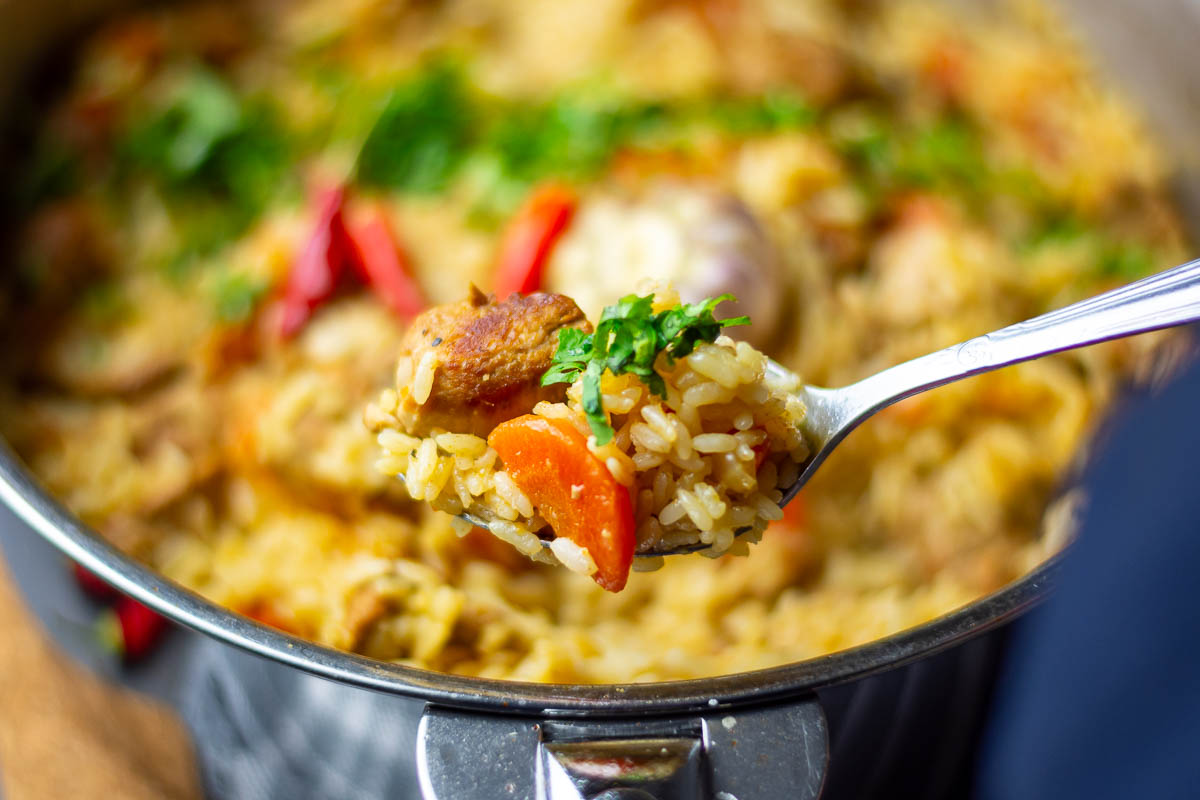
Plovas in Lithuanian Kitchens
In Lithuania, plovas has become genuine comfort food, the kind of dish nearly every family has their own version of and quietly insists is the correct one. Where the Uzbek original leans on lamb, Lithuanian kitchens use pork or chicken instead, largely because that's what was actually available.
My grandmother was strict about how the rice steamed at the end, since that's the difference between plovas that stays fluffy and separate and plovas that clumps into something closer to risotto. Get the steaming step right and you'll taste why it's stuck around in Lithuanian kitchens long after most people forgot where the dish originally came from.
Ingredients and Substitutes
Here's everything you'll need to make this delicious rice dish:
- odourless oil: use neutral oil like vegetable oil, rapeseed oil (canola oil) or sunflower oil.
- pork: it is argued that fattier cuts of meat should be used for more flavor, so choose pork shoulder/ butt or pork neck. I never liked excess fat on my meat, however, and always make pork plov with pork loin or even tenderloin.
- large onion: brown or yellow onions are typically used.
- large carrot: cut into thin semi-circles.
- spices: we used ground cumin and sweet paprika, but, ¼ teaspoon ground coriander, dried barberries, turmeric and cayenne pepper are also often used.
- salt and black pepper: to taste
- small bulb of garlic: yes, the whole bulb of garlic! Cut off the root ends, but leave the bulb intact and unpeeled.
- long-grain rice: like basmati.

Find the ingredient quantities and detailed instructions on the recipe card at the bottom of the post.
THE LITHUANIAN DEBATE: I always remember having a little bit of tomato flavour in my pork pilaf as a child. My family used to add a tablespoon of tomato paste (tomato puree) or 3 tablespoon of tomato ketchup to the rice at the end of cooking, but this seems to be rather controversial. I asked around! Some of my friends were adamant that this is only done in school canteens and ketchup should never be used in making authentic pilaf, whilst others could not imagine a Lithuanian version of pilaf without a little bit of tomato flavor.
Step-By-Step Method
Plovas in Lithuanian Kitchens
Step 1: Heat the oil in a large, heavy-bottomed pot over medium-high heat. Add the pork and brown it on all sides until it's properly caramelized, not just gray, since this is most of your flavor base. Remove the pork and set aside, then lower the heat.


Step 2: Add the chopped onion to the same pot and sauté for 5 to 6 minutes until it softens. Return the pork to the pot, add the carrots, and fry everything together for 10 to 12 minutes, stirring often so nothing catches on the bottom.
Step 3: Stir in the cumin and paprika and cook for about a minute, just long enough for the spices to turn fragrant.
Step 4: Pour in enough hot water to submerge the meat and vegetables, then bring to a simmer. Depending on the cut of pork, this takes 30 to 60 minutes: 30 to 40 minutes for a more tender cut, closer to 60 for a tougher one.


Step 5: Season with salt and pepper, then nestle the whole, unpeeled garlic bulb into the pot.
Step 6: While that simmers, rinse the rice thoroughly in a fine sieve under cold water until the water runs mostly clear. This gets rid of surface starch, which is what keeps the finished plovas from turning gluey. Spread the rinsed rice evenly over the meat layer.


Step 7: Pour 600ml (2.5 cups) of hot water over the rice, bring it to a boil, then turn the heat down to the lowest setting and simmer, uncovered, for 10 minutes.
Step 8: Cover with a tight-fitting lid and keep simmering for another 15 to 20 minutes. If the rice still isn't tender, add a splash more water and give it a few more minutes.
Step 9: Give everything a good stir, fish out the garlic bulb, and serve immediately with a scattering of fresh parsley.


Recipe Tips
- Use long-grain rice, ideally basmati. Short-grain or sticky rice varieties will clump instead of staying separate.
- Rinse the rice properly. Don't skip this step even though it feels fussy, it's the single biggest factor in whether your plovas turns out fluffy or gluey.
- Match your pork cut to how you cut it. Leaner cuts like tenderloin do better in slightly larger pieces so they don't dry out; fattier cuts like shoulder can go smaller since they stay moist regardless.
- Don't be afraid to experiment with the spices. Coriander, turmeric, and cinnamon are all worth trying if you want a different direction from the cumin and paprika base.
Following these tips will help you create a perfectly balanced pork pilaf with tender meat, fluffy rice, and just the right burst of flavor.

Recipe FAQs
Not quite, even though the texture can look similar if the rice ends up soft. Risotto is built by adding warm stock to the rice gradually, stirring constantly, until the starch releases and creates a creamy sauce around each grain. Plovas is closer to a pilaf method: the rice steams on top of the meat and absorbs a set amount of liquid all at once, with no stirring once it's covered. The result is separate, fluffy grains rather than a creamy one.
Yes, and it's actually a common swap in Lithuanian kitchens. Chicken thighs work best since they hold up to the simmering better than chicken breast. Because chicken cooks faster than pork, cut the simmering time in Step 4 down and check for doneness earlier rather than sticking to the full 30 to 60 minutes.
Mushy rice is almost always down to too much water, not enough rinsing beforehand, or lifting the lid too often while it steams. Undercooked rice usually means the heat was too high during the covered simmer in Step 8, so the liquid evaporated before the rice had time to fully absorb it. Stick to the lowest heat setting once the lid goes on and resist the urge to check on it constantly.
Yes, up to a point. You can brown the pork and chop the vegetables the day before and keep them refrigerated separately, then start cooking fresh from Step 2 when you're ready. Once the rice goes in, though, it's best to finish the dish in one go rather than pausing partway through, since rice that's partially cooked and then reheated later won't have the same texture.
It hasn't been tested specifically for freezing in this recipe, so I'd treat it cautiously. Rice dishes generally freeze reasonably well, but the texture softens noticeably on thawing and reheating, more so than it does with fridge leftovers. If you want to try it, freeze in a well-sealed container and expect a softer result than freshly made.
What To Serve Pork Pilaf With?
Plovas usually doesn't need help. It's a complete meal on its own, and in my house it rarely gets a side dish at all. If you want to round it out anyway, a simple cucumber and tomato salad or steamed green beans with a squeeze of lemon juice both cut through the richness nicely without competing for attention.
Storage and Reheating
Plovas is genuinely best eaten the day you make it, when the rice is still fluffy and the pork hasn't had time to dry out. That said, leftovers keep well in an airtight container in the fridge for up to four days.
Reheat in the microwave if you can, since it keeps the texture closer to fresh; the stovetop works too, but expect the rice to turn slightly softer in the process.
More Rice Recipes
Here are some more rice dishes that are popular in Lithuania:


Pork Pilaf (Lithuanian Plov With Pork)
Equipment
- Large Heavy-Bottomed Pot With A Matching Lid
Ingredients
- 3 tablespoon neutral oil
- 500 g (1.1 lb) pork shoulder or pork loin, cut into chunks
- 1 large onion finely chopped
- 1 large carrot cut into thin semi-circles
- ¼ teaspoon cumin
- ¼ teaspoon paprika
- salt and black pepper to taste
- 1 small bulb of garlic
- 300 g (2¼ cups) long-grain rice
- 600 g (2½ cups) hot water
Instructions
- Heat the oil in a large pot with a heavy bottom and a matching lid. Add the pork chunks and brown them on all sides until they are well caramelised over high heat. Remove the meat from the pan, and reduce it to low-medium heat.
- Add the chopped onion, and sautee for 5-6 mins, until starting to soften. Then place the pork pieces back in the pan and add the sliced carrots. Fry for 10-12 minutes stirring often, until the carrots start to soften.
- Add the cumin and paprika and stir for another minute.
- Pour just enough hot water over the meat and vegetables to submerge and leave it over low heat to simmer for 30-60 minutes (depending on the cut of meat used). Lean pork tenderloin will need 30-40 minutes, whilst tougher cuts like pork shoulder/ pork neck will take about 60 minutes. Almost all water will have evaporated by the end of the process.
- At this point, season the meat with salt and pepper. Add the whole small bulb of garlic (unpeeled).
- Run plenty of cold water through your rice in a fine sieve to remove the starch from the surface. Then spread the washed rice on the meat in an even layer.
- Carefully pour 600ml (2.5 cups) of hot water over the rice and bring it to a boil, then reduce the heat to the lowest setting and simmer (without the lid) for 10 minutes.
- After 10 minutes, cover the pot with a tight lid and continue simmering for another 15-20 minutes. If the rice isn't tender after the water has been absorbed, add a little bit more water, cover it with a lid and simmer for a while longer.
- Stir, remove the garlic bulb, and serve immediately, garnished with fresh parsley.

Leave a Reply