

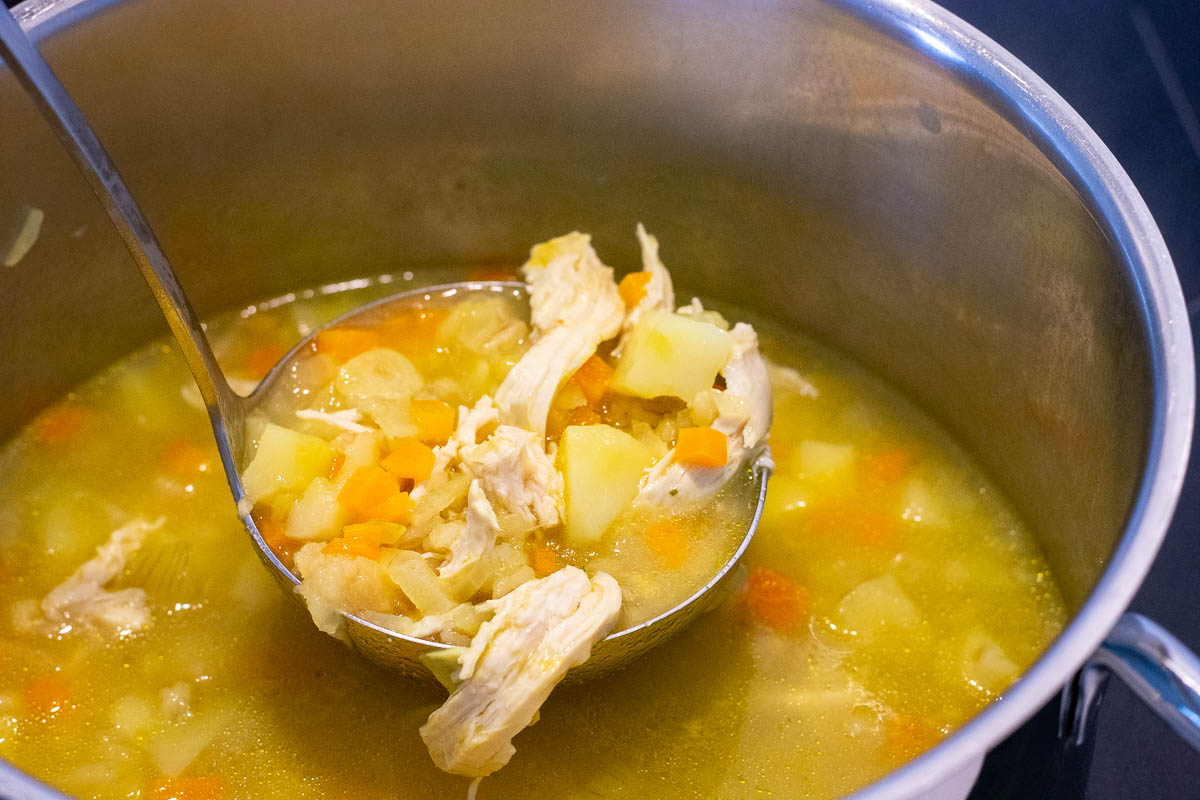
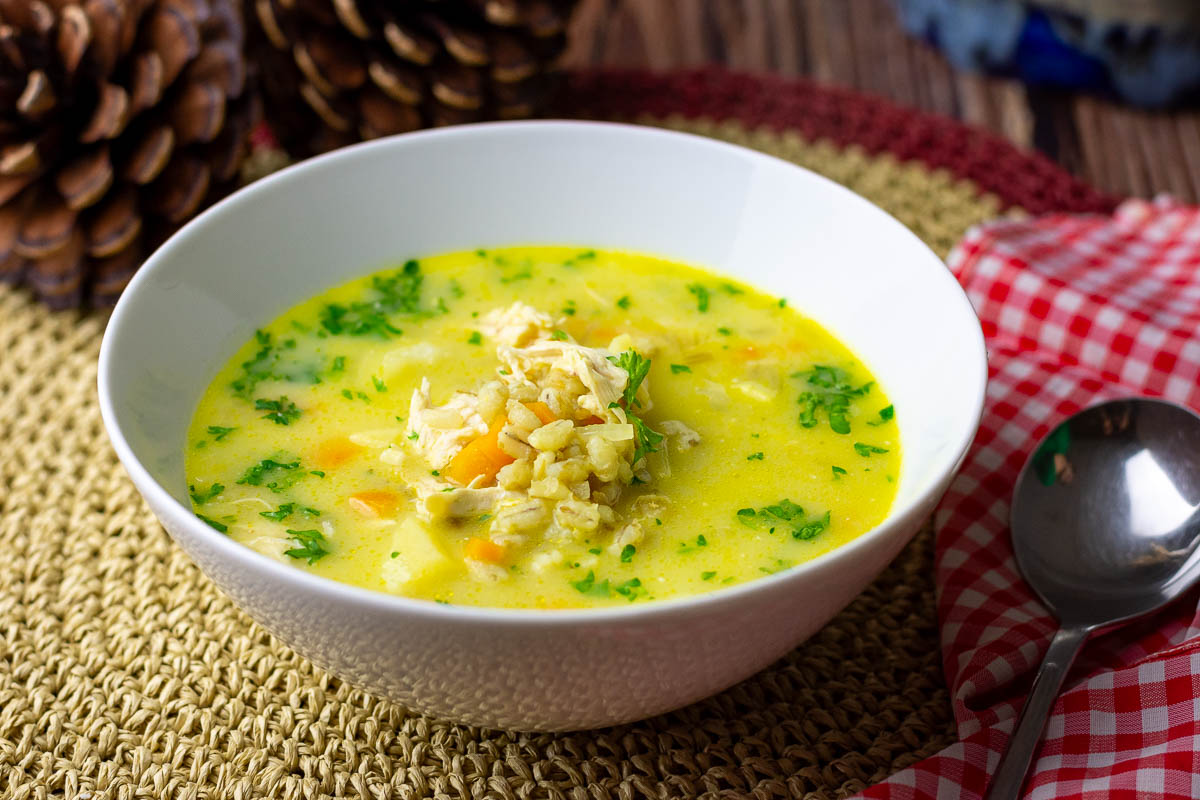
This is a Lithuanian pearl barley and chicken soup: tender chicken, potatoes, carrots and barley in a light broth that smells of allspice and bay, finished with a spoonful of sour cream and far more parsley than looks reasonable. It's cheap, it's filling, and you probably have most of it in the cupboard already.

Jump to:
Some soups get written about. Others just turn up on a Tuesday in November, with a loaf of dark rye on the table beside them. Perlinių kruopų sriuba is the second kind.
And yes, you soak the barley overnight. The packet will tell you that's unnecessary. Every Lithuanian kitchen I've ever stood in has ignored the packet.
This recipe makes two generous bowls, so it's a weeknight soup rather than a pot that follows you around until Friday. It doubles easily if you want leftovers, and with barley soup, leftovers are half the point.
What Makes This Barley Soup Lithuanian
If you grew up on American chicken barley soup, this will look familiar for about five seconds. Then you'll notice what's missing. There's no celery, no thyme, no tomato. Allspice and bay do that job instead, quietly, in the background.
And right at the end, a spoonful of sour cream goes in, turning the broth pale, soft and slightly tangy. That last step is the giveaway. Lithuanians put sour cream in, on or next to almost everything, and soup is no exception.
Perlinės kruopos: the pantry staple
Perlinės kruopos means pearl barley, literally "pearl groats." Kruopos is the everyday Lithuanian word for groats and hulled grains in general, so you'll also see grikų kruopos (buckwheat groats) and manų kruopos (semolina) on the same shelf. Pearl barley was the cheap, filling one, and it ended up in a whole family of soups.
This chicken version is the light, everyday member of that family. Its cousins include perlinių kruopų sriuba su grybais (barley soup with mushrooms, often made with dried forest mushrooms), heartier versions with smoked meat, and sauerkraut soups that get a handful of barley for body. Same grain, very different moods.
Is it the same as Polish krupnik?
Close relatives, not twins. Polish krupnik is also a barley soup, but it usually leans on dried mushrooms and a longer-simmered meat broth. This Lithuanian version is lighter and quicker, and the sour cream finish gives it a completely different character. If you've had krupnik at a Polish grandmother's table, you'll recognize the family resemblance and then notice the creamy, tangy finish that krupnik usually doesn't have.
Ingredient Notes
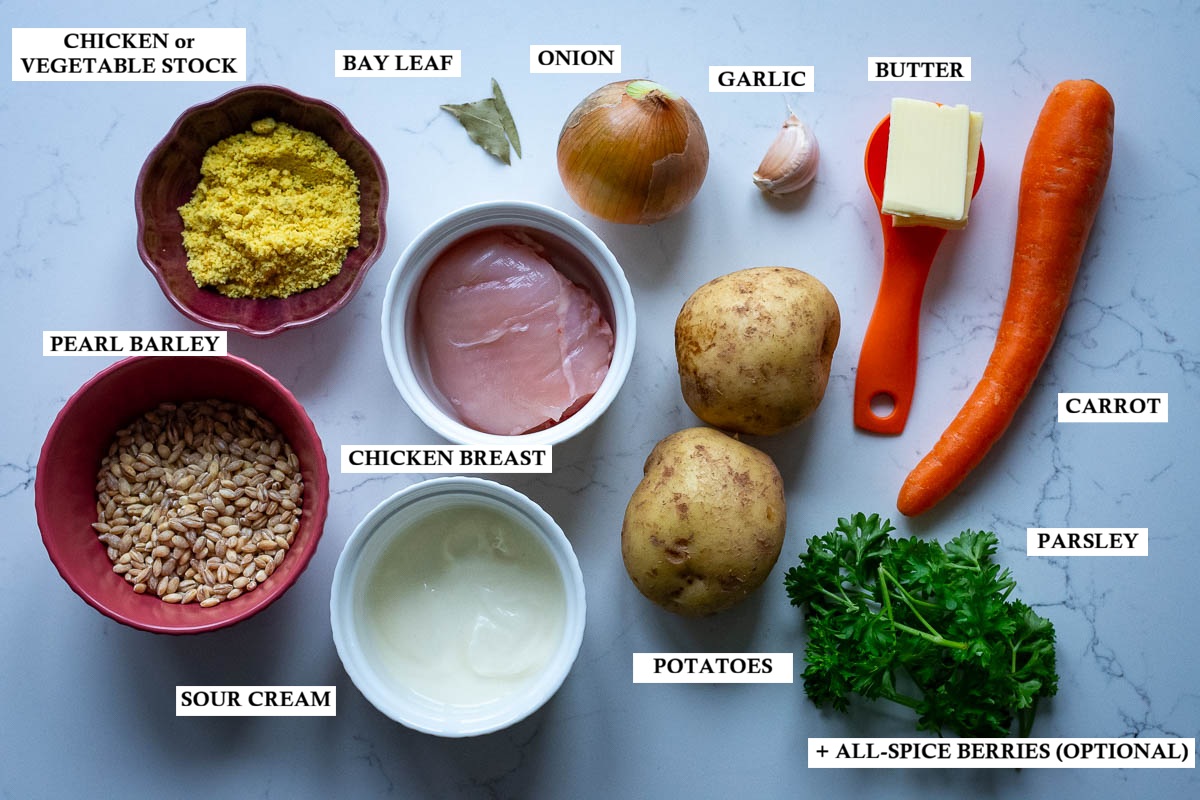
The full quantities are in the recipe card below. Here's what actually matters and why.
Pearl barley. Pearl barley has had its tough outer bran polished off, which is why it cooks in a reasonable time and turns soft and plump in soup. That's what you want here. Hulled barley (sometimes sold as pot barley or whole barley) still has the bran on, so it's chewier and takes a lot longer to cook. You can use it, but see the FAQ on hulled barley before you do.
Chicken broth. Use low-sodium chicken broth (stock) if you can. Barley drinks liquid as it cooks, and as the liquid goes down, the salt concentrates. Regular broth that tastes fine on day one can taste like the sea by day two. If you're using stock cubes, you're in good company. Plenty of Lithuanian home cooks reach for a sultinio kubelis (stock cube) or a pinch of Vegeta, the all-purpose seasoning that lives in half the kitchens of Eastern Europe. Just hold back on extra salt until the end.
Chicken. A boneless breast is the quick, tidy option. It poaches in 15 to 20 minutes and shreds easily. Chicken thighs give you a richer broth and stay juicier, especially if you're reheating leftovers. Bone-in thighs need longer in the pot (the card note covers it), and you'll need to pull out the skin and bones before shredding.
Potatoes, carrots and onion. This is the backbone of almost every everyday Lithuanian soup. Nothing fancy, just cooked properly. Grate the carrot if you want it to melt into the broth and turn it slightly golden. Dice it if you like to see it in the spoon. Both are correct, and every family will tell you theirs is the right one.
Allspice berries and bay leaf. Allspice (kvapieji pipirai, literally "fragrant peppercorns") looks like a fat brown peppercorn and tastes faintly of clove, cinnamon and pepper all at once. A few berries and a bay leaf give the broth that unmistakable Lithuanian soup smell. You'll find whole allspice in the spice aisle of most supermarkets, and always in Polish and Eastern European shops. If you can't get it, leave it out and add an extra bay leaf. The soup will still be good, just a little less Lithuanian.
Sour cream. Full-fat only. Lower-fat sour cream curdles far more easily, even when you temper it carefully. In the US, regular full-fat sour cream works, or look for grietinė (Lithuanian-style sour cream) in Eastern European stores. In the UK, use full-fat soured cream or crème fraîche.
Parsley. Flat-leaf or curly, chopped, and lots of it. Dill works too, or use half of each.
Tips for the Best Pearl Barley and Chicken Soup
Why soak the barley overnight
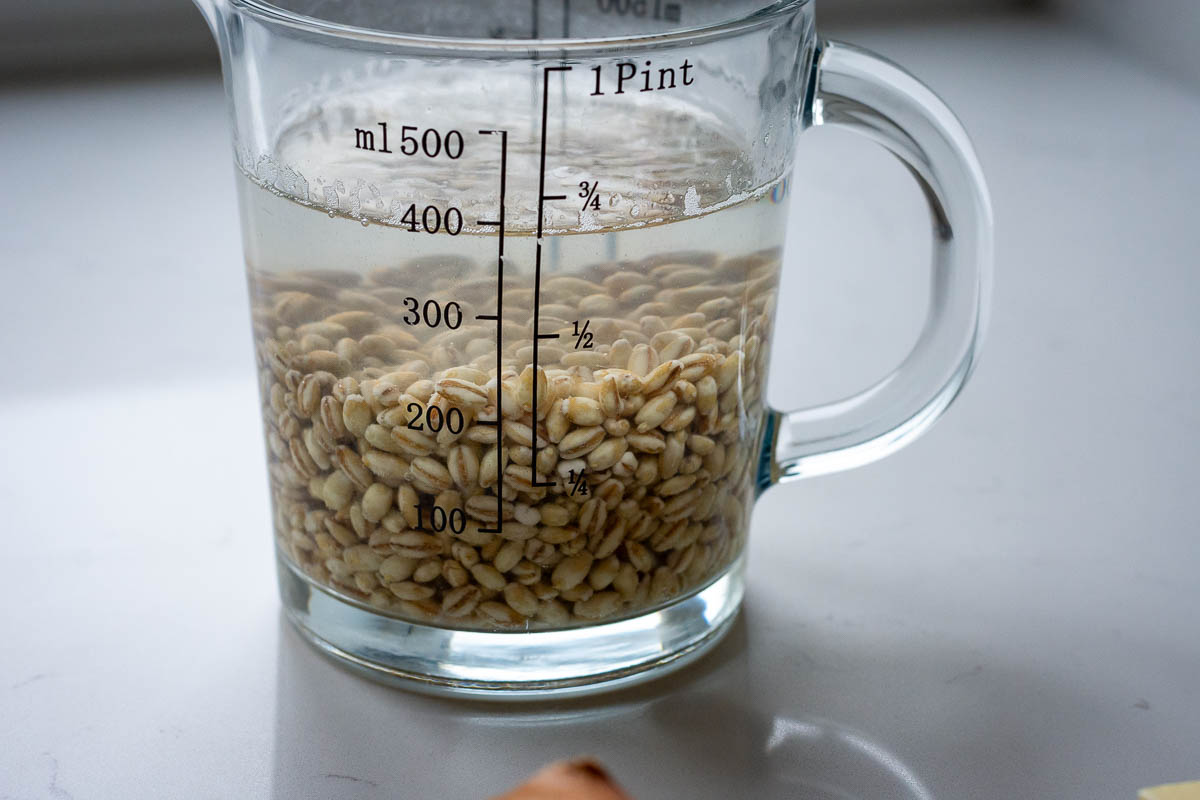
This is the step people are most tempted to skip, and the one Lithuanians are most stubborn about. Soaked barley cooks faster and more evenly, so you don't end up with some grains bursting while others are still chalky in the middle. It also releases less starch into the pot, which means a cleaner-tasting broth that doesn't turn gluey.
It takes 30 seconds of effort the night before. Rinse the barley, cover it with plenty of cold water, and go to bed.
Forgot to soak it? It's not a disaster. Rinse it very well, expect it to need noticeably longer in the pot, and keep a little extra broth or water nearby, because unsoaked barley drinks more. Start checking for doneness after the potatoes go in and keep simmering until the grains are tender.
Rinse until the water runs clear
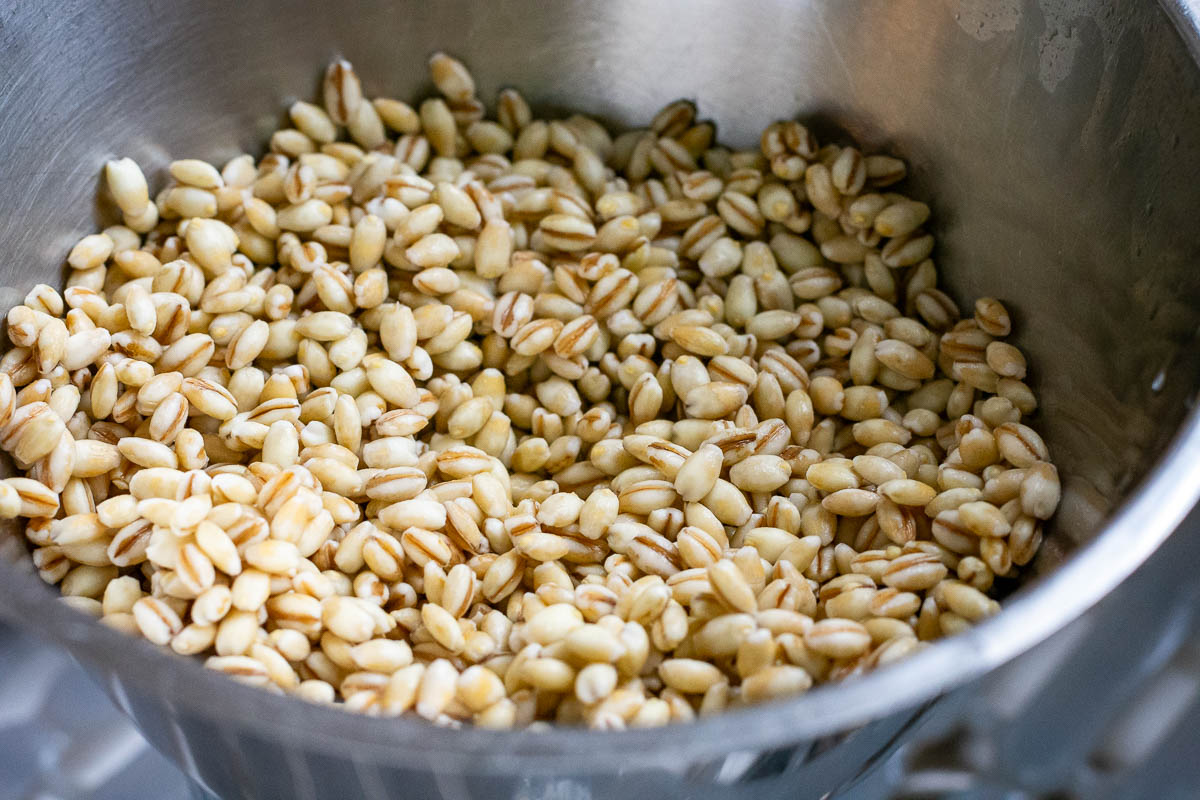
After soaking, drain the barley and rinse it again, swishing it around with your hand until the water stops looking cloudy. That cloudiness is surface starch, and surface starch is exactly what makes barley soup gummy. Skip it and you'll notice.
Don't rush the onion and carrot
It's tempting to throw the vegetables straight into the broth. Don't. Softening them slowly in butter for 6 to 8 minutes, until they're soft and just starting to turn golden, is where most of the sweetness and depth in this soup comes from. There's no stock pot simmering for hours here, so this step matters more than it looks.

Season at the end, not the start
Broths vary wildly in salt, and the barley will concentrate whatever is in there as it cooks. Taste only once the chicken goes back in, then add salt and pepper a little at a time. Salting at the start is the fastest way to an over-seasoned pot you can't fix.
How to temper sour cream so it doesn't split
Sour cream curdles when it hits very hot liquid all at once. The proteins tighten up and separate, and you get little white flecks floating in a thin broth. It still tastes fine, but it doesn't look great. Tempering avoids that by warming the sour cream gradually.
- Take the pot off the heat first.
- Put the sour cream in a small bowl.
- Add a ladleful of hot broth, a little at a time, whisking constantly, until the sour cream is smooth and loose.
- Stir the mixture back into the pot.
- From here on, don't let the soup boil.
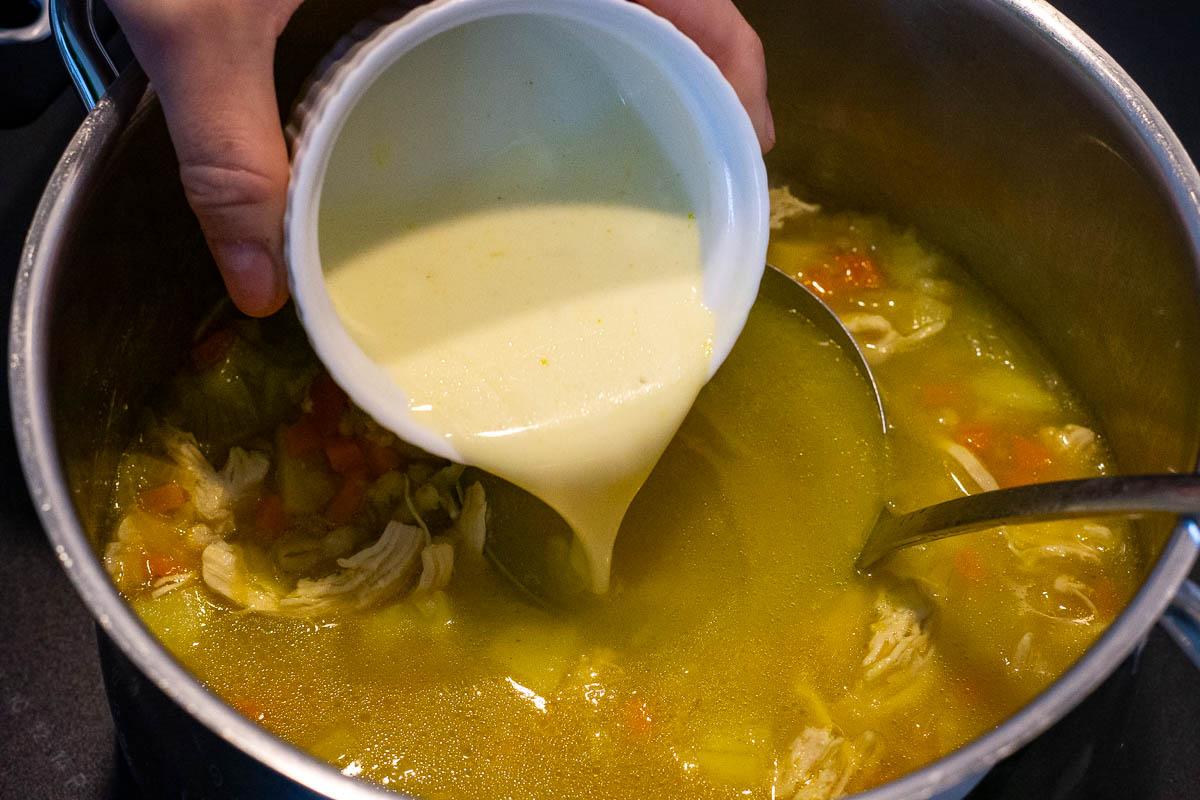
This is also why full-fat matters. The fat cushions those proteins from the heat. Low-fat sour cream has less of that protection, so it splits even when you're careful.
What the barley should feel like
Aim for soft with a slight chew. Bite a grain: it should be tender all the way through, with no chalky white dot in the center, but not so soft it falls apart into mush. Cooking times vary between brands, so trust the bite over the clock.
The thickening problem (and how to handle it)
Barley keeps absorbing liquid long after you turn off the heat. A soup that looks perfect at the stove can be closer to porridge 20 minutes later, and very much porridge the next day. When you serve it, aim for a consistency that's a little looser than you'd like. It'll get there. For leftovers, just stir in a splash of broth or water as you reheat until it's back where you want it.
How to Serve It
With dark Lithuanian rye bread. That's not really a suggestion, it's more of a rule. Juoda duona (literally "black bread") is the dense, slightly sweet Lithuanian rye loaf that turns up at almost every meal, and a thick slice with cold butter next to a bowl of barley soup is about as Lithuanian as lunch gets.
On top, add more parsley or dill and, if you like, an extra spoonful of sour cream right in the middle of the bowl. Nobody will judge you.
It's filling enough to be a main meal on its own. If you'd rather serve it as a starter, keep the portions small and follow it with something lighter, because a full bowl of this before cepelinai (Lithuania's famously hefty potato dumplings) is a commitment.
This is everyday autumn and winter food. It's a Sunday lunch soup, a cold-Tuesday soup, the kind of thing a grandmother puts on the stove for no reason other than "because it's cold outside."
Storage, Reheating and Make-Ahead
Fridge and freezer times are in the recipe card notes. A few extra things worth knowing:
Reheating. Warm it gently over medium-low heat with a splash of broth or water, stirring as it loosens. Once the sour cream is in, don't let it boil, or it may split. Microwaving individual bowls is fine. Go in short bursts and stir between them.
Make it ahead. For the best texture, cook the soup to the end of step 6 (chicken back in, bay leaf and allspice out), cool it and refrigerate. On the day, reheat, loosen it with a little broth, season, then temper and stir in the sour cream just before serving. It tastes freshly made, because the bit that matters most is.
Scaling up. The recipe doubles easily for four. The one thing that doesn't scale perfectly is the liquid, since a bigger pot evaporates differently and more barley absorbs more. Keep an extra cup or two of broth on hand and add it as needed.
Variations
- Mushroom. Add a few dried porcini (soaked, chopped, and their soaking liquid strained into the pot) or a handful of sliced fresh mushrooms softened with the onion. This brings it closer to the classic su grybais (with mushrooms) version.
- Smoked. A little diced smoked pork or a few slices of smoked sausage, simmered with the broth, makes a heartier winter soup. Taste before salting, because smoked meat brings plenty of its own.
- Vegetarian. Use vegetable broth, skip the chicken and double up on mushrooms. Dried porcini give the broth the depth the chicken would have.
- Leftover or rotisserie chicken. Skip the poaching step and simmer the barley straight in the broth with the bay and allspice. Stir in the cooked chicken at the end, just long enough to heat through.
- Chicken thighs. For a richer broth, swap the breast for bone-in thighs. The recipe card note has the timing.
- Dill instead of parsley. Or both. Dill makes it taste a little more summery, parsley keeps it classic.
FAQs
You don't have to, but for this soup it's worth it. Soaked barley cooks more evenly and gives a cleaner, less gluey broth. See why soak the barley overnight above.
Usually because it went into soup that was too hot, wasn't tempered first, or was a low-fat sour cream. Once it's split, you can't fully undo it, though a good whisk can smooth it out a little. The good news is that it tastes exactly the same. Next time, take the pot off the heat and temper with full-fat sour cream.
Not quite. Polish krupnik is a close cousin, usually made with dried mushrooms and a longer-simmered broth, and it rarely gets the sour cream finish. To add to the confusion, in Lithuania krupnikas is something else entirely: a spiced honey liqueur. So if a Lithuanian relative offers you krupnikas after dinner, don't expect a bowl of soup.
Yes, but freeze it before the sour cream goes in. Dairy tends to split when frozen and reheated. Thaw, reheat with a splash of broth, then temper fresh sour cream into it.
The barley kept absorbing liquid as it sat. It's completely normal. Stir in broth or water as you reheat until it's the consistency you like, then check the seasoning again.
More Lithuanian Soups
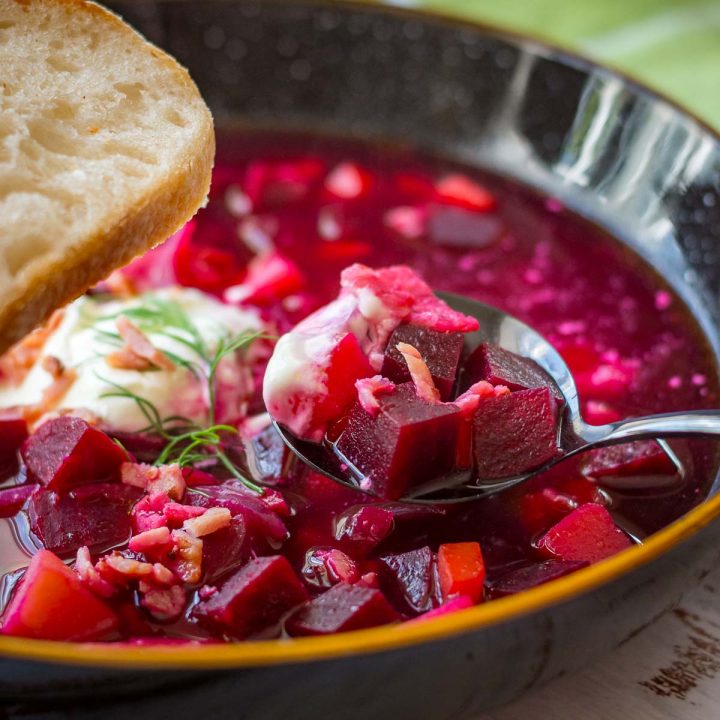
If this one's on repeat at your place, try the summer opposite: Šaltibarščiai (Lithuanian cold beet soup). For more soup recipes, have a look below:


Lithuanian Chicken and Pearl Barley Soup (Perlinių Kruopų Sriuba)
Ingredients
- ⅓ cup (60 g) pearl barley
- 1 boneless skinless chicken breast (about 5 oz / 150 g)
- 4 cups (1 liter) low-sodium chicken broth (stock), or 2 cups broth plus 2 cups water
- 1 bay leaf
- 3-4 allspice berries optional
- 1 tablespoon butter
- 1 small onion finely diced
- 1 garlic clove thinly sliced
- 1 medium carrot, diced
- 2 medium potatoes, about 7 oz / 200 g, peeled and cut into ½-inch cubes
- salt to taste
- freshly ground black pepper
- 2 tablespoon (30 g) full-fat sour cream
- 1 small handful fresh parsley chopped
Instructions
The Night Before:
- Soak the barley. The night before, rinse the barley and cover it with plenty of cold water. Leave it to soak overnight (8–12 hours). In the morning, drain and rinse until the water runs clear.
Make The Soup:
- Poach the chicken. Put the chicken breast, broth, bay leaf and allspice in a medium pot. Bring slowly to a gentle simmer, skimming off any foam that rises. Simmer for 15–20 minutes until the chicken is cooked through. Lift it out onto a plate and set aside.
- Cook the barley. Add the soaked barley to the pot and simmer gently, partly covered, for 15 minutes.
- Soften the vegetables. While the barley cooks, melt the butter in a small frying pan over medium-low heat. Add the onion, garlic and carrot and cook for 6–8 minutes, stirring now and then, until soft and lightly golden. Don't rush this part. It's where a lot of the flavor comes from.
- Add the potatoes. Add the potatoes and the softened onion and carrot to the pot. Simmer for 15 minutes, until the potatoes are tender and the barley is soft but still has a little chew.
- Return the chicken. Shred or dice the chicken and stir it back into the soup. Fish out the bay leaf and allspice berries if you can find them.
- Season. Taste first, then add salt and pepper. How much salt you need depends entirely on your broth, so don't season until now.
- Temper the sour cream. Take the pot off the heat. Spoon the sour cream into a small bowl, then whisk in a ladleful of hot broth, a little at a time, until smooth and loose. Stir this back into the soup. Don't let the soup boil once the sour cream is in, or it may split.
- Serve. Ladle into bowls and scatter generously with parsley.
Notes





Leave a Reply