

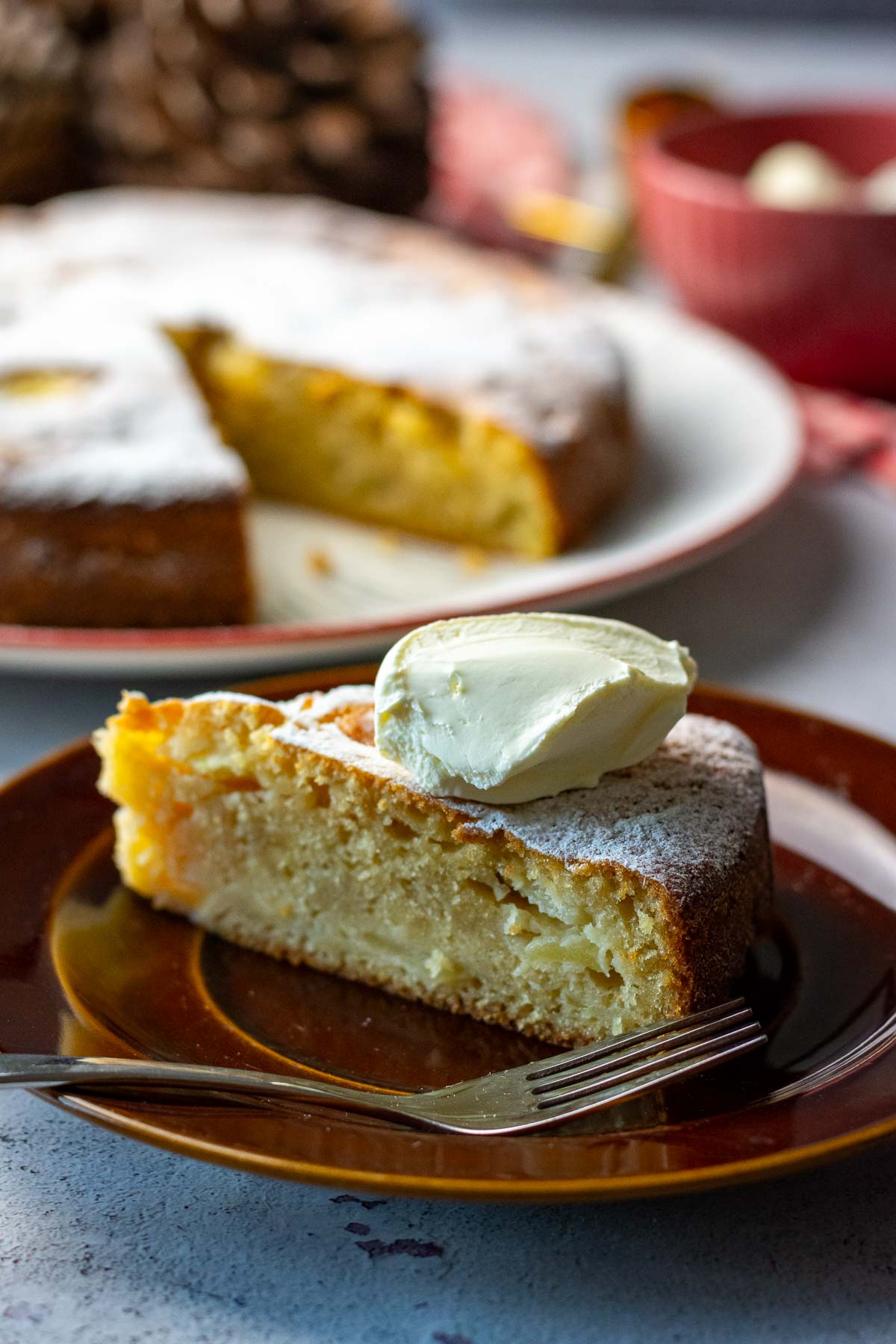
Apple cake shows up on a lot of Lithuanian tables, and pretty much every family has their own version they'll quietly insist is the right one. This is one of many variations of apple cake we make in Lithuania — obuolių pyragas, if you want the Lithuanian name for it — and it's one of my favorites for a specific reason: unlike almost any other apple cake I make, I actually prefer to eat this one cold. Give it time to cool completely and the apples melt right into the crumb, and a spoonful of yogurt (or kefir, if that's what's open in your fridge) keeps it moist for days rather than just the day you bake it.

Jump to:
- Recipe Highlights
- Obuolių Pyragas: A Lithuanian Apple Cake Tradition
- Why Yogurt (or Kefir) Works Here
- What Apples to Use for Lithuanian Apple Cake
- Ingredient Notes
- Step-by-Step Method
- Recipe FAQs
- Recipe Tips
- Storage
- How To Serve Lithuanian Apple Cake?
- More Lithuanian Recipes You'll Love
- Lithuanian Apple Cake (Apple Yogurt Cake)
Recipe Highlights
A one-bowl batter. No creaming, no resting, no folding in stages — beat, mix, fold in the apples, bake.
Better the next day. Most cakes are best fresh. This one actually improves once it's fully cooled, which makes it a genuinely good make-ahead option.
Yogurt or kefir, your choice. Either works, and each gives you a slightly different result — more on that below.
Feeds a crowd without much effort. One 18cm tin gives you eight portions from a handful of pantry staples and three apples.

Obuolių Pyragas: A Lithuanian Apple Cake Tradition
Lithuania is a country of serious cake lovers, and apple cake is one of the most common ones you'll find, alongside things like Lithuanian Farmer's Cheese Roll Cake, Lithuanian Honey Cake, and Lithuanian Plum Cake.
What sets obuolių pyragas apart from a lot of other apple cakes is the yogurt or kefir folded into the batter — it's what keeps this one so moist, and it's exactly why I think it holds up better cold than most cakes do.

Why Yogurt (or Kefir) Works Here
Yogurt and kefir both do the same two jobs in this batter: they add moisture that plain milk doesn't, and their acidity reacts with the baking powder to help the cake rise properly. Kefir is slightly thinner and tangier than yogurt, so if you use it instead, expect a marginally lighter crumb and a touch more tang — either one works, this isn't a recipe where you need to go hunting for the "correct" dairy.
It's also the reason this cake keeps so well: the fat and acidity in the yogurt or kefir slow down how quickly the crumb dries out, which is part of why it's still good, if not better, a day or two later.
What Apples to Use for Lithuanian Apple Cake
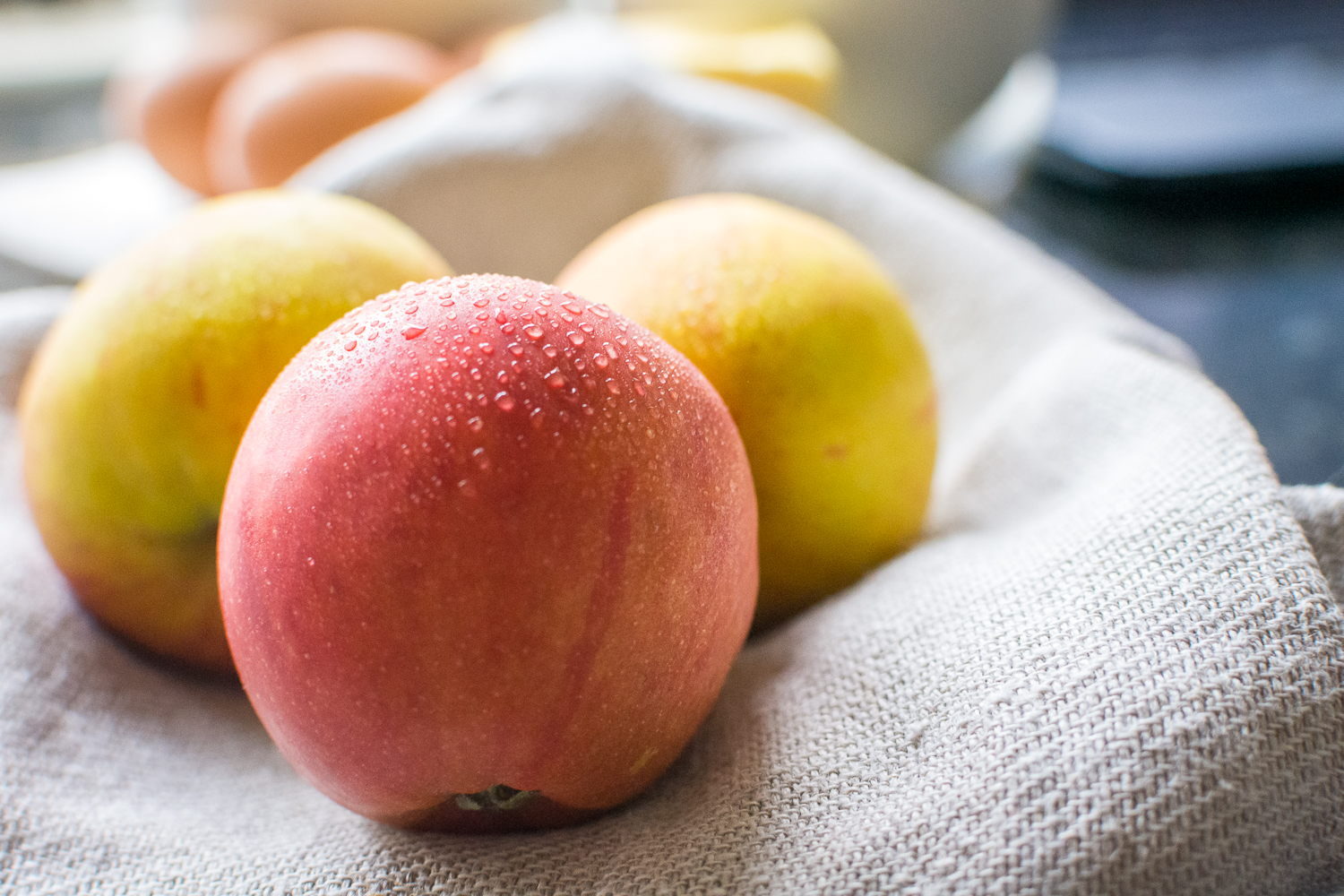
Use apples that are tart and break down when cooked — Granny Smith is the reliable choice. You want the apples to soften and half-disintegrate into the batter as it bakes, not hold their shape in neat slices, since that's what gives this cake its moist, almost custardy texture around the fruit.
Ingredient Notes
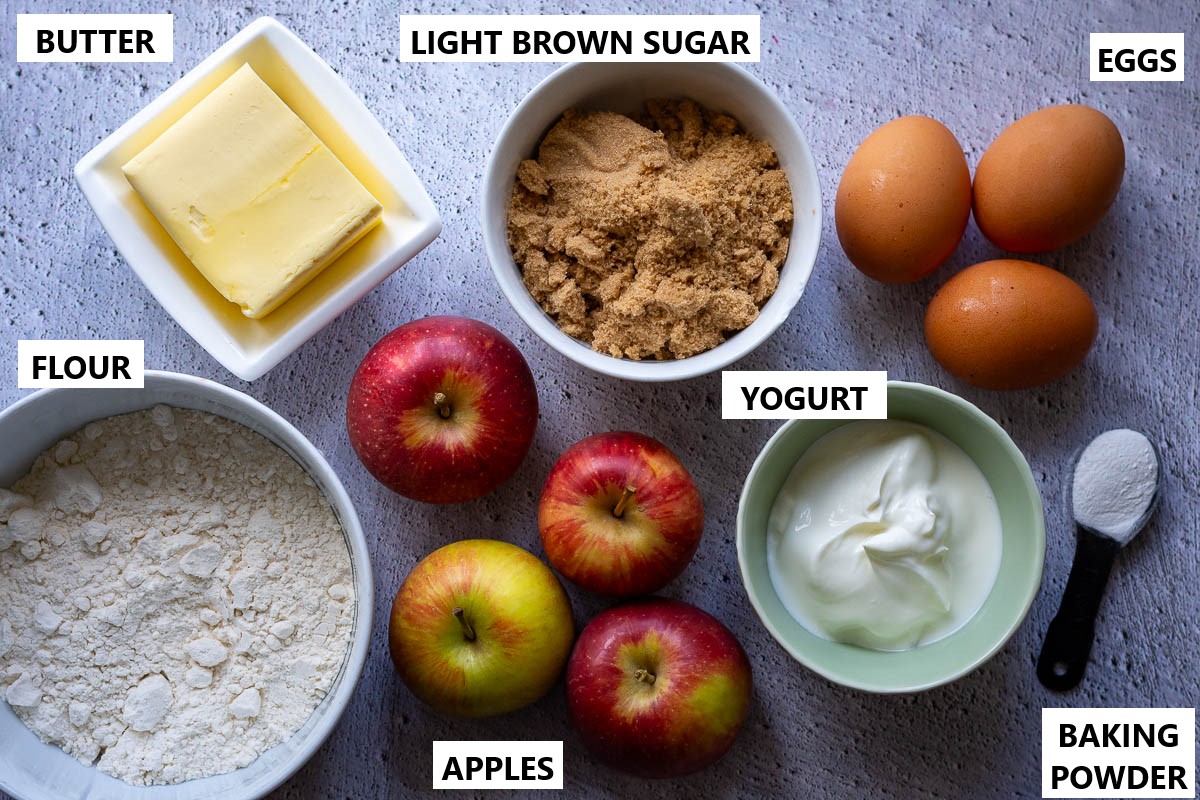
You only need a handful of everyday ingredients here, and the full quantities are in the recipe card below.
Light brown sugar can be swapped for dark brown sugar if you want a more pronounced molasses flavor coming through.
Natural yogurt or kefir — either works, see above for how they differ.
Butter should be melted and left to cool slightly before it goes into the egg mixture, so it doesn't scramble the eggs on contact.
Find the full ingredient quantities and instructions in the recipe card below.
Step-by-Step Method
Step 1: Preheat the oven to 180°C fan (350°F). Generously grease an 18cm (7in) springform cake tin with butter and line the base with a circle of baking parchment.
Step 2: Melt the butter in a small saucepan and leave it to cool down slightly.
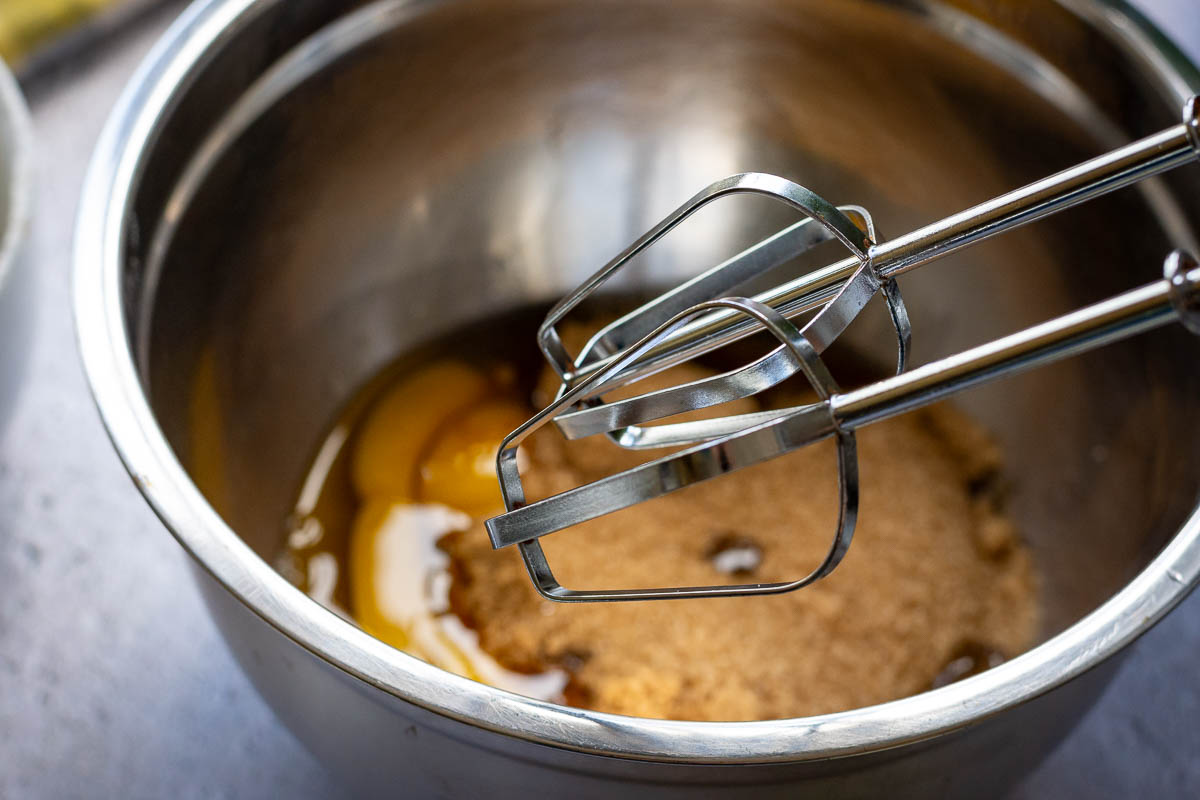
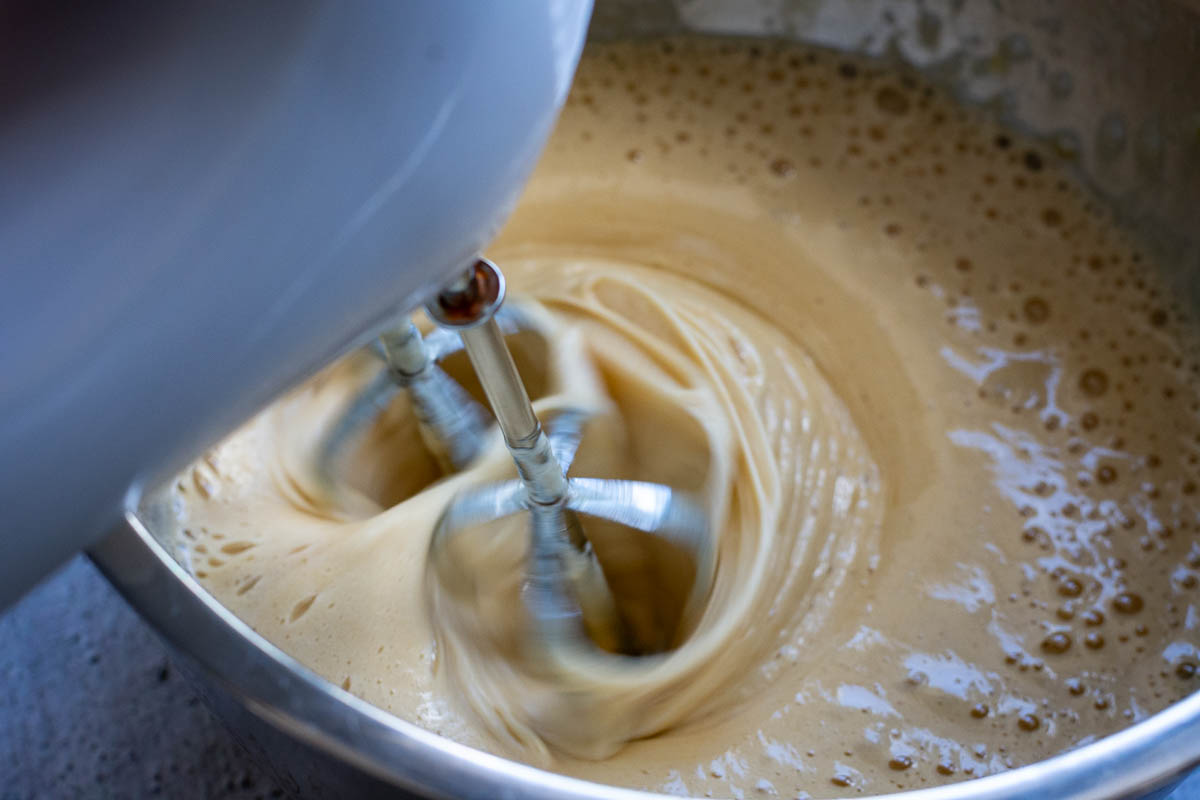
Step 3: Using an electric handheld mixer, beat the eggs and sugar for a couple of minutes until thickened and doubled in size.
Step 4: Pour the cooled melted butter and the yogurt (or kefir) into the egg mixture and beat again for about 30 seconds until well combined.
Step 5: In a separate bowl, sift together the flour and baking powder.
Step 6: Add the dry ingredients to the egg mixture, add a pinch of salt, and carefully fold with a rubber spatula until just incorporated.
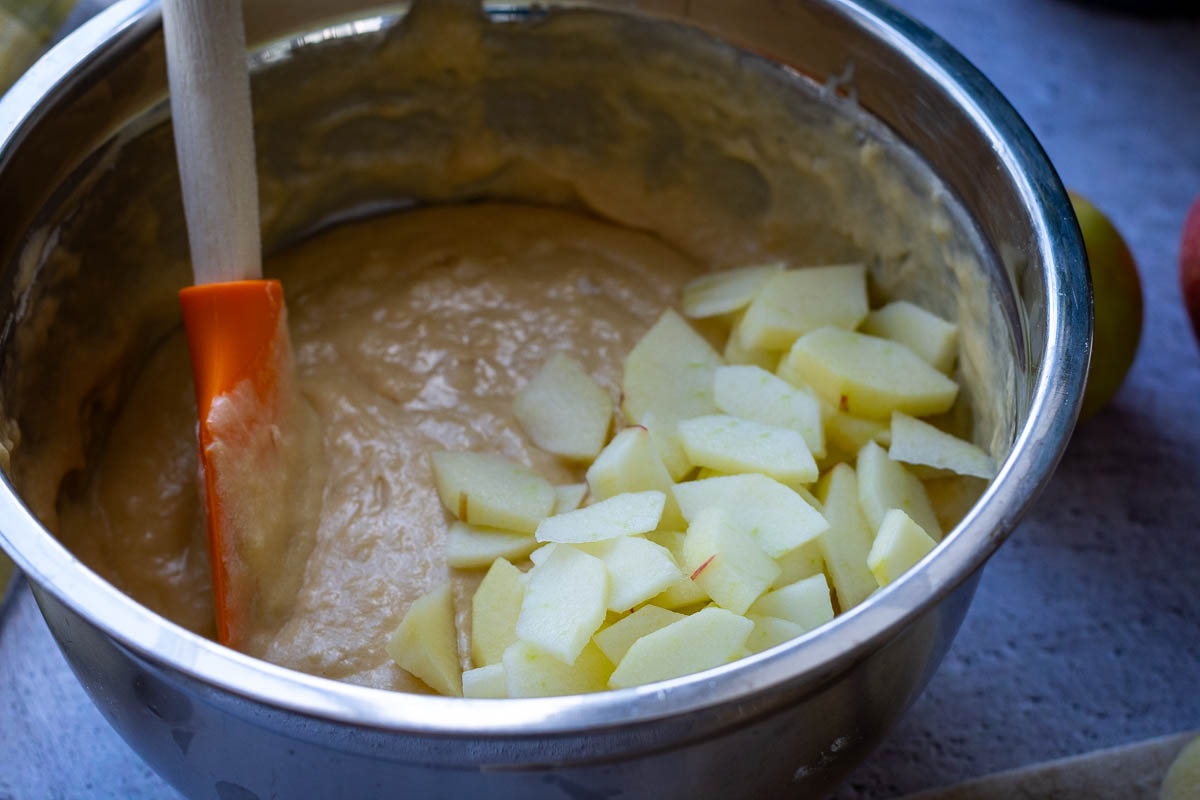
Step 7: Add the thinly sliced apples and mix just enough to combine — don't overwork the batter here.
Step 8: Pour the batter into the prepared tin and bake for 40–45 minutes, until a skewer inserted into the middle comes out clean.
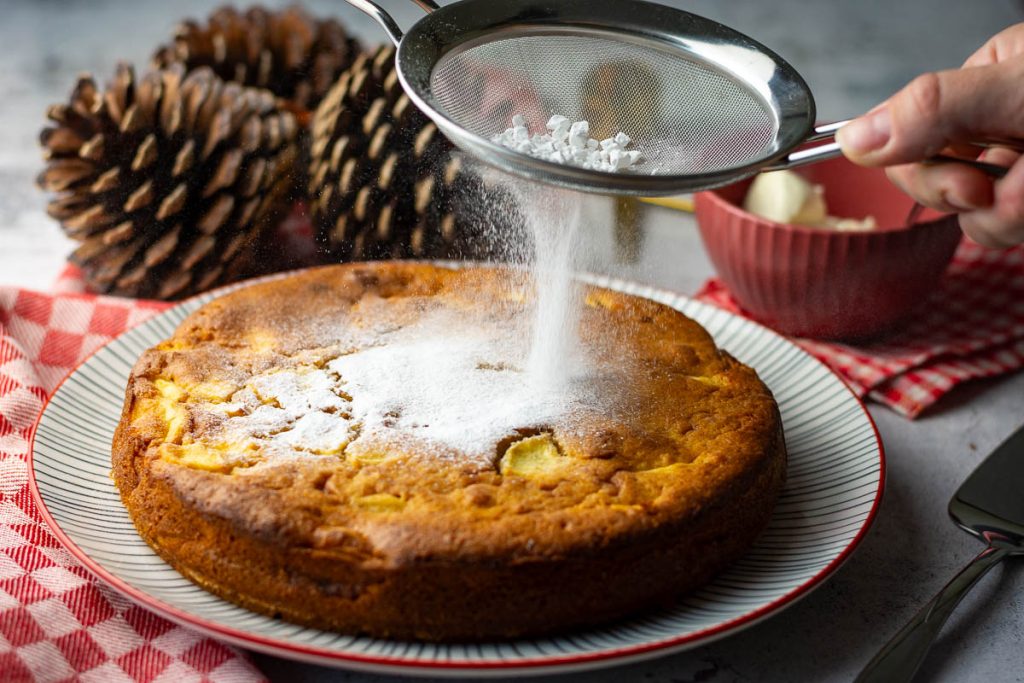
Step 9: Leave the cake in the tin for 5 minutes to firm up, then turn it out, peel off the parchment, and let it cool to room temperature before slicing.

Recipe FAQs
Kefir is a fermented dairy product that originated in the Caucasus region and is widely consumed around the world. It is made by fermenting milk with kefir grains, which are a combination of yeast and bacteria. The fermentation process produces a tangy, slightly effervescent drink with a texture similar to yogurt but thinner.
Using kefir in baking, especially in recipes like Lithuanian apple cake, offers several benefits. Firstly, kefir's acidity helps activate baking powder, leading to a better rise in the cake and creating a lighter texture. Secondly, kefir adds moisture to the batter, resulting in a moister and more tender cake. Finally, kefir imparts a subtle tangy flavor that complements the sweetness of the apples, enhancing the overall taste profile of the cake. Its probiotic properties may also add a slight complexity to the final product. As a traditional ingredient in Lithuanian cuisine, kefir brings a touch of authenticity to the apple cake, making it a cherished treat in the region.
Absolutely! Leave it to cool down slightly when you take it out of the oven, at least 20 minutes, and serve it warm with ice cream or a dollop of sour cream. But if you ask me, this is the one apple cake that I personally prefer cold. The apples really blend into the cake whilst cooling, making it a very moist and delicious cake.
Yes! And you will get a good arm workout too - so win-win! Beat the eggs and sugar vigorously for approx 5-6 minutes. The sugar needs to dissolve and the egg mixture needs to increase in volume and thicken. Beat the mixture again after adding yogurt (or kefir) and butter until everything is well incorporated.
Cinnamon, a pinch of nutmeg and a pinch of ground cloves! It's the most amazing aromatic combination of spices!
This is usually down to how much liquid your particular apples released during baking — juicier apples can need extra time. If the skewer test isn't coming out clean at 40–45 minutes, give the cake another 5–10 minutes rather than pulling it early, and check again from there.
Recipe Tips
- Let the cake cool completely before deciding how you feel about it. Warm from the oven it's a good, fairly ordinary apple cake. Fully cooled, it's a different, better cake — give it the time.
- Don't skip cooling the melted butter. Butter straight off the heat can scramble the eggs on contact, which shows up as little cooked flecks in the batter.
- If the top browns before the skewer comes out clean, loosely tent the tin with foil for the last 10 minutes rather than pulling it early.
- If your apples release a lot of liquid as they bake and the middle looks underbaked at 40–45 minutes, give it another 5–10 minutes and check again rather than assuming something's gone wrong — this varies with how juicy your particular apples are.
Storage
Store in an airtight container at room temperature for up to 3 days. It doesn't freeze well — the apples release too much moisture on thawing and the texture turns waterlogged rather than moist, so this one's best made to eat within a few days rather than stashed away.
How To Serve Lithuanian Apple Cake?
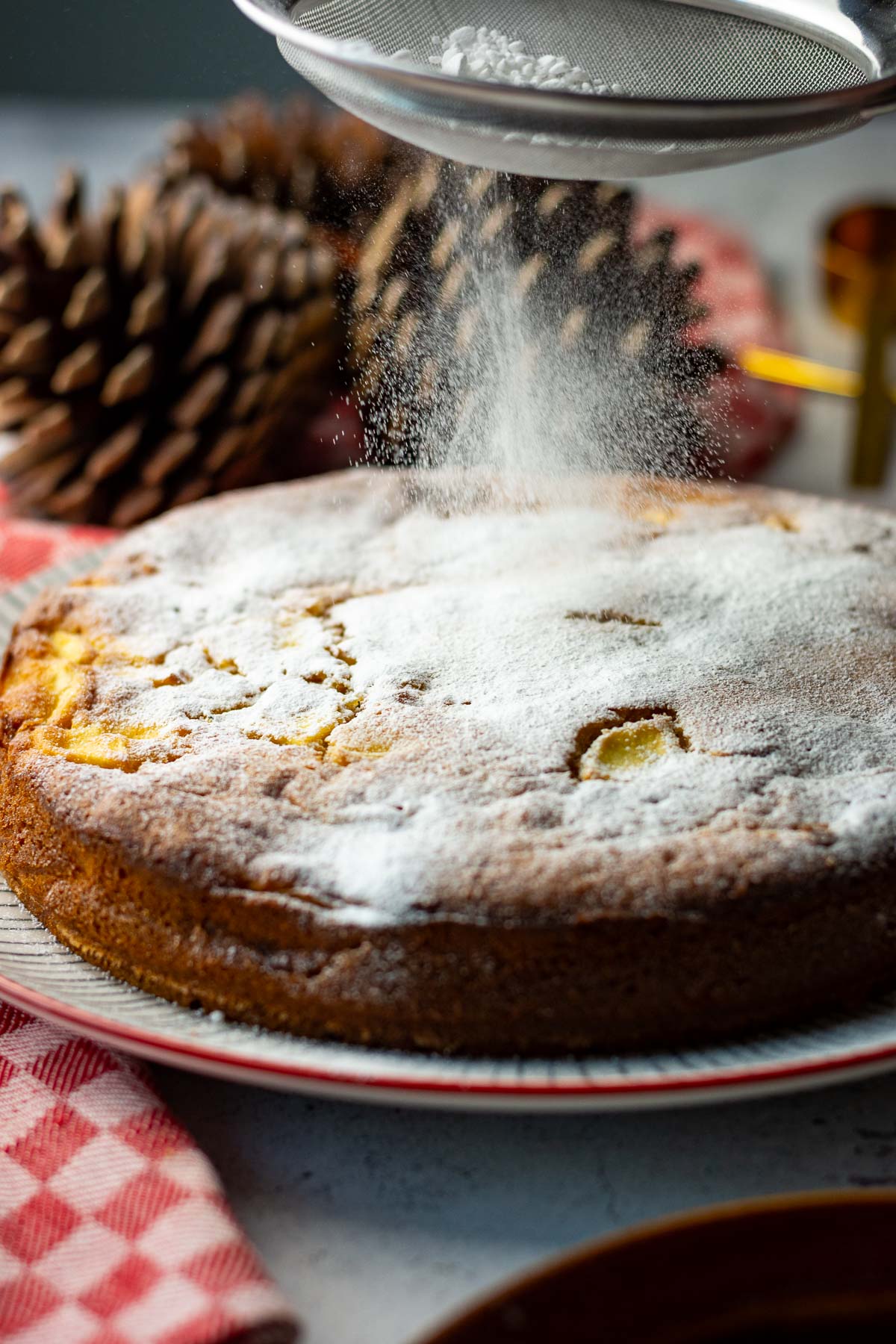
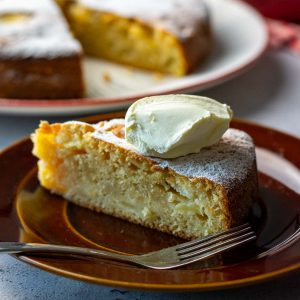
I eat this cold, straight from the fridge, most of the time — no embellishment needed. If you want it warm instead, a dollop of sour cream or crème fraîche, a spoon of whipped cream, or a scoop of vanilla ice cream all work well against the tartness of the apples.
More Lithuanian Recipes You'll Love
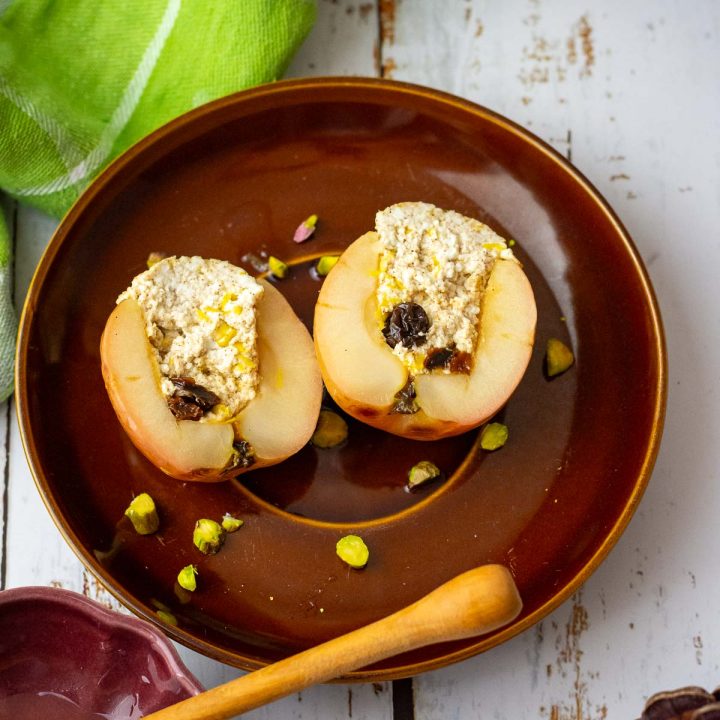
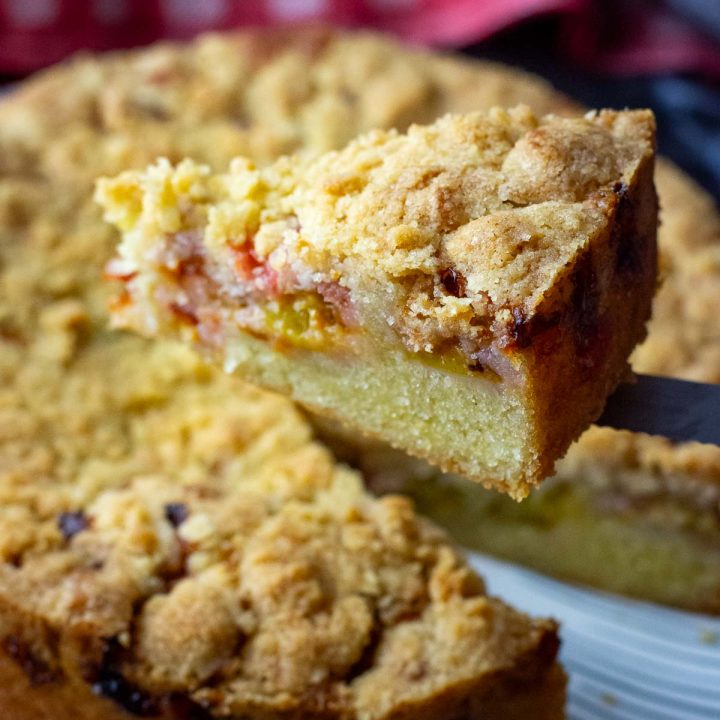
If you like this one, Lithuanian Grated Apple Pancakes and Baked Apples Stuffed with Farmer's Cheese both make good use of the same tart apples. For more of that yogurt-and-kefir moisture trick, Lithuanian Kefir Pancakes is worth trying next, and if cake is what you're really after, Lithuanian Farmer's Cheese Cake (Draugystės Pyragas) is another family staple built the same comforting, no-fuss way.
Lithuanian Apple Cake (Apple Yogurt Cake)
Equipment
- Electric Handheld Mixer
- 18cm (7in) Springform Cake Pan
Ingredients
- 125 g (½ cup plus 1 tablespoon) butter, melted and cooled slightly
- 150 g (¾ cup, packed) light brown sugar
- 3 medium eggs
- 100 g (⅓ cup plus 1 tablespoon) natural yogurt or kefir
- 150 g (1¼ cups) all-purpose flour
- 1 teaspoon baking powder
- 1 pinch salt
- 3 medium apples peeled, cored and thinly sliced
Instructions
- Preheat the oven to 180°C (350°F). Generously grease an 18cm (7in) springform cake tin with butter and line the base with a circle of baking parchment.
- Melt the butter in a small saucepan and set aside to cool slightly — it shouldn't be hot when it goes into the egg mixture in Step 4, or it can scramble the eggs.
- Using an electric handheld mixer, beat the eggs and sugar together for 2–3 minutes, until the mixture has thickened, turned pale, and roughly doubled in volume.
- Add the cooled melted butter and the yogurt (or kefir) to the egg mixture and beat for a further 30 seconds, until fully combined with no streaks of butter visible.
- In a separate bowl, sift together the flour and baking powder.
- Add the flour mixture and the pinch of salt to the egg mixture. Fold gently with a rubber spatula just until no dry flour remains — a few small lumps are fine, don't overmix.
- Add the sliced apples and fold in just enough to distribute them evenly through the batter.
- Pour the batter into the prepared tin and bake for 40–45 minutes, until a skewer inserted into the centre comes out clean.
- Leave the cake in the tin for 5 minutes to firm up, then turn it out onto a rack, peel away the parchment, and leave to cool completely to room temperature before slicing.
Video
Notes
Leave a Reply