

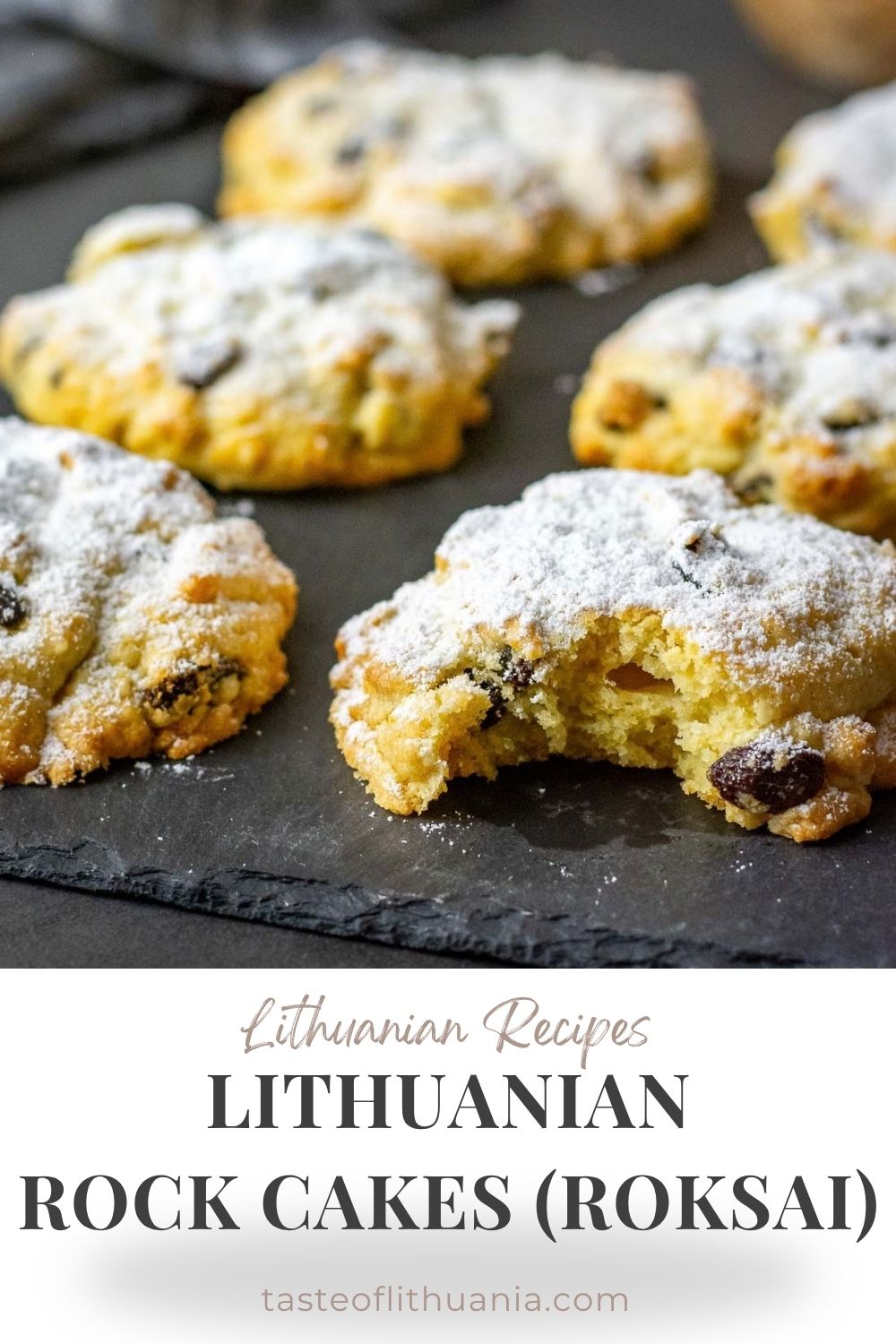
If you're reading "rock cakes" and picturing something that could chip a tooth, fair enough. Despite the name, these are small, craggy raisin cakes with a crisp edge and a soft, buttery middle, somewhere between a scone and a cookie. These Lithuanian rock cakes, called roksai (ROK-sai) in Lithuanian, are made in one bowl with a spoon and are done in about 35 minutes.
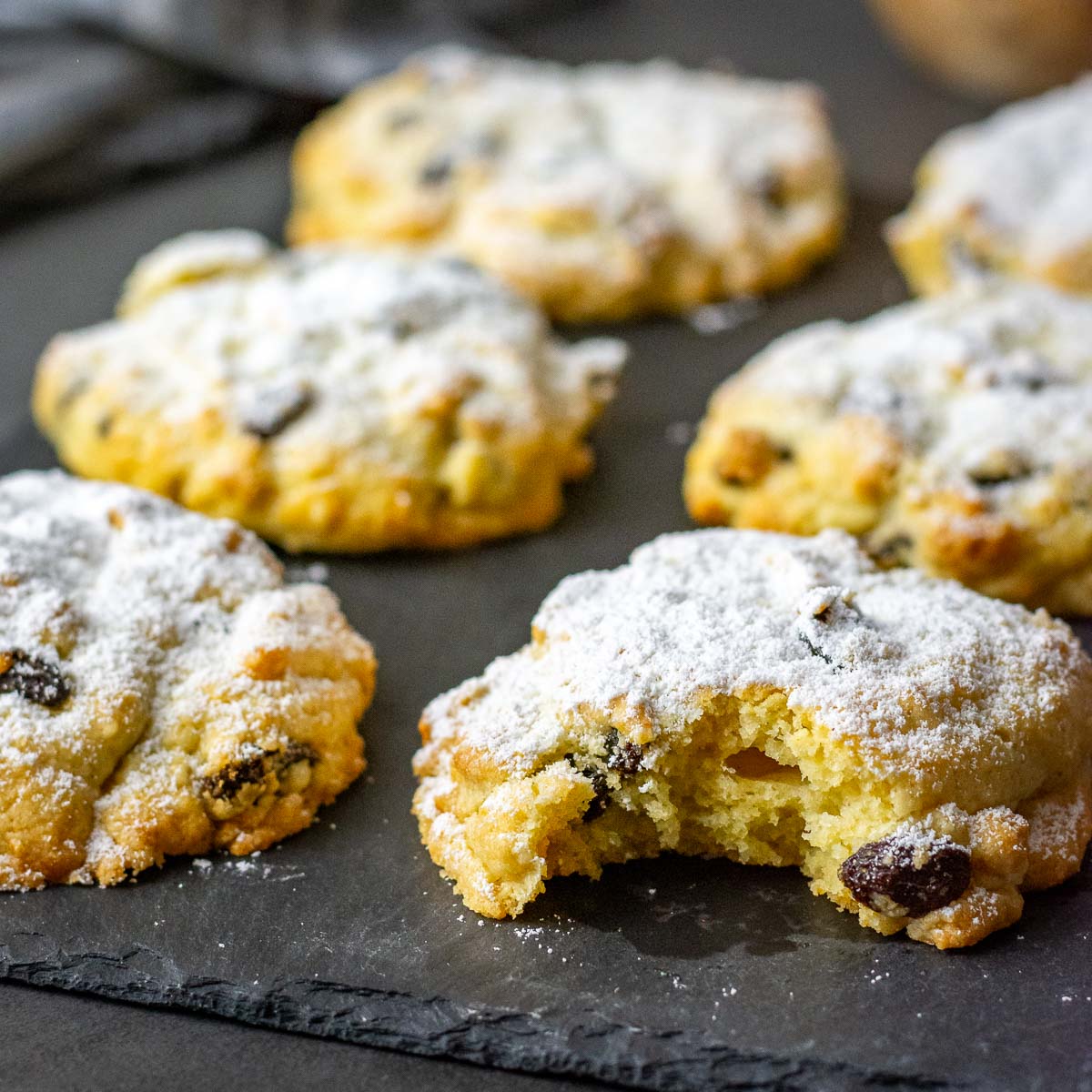
This version is the soft kind, and it has sour cream in it. Keep reading if you want to know why that matters, and why a Lithuanian baker is making a British cake at all.
Jump to:

Recipe Highlights
TIMING: 15 minutes of work and 15 minutes in the oven. No mixer.
TEXTURE: Crisp, craggy edges with a soft, buttery middle.
THE SOUR CREAM: Keeps the crumb tender and nudges the flavor toward the Lithuanian pantry.
YIELD: 9 roksai.

I grew up buying roksai at the school canteen and at grocery stores, and not once did I think they weren't quintessentially Lithuanian. As it turns out, roksai are the English (or Scottish) rock cakes with a Lithuanian spelling. They're a British bake, named for their lumpy, rocky look and often described as a thrifty wartime treat. Somewhere along the way Lithuanian bakers borrowed the recipe and kept the name.
I won't pretend they're anything to rave about. Roksai were never life-changing, just a cheap, no-frills snack that did the job. But that's exactly why I like them. They stand for simplicity and humble beginnings, something plenty of Lithuanians will recognize, and this version just happens to be made with real butter and sour cream.
What are roksai (and why are they called that)?
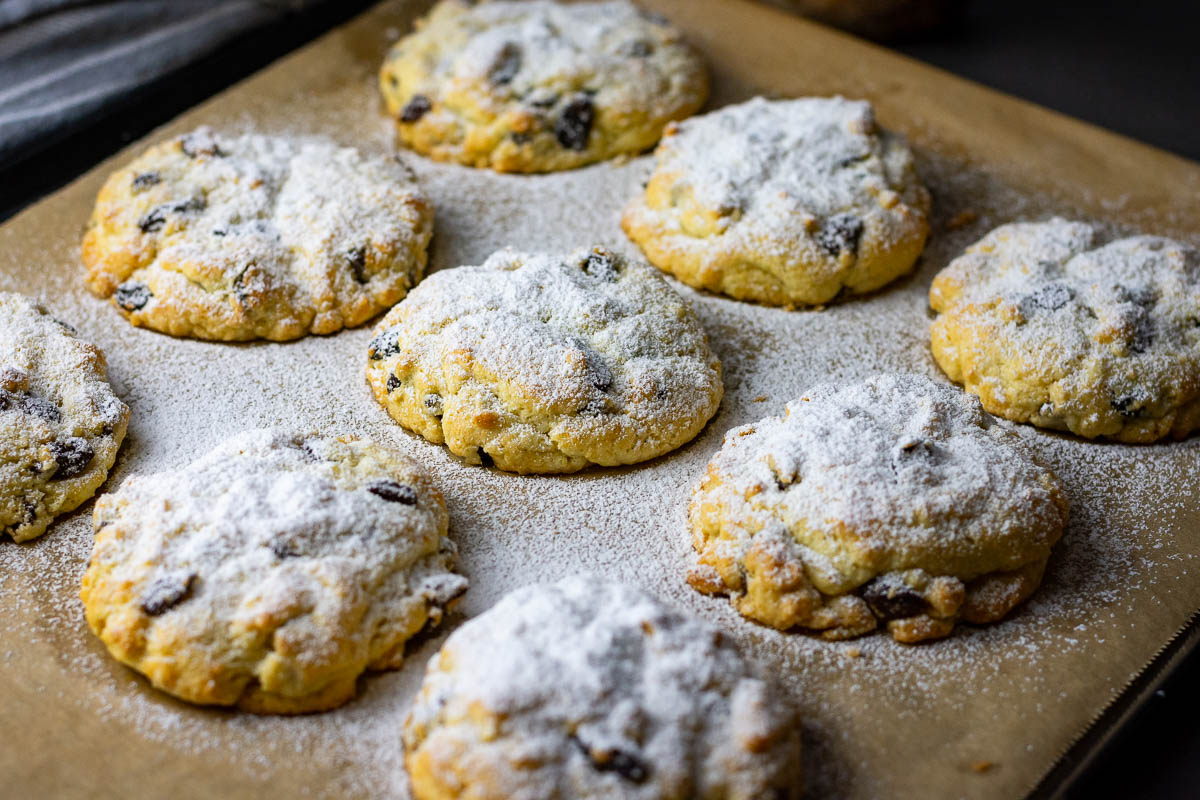
Roksai is simply the English "rock cakes" written the way Lithuanians say it. There is no old Lithuanian dish behind the name. Rock cakes are a British bake, named for their lumpy, rocky look, and they are often described as a lean wartime treat made with whatever was in the cupboard. Lithuanian home bakers picked the recipe up (some Lithuanian baking blogs say so outright, and some trace theirs to an English cookbook) and kept the name, spelled the way it sounds.
I would rather tell you that than dress it up as a centuries-old tradition. It is a borrowed recipe that became a normal part of everyday Lithuanian baking, which is how a lot of home food works.
Ingredient Notes
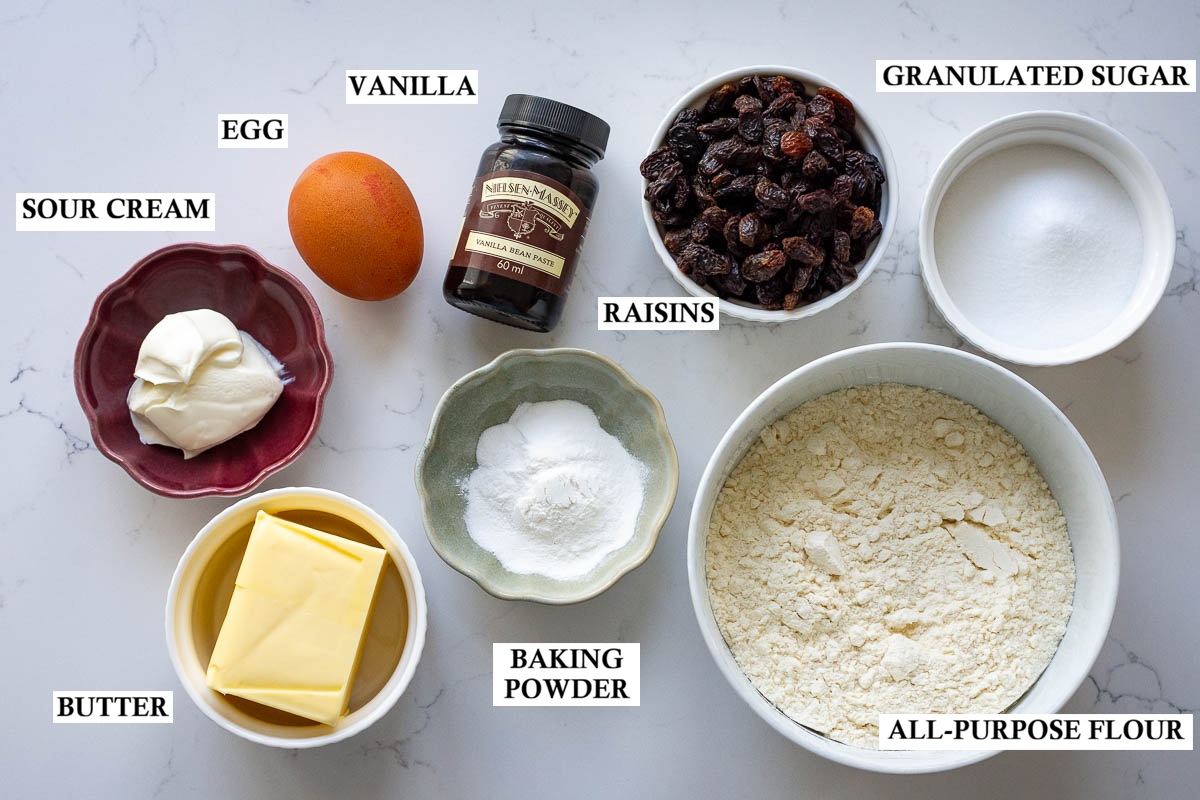
Nothing here is hard to find. A few notes on what matters:
- All-purpose flour and baking powder. British recipes usually use self-raising flour. Here the baking powder does all the lifting, so don't cut it back. If you only have self-raising flour, see the FAQs.
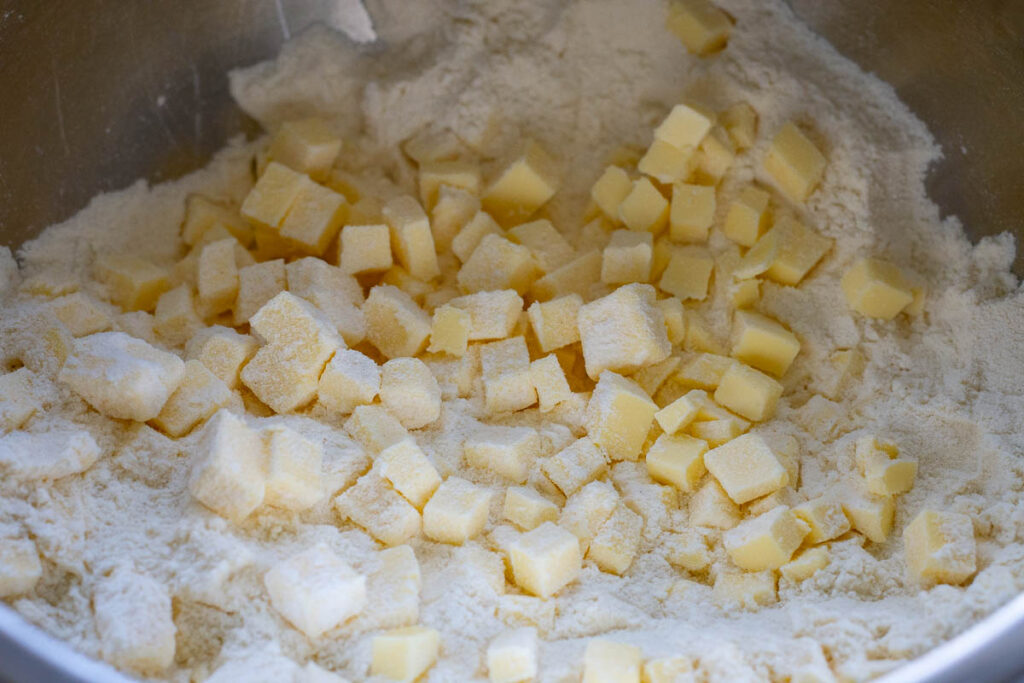
- Cold butter. This is the one that decides whether you get craggy cakes or flat, greasy ones. Warm butter melts into the flour before it reaches the oven. Cut it into small cubes and keep it in the fridge until you need it.
- Full-fat sour cream. It adds tenderness and a slight tang. Low-fat sour cream is runnier and can make the dough sticky, so stick with full-fat if you can.
- Raisins. Standard raisins are what I use. If yours are very dry, soak them in hot water for 10 minutes and pat them dry first. Currants or sultanas will also work.
- Vanilla extract. It needs good quality, strong-flavoured extract or vanilla bean paste to mask a generous amount og bakig powder needed for the bake.
Method
1. Heat the oven. Preheat to 350°F (180°C), or 325°F (160°C) if you have a fan oven. Line a large baking sheet with parchment paper. Use two sheets if yours are small.
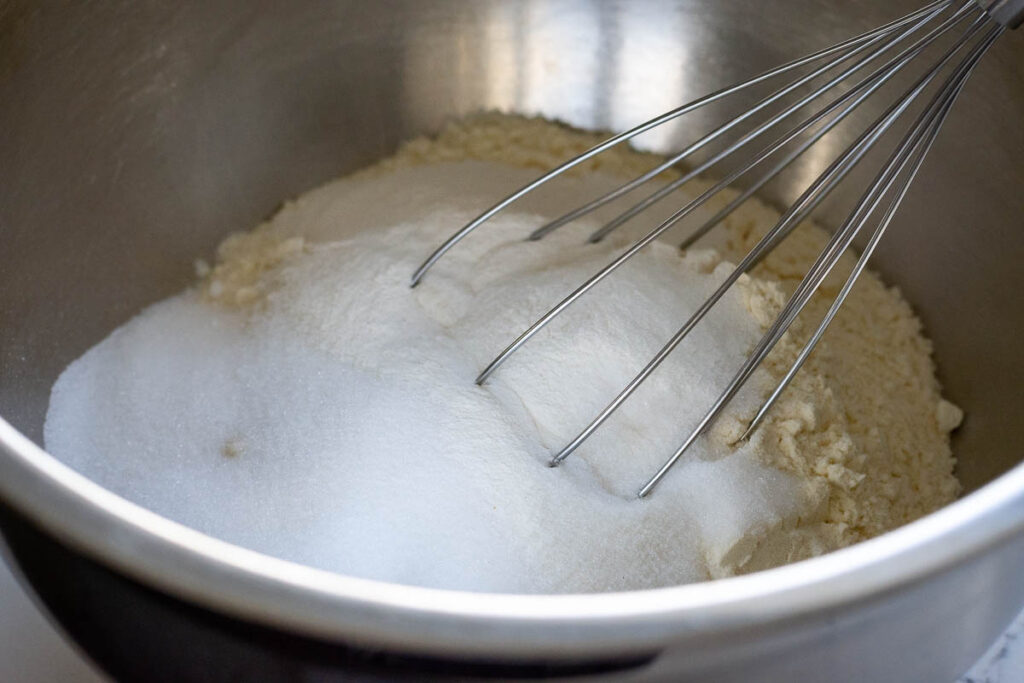
2. Rub in the butter. Whisk the flour, sugar and baking powder together in a large bowl. Add the cold butter and rub it into the flour with your fingertips until the mixture looks like coarse breadcrumbs, with a few pea-sized bits of butter still visible. Stir in the raisins.
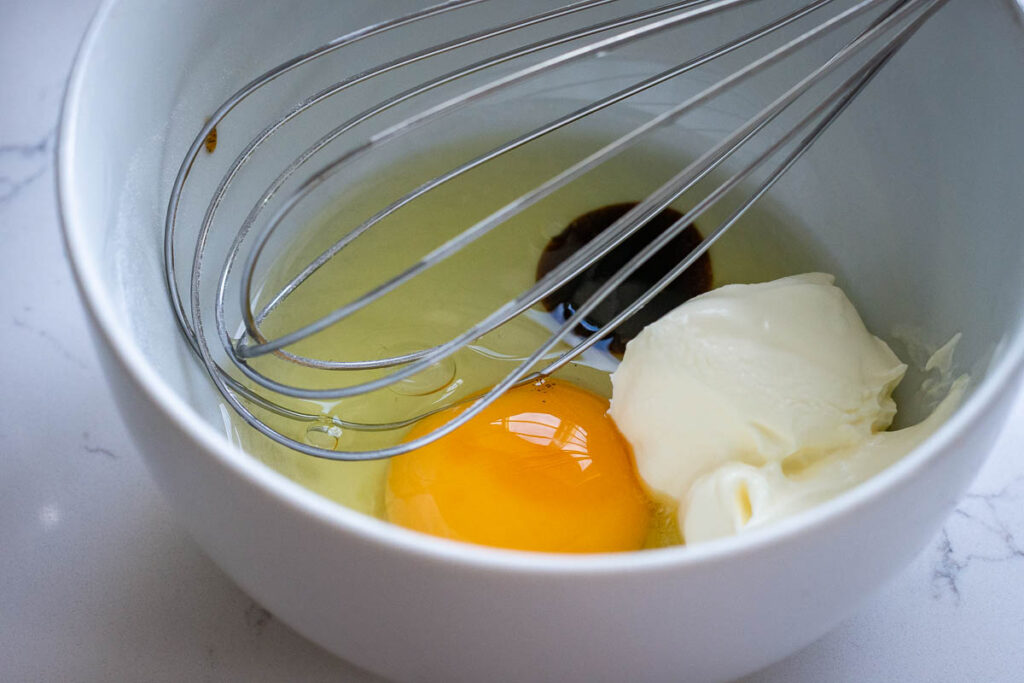
3. Mix the wet ingredients. Beat the egg, sour cream and vanilla together in a small bowl until smooth.
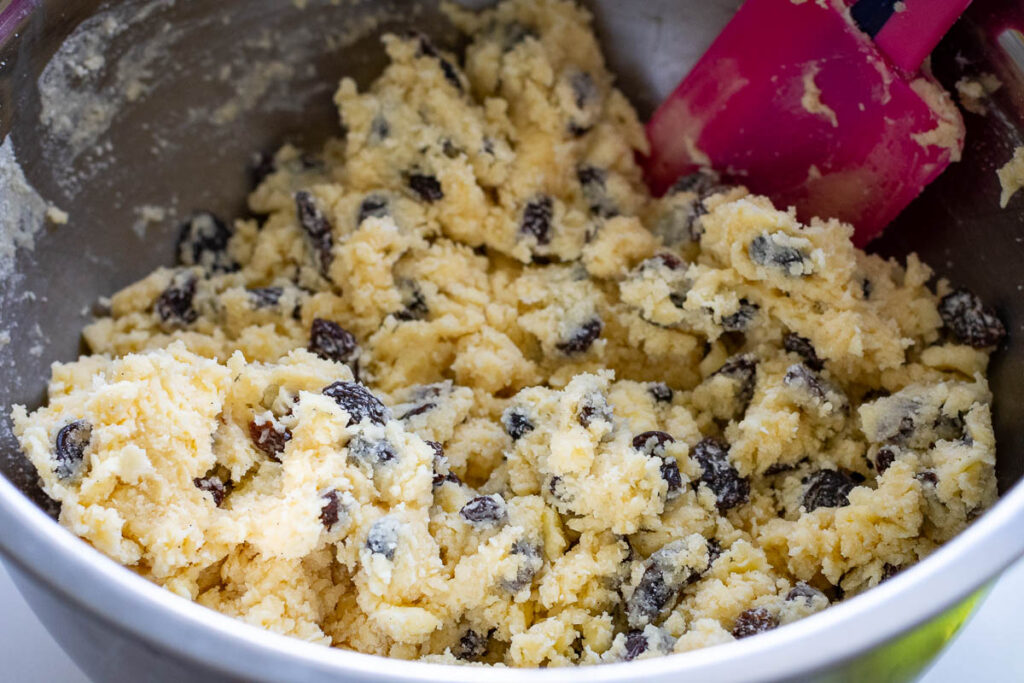
4. Make the dough. Pour the egg mixture over the dry ingredients and stir with a spoon until everything just clumps together into a thick, shaggy dough. If dry patches of flour remain, add up to 1 more teaspoon of sour cream. Stop as soon as there is no dry flour left. It should look rough, not smooth.
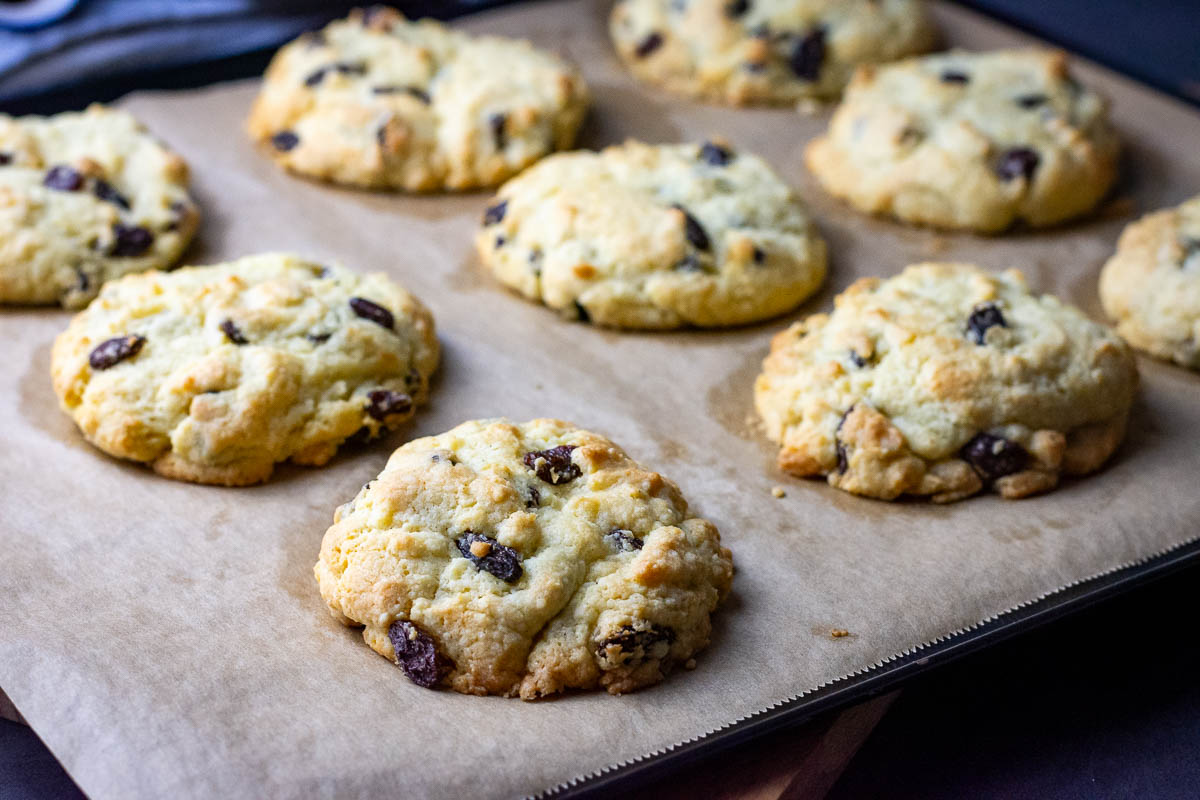
5. Shape. Scoop 9 rough mounds, about 2 heaped tablespoons each, onto the baking sheet, leaving about 2 inches (5cm) between them. Don't smooth or tidy them. The craggy edges are the whole point.
6. Bake. Bake for 12 to 15 minutes, until golden brown. Start checking at 12 minutes.
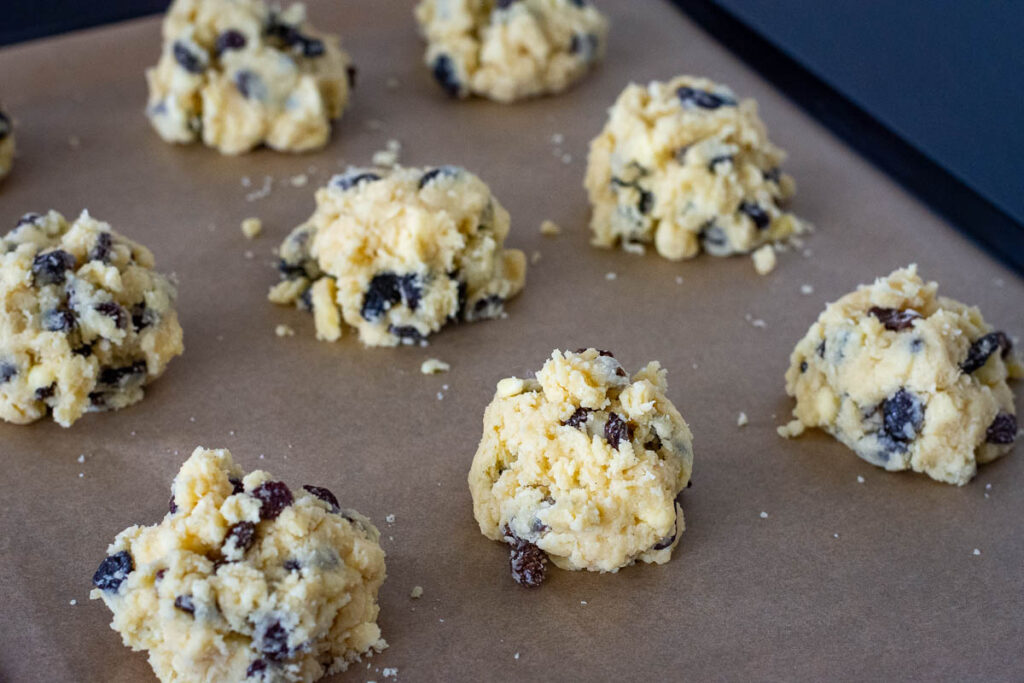
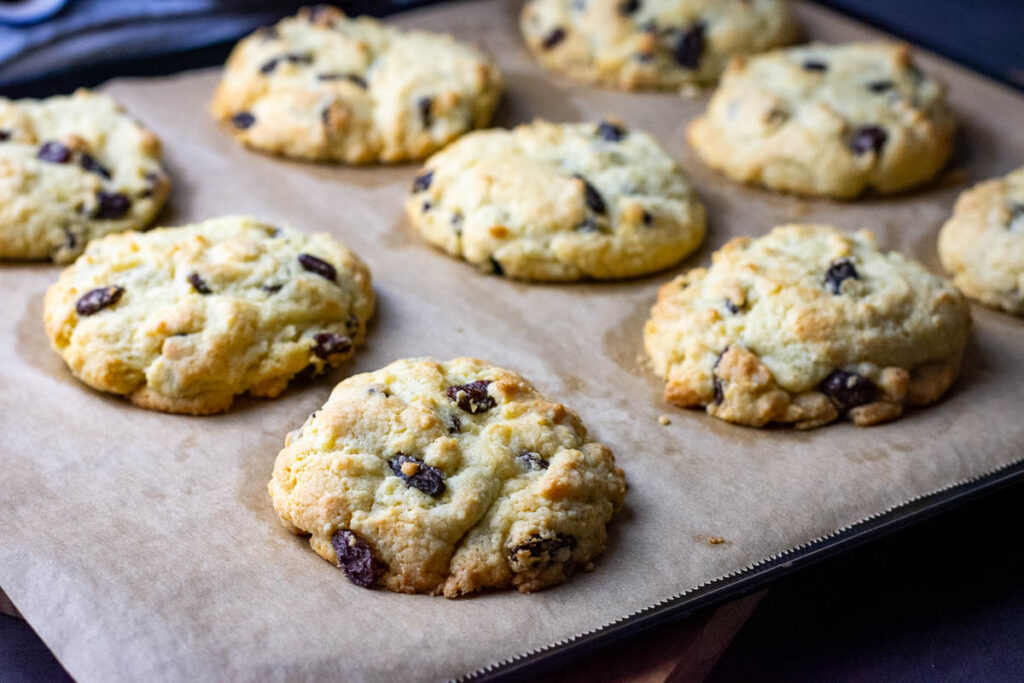
7. Cool. Leave them on the tray for 2 minutes, then move them to a wire rack. They are best warm, dusted with powdered sugar.
Tips for craggy, not flat, roksai
- Keep the butter cold. If your kitchen is warm or your hands run hot, pop the cubed butter in the freezer for 10 minutes first.
- Stop mixing early. Stir only until the flour disappears. Keep going and the roksai turn tough instead of tender.
- Don't neaten the mounds. Smooth rounds bake into smooth, boring cakes. Rough dough gives you the crisp, craggy edges.
- Give them space. Two inches apart, or they merge into one large raisin pancake.
- If the dough is sticky, chill it for 15 minutes before scooping. Full-fat sour cream makes this less likely.
- If they are too slack after shaping, place the whole baking sheet in the freezer for 10 minutes. Then bake. This controls the spread.
- Try freezing the butter. Grate the frozen butter into the flour mixture. This will keep everything cool for longer.
Serve Roksai with tea or coffee, ideally while they are still warm, ideally with whoever turned up unannounced.
Storing and freezing
- Room temperature: Airtight container for up to 2 days. They are at their best the day they are baked, and a few minutes in a warm oven brings them back.
- Freezing baked roksai: Up to 2 months. Reheat from frozen in a low oven.
- Make ahead: Scoop the dough onto a tray, freeze solid, then bake from frozen with a few extra minutes in the oven.
Variations
- Different dried fruit. Currants or dried cranberries instead of raisins, same quantity.
- A little extra flavor. A pinch of cinnamon or the zest of half an orange, stirred in with the dry ingredients.
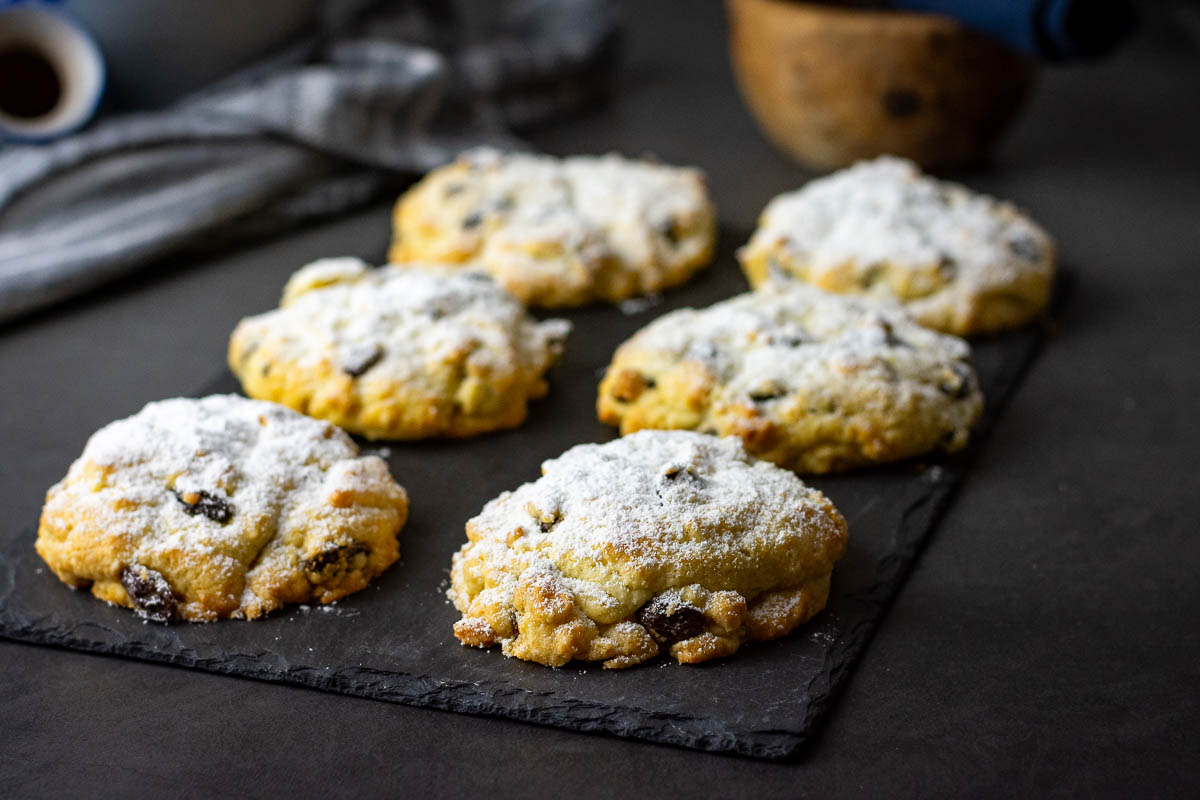
- Powdered sugar. A light dusting once cooled is the classic Lithuanian finish. It is a nice touch if you want them to look more like the crisp roksai you may remember.
Roksai FAQs
Because they come out lumpy and craggy, like small rocks. They are meant to be soft inside, whatever the name suggests.
Not originally. Rock cakes are a British bake, and "roksai" is the Lithuanian spelling of the English name. They have been part of Lithuanian home baking for a long time, but the recipe came from elsewhere.
Yes. Swap the all-purpose flour for self-raising flour and cut the baking powder down to 1 teaspoon.
Usually warm butter, too little baking powder, or dough that was too wet. Use cold butter, measure the baking powder accurately, and chill sticky dough for 15 minutes before scooping.
Overmixing, or baking them too long. Stir just until the flour disappears and start checking at 12 minutes.
Christmas In Lithuania eBook
Bring a touch of authentic Lithuanian magic to your holiday season! Whether you’re reconnecting with your roots or surprising loved ones with a nod to their heritage, Christmas in Lithuania is your ultimate guide to a heartwarming, delicious, and tradition-filled celebration.

More Lithuanian Baking Recipes
Roksai (Lithuanian Rock Cakes)
Equipment
- Large Baking Sheet
- Parchment Paper
Ingredients
- 1¾ cups + 2 tablespoon (225 g) all-purpose flour
- 6 tablespoon (75 g) granulated sugar
- 2½ teaspoon baking powder
- 9 tablespoon (125 g) cold unsalted butter, cut into small cubes
- 1 cup (150 g) raisins
- 1 large egg
- 1 heaped tbsp (30 g) full-fat sour cream, plus up to 1 teaspoon more if needed
- 1½ teaspoon vanilla extract or vanilla bean paste
Instructions
- Heat the oven. Preheat to 350°F (180°C). Line a large baking sheet with parchment paper. Use two sheets if yours are small.
- Rub in the butter. Whisk the flour, sugar and baking powder together in a large bowl. Add the cold butter and rub it into the flour with your fingertips until the mixture looks like coarse crumbs. Stir in the raisins.
- Mix the wet ingredients. Beat the egg, sour cream and vanilla together in a small bowl until smooth.
- Make the dough. Pour the egg mixture over the dry ingredients and stir with a spoon until everything just clumps together into a thick, shaggy dough. If dry patches of flour remain, add another teaspoon of sour cream. Stop as soon as no dry flour is left.
- Shape. Scoop 9 rough mounds, about 2 heaped tablespoons each, onto the baking sheet, leaving about 2 inches (5 cm) between them. Don't smooth them. The craggy edges are the point. TIP: if your butter has softened a lot in this time, place the shet in the frigde (or even freezer) for 15 minutes , so the butter to firm up. This will control the spread.
- Bake. Bake for 12 to 15 minutes, until golden brown. Start checking at 12 minutes. See notes for what to do if they spread too much.
- Cool. Leave them on the tray for 2 minutes, then move them to a wire rack. They are best eaten warm, dusted with powdered sugar.
Notes
Leave a Reply