

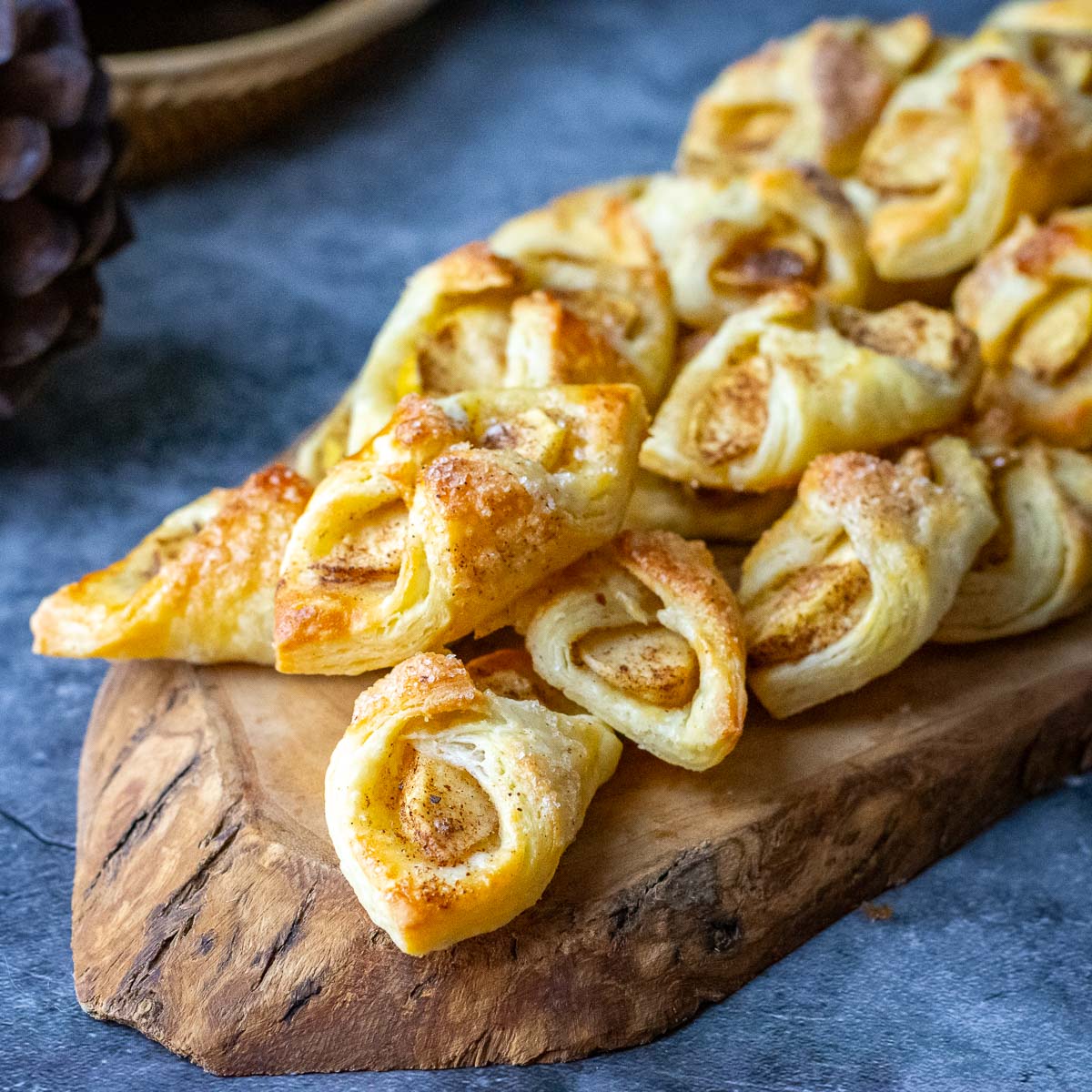
Lithuanian apple cookies, or obuolių sausainiai, are a true classic. They're not a cookie in a traditional sense (more like a mini pastry), but in Lithuania, we call them "sausainiai", which means cookie. A sour cream pastry dough folded around thin apple slices, brushed with egg, dusted with cinnamon sugar, and baked in a batch big enough to actually last more than one sitting.
Jump to:
One thing worth saying upfront: if you've searched for "Lithuanian apple cookies" before and landed on a soft, cakey drop cookie with apple chunks stirred through the batter, that's a real recipe too, just not this one. This is the folded, filled version — closer to a mini hand pie than a cookie, whatever the name on the tin says.

Recipe Highlights
TIMING: about 30 minutes of hands-on dough and apple prep, then 1–2 hours in the fridge you can walk away from completely, then 18–20 minutes in the oven.
TEXTURE: flaky, buttery pastry giving way to soft, honey-cinnamon apple in the center.
MAKE-AHEAD FRIENDLY: the dough freezes for up to a month, so a batch can start well before you actually need it.
YIELD: about 50–55 small pastries, enough to fill a tin rather than just get through one afternoon.

Let's clear this up before you're three steps into the method wondering where you went wrong. Obuolių sausainiai translates roughly to "apple cookies," and that's the name that stuck, but the dough here has nothing in common with a Western drop cookie. It's a grated-butter, sour-cream pastry - the same family as Lithuanian Grietiniečiai (Sour Cream Pastries) - rolled thin, cut into squares, and folded around a single slice of apple like a tiny parcel. It bakes up flaky and a little craggy at the edges, not soft or cakey.
Ingredient Notes
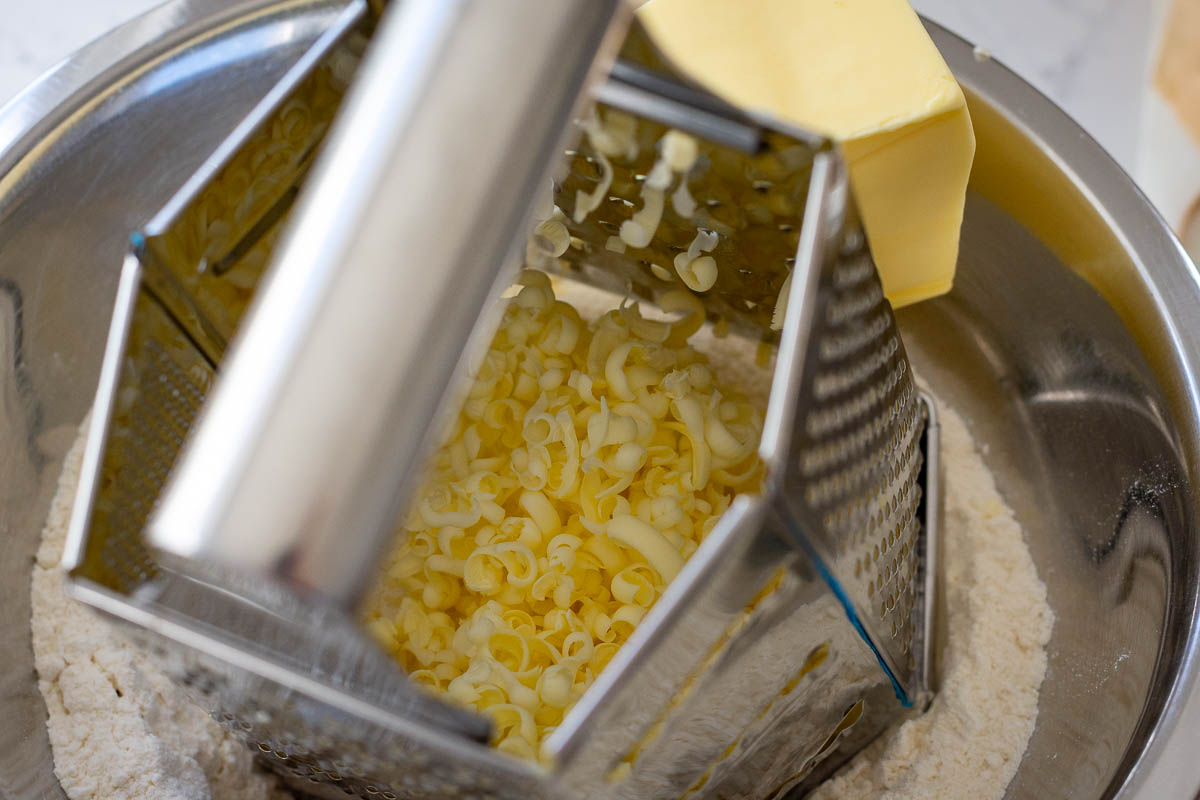
Butter, frozen and grated. This is the trick that makes the dough flaky instead of tough. Grating frozen butter into the flour keeps it cold all the way through mixing, so you get little cold streaks of fat running through the dough rather than butter that's been warmed and worked into submission by your hands. If your kitchen runs warm, work fast and don't be precious about getting every last shred grated before it starts to soften.
Sour cream, and specifically the fat content. Go for full-fat, ideally around 30%. Lower-fat sour cream has more water in it, which can make the dough slacker and harder to roll thin without tearing.
Apples: firm and tart, not soft and sweet. Granny Smith or Braeburn hold their shape at oven temperature and don't collapse into mush before the pastry's done. A soft, sweet apple like Gala will still taste fine, but you'll get more liquid pooling in the pastry and a less defined bite.
The honey. Not part of the traditional filling, but a small amount balances tart apples nicely. If your honey has crystallized in the jar, warm it for a few seconds first so it coats the apple slices evenly instead of sitting in little hard clumps.
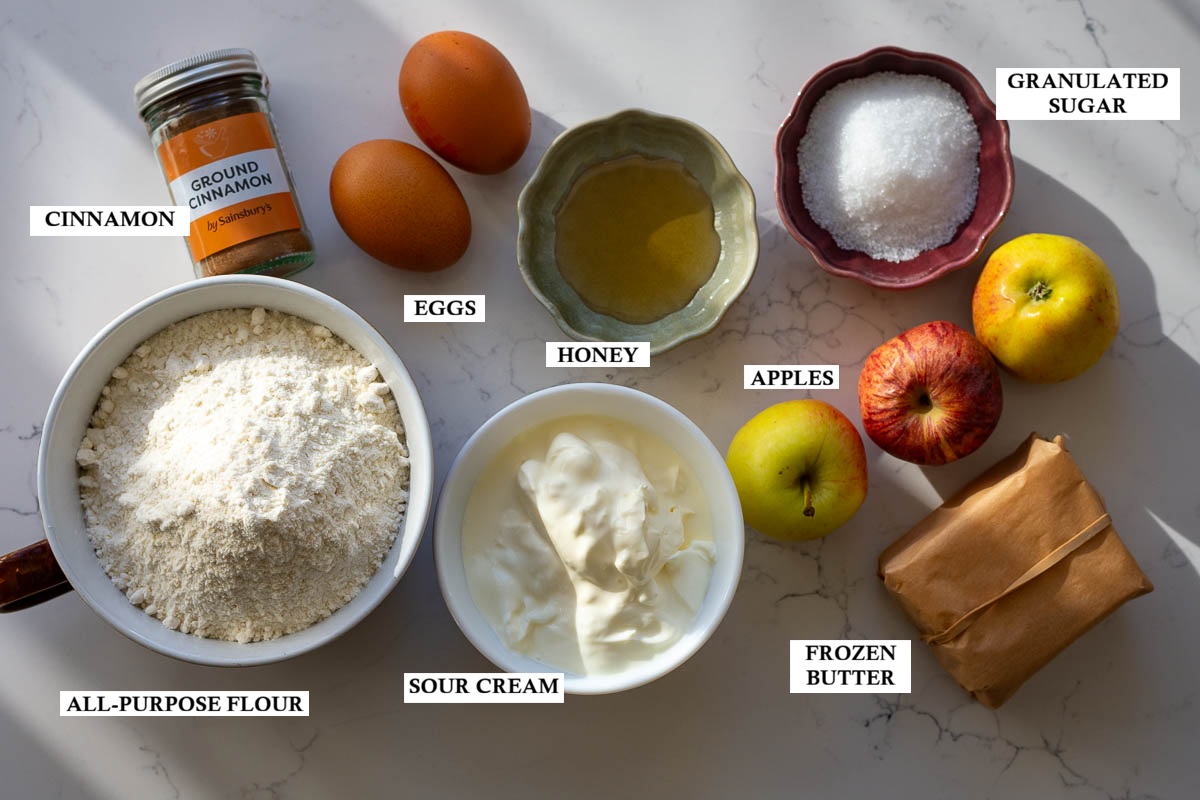
Spice swap. Cardamom or allspice can replace some of the cinnamon in the filling if you want something a bit warmer and less immediately recognizable as "cinnamon apple."
Step-By-Step Method
Start the dough first
Combine the flour with the frozen, coarsely grated butter in a large bowl and work it between your fingers until it looks like coarse crumbs with no dry flour left visible.
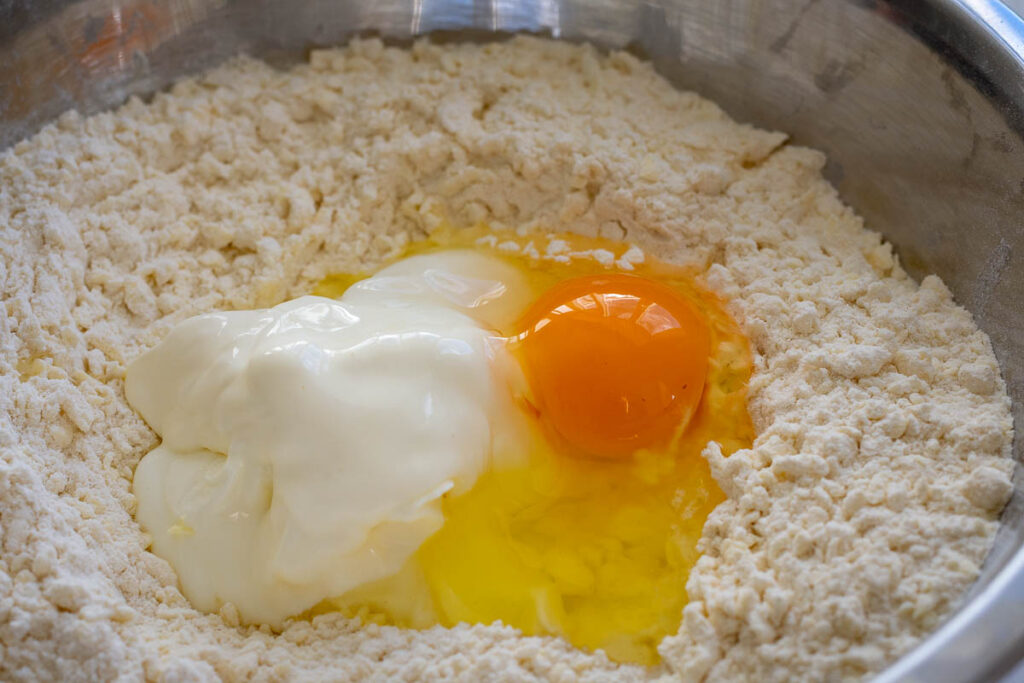
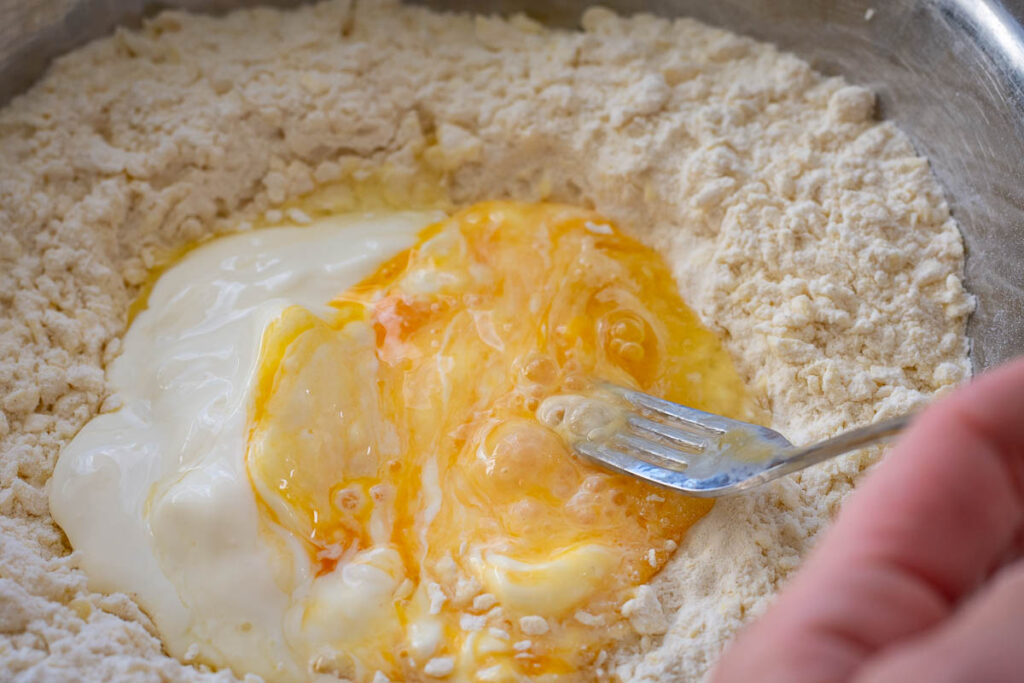
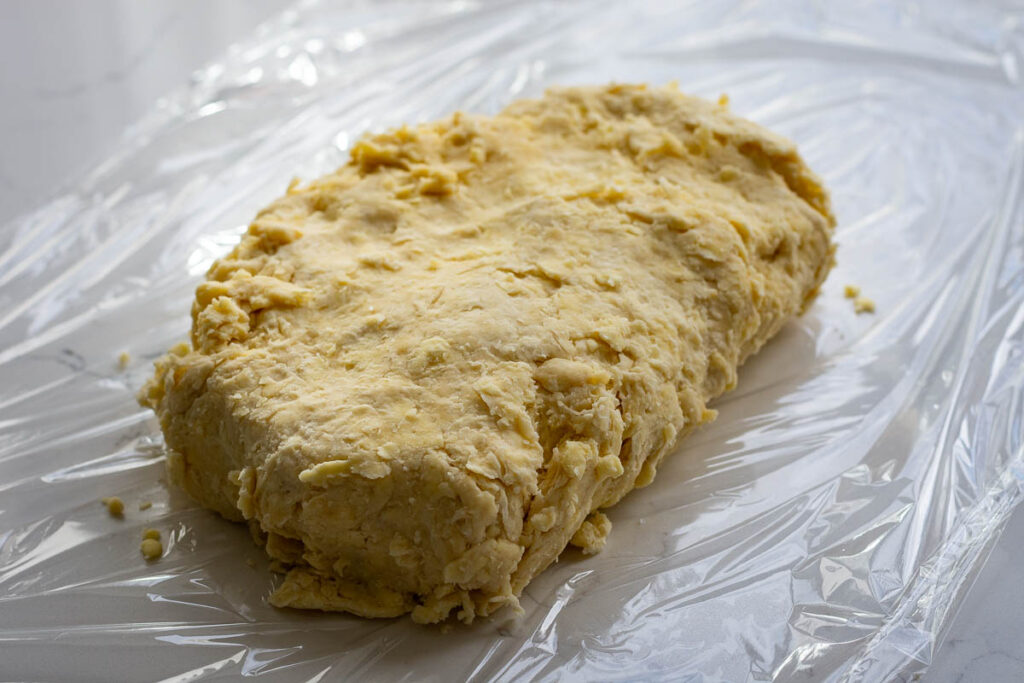
Add the sour cream, the lightly beaten egg (or beat the egg write inside the well of the flour as shown in the photo below), and a pinch of salt, then mix and knead just until it comes together into a ball. Don't overwork it here — you're looking for "just holds together," not smooth and elastic. If it's too sticky to handle, work in an extra tablespoon of flour.
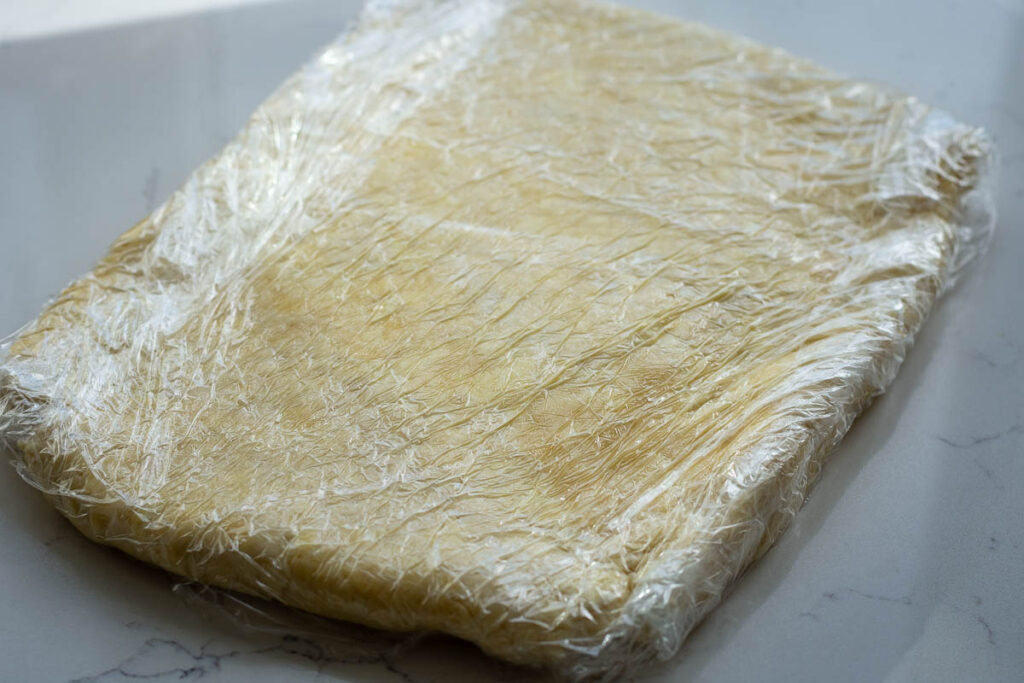
Wrap it in plastic, flatten and chill for 1–2 hours. Cold dough rolls out cleanly; dough that's still soft from mixing will stick to everything and fight you the whole way.
Make the filling
Make the filling closer to when you're ready to roll, not hours ahead — the apples will start releasing liquid and the honey will thin out if it sits too long. Peel, halve, and core three medium apples, then slice thinly, about ⅛ inch thick. You want roughly 60 slices across the three apples, so keep them slim rather than chunky. Toss with the honey, sugar, and cinnamon until every slice is coated.
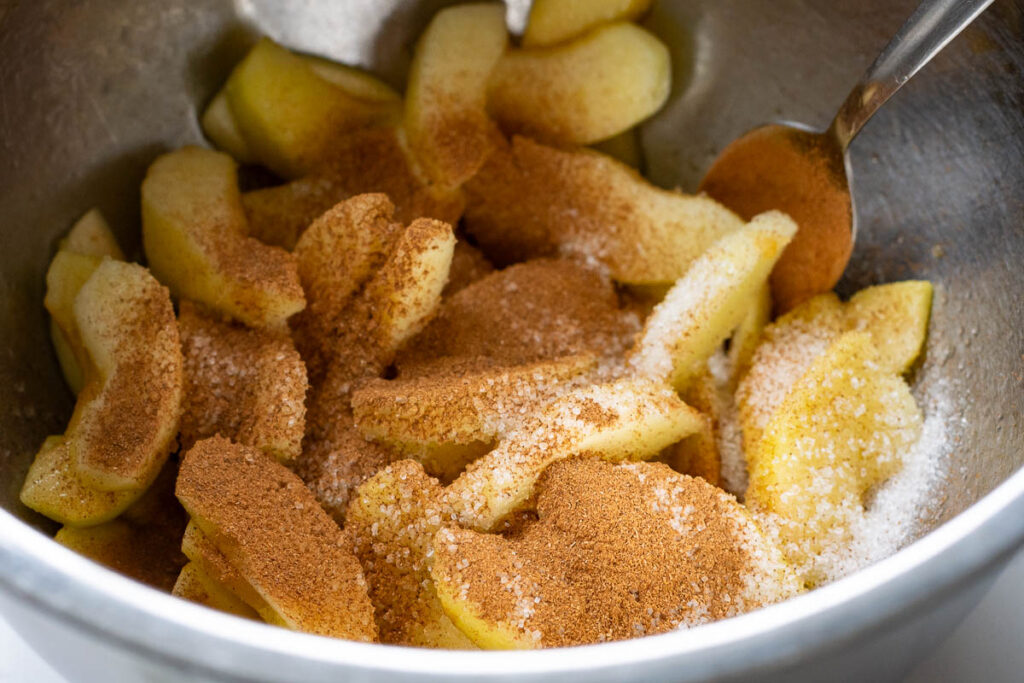
Preheat the oven to 350°F if you're using convection, or 375°F if your oven doesn't have a fan setting. Line two large baking sheets with parchment.
Shaping
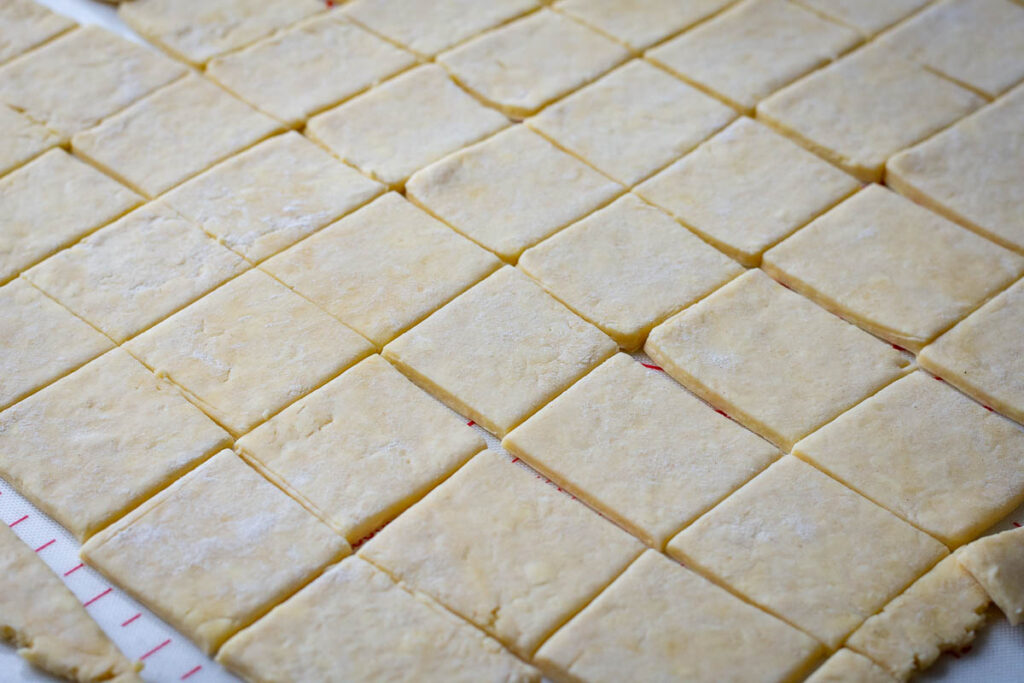
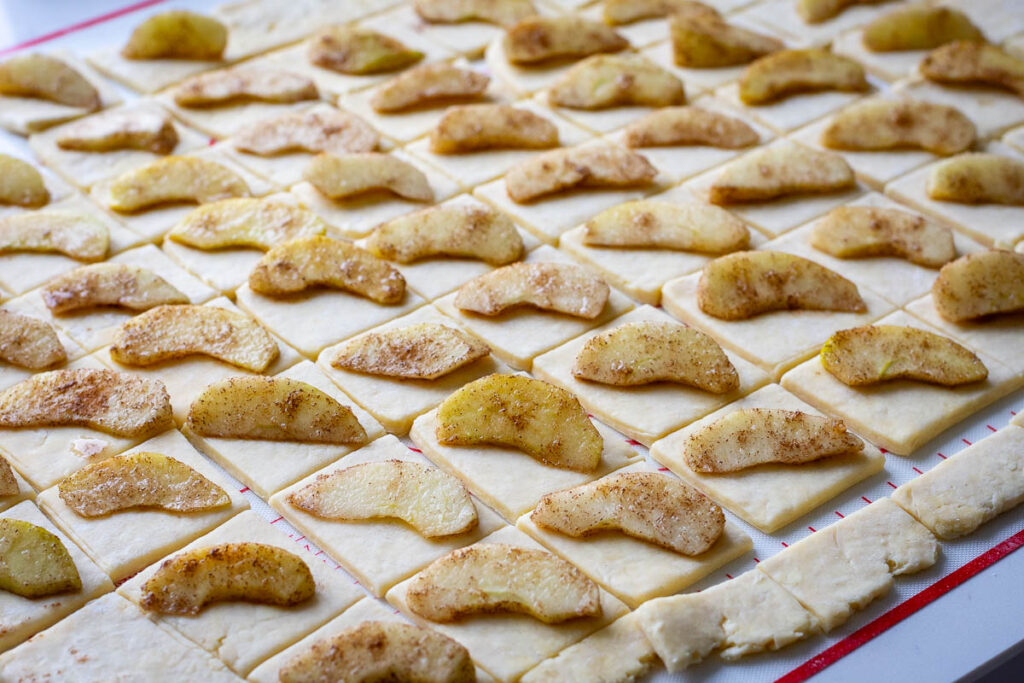
Now the part that actually needs a little attention: roll the chilled dough out on a floured surface to roughly 22 x 18 inches. You'll likely need to do this in sections rather than one heroic sheet. Cut into squares about 2.5 to 2.75 inches per side, sized so one apple slice fits diagonally with a bit of dough left to fold over on each side.
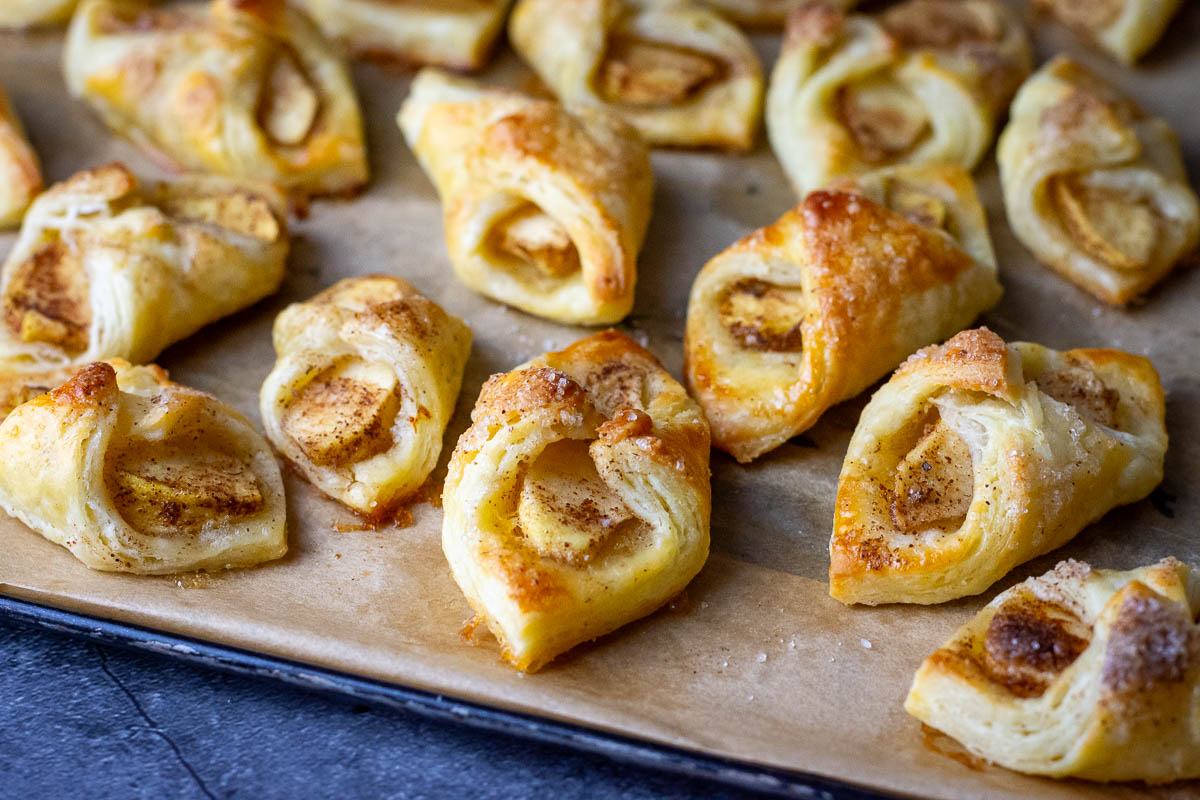
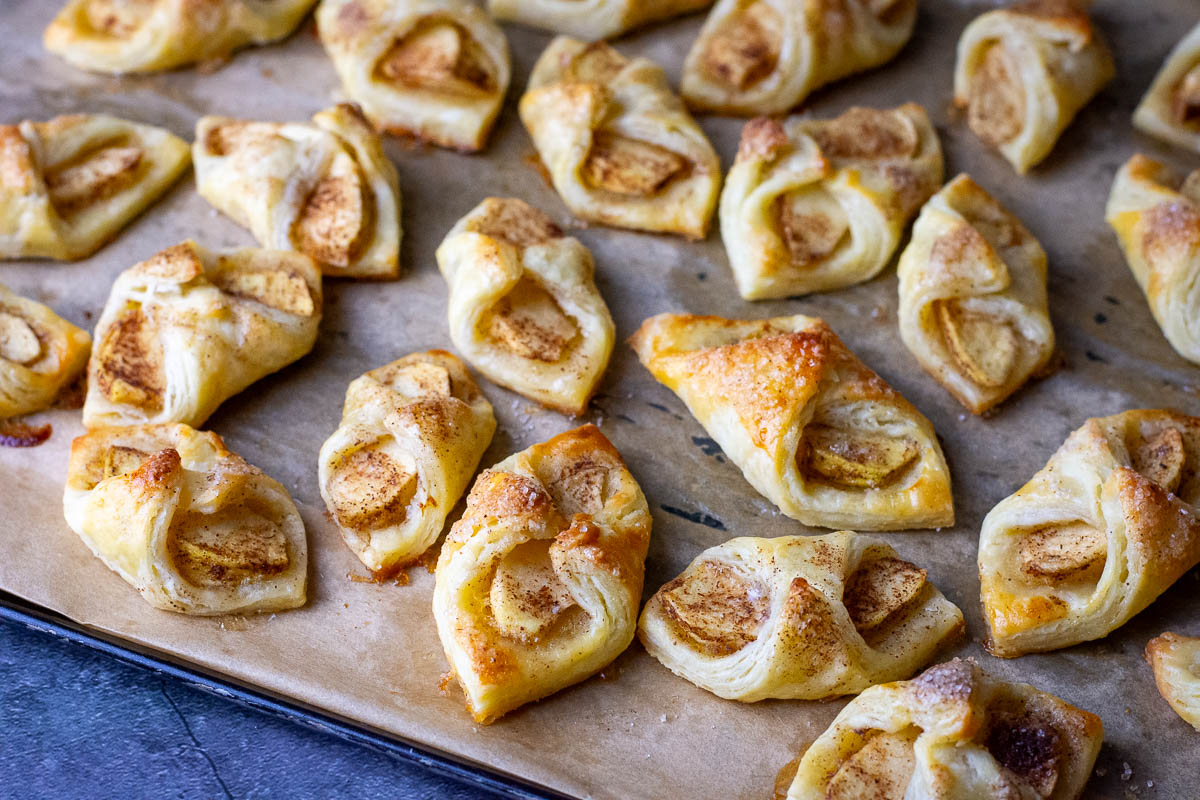
Place one apple slice on each square, fold the corners up and over it, and pinch gently to seal. You're not making an origami crane — you just need something that holds together in the oven, not a perfect seam. Arrange them on the lined sheets with a little space between each, brush with beaten egg, and sprinkle with cinnamon sugar.
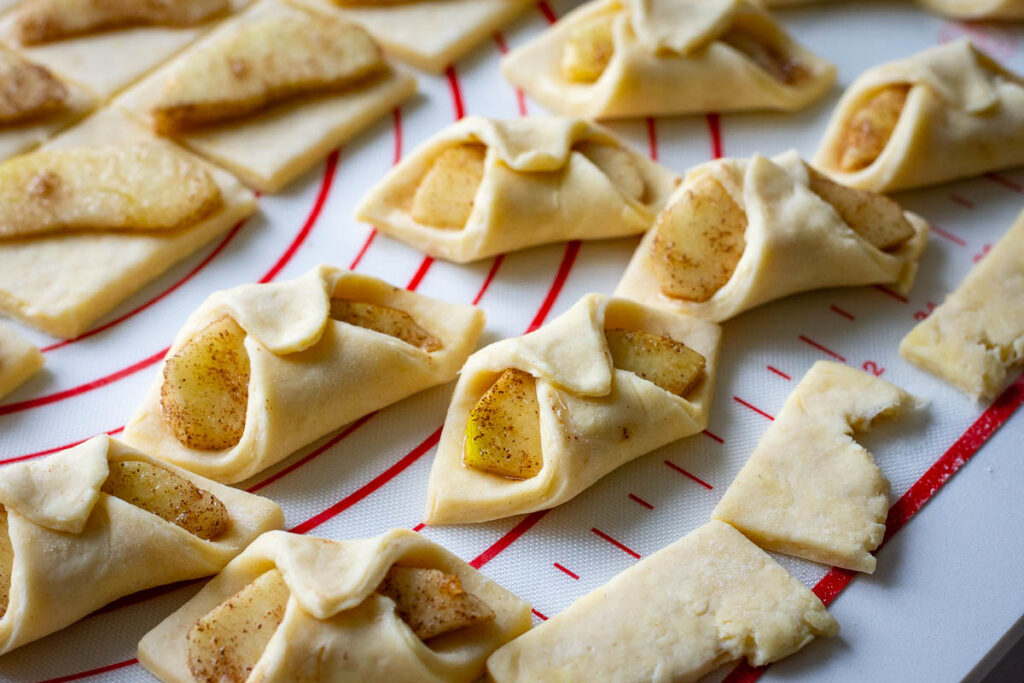
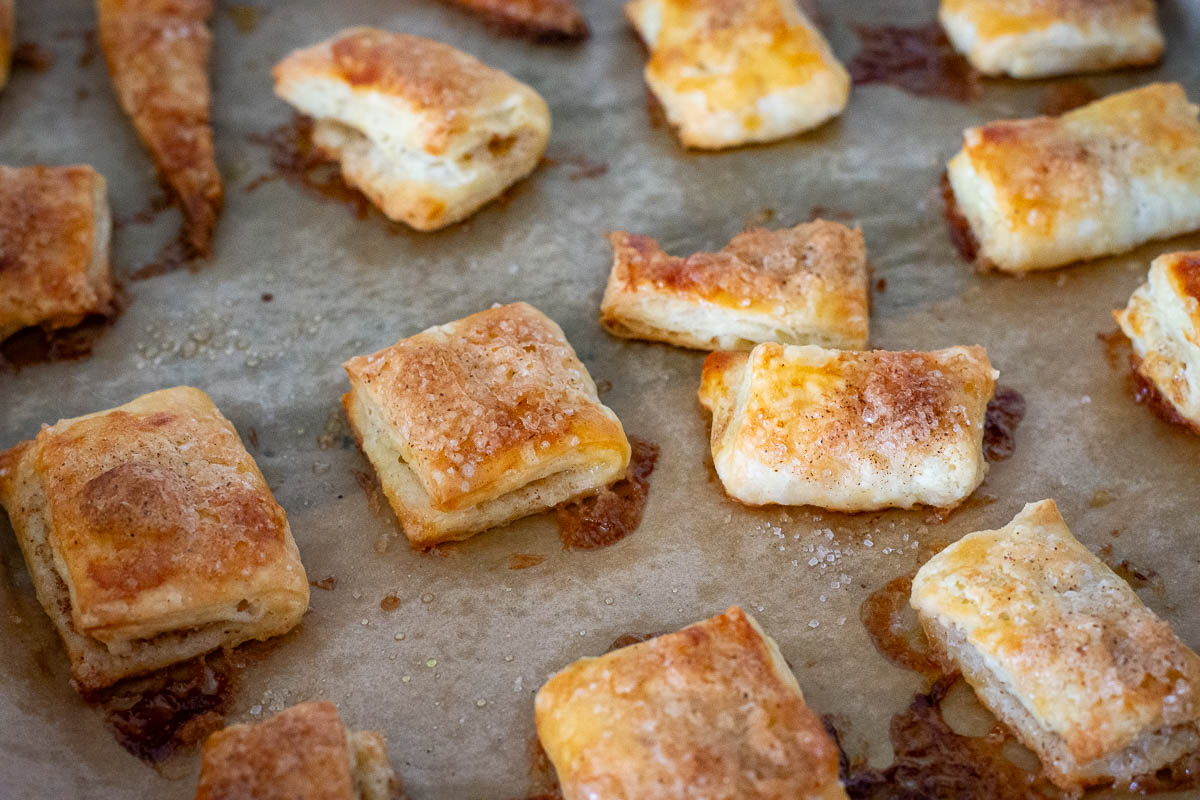
Do not throw away scraps! Lay any uneven edges on a baking sheet, brush with egg and sprinkle with cinnamon sugar. They bake a little quicker, but are amazingly delicious! If there's no space in the oven, keep the scraps in the fridge and bake after your cookies come out of the oven!
Baking
Bake for 20–25 minutes, until golden brown. Because the apple slices are thin, they cook through quickly, so check at the 20-minute mark rather than waiting for the timer. Let them cool for a few minutes before eating — the filling holds heat longer than the pastry looks like it should.
Getting the Fold — and the Yield — Right
Two things separate a good batch from a frustrating one. First, keep the dough cold. If it warms up while you're rolling and cutting, pop it back in the fridge for ten minutes rather than pushing through with dough that's gone soft and sticky.
Second, try to keep your squares a consistent size. It's tempting to eyeball it, but uneven squares mean uneven folding, uneven apple-to-pastry ratio, and a yield that drifts well below 50. A ruler sounds fussy for a pastry recipe, but it's genuinely the fastest way to get through this step without measuring every single square by eye.
Also worth repeating from the ingredient notes: don't fill and shape ahead of time. The apples release liquid fast, and pastry that's sat around a filled, unbaked parcel for even twenty minutes will be noticeably soggier going into the oven than one that goes in right after folding.
Best Served With a Strong Cup of Tea
These are built for exactly the kind of hospitality where tea appears the moment someone sits down, invited or not. In a lot of Lithuanian households, a full tin of something like this isn't really optional if you're expecting company, or even if you're not — it's just what's offered. Serve them slightly warm if you can, with strong black tea or coffee, and don't feel obligated to plate them nicely. A pile on a plate in the middle of the table is the correct presentation.
Storage
Baked pastries keep in an airtight container at room temperature for 2 days, or in the fridge for up to 4. They're at their best the day they're made — the pastry softens a little after that, though they're still good.
For make-ahead: the dough can be made up to a day in advance and kept in the fridge, or frozen for up to a month. Thaw it in the fridge before rolling. As covered above, don't fill and shape the pastries ahead of baking — that's the one step where getting ahead of yourself actually costs you texture.
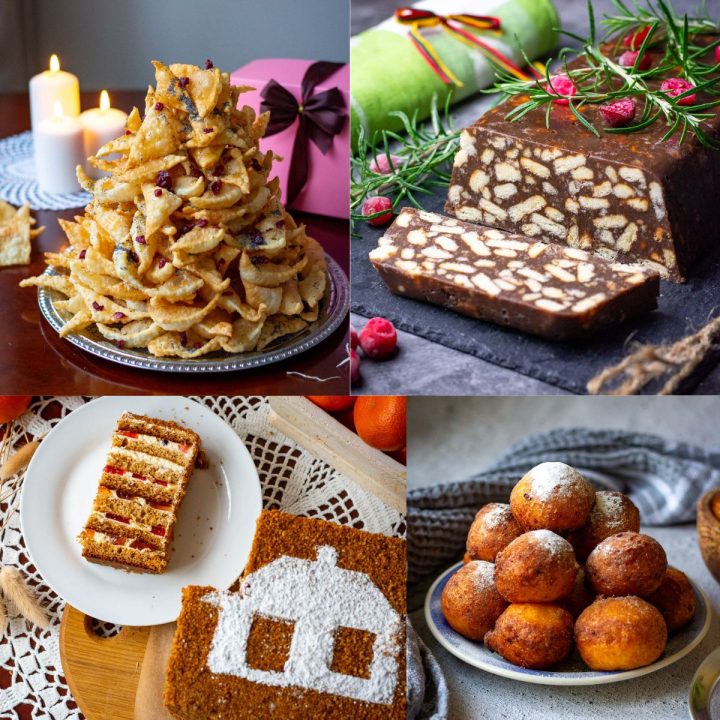
More Traditional Lithuanian Cookies
Lithuanian Apple Cookies (Obuolių Sausainiai)
Equipment
- Box Grater (for the butter)
- Rolling Pin
- Pastry brush
- Parchment Paper
- 2 Large Baking Sheets
Ingredients
For The Pastry:
- 2 ½ cups (350g) all-purpose flour
- 1 heaped tbsp granulated sugar
- pinch of salt
- 200 g (1¾ sticks / 14 tablespoons) unsalted butter frozen
- ¾ cup + 1 tbsp (200g) full-fat sour cream or creme fraiche
- 1 large egg
For The Apple Filling:
- 3 medium apples about 1 lb (450g) total — a firm, tart variety like Granny Smith or Braeburn holds its shape best
- 1 tablespoon (20g) honey
- 3 tablespoons (35g) granulated sugar
- 1 teaspoon ground cinnamon
For The Topping:
- 1 small egg beaten
- 2 tablespoons granulated sugar
- ½ teaspoon ground cinnamon
Instructions
- Before you begin, wrap the required amount of butter in a piece of parchment paper and place it in the freezer for at least 1 hour before making the cookies. It should freeze solid.
Make The Pastry
- In a large bowl, combine the flour, salt and sugar. Grate the butter straight from cold into the flour. Work it quickly between your fingers until it looks like coarse crumbs with no dry flour left.
- Add the sour cream and the lightly beaten egg (or beat the egg and sour cream right in the well of the flour). Mix and knead just until the dough comes together into a ball — don't overwork it. If it's too sticky to handle, work in an extra tablespoon of flour.
- Flatten and wrap the dough in plastic and chill for 1–2 hours.
Make The Filling:
- Make the filling shortly before you're ready to roll (don't do this too far ahead, or the apples will weep and the honey will thin out). Peel the apples, halve and core them, then slice thinly — about ⅛ inch (3mm) thick. You're aiming for roughly 50–55 slices total across the 3 apples, so keep them slim rather than chunky. Toss with the honey, sugar, and cinnamon until evenly coated.
Shape and Bake:
- Preheat the oven to 350°F (180°C) if you're using convection/fan; if your oven doesn't have a fan setting, use 375°F (190°C) instead. Line two large baking sheets with parchment.
- On a floured surface, roll the chilled dough out to roughly 22 x 18 inches (55 x 45cm) — you'll likely need to do this in sections given the size. Cut into squares about 2.5–2.75 inches (6.5–7cm) per side, sized to fit one apple slice diagonally.
- Place one apple slice on each square. Fold the corners up and over the apple and pinch gently to seal — you're not aiming for a perfect parcel, just something that holds together in the oven. Arrange on the lined baking sheets, leaving a little space between each.
- Brush each pastry with the beaten egg, then sprinkle with the cinnamon sugar.
- Bake for about 20-25 minutes, until golden brown. Thinner slices cook through quickly, so check at 20 minutes. Let cool for a few minutes before eating — the filling holds a lot of heat.
Notes

Leave a Reply