

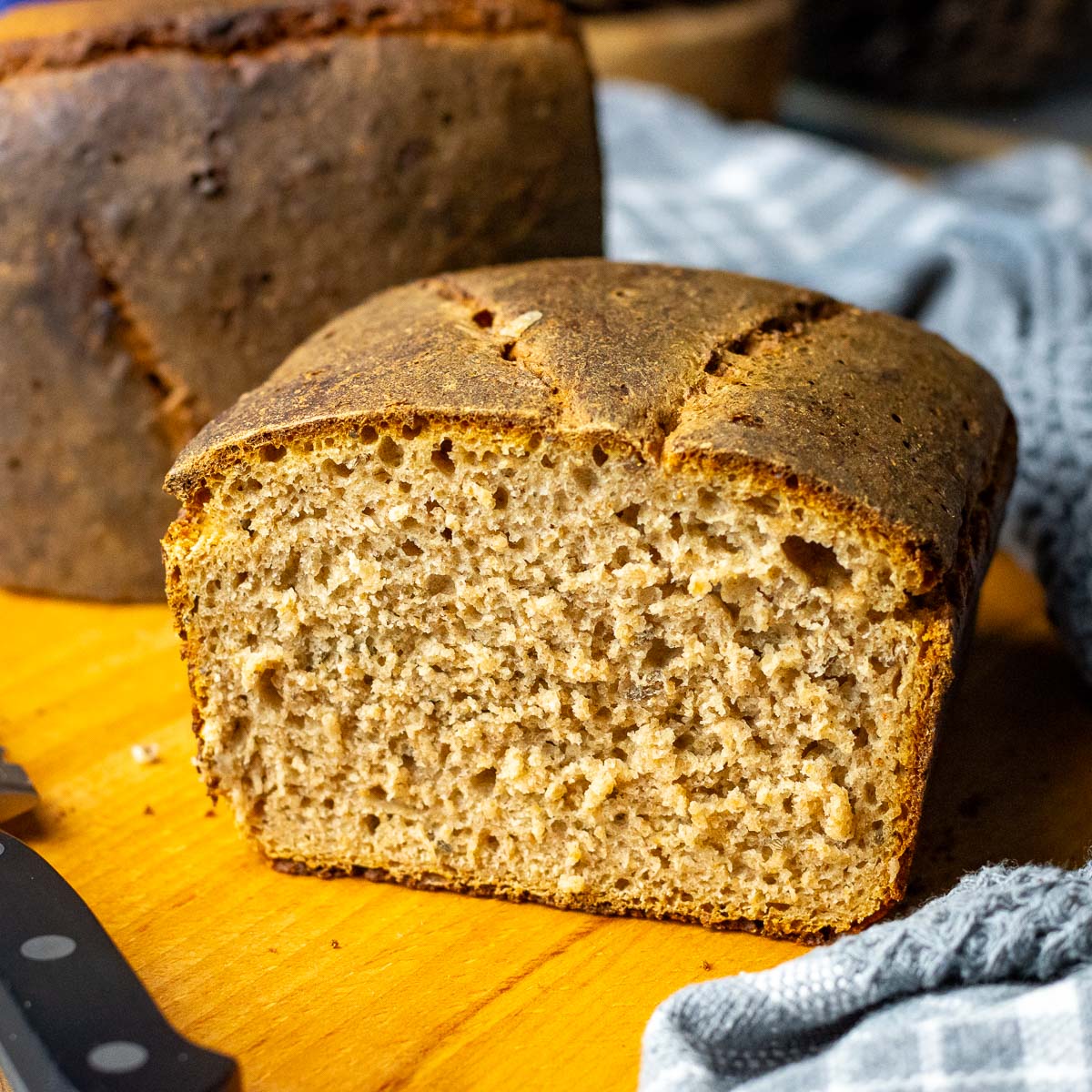
There are few things more deeply rooted in Lithuanian food culture than Lithuanian Rye Bread. Dense, dark, and unapologetically sour, this sourdough rye bread isn’t just something you eat — it’s something you respect. Naturally leavened with sourdough slowly, shared intentionally, and tied closely to tradition, Lithuanian bread has carried families through generations.
Jump to:
This recipe from Malsena is inspired by tradition, tested many times, and deeply nostalgic — the kind of bread that tastes better when you pause for a moment before slicing into it.
The Status Of Bread In Lithuania
Bread in Lithuania has always held a near-sacred status. Traditionally, Lithuanian bread was the first thing shared at the table during a special meal, often broken by the head of the family. Dropping bread was frowned upon, wasting it even more so. Bread symbolized nourishment, stability, and respect for hard work.
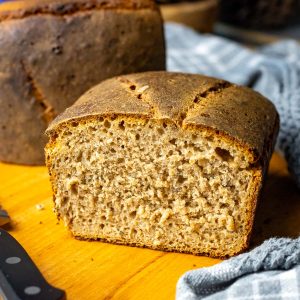
Lithuania has many types of bread, but juoda ruginė duona — Lithuanian black rye bread — is the most iconic. Made with dark rye flour, naturally fermented, and baked until deeply caramelized, it’s closer in spirit to Borodinsky bread than to anything soft or fluffy. This is not sandwich bread. This is grandma’s bread, meant to be sliced thin and eaten slowly.
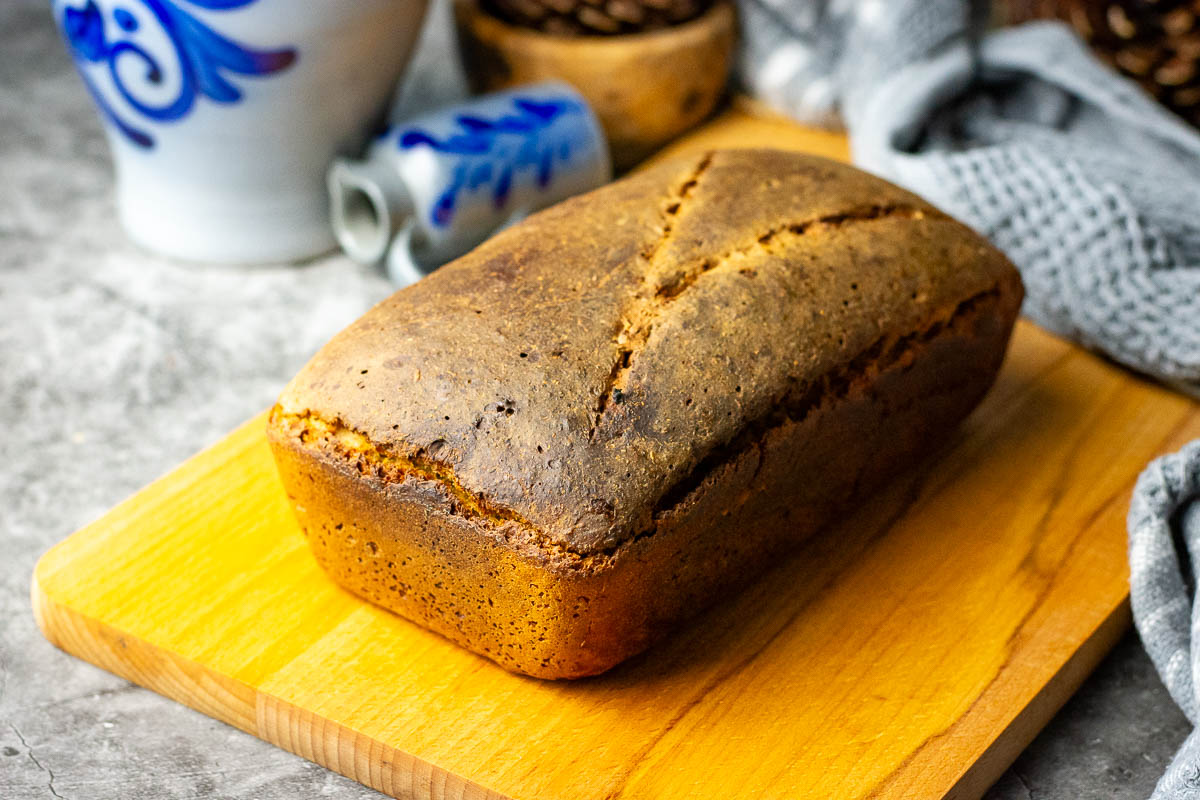
Growing up, rye bread was never my favorite. As a child, it tasted too sour, too heavy, too… serious. But tastes change. These days, I absolutely love it — especially when baked with caraway seeds, and sometimes with a generous handful of sunflower seeds folded into the final dough. Every time I bite into Lithuanian rye bread, it feels like something to be cherished.
My mum still slips a loaf into my suitcase every time I visit Lithuania. Sorry to all the airport staff I confidently told, “Yes, I packed the suitcase myself.”
Ingredient Notes
This rye recipe relies on a large preferment and simple ingredients, but each one matters.
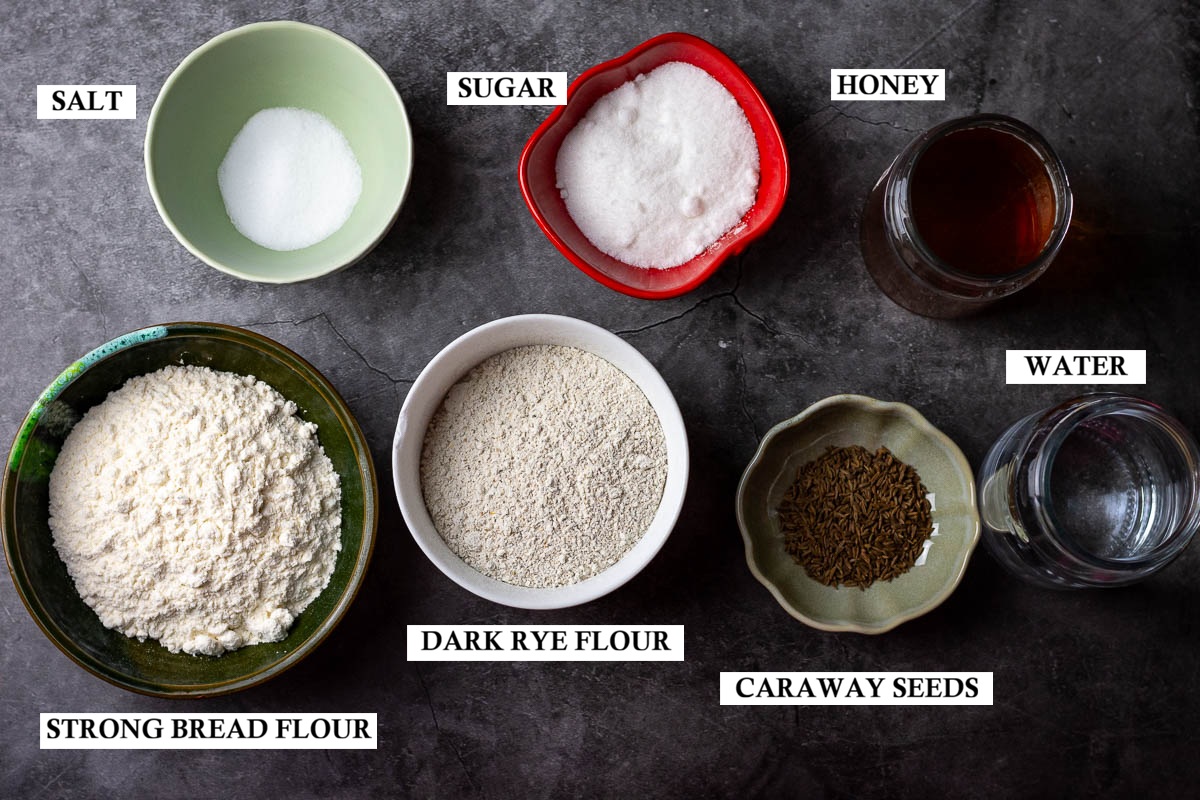
- Sourdough starter – Use unfed starter that is fresh, not old. Think discard that’s no more than 2-3 days old. Our sourdough starter is 100% hydration to start with.
- Whole rye flour / dark rye flour – Rye flour is naturally sour and behaves very differently than wheat flour.
- Bread flour / strong wheat flour – A small amount helps structure the final dough.
- Caraway seeds – Classic and unmistakably Lithuanian. Optional, but highly recommended. And if have leftover, try Lithuanian Caraway Seed Tea.
- Sugar & honey – Both are traditional and help balance the sourness.
- Salt – Essential for flavor and fermentation control.
- Malt extract – Optional, but adds depth and color - that dark black Lithuanian bread is known for.
- Lukewarm water – Helps encourage fermentation without stressing the wild yeast mixture.
Interested In Baking Sourdough?
To bake Lithuanian rye bread, you’ll need a sourdough starter. This isn’t a quick yeast loaf made with fresh yeast — it relies on natural fermentation.
If you’re a sourdough baker (or want to become one), I share sourdough recipes, tips, and troubleshooting over at somebodyfeedseb.com, where I’ve documented my journey as a sourdough baker over a long time — mistakes included.
No sourdough starter? Try another Lithuanian bread - Gluten-Free, High-Protein Farmer's Cheese Bread With Oats and Seeds!
Step-By-Step Method
This bread is baked in a dish, not free-standing. Rye dough doesn’t go through full cold fermentation, so it needs support. Lithuanian Rye Bread is made over 2 days, so plan ahead!
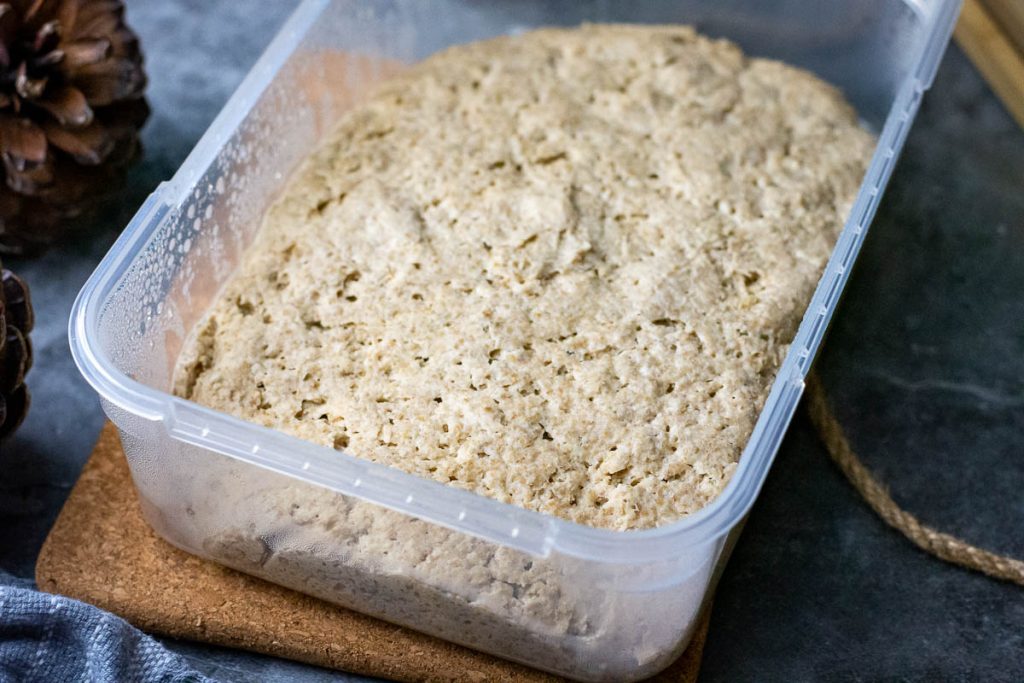
1. Prepare the levain (Day 1, evening). In a large bowl, mix sourdough starter, whole rye flour, and lukewarm water. Cover and leave in a warm place, ideally a draft-free place around room temperature, for 12 hours.
2. Check the levain (Day 2). The mixture should be airy and at least doubled in size.
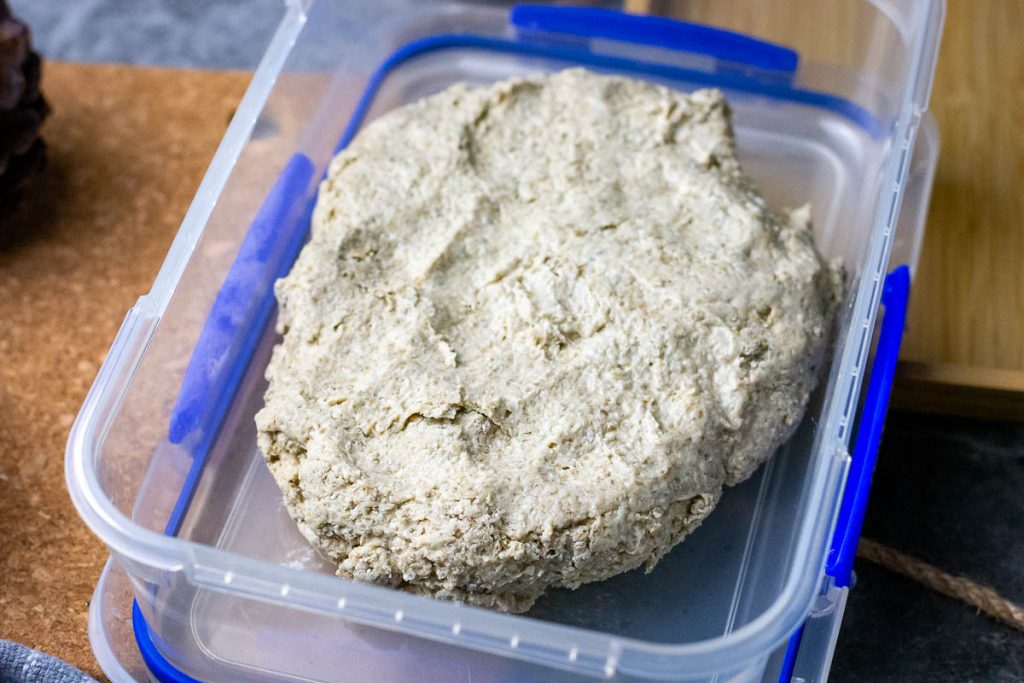
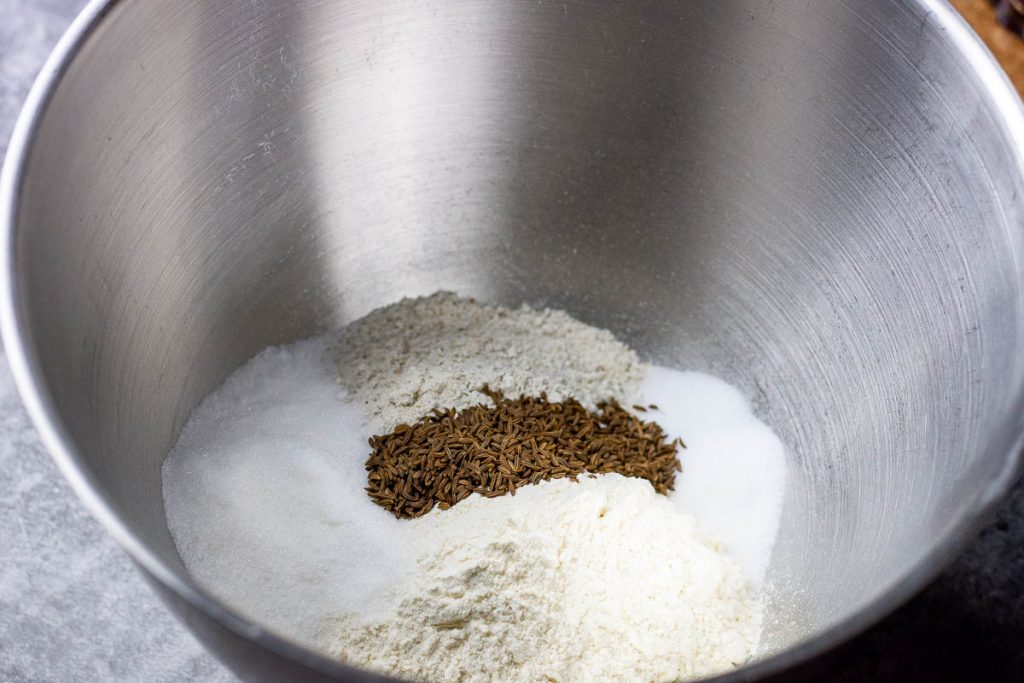
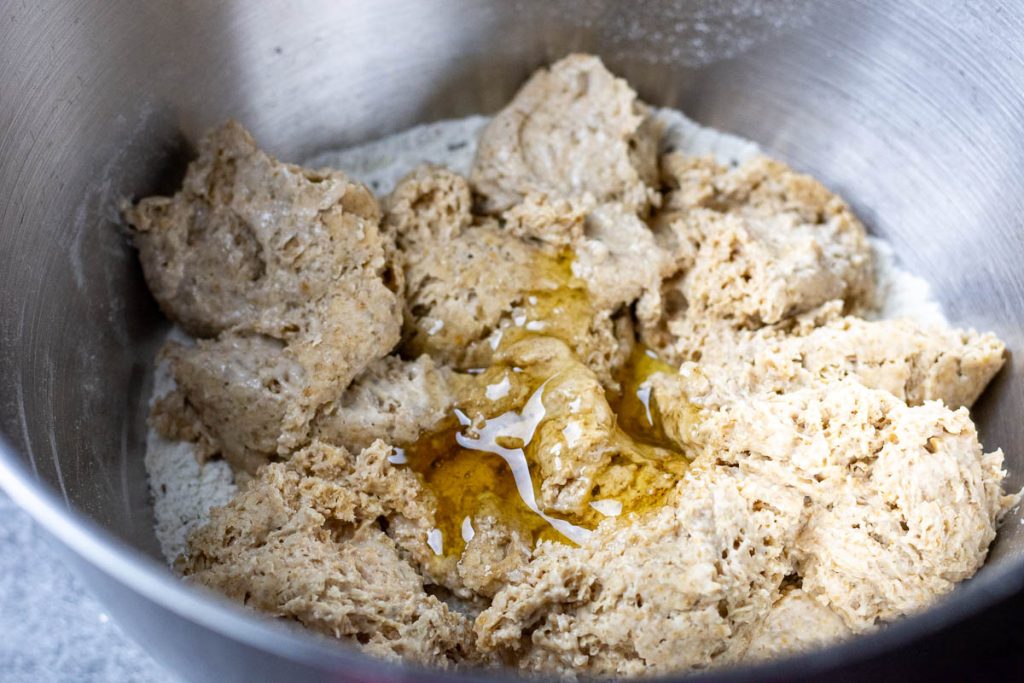
3. Mix the final dough. Add dark rye flour, bread flour, sugar, honey, salt, caraway seeds, optional malt extract, and water. Mix until fully combined. Expect a sticky rye dough — this is normal.
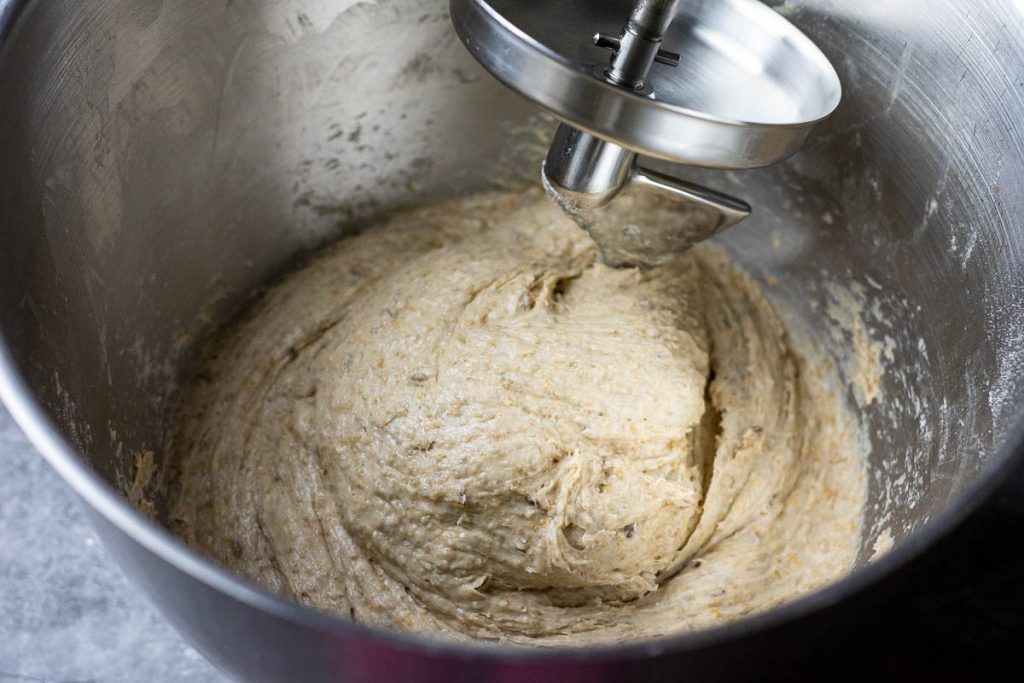
4. Knead. Knead in a stand mixer for 8–10 minutes. If kneading by hand, use wet hands and a slap-and-fold motion a couple of times. The dough will be cohesive but not elastic.
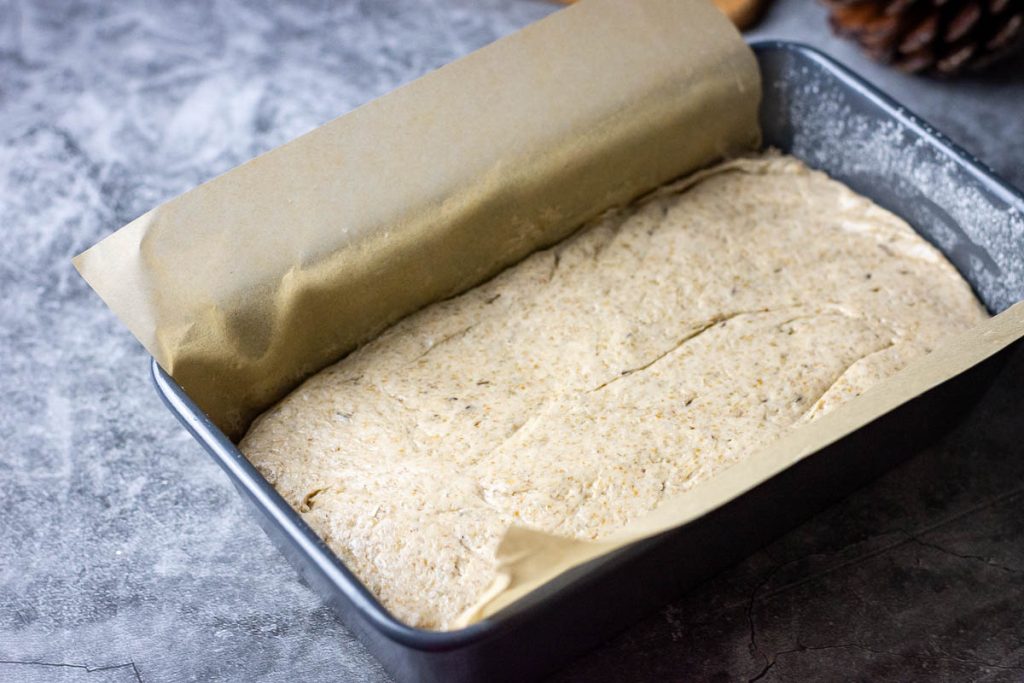
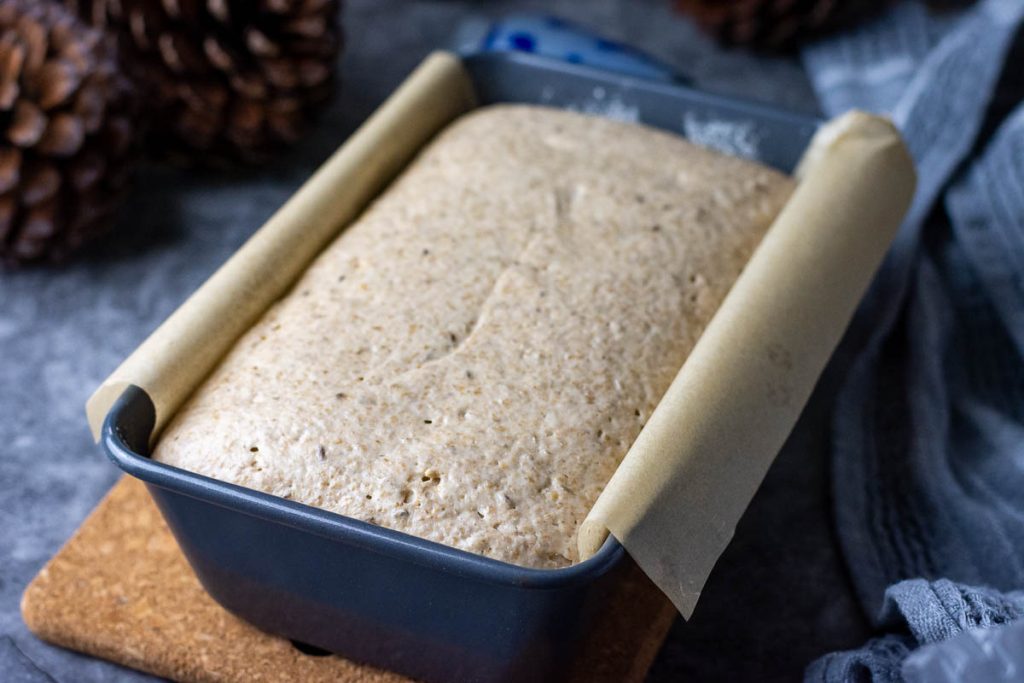
5. Shape and proof. Scoop the dough into a lined loaf pan and flatten the surface with a rubber spatula. Place the pan in a plastic bag and leave to rise in a warm place for 3–4 hours, until the dough increases by about 50%. Score the bread with a sharp knife, razor blade or bread lame just before placing it in the oven.
5. Bake. Bake at 465°F for 15 minutes, then reduce to 390°F and bake for another 30 minutes. The surface of the loaf should be dark and firm.
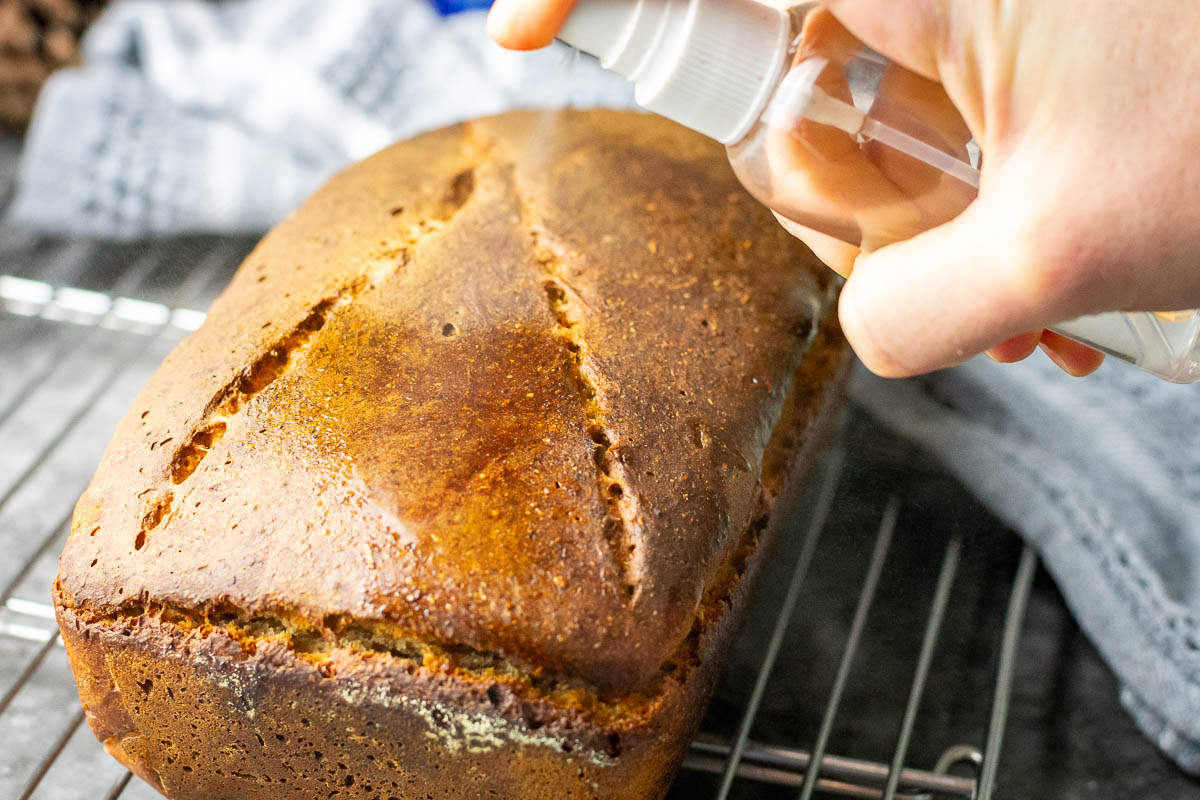
6. Finish. Remove from the pan immediately, spray lightly with water, and place on a wire rack to cool completely.
Recipe Tips
- Use a kitchen scale - sourdough requires a little bit more precision.
- Do not use very old unfed starter — it will make the bread unpleasantly sour.
- Rye dough is not stretchy like wheat dough — don’t expect it to behave the same.
- Bake in a dish, not free-standing, or the loaf will spread.
- This bread is meant to be sour — that’s the expectation.
- Add a handful of sunflower seeds if you like.
- The crust is thick and dark; soften it by spraying with water or wrapping in a tea towel.
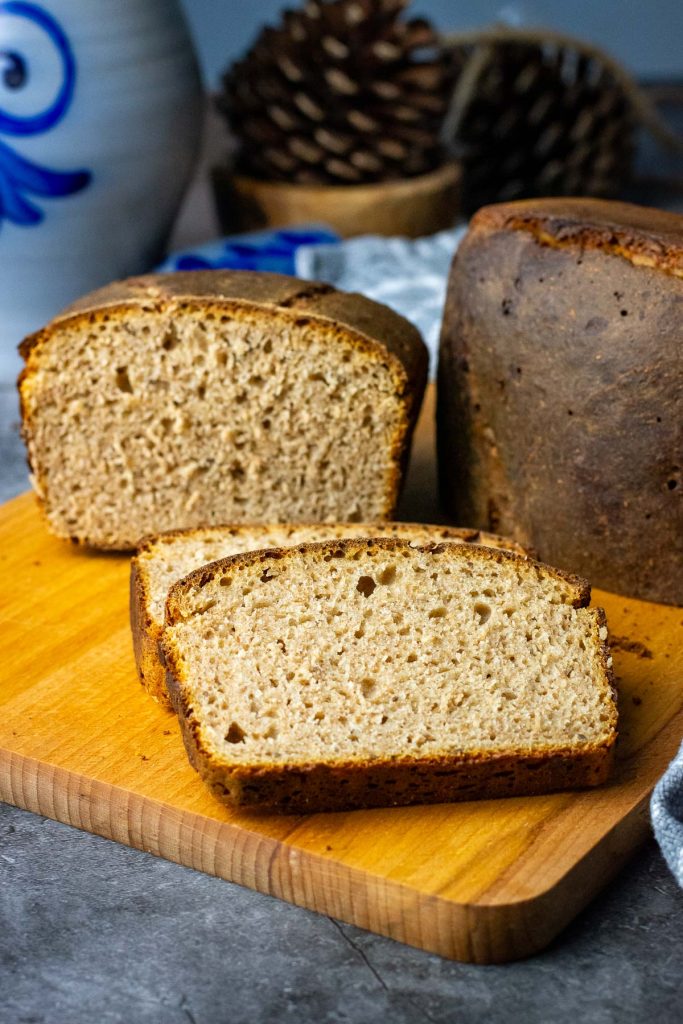
- Cool completely before slicing, or the crumb will be gummy.
Serving Suggestions
Lithuanians serve rye bread with everything. Sliced thin, often with butter, cheese, cured meats, or alongside soups and stews. It’s perfect with Lithuanian cabbage soup, sauerkraut dishes, or just eaten on its own with coffee.
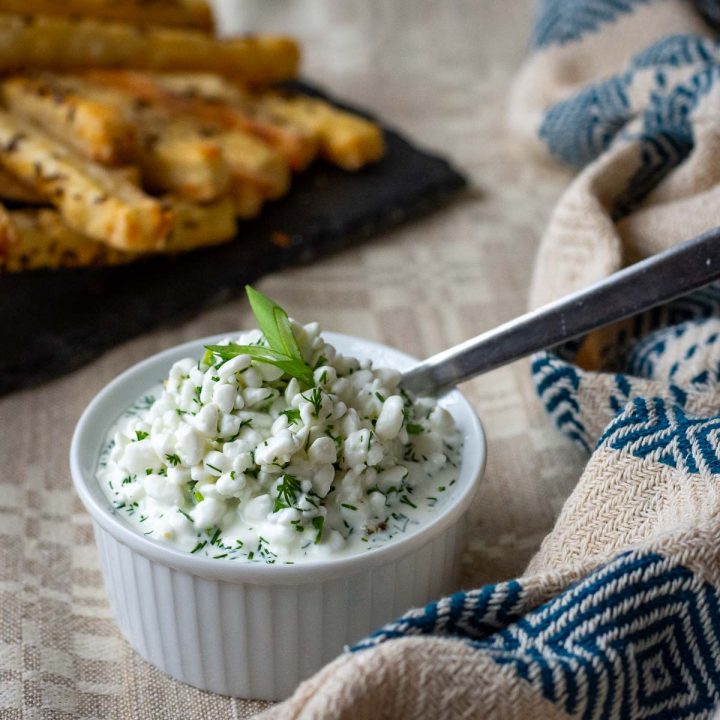
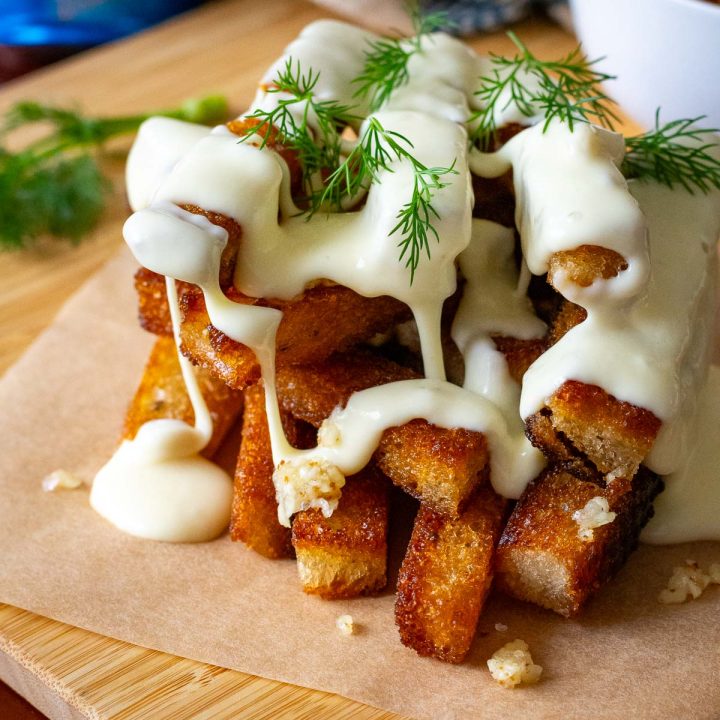
My dad loves it alongside Farmer's Cheese With Sour Cream for breakfast. When your bread goes stale, make Lithuanian Fried Bread With Cheese!
Storage
Store the finished loaf wrapped in a clean cloth or in an airtight container at room temperature for several days. It slices best the next day and keeps improving in flavor.
More Lithuanian Baking Recipes
I tested many versions of this bread, and this is the one I like best — from Malsena, one of Lithuania’s most respected flour mills. Some recipes aren’t meant to be reinvented; they’re meant to be honored. More Lithuanian baking recipes are linked below.



Lithuanian Rye Bread
Equipment
- Kitchen scale sourdough requires a little precision
- Stand Mixer fitted with a dough hook attachment
- Loaf Pan (8.5 x 4.5 x 2.5 inches - 2 lb volume)
Ingredients
For Levain
- 200 g sourdough starter unfed, but not old*
- 200 g whole rye flour a.k.a. dark rye flour
- 100 g lukewarm water*
For The Dough
- 500 g active levain all of the mixture you prepared yesterday
- 100 g dark rye flour
- 120 g strong bread flour wheat flour
- 1 tablespoon caraway seeds
- 3 tablespoon granulated sugar
- 1 tablespoon honey
- 2 teaspoon salt
- 1 tablespoon malt extract optional
- 100 g lukewarm water*
Instructions
DAY 1 - Evening: Prepare Levain
- In a large bowl, combine sourdough starter, water and rye flour. Mix well until fully combined.
- Cover the bowl and leave it in a warm spot (around 24°C ( 76° F) for 12 hours (overnight).
DAY 2:
- Lightly oil and line a non-stick 2 lb loaf pan (8.5 x 4.5 x 2.5 inches) with parchment paper, leaving some overhang on the long sides for easy removal. You can use a non-stick round cake pan as well.
- Yesterday's mixture should have at least doubled in volume and look airy.
- To your sourdough levain, add both types of flour, sugar, honey, salt, caraway seeds and water. If using, add the malt extract too.
- Knead the dough in a stand mixer fitted with a dough hook attachment for 8-10 minutes. If kneading by hand, expect a sticky dough, so a slap and fold method works best here. You should end up with soft and cohesive dough that sticks to your hands a lot less.
- Scoop the dough into a lined loaf pan and flatten the surface with a rubber spatula.
- Place it in a plastic bag (ensuring the top doesn't touch the dough as it rises) and leave it in a warm spot (around 24°C (76° F)) for 4-5 hours, or until the volume increases by at least 50%.
- Preheat the oven to 240° C (465°F) (as high as most home ovens go).
- When the dough is proofed, score the bread with a sharp knife or a bread lame. and immediately place it in the oven. Bake the bread for 15 minutes. Then reduce the temperature to 200° C (390° F) and continue baking for another 30 minutes.
- The crust should be dark and the edges should be coming away from the pan.
- As soon as you take the bread out of the oven, remove it from the pan and spray with a little water to soften the crust.
- Place the bread on a wire rack and allow it to fully cool before slicing.
Video
Notes



Leave a Reply