

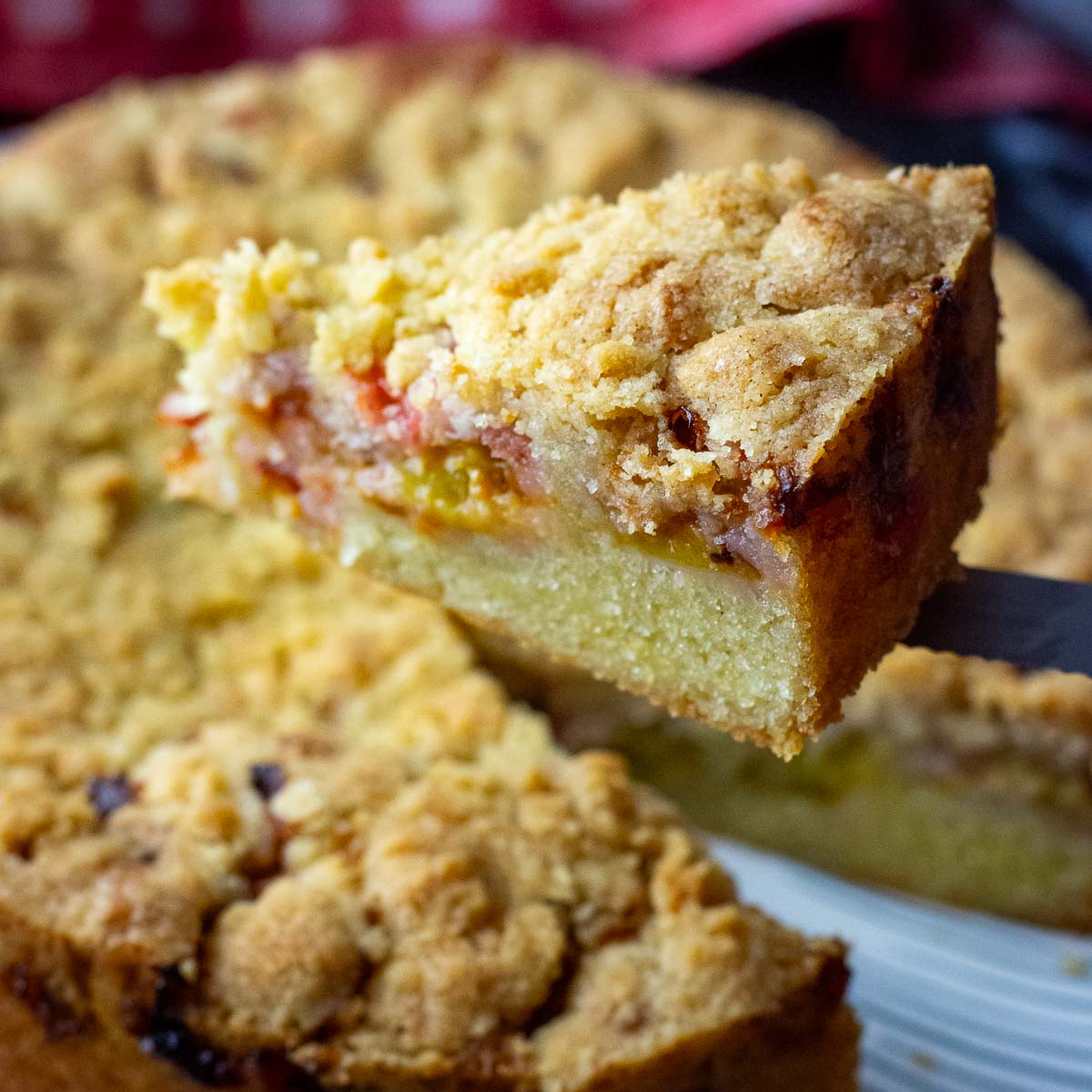
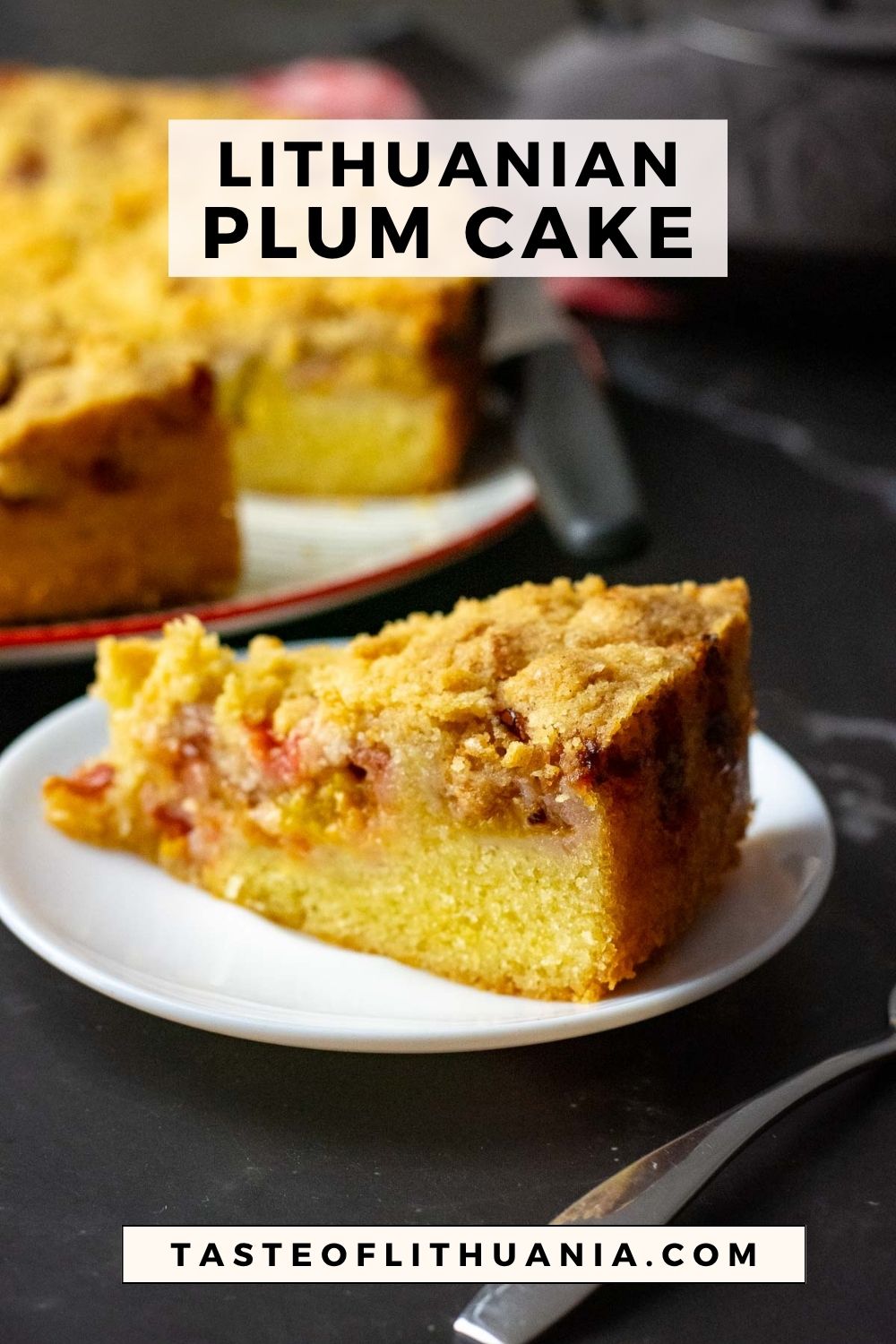
This Lithuanian plum cake (slyvų pyragas) is a simple butter cake topped with sweet, juicy plums and a buttery cinnamon streusel. It comes together in one bowl with basic pantry ingredients and only gets better as it sits, so don't be afraid to bake it a day ahead.
Jump to:
My grandmother grew plums, but the wrong kind, or at least the wrong kind as far as I was concerned. Hers were small, yellow, and sour enough to make you screw up your face, and as a kid I wanted nothing to do with them. What I actually wanted were the plums our neighbors grew: dark, juicy, sweet enough to eat straight off the tree. Every so often they'd send some over, and when they did, this Lithuanian plum cake is what we made with them.
There isn't one official name or recipe for this cake. Versions of it turn up across Lithuanian, Polish, and German home baking, all built on the same idea: a simple butter cake, fruit pressed into the top, a cinnamon streusel over the whole thing. In Lithuanian, you'd call it slyvų pyragas, which just means "plum cake" (pyragas covers everything from cake to pie to a savory bake, so context does the work). This is the home-kitchen version, made with plums that were good enough to eat on their own, which is really the only requirement.

Recipe Highlights
TIMING: 20 minutes to put together, then largely hands-off while it bakes and cools.
TEXTURE: a dense, buttery crumb under juicy roasted plums and a coarse cinnamon streusel.
MAKE-AHEAD FRIENDLY: it's honestly better the next day, once it's had time to fully set.
YIELD: one 9-inch cake, 8 to 10 slices, enough for a full pot of coffee's worth of company.

Ingredient Notes
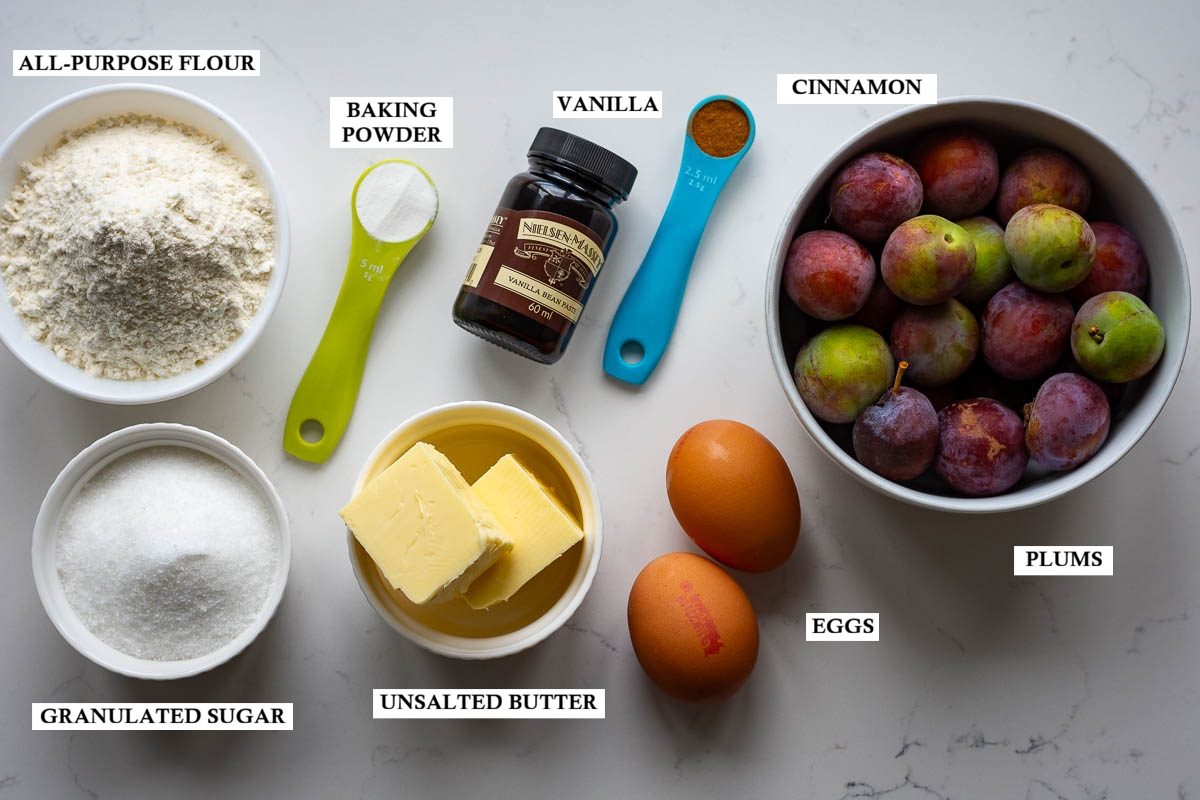
Plums. You want plums sweet and ripe enough that you'd happily eat one out of hand. Italian prune plums work well here because they hold their shape and don't weep too much liquid, but any sweet, firm-fleshed plum variety will do.
Butter. Softened for the cake batter, cold for the streusel, and these two temperatures aren't interchangeable. Softened butter for the cake creams properly with the sugar to trap air; cold butter for the streusel is what gives you distinct crumbs instead of a paste.
Vanilla bean paste. Regular vanilla extract works fine as a swap, use the same amount. The paste just gives you visible flecks and a slightly rounder flavor, nothing the recipe depends on.
Flour. Standard all-purpose flour throughout.
Other stone fruit. No plums, no problem. Sliced apricots or nectarines work in the same quantity and method, but reduce the sugar slightly as they're naturally sweeter than plums.
How to Make Lithuanian Plum Cake
1. Preheat the oven to 350°F (180°C). Grease a 9-inch (23cm) springform pan and line the base with parchment paper.
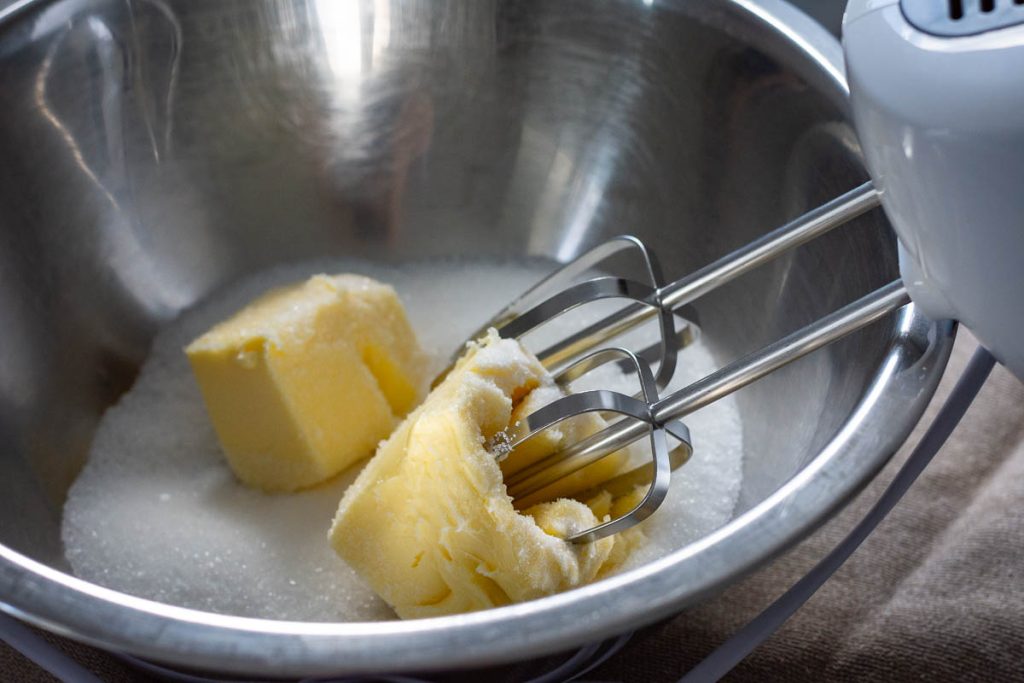
2. In a large mixing bowl, beat the softened butter and sugar with an electric hand mixer for about 2 minutes, until light and fluffy.
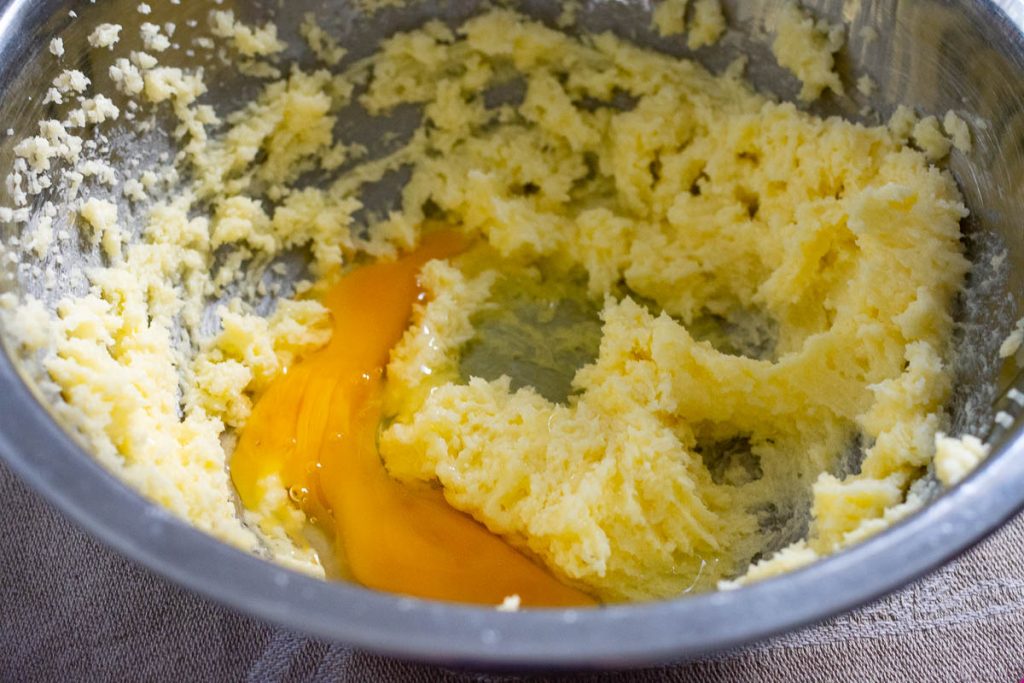
3. Add the eggs one at a time, beating well after each addition, then beat in the vanilla bean paste.
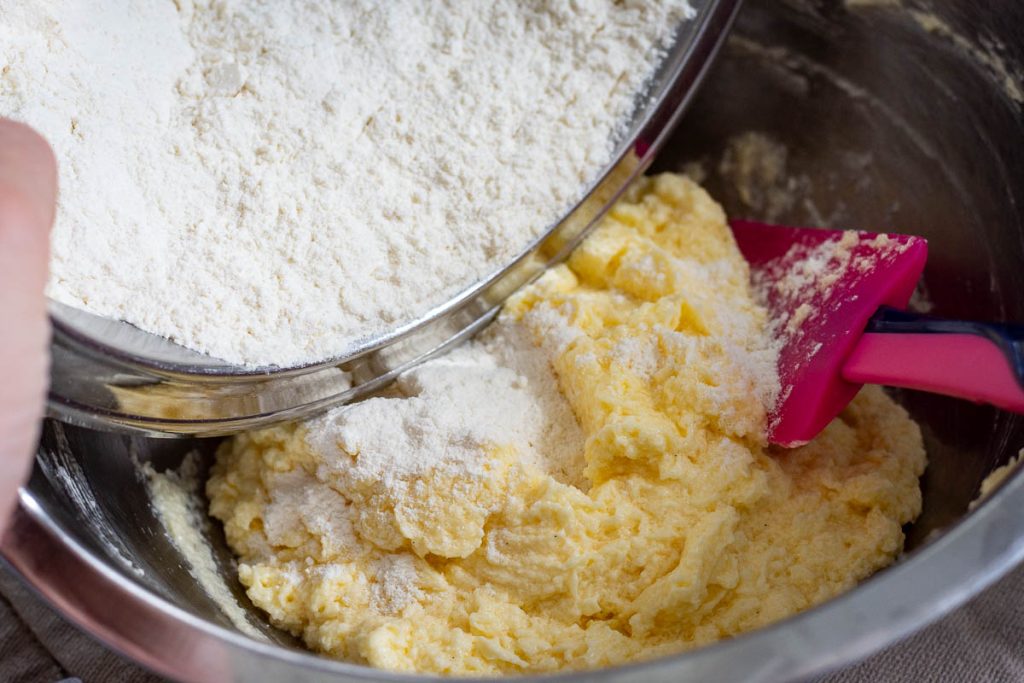
4. In a separate bowl, whisk together the flour, baking powder, and a pinch of salt. Add to the wet ingredients and fold in with a rubber spatula until just combined, don't overmix.
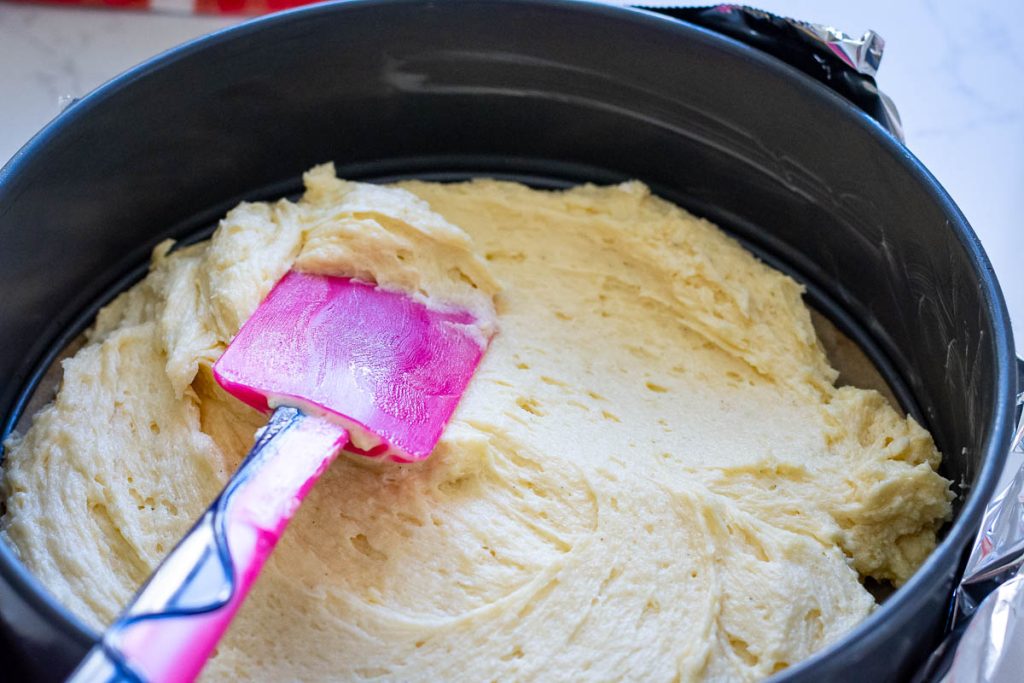
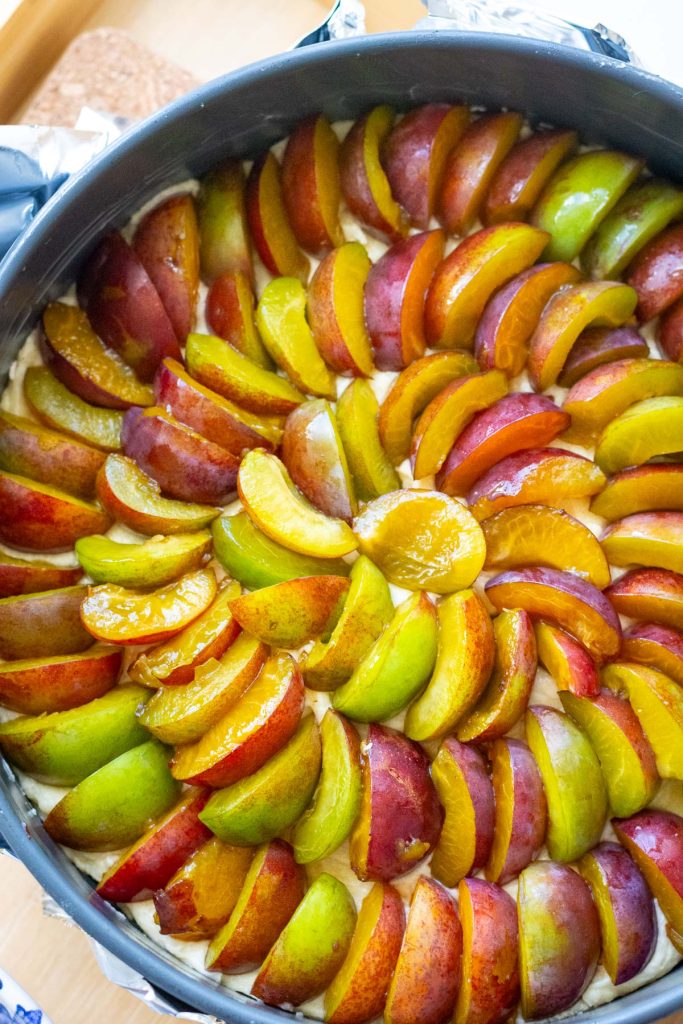
5. Spread the batter into the prepared pan. Arrange the quartered plums on top in circles.
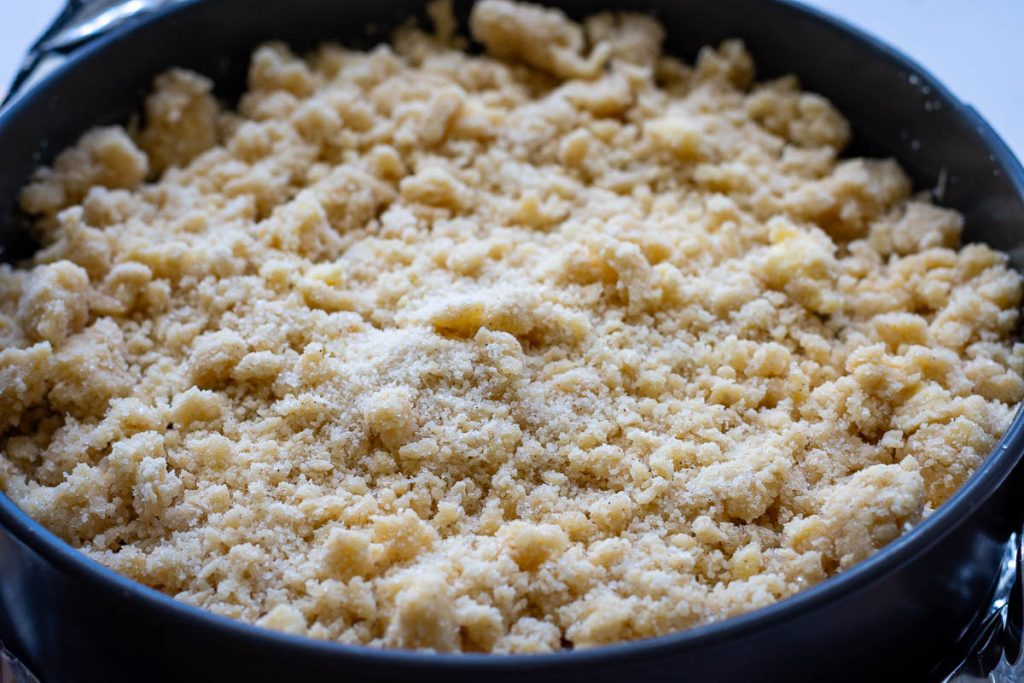
6. Make the streusel: mix the flour, sugar, cinnamon, and a pinch of salt in a bowl. Rub the cold butter into the mixture with your fingertips until it forms coarse crumbs. Scatter evenly over the plums.
7. Bake for 50 to 55 minutes, until the streusel is golden and a skewer inserted into the cake (avoiding a plum) comes out clean.
8. Let the cake cool in the pan for 20 minutes, then run a blunt knife around the edge and release the springform. Cool completely to room temperature before slicing.
Important Tips
- Don't overmix the batter. Fold the dry ingredients in just until you can't see flour streaks. Overmixing develops the gluten and gives you a tougher, denser crumb than you want here.
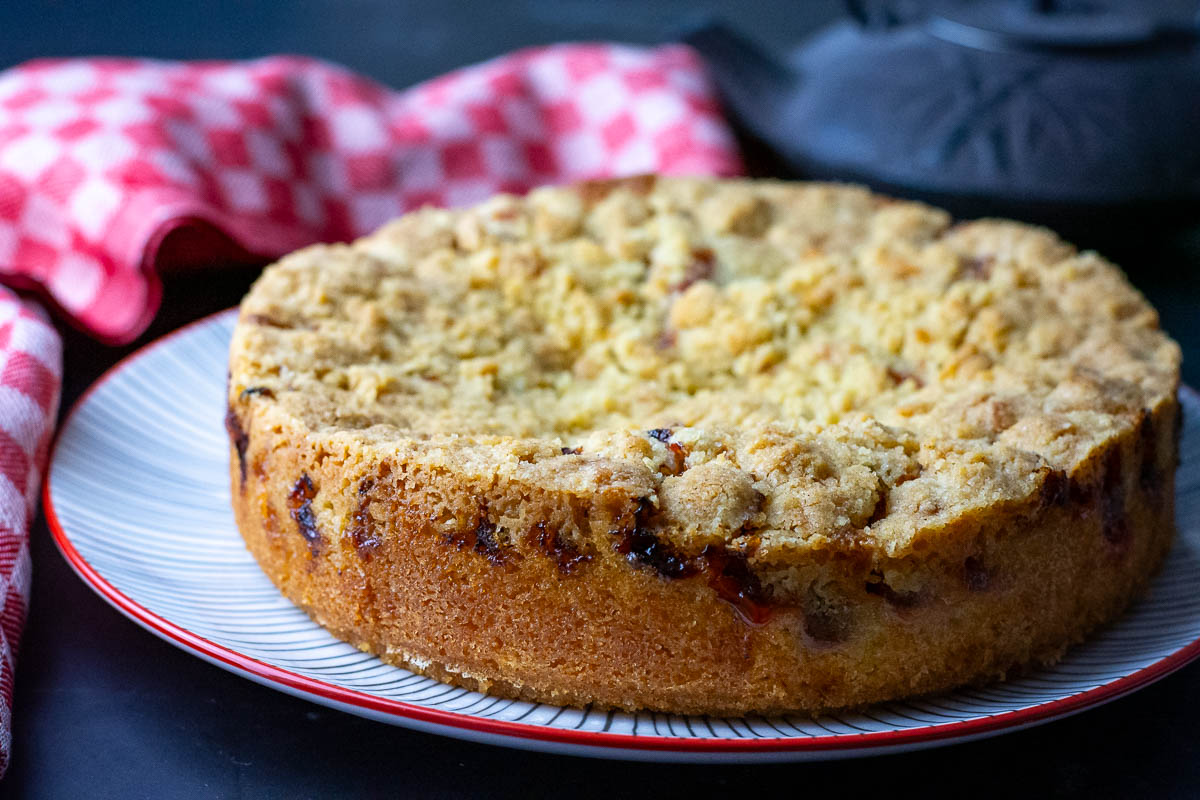
- Watch your streusel crumb size. You're after coarse breadcrumbs, not sand and not dough. If it starts clumping together into a paste, your butter's too warm; pop the bowl in the fridge for 10 minutes and try again.
- Manage plum moisture. Very juicy plums can make the batter underneath go slightly gummy. Pat the quartered plums dry with a paper towel before arranging them on the batter.
- Trust the skewer, not the clock. Ovens vary, and a skewer inserted away from a plum (fruit juice will always look wet) is a more reliable doneness cue than the timer alone.
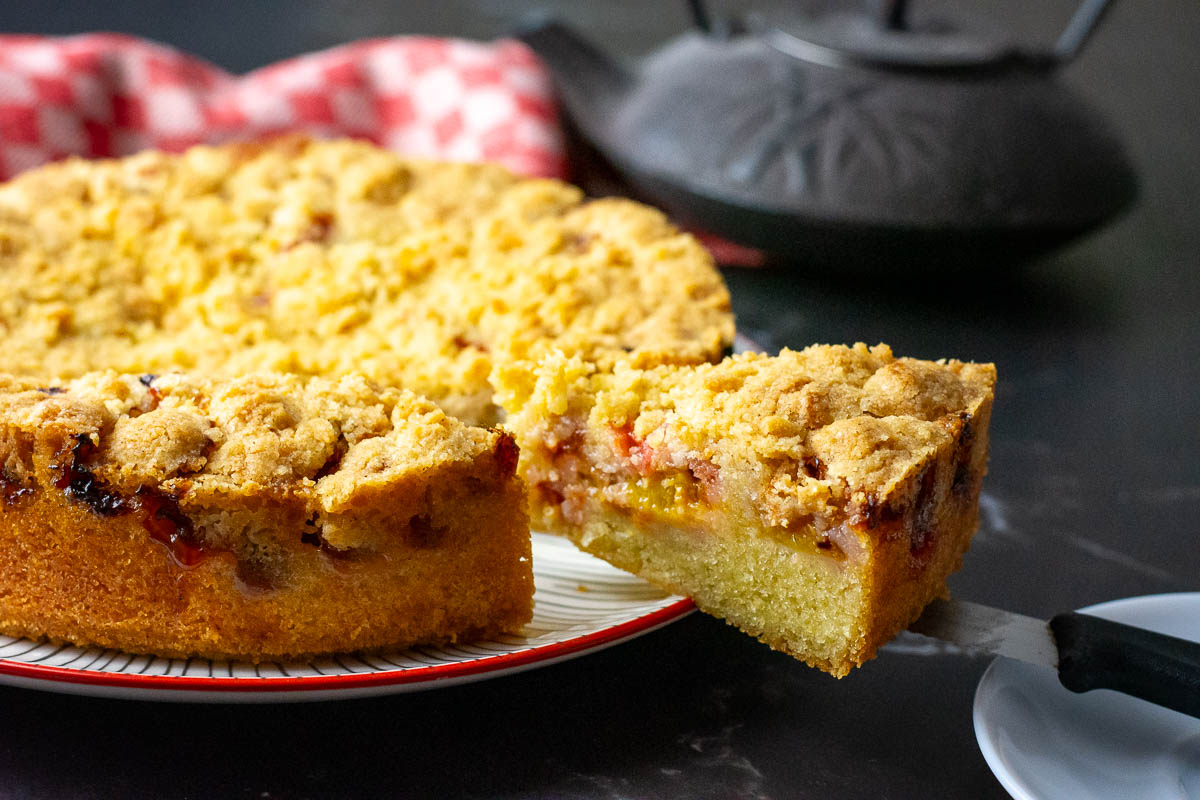
- Don't cut it warm. The center needs to fully set as it cools. Slice too early and you'll get a wet, dense slice instead of a clean one.
Serving Suggestions
This cake doesn't need much. A dusting of powdered sugar is the classic finish, and honestly all it needs alongside a cup of coffee or tea.
For something more like dessert, serve slightly warm with a scoop of vanilla ice cream, or at room temperature with a spoonful of lightly sweetened whipped cream or a dollop of sour cream, which cuts nicely through the sweetness of the streusel.
Storage & Make-Ahead
Store the cooled cake covered at room temperature for up to 3 days, or in the fridge for up to 5 (the fruit topping means it doesn't hold as well at room temperature as a plain butter cake would). Bring refrigerated slices back to room temperature, or warm briefly, before serving.
To make ahead, bake the cake up to a day in advance; the flavor actually improves overnight as the plum juices settle into the crumb. You can also freeze fully cooled, unsliced cake wrapped tightly for up to 2 months. Thaw overnight in the fridge, then bring to room temperature before serving.
Recipe FAQs
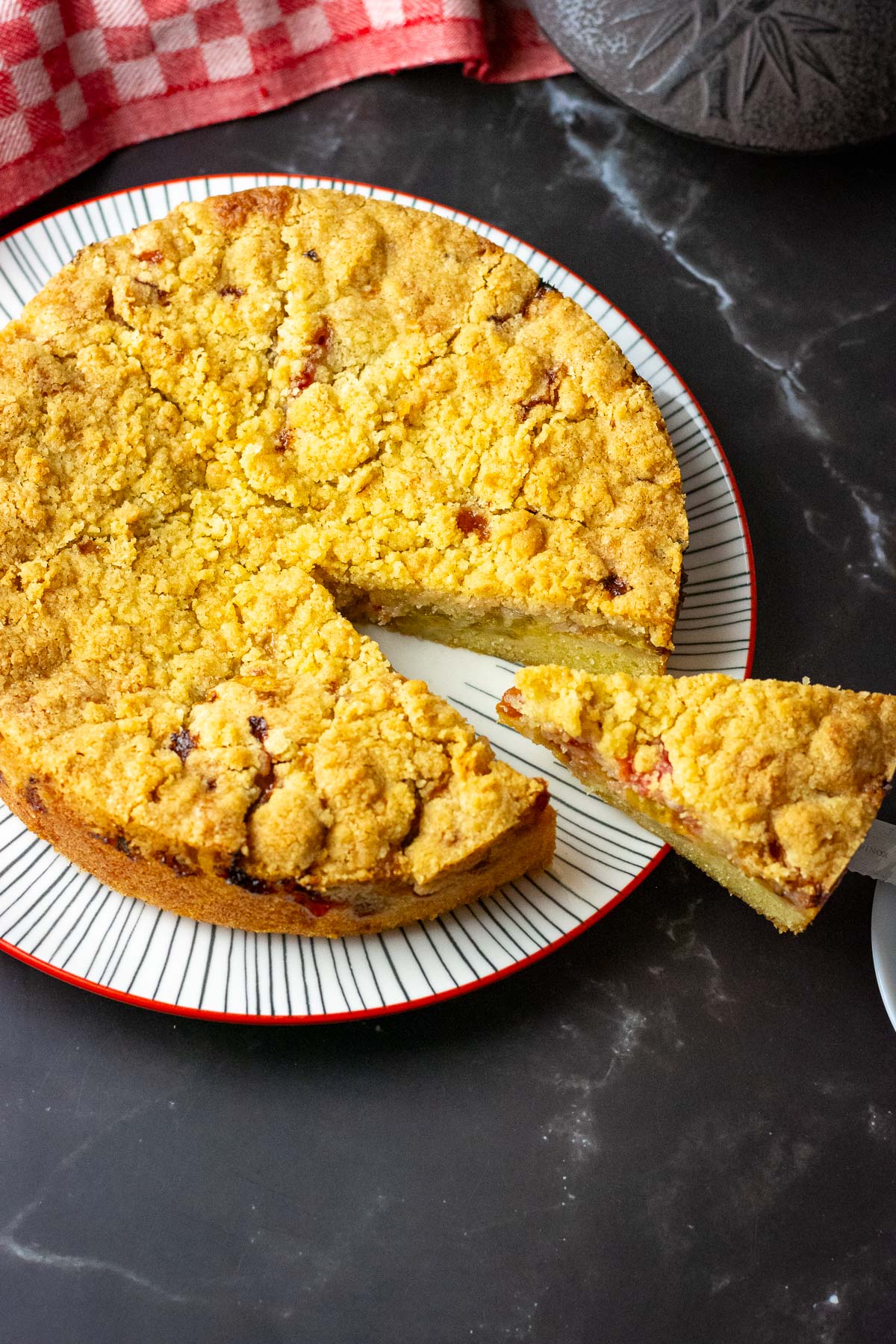
Almost always one of two things: it was sliced before fully cooling, or the plums were very juicy and released more liquid than the batter could absorb during baking. Let the cake cool completely (not just the 20 minutes in the pan) before cutting, and pat very juicy plums dry before arranging them next time.
An 8-inch pan will work but the cake will be taller and need a longer bake time, tent it with foil if the streusel is browning before the center is set. A 10-inch pan will give you a shorter cake and will likely be done closer to 40 to 45 minutes, so start checking early.
More Lithuanian Cake Recipes to Try
Lithuanian Plum Cake (Slyvų Pyragas)
Equipment
- 9-inch (23cm) springform pan
- Electric Hand Mixer
- Rubber Spatula
Ingredients
- 1.1 lb (500g) plums, ripe but firm, pitted and quartered
- ½ cup + 1 tbsp (120g) unsalted butter, softened
- ¾ cup (150g) granulated sugar
- 1 teaspoon vanilla bean paste or extract
- 2 large eggs
- 1 cup (125g) all-purpose flour
- 1 teaspoon baking powder
- pinch of salt
Streusel topping
- 1 cup (125g) all-purpose flour
- ½ cup (100g) granulated sugar
- ½ teaspoon cinnamon
- pinch of salt
- ½ cup (110)g cold unsalted butter cubed
Instructions
- Preheat the oven to 350°F (180°C). Grease a 9-inch (23cm) springform pan and line the base with parchment paper.
- In a large mixing bowl, beat the softened butter and sugar with an electric hand mixer for about 2 minutes, until light and fluffy.
- Add the eggs one at a time, beating well after each addition, then beat in the vanilla bean paste.
- In a separate bowl, whisk together the flour, baking powder, and a pinch of salt. Add to the wet ingredients and fold in with a rubber spatula until just combined, don't overmix.
- Spread the batter into the prepared pan. Arrange the quartered plums on top in circles.
- Make the streusel: mix the flour, sugar, cinnamon, and a pinch of salt in a bowl. Rub the cold butter into the mixture with your fingertips until it forms coarse crumbs. Scatter evenly over the plums.
- Bake for 50–55 minutes, until the streusel is golden and a skewer inserted into the cake (avoiding a plum) comes out clean.
- Let the cake cool in the pan for 20 minutes, then run a blunt knife around the edge and release the springform. Cool completely to room temperature before slicing.
Notes
Leave a Reply