

Looking for a great way to make beautiful eggs for Easter Sunday? This easy guide will show you How To Dye Eggs With Onion Skins, a popular Lithuanian method that uses natural materials like onion peels and leaves to create stunning patterns. Forget artificial dyes—this traditional technique makes decorating Easter eggs both fun and eco-friendly!

Jump to:
Lithuanian Easter Eggs
In Lithuania, decorating Easter eggs is an old tradition that brings families together and showcases creativity. Once the eggs are dyes and decorated, they are no longer referred to as eggs - they are now Margučiai!
While the simple onion skin dye method is the most popular, there are many other ways Lithuanians decorate their fresh eggs. Some use natural dyes like yellow onions or small leaves pressed into the egg shells to create beautiful patterns.

For those who want to get really intricate, eggs are sometimes decorated with melted wax or crayons to form intricate designs, a process that can take hours but results in stunning works of art. Another unique method is wrapping eggs in patterned silk, creating vibrant and detailed patterns when boiled.
Each family has its own family tradition, and everyone gets involved—from young kids pressing flowers to grandparents carefully applying wax.
No matter the method, these beautifully decorated eggs always make it to the Easter table, a centerpiece that ties together the celebration and adds to the joy of the season. With natural ingredients and a lot of love, Lithuanian Easter eggs are a beautiful expression of culture and family.
What You’ll Need
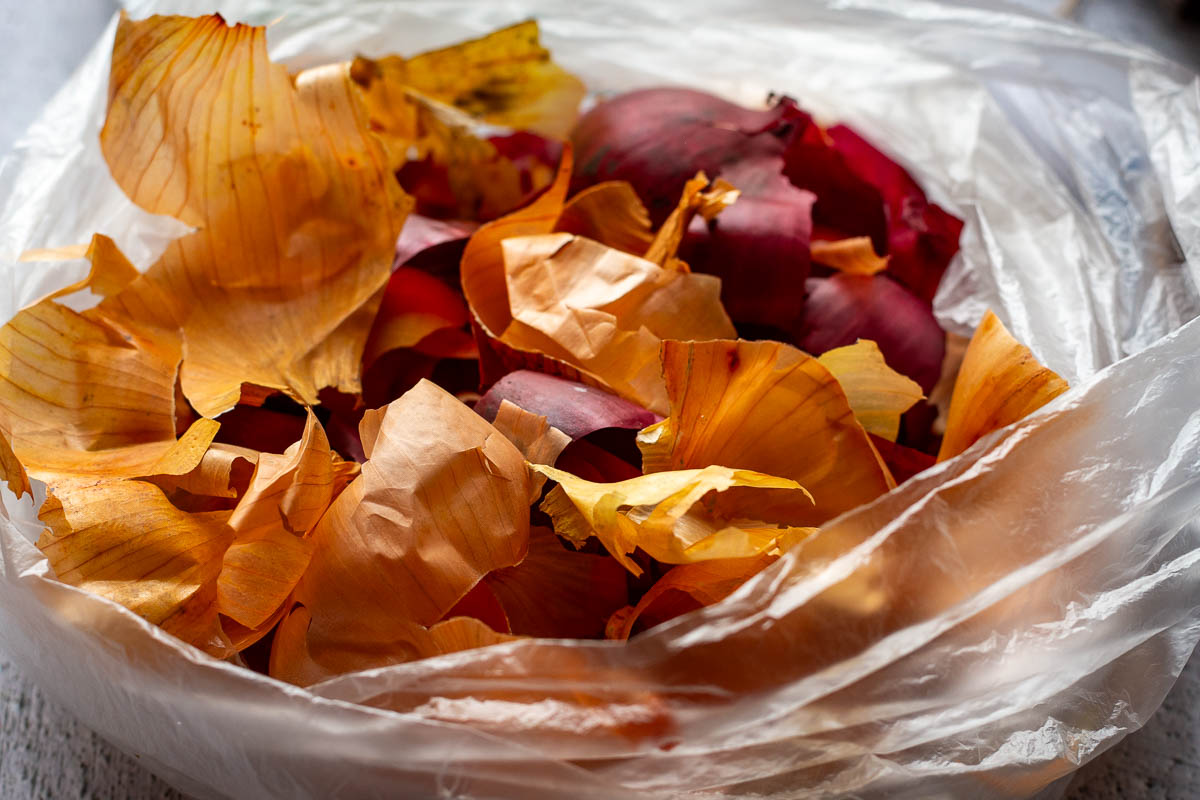
Start saving onion skins a few weeks (or even months) ahead, especially if you're planning to dye a lot of eggs. The amount of onion skins you use will affect the depth of color—more skins mean richer, darker shades. Using both red onion skins and yellow onion skins will give you a mix of warm, earthy tones.
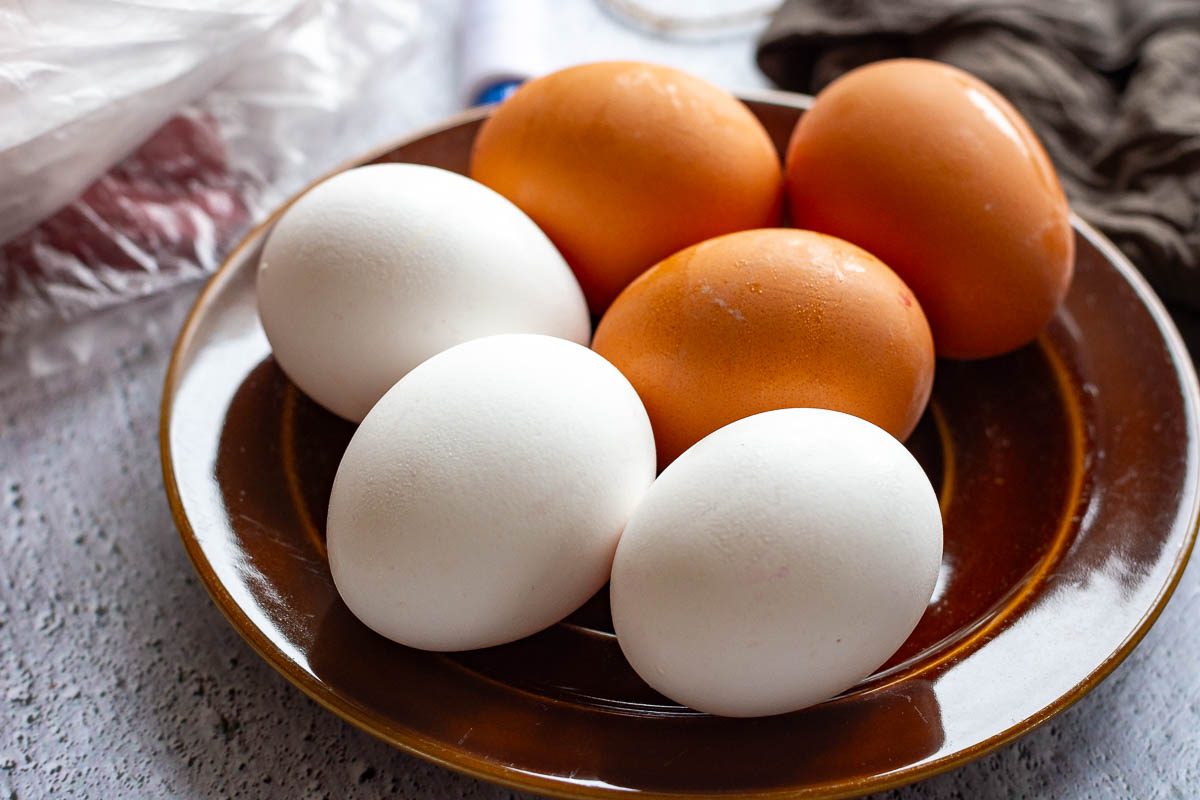
For the best contrast, choose both white eggs and brown eggs—lighter shells will pick up brighter hues, while darker ones will have a deeper, more muted look.
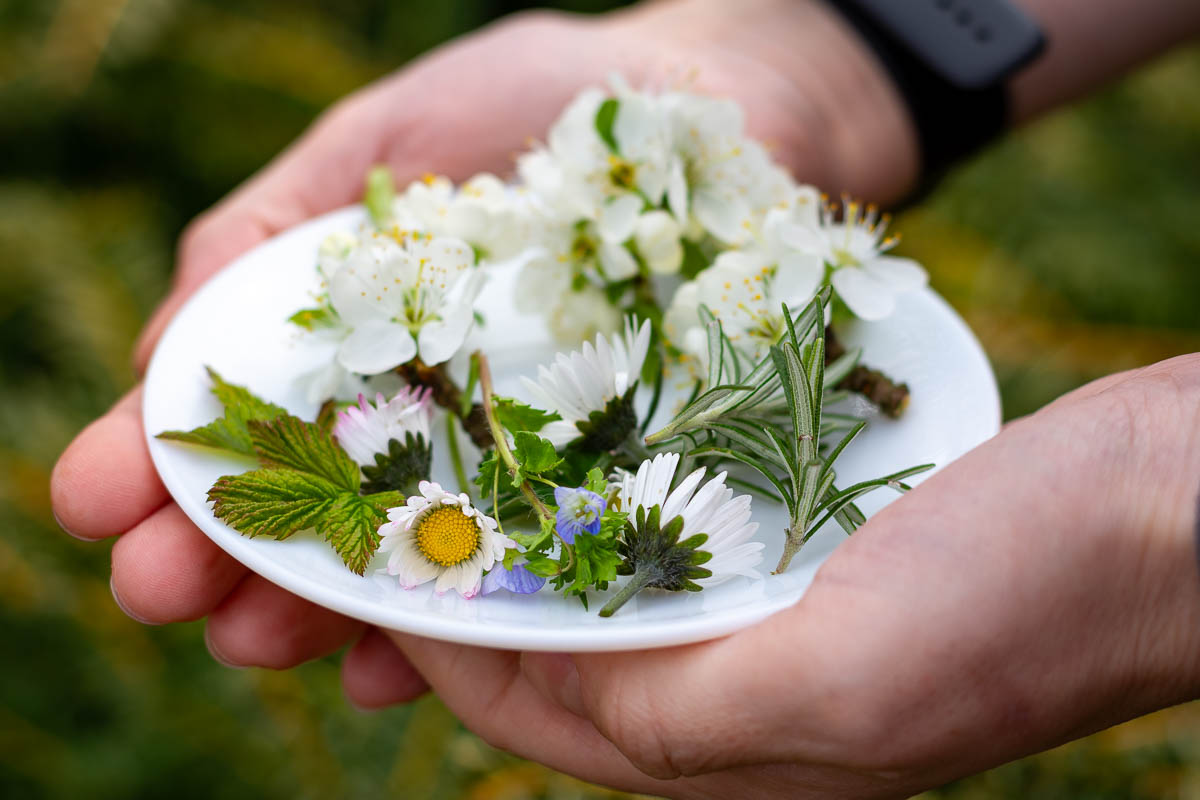
Head out into your garden, a nearby meadow, or even your fridge to gather small leaves, blossoms (like daisies), and herbs like parsley, dill, or cilantro to create intricate patterns on the shells.
You’ll also need a pair of nylon stockings (ladies’ stockings or mid-calf socks work well) to hold everything in place. Secure the papery skin around each egg with sewing thread or butcher’s twine—not only does this keep the design in place, but the twine itself can create a beautiful stripy pattern on the eggs!

Step-By-Step Method
1. Prepare the onion peels. Gather plenty of dry onion peels (both yellow and red work). The more you use, the deeper the color. Reserve the smaller pieces of onion peel too. We'll add them to the pot of water that the eggs boil in.
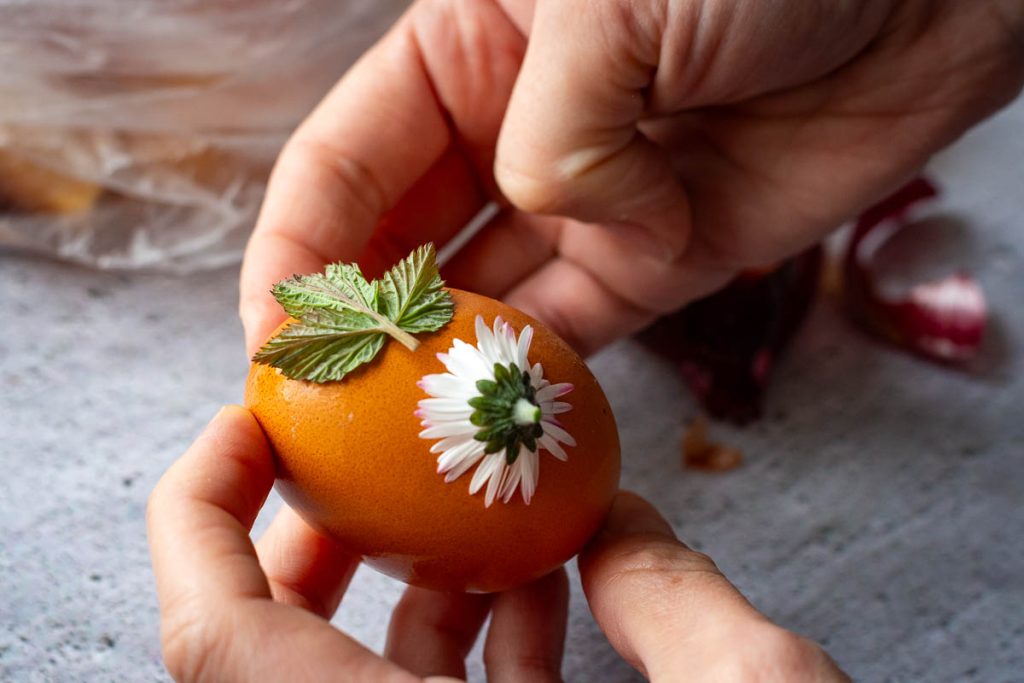
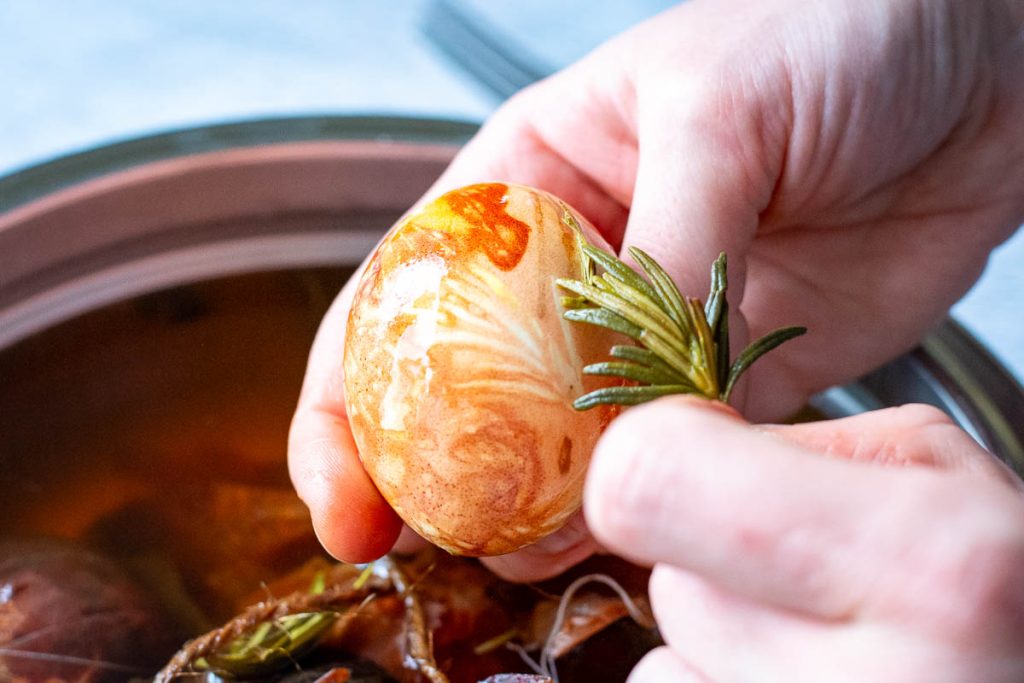
2. Get the eggs ready. Use room temperature raw eggs. Wet the eggs, and press small leaves, flowers, or grains against the shell for patterns.
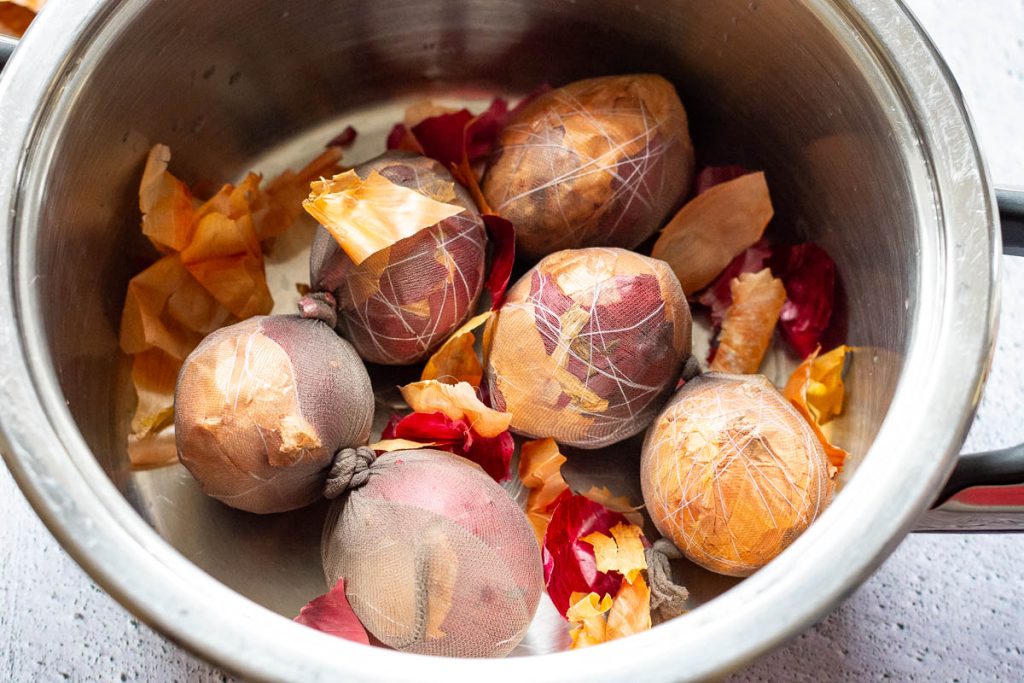
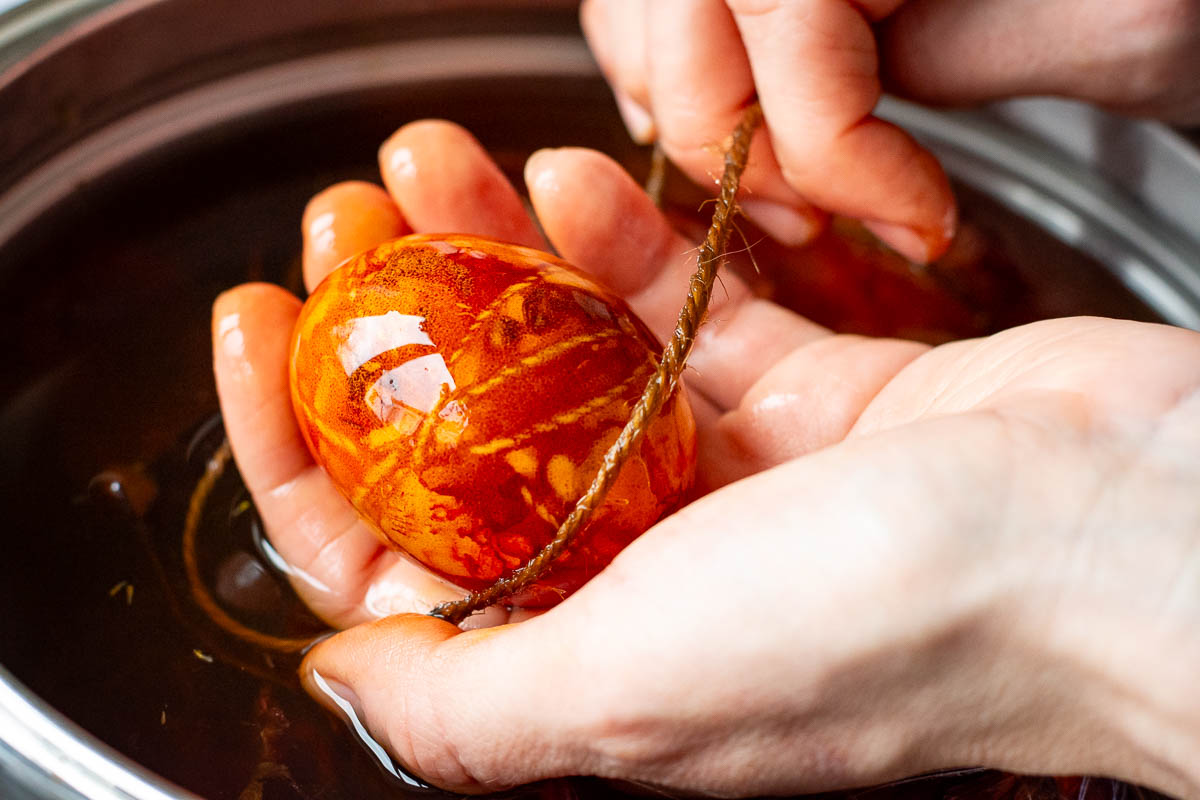
3. Wrap the eggs. Carefully place each prepared egg into a couple of layers of onion peels, ensuring all parts of the egg are covered. Then twist ties (like Butcher's twine or sewing thread) around the eggs to keep the peels in place and secure everything in a nylon stocking. Tie a knot before adding another egg to the stocking. Repeat the process with the rest of the eggs, until you run out of eggs, onion skins or stocking space :).
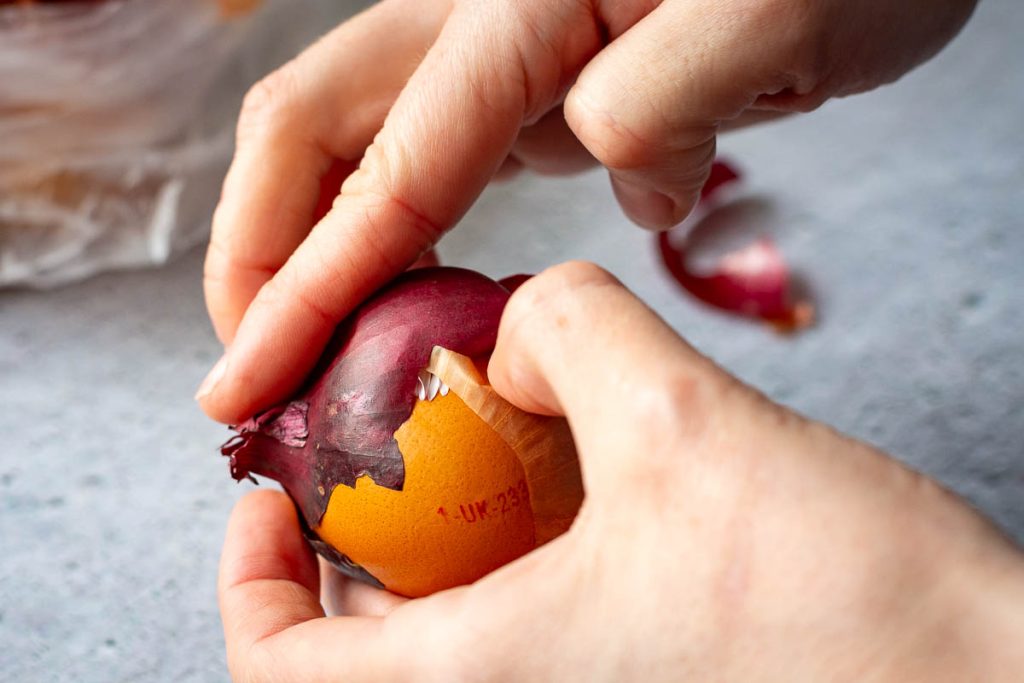
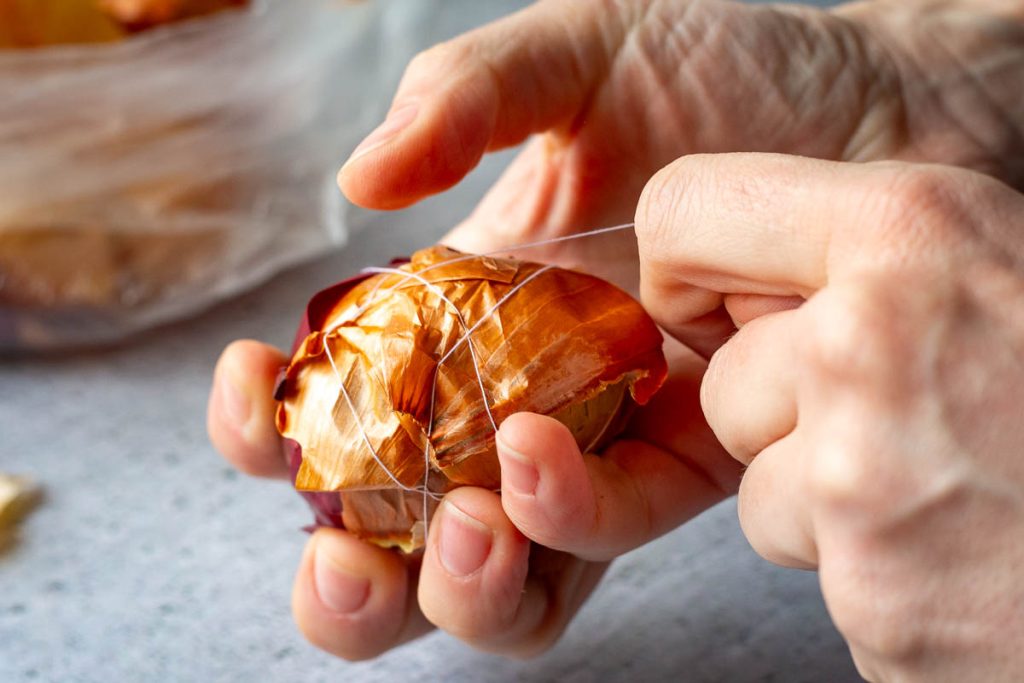
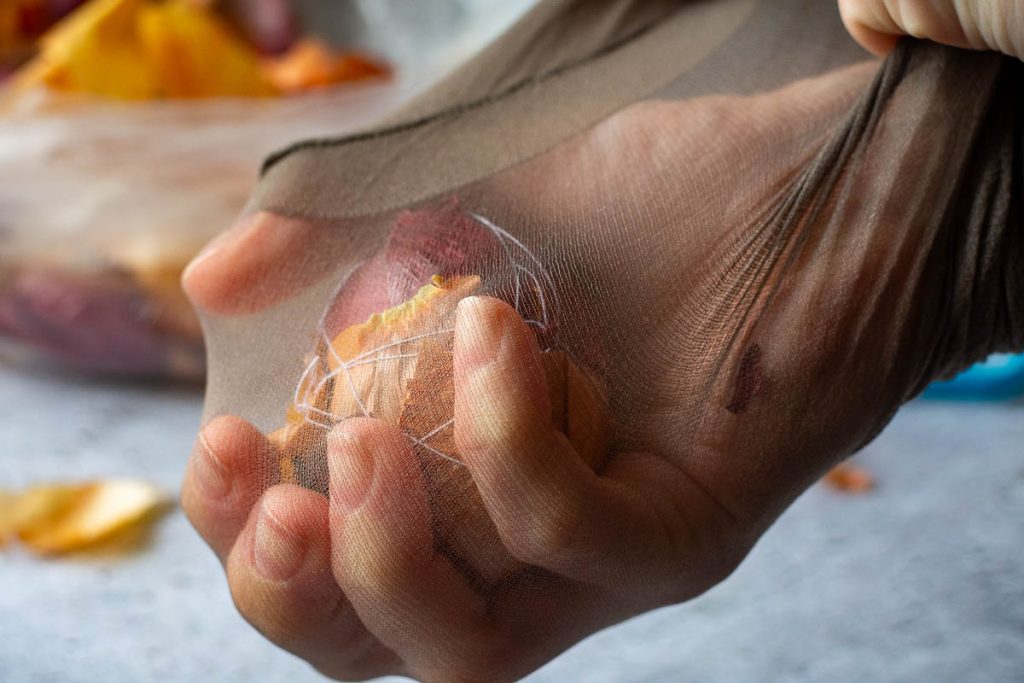
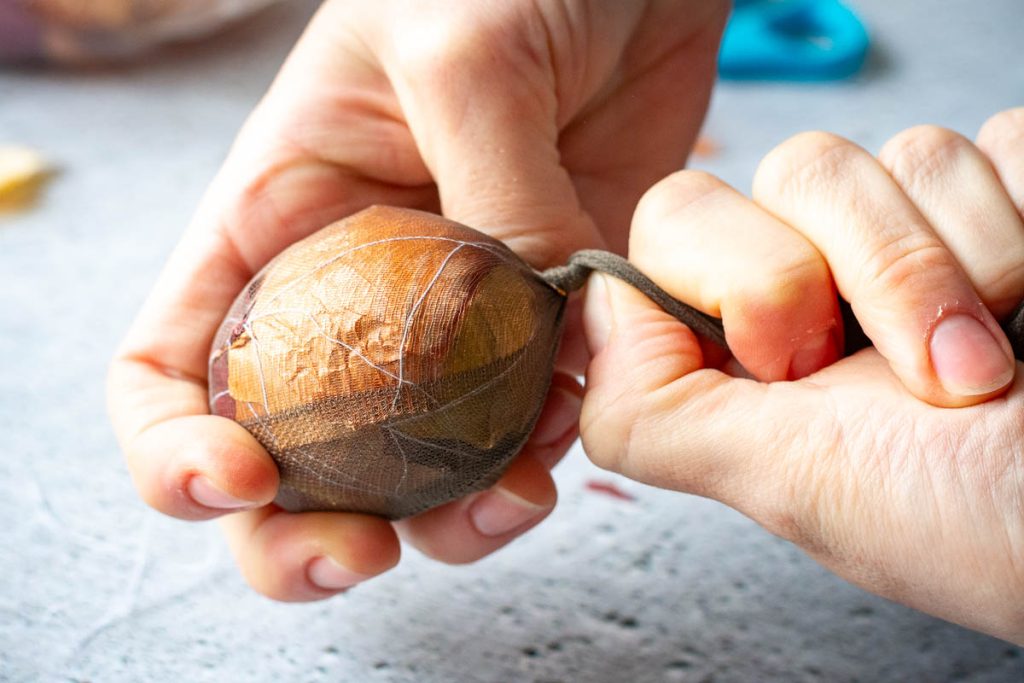
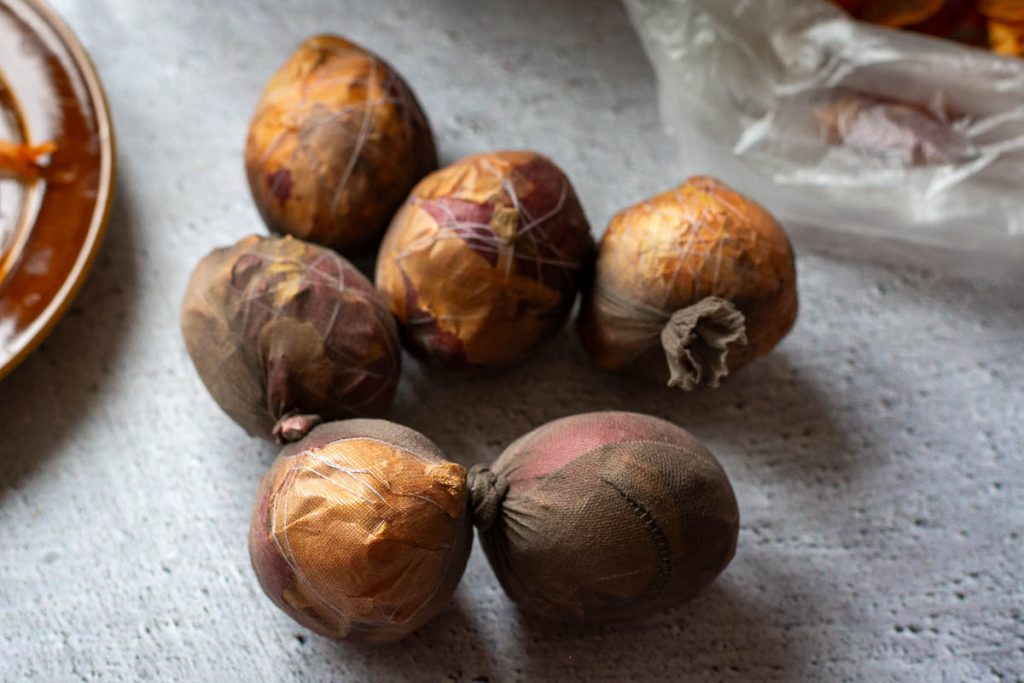
4. Boil the eggs. Place the egg stocking in a large pot and cover with a few cups of water to submerge. Add extra small onion peels for a richer color. You may also add some food colouring at this point. Bring to a slow boil over medium heat. Once the water boils, cook for about 10 minutes.
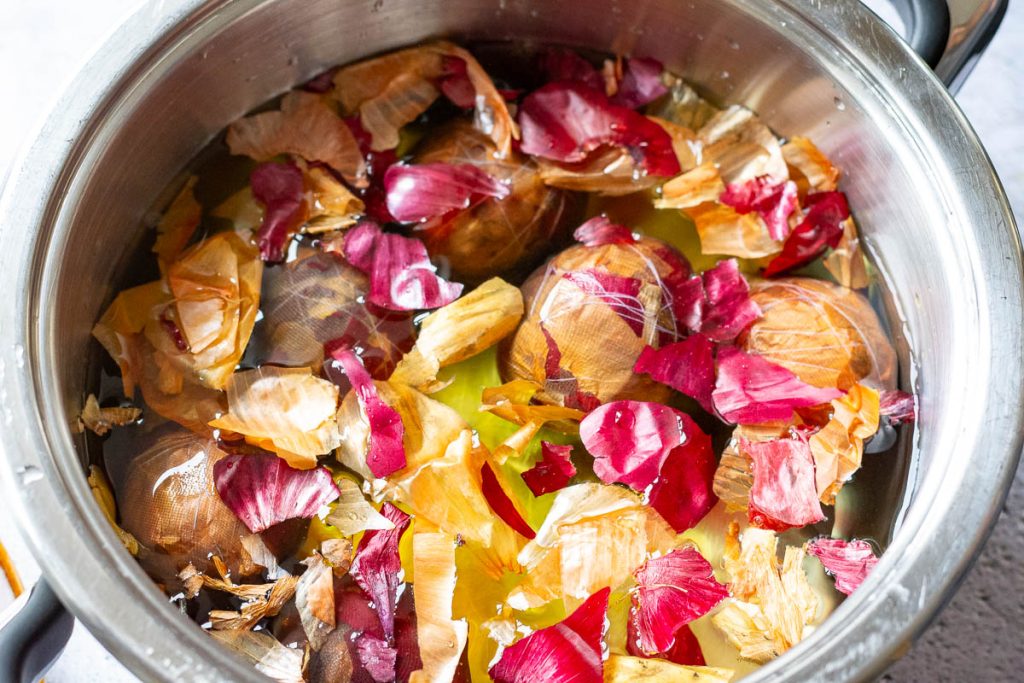
5. Cool them down. Transfer the dyed eggs into a bowl of cold water to stop cooking, keeping them in the stockings still and allow them to cool down to room temperature.
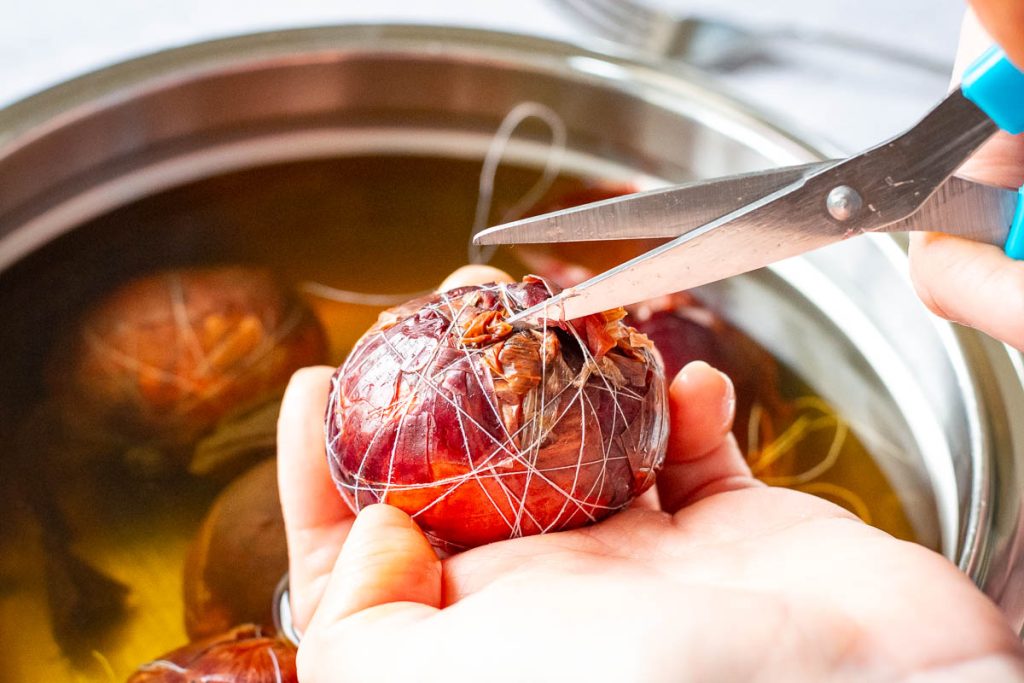
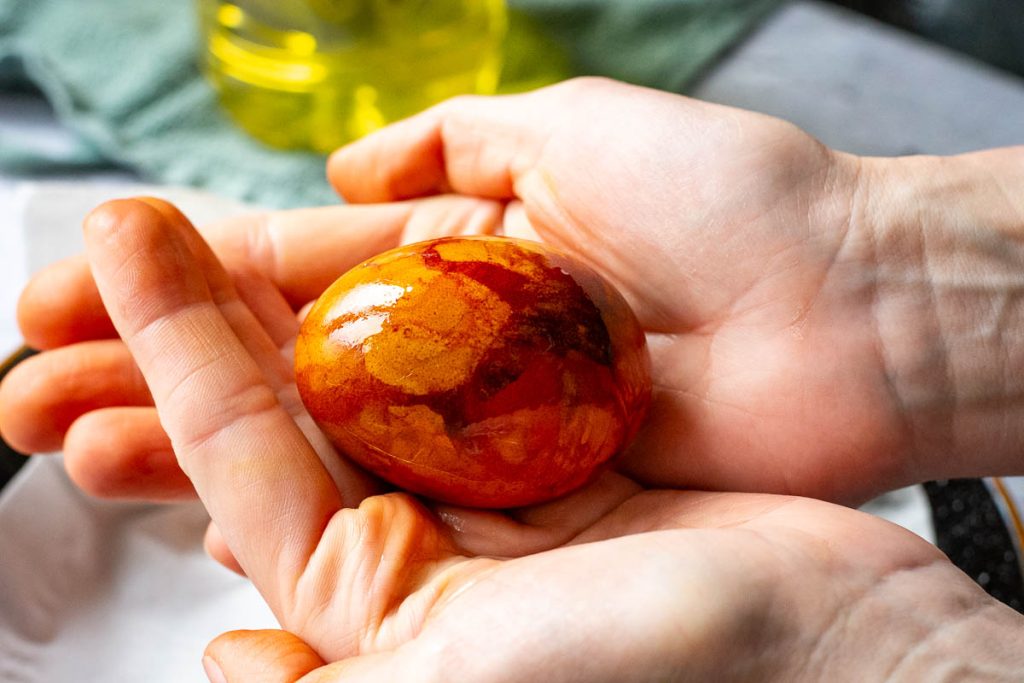
6. Unwrap and polish. Remove the wrapped egg from the stocking by cutting through the knots with scissors. Peel off the onion skins, and admire the patterns and different shades. Let the dyed eggs air dry for a few minutes. For that beautiful shine, rub the Easter eggs with a paper towel dipped in olive oil or simply use a piece of butter.

Storage
In Lithuania, decorating Easter eggs with onion skins is usually done on Holy Thursday or Good Friday, so the eggs are ready to enjoy on Easter Day. To keep them fresh, store the dyed eggs in the fridge, either in a covered bowl or an egg carton. Hard-boiled eggs will keep in the fridge for up to a week.
Variations
While the onion skin method is a classic, there are plenty of ways to mix it up and give your eggs a unique look. One fun variation is boiling your eggs with shredded red cabbage (a.k.a. purple cabbage) and a couple of tablespoons of vinegar. This creates a beautiful purple hue.
For those who like a bit more color, some families add food coloring to different pots of water, creating eggs in different colors.
You can even get creative with rubber bands or stickers to make cool patterns. Just wrap a rubber band around the egg before dyeing it to leave some white stripes or shapes behind.
If you’re feeling extra crafty, a pot of dye and some fun tools can help you experiment with endless designs!
Traditional Way To Eat Lithuanian Easter Eggs
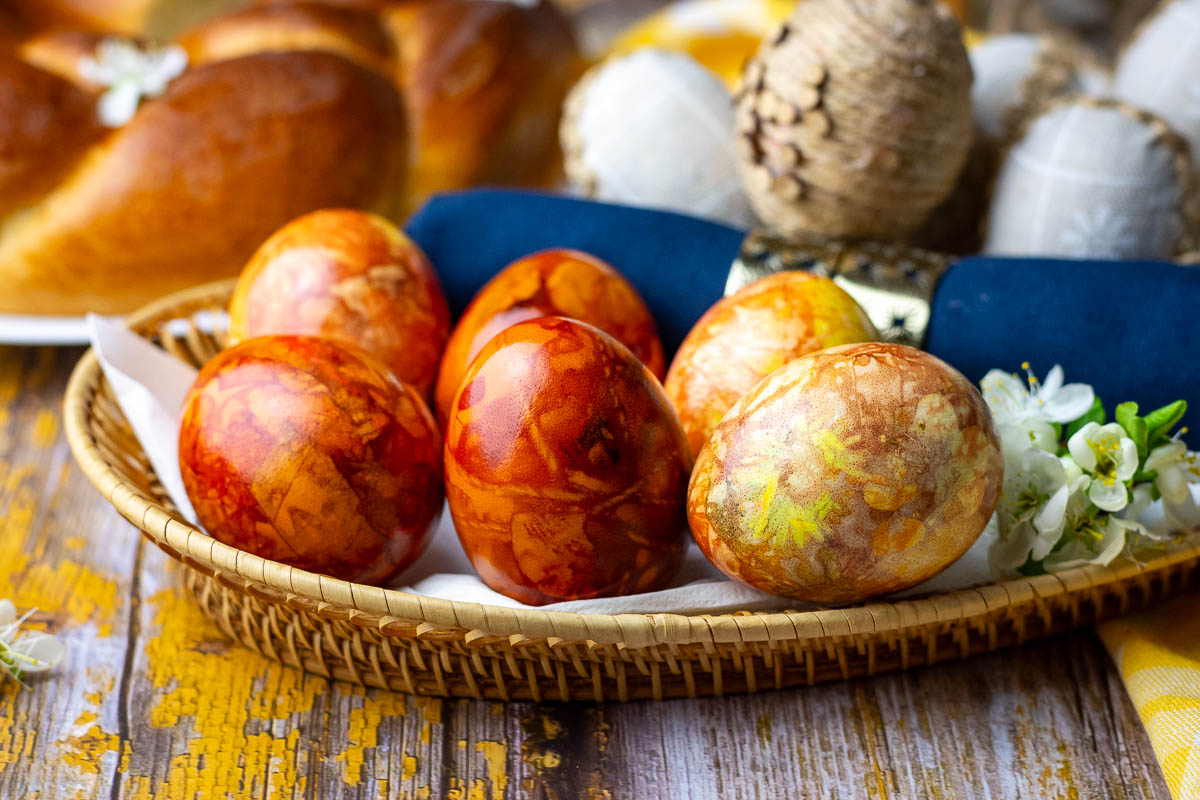
In Lithuania, beautiful Easter eggs aren’t just for decoration—they’re the very first thing eaten on Easter Sunday. The eggs enjoy a place in the center of the table, often in a woven basket. Each person chooses one.
Then comes the fun part—the egg-cracking game! One person holds their egg blunt-side up while another taps it with the pointy end of theirs. The game continues around the table until a winner emerges. The person whose egg remains uncracked on one or both ends. Winning is said to bring good luck and a happy year ahead!


The eggs are then peeled and eaten with a generous dollop of mayonnaise and a slice of black bread.
What To Do With Leftover Eggs?
In Lithuania, Easter eggs double as game pieces for another fun tradition. Children each get a handful of eggs and roll them down a makeshift slope, aiming to hit an egg that’s already at the bottom. If they succeed, they get to keep both eggs—simple, fun, and a great way to make Easter last a little longer!
Once the games are over, those extra eggs don’t go to waste. We turn leftovers into egg salad, or classic Lithuanian appetizers like Deviled Eggs with Ham and Cheese, Tuna Stuffed Eggs and Smoked Mackerel Deviled Eggs — perfect for using up every last bit!

More Lithuanian Easter Traditions and Recipes
Let's make this Easter truly Lithuanian, shall we? If you have your onion skin eggs ready, why not go ahead and try some of the ideas below:


Leave a Reply