

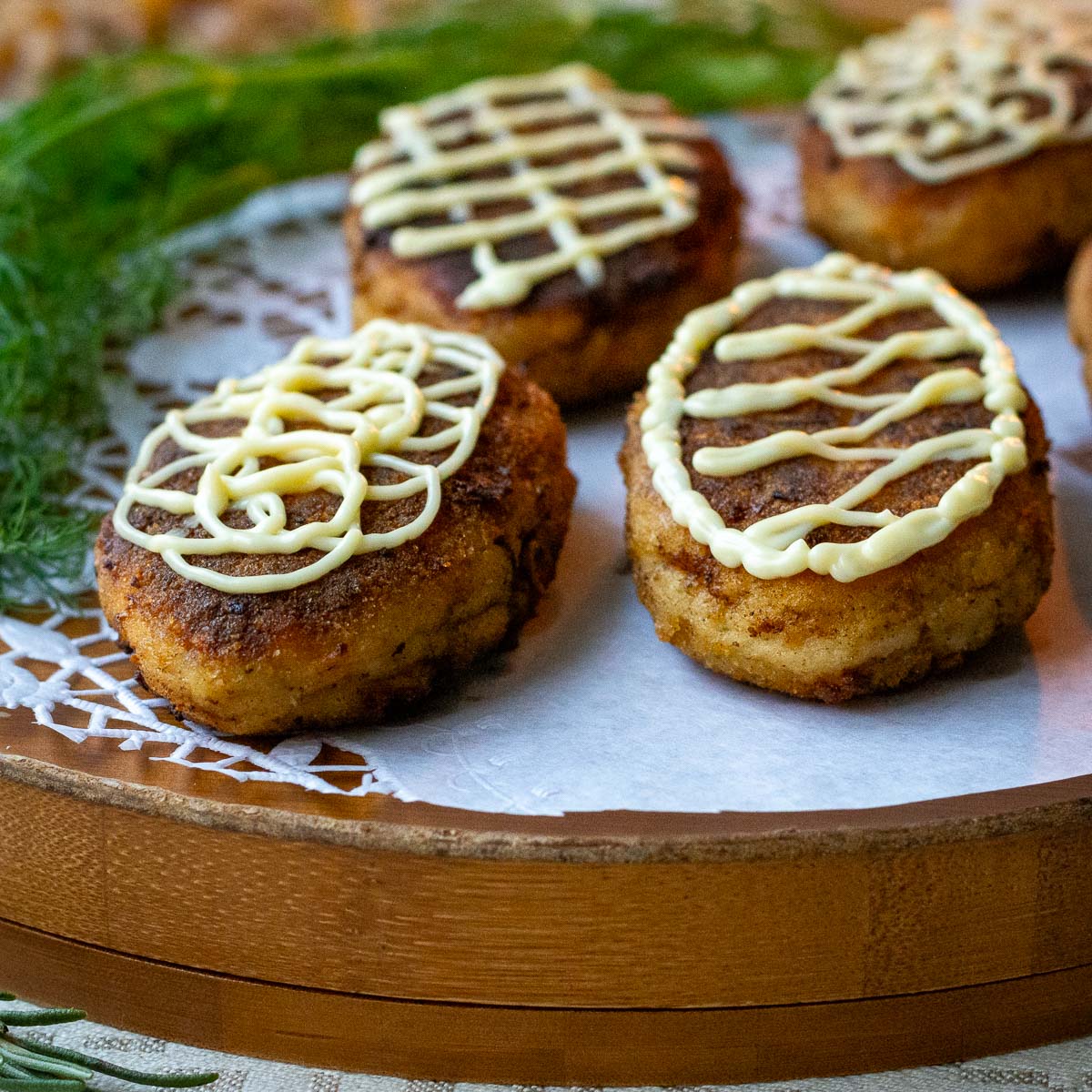
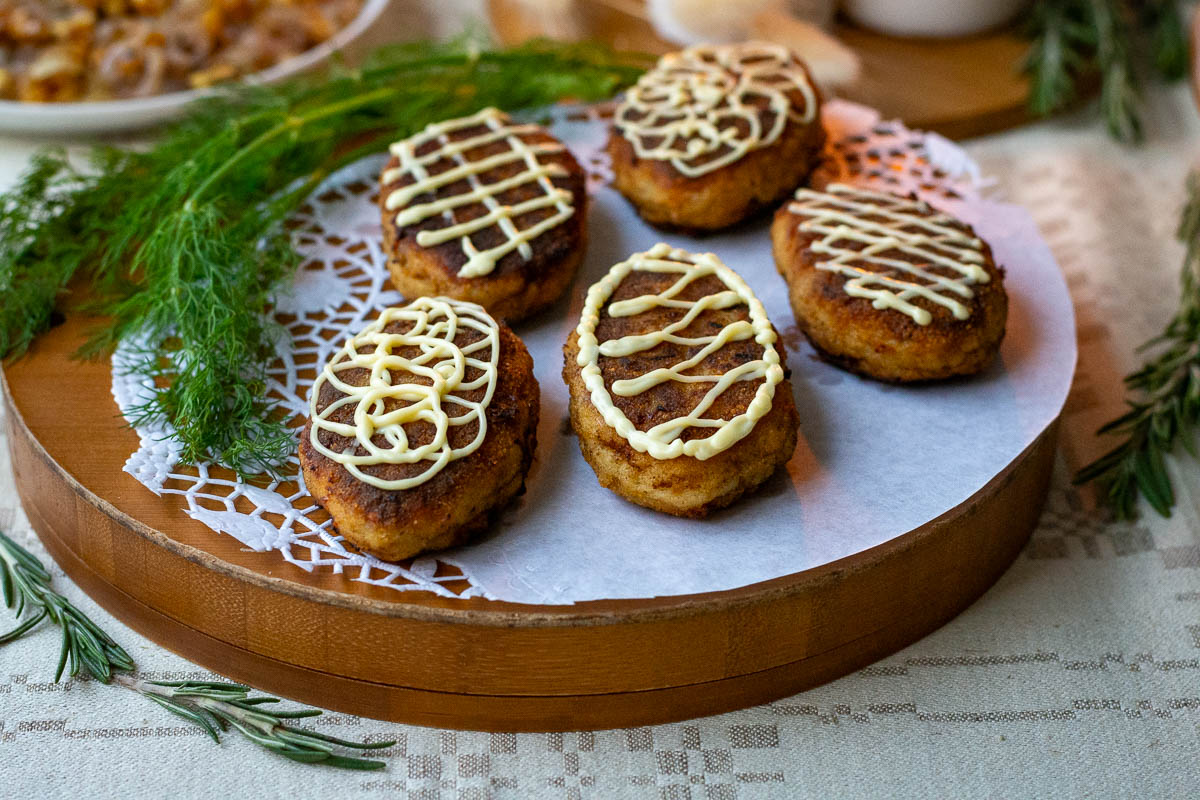
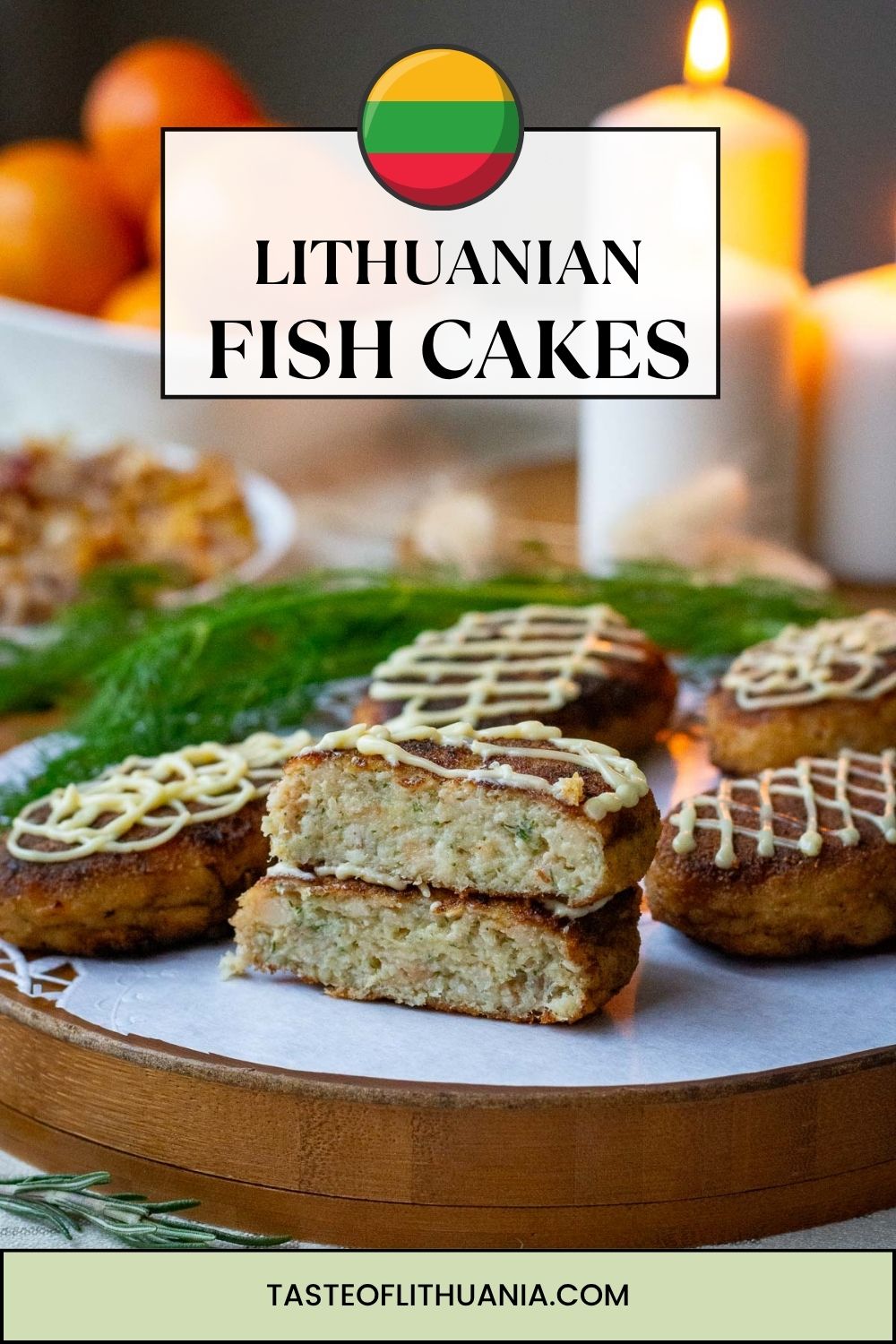
In our family, a plate of Lithuanian fish cakes shows up looking almost too neat to eat — pale, soft ovals with a ribbon of mayonnaise piped across the top like something out of a Soviet-era cookbook (because, honestly, it kind of is). We call them žuvies kotletai (pronounced roughly ZHOO-vyess kot-LEH-tie, meaning simply "fish cutlets" in Lithuanian), and they're one of those dishes we only make for big occasions, which somehow makes them taste better than food that's around all the time.
Jump to:
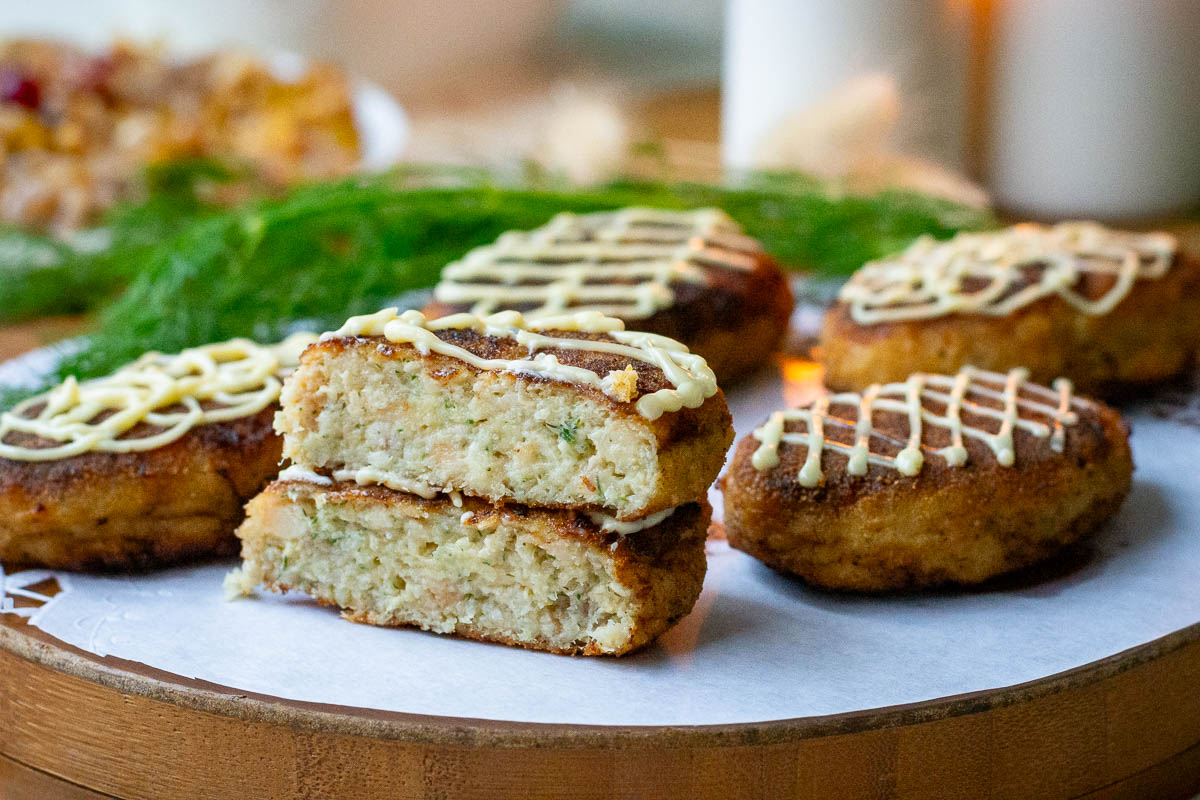
What sets Lithuanian fish cakes apart from the fish cakes you'll find elsewhere is what's not in them: no potato. Instead, the filler is milk-soaked white bread, which gives the mixture a softness that's genuinely hard to get with a starchy binder — closer to a quenelle than a fritter.
They're traditionally served cold, which is part of what makes them a good fit for a table that already has ten other dishes on it. And while they're firmly a Christmas Eve fixture in our house, they turn up at Easter and other big family meals too — this isn't a recipe you need to save for one day a year.

Recipe Highlights
THE TWIST: No potato. Milk-soaked bread is the binder, which gives these a texture closer to a quenelle than a typical fish cake.
TIMING: Under 2 hours start to finish, and most of that is hands-off chilling.
SERVING STYLE: Eaten cold, straight from the fridge, finished with a swirl of piped mayonnaise.
MAKE-AHEAD FRIENDLY: The raw mixture keeps overnight, so you can prep before the rest of the meal takes over.
YIELD: 7–8 cakes, right at home on a Kūčios or Easter table.

Ingredient notes
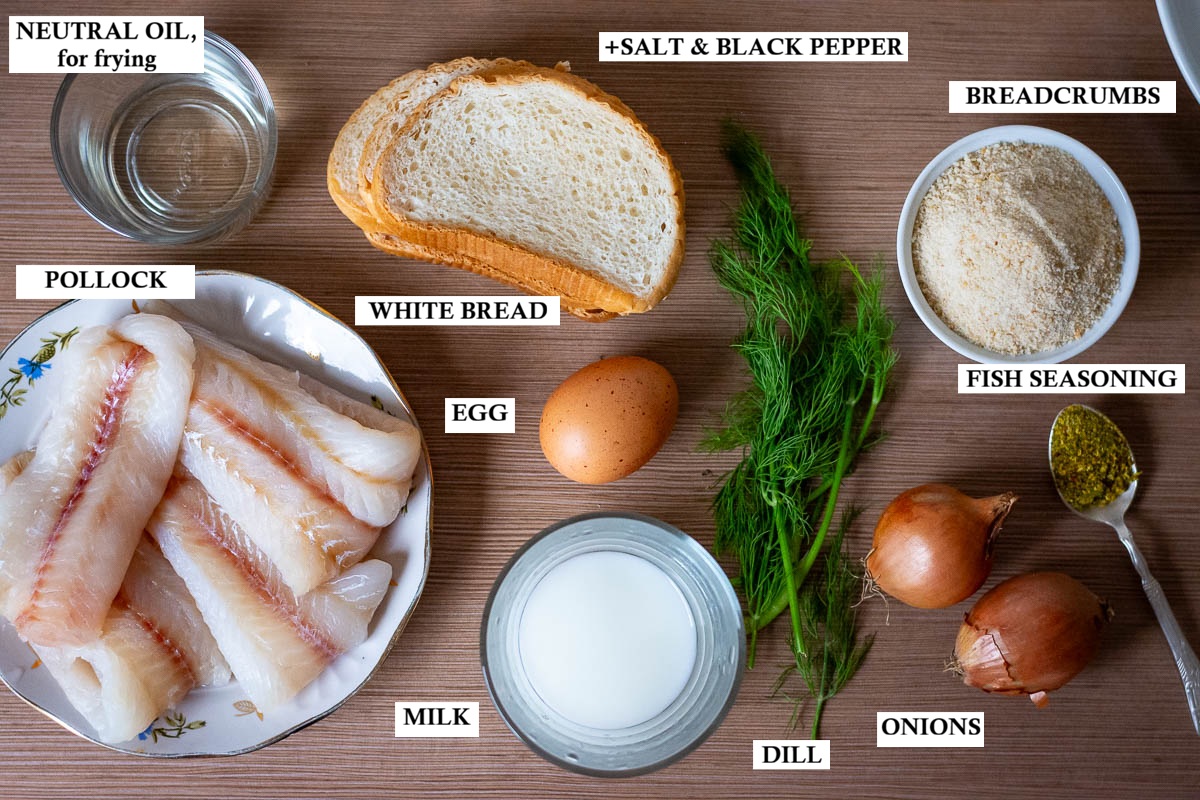
POLLOCK is the classic choice here and what most Lithuanian households use, largely because it's cheap, mild, and easy to find frozen. You need 340g (0.75 lb) of fillet once thawed — if you're starting from frozen, buy about 500g (1.1 lb), since fish loses a fair bit of water as it defrosts. Any firm white fish works if pollock isn't available where you are: cod, haddock, or hake are all fine substitutes.
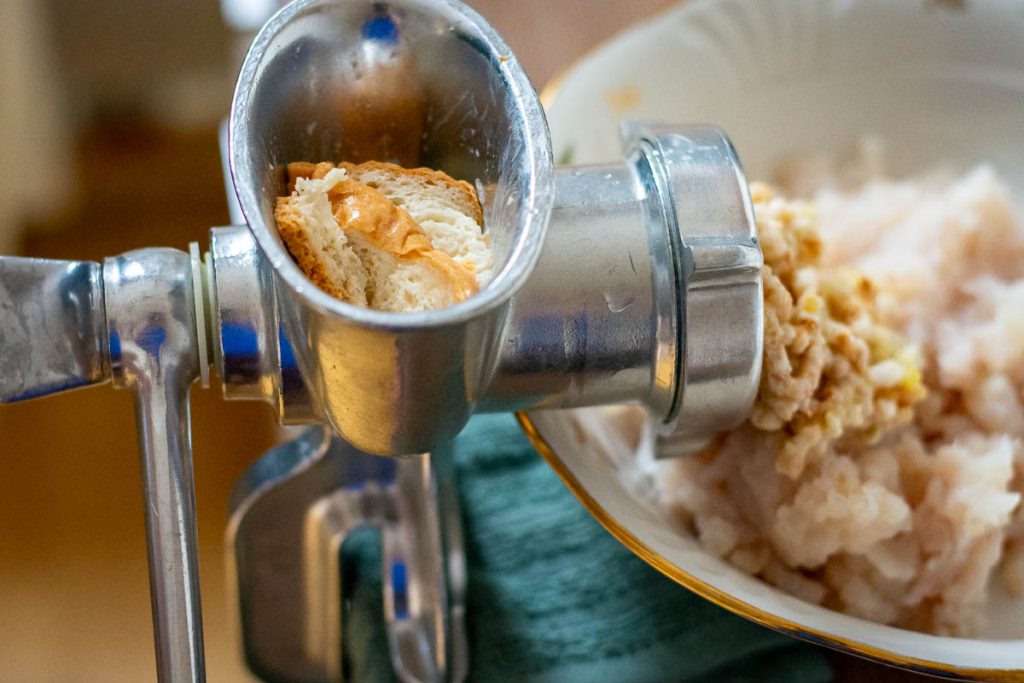
WHITE SLICED BREAD, soaked in milk, is the whole trick of this recipe. Most fish cake and meatball recipes from other cuisines use breadcrumbs or potato for bulk; Lithuanian home cooks use bread softened in milk instead, which keeps the inside tender rather than dense. Don't skip squeezing the milk back out before it goes in the mincer — too much liquid and the mixture won't hold its shape.
FISH SEASONING just means a pre-mixed seasoning blend for fish — most supermarkets sell one, usually a combination of paprika, dried herbs, garlic and onion powder. If you can't find one, a mix of sweet paprika, a pinch of garlic powder, and a little dried dill will get you close.
FRESH DILL is non-negotiable if you want this to taste properly Lithuanian rather than generically fried fish. Don't swap it for dried unless you really have to.
BREADCRUMBS are just for the coating here, separate from the milk-soaked bread inside — regular dried breadcrumbs are fine.
How to make Lithuanian fish cakes
1. Thaw and dry the fish. If working from frozen, thaw it fully — 500g (1.1 lb) frozen will give you roughly 340g (0.75 lb) once thawed. Squeeze out as much excess water as you can. If you're using fresh fish, just pat it dry with paper towels.
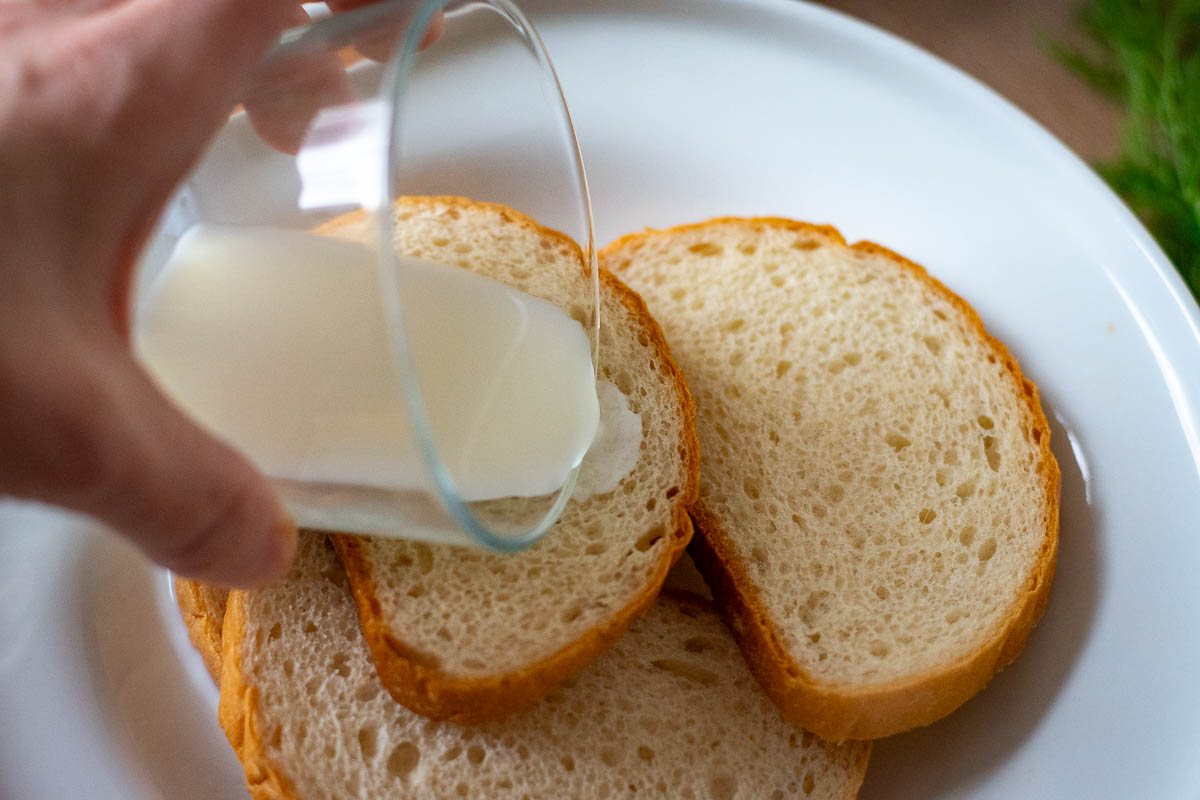
2. Soak the bread. Tear the bread into a bowl and pour the milk over it — it doesn't need to be fully submerged, just damp enough to soften. Leave for 15–20 minutes.
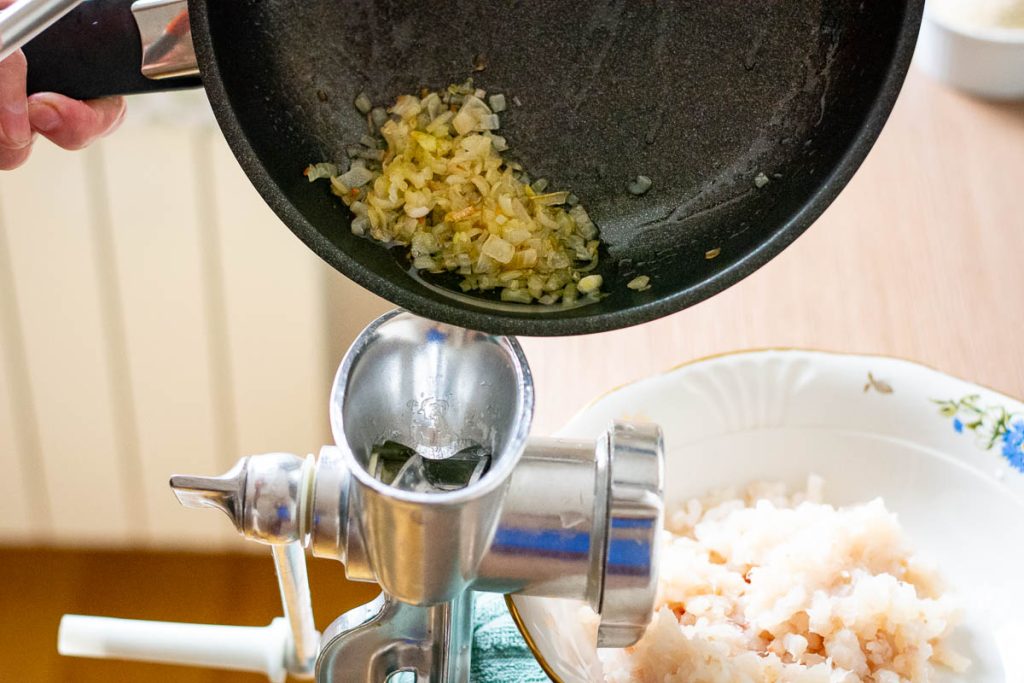
3. Cook the onion. Sauté the finely chopped onion in a little oil until soft, about 10 minutes, then set aside to cool slightly. Adding hot onion straight to raw fish will start cooking the outside of the mixture, so give it a few minutes.
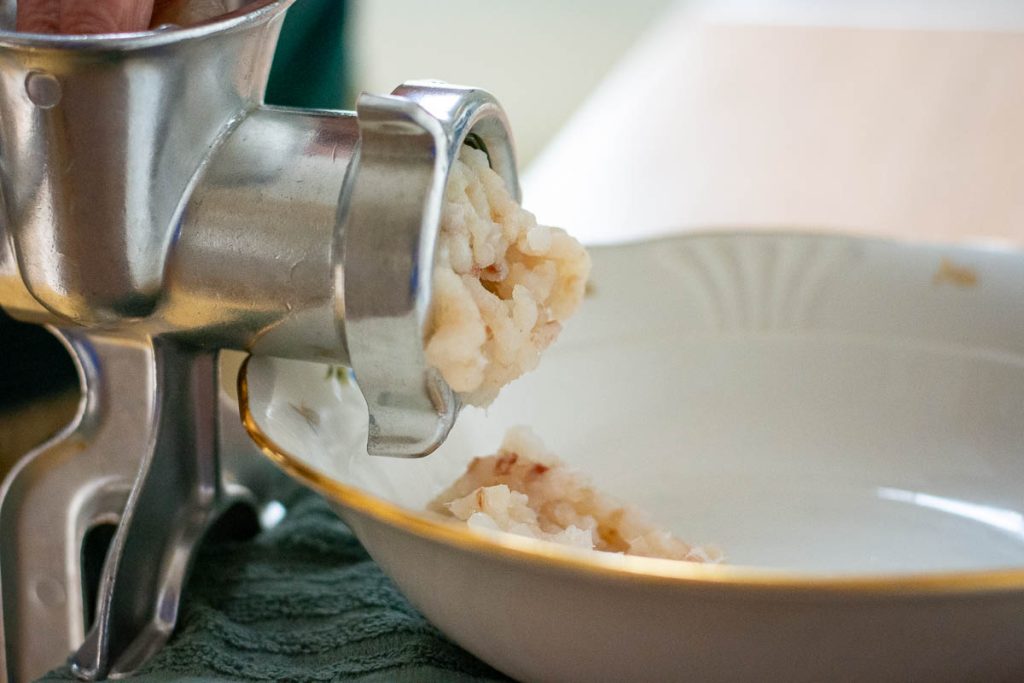
4. Mince everything together. Run the fish fillets through a meat mincer or food processor along with the cooled onion and the soaked bread (squeeze the excess milk out first — you want it soft, not soggy).
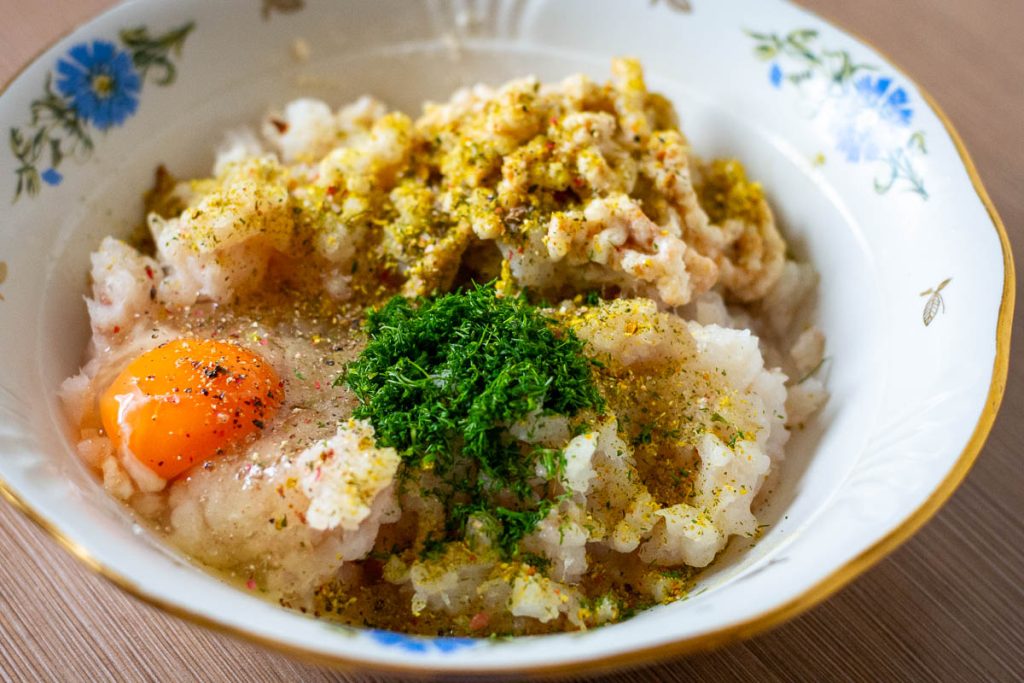
5. Season and mix. Add the egg, chopped dill, fish seasoning, salt, and black pepper, and mix well. The mixture should be soft but still hold together when shaped — if it feels too wet to work with, mix in a tablespoon of flour.
6. Chill for an hour. This is the step people skip and shouldn't. An hour in the fridge firms the mixture up enough to shape properly and gives the seasoning time to settle through the fish.
7. Shape and coat. Form the chilled mixture into 7–8 oval cakes and roll each one in breadcrumbs.
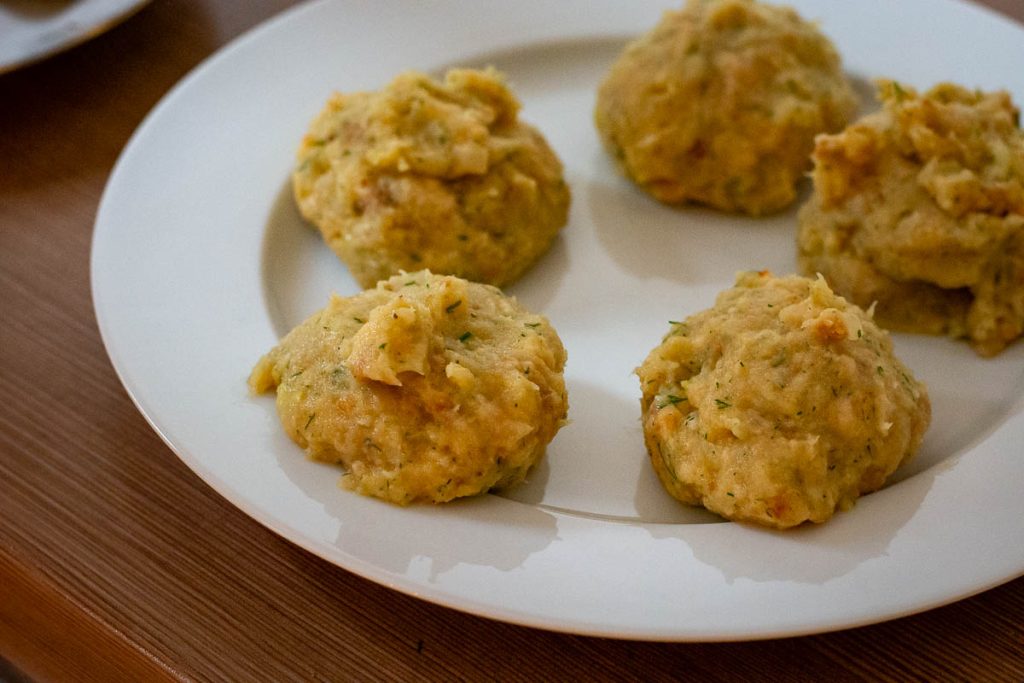
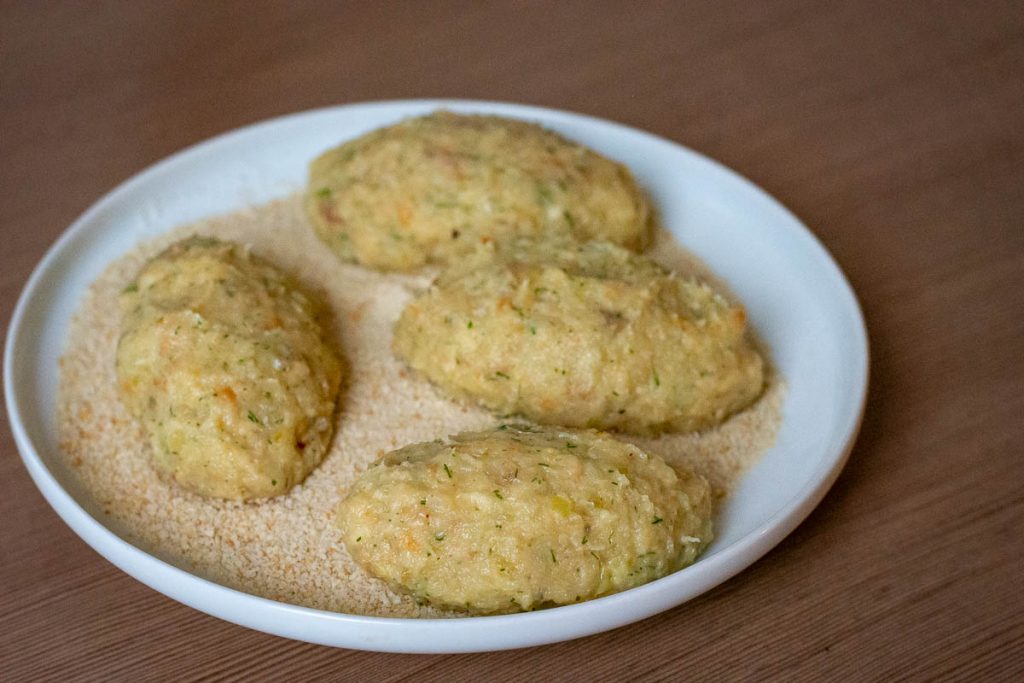
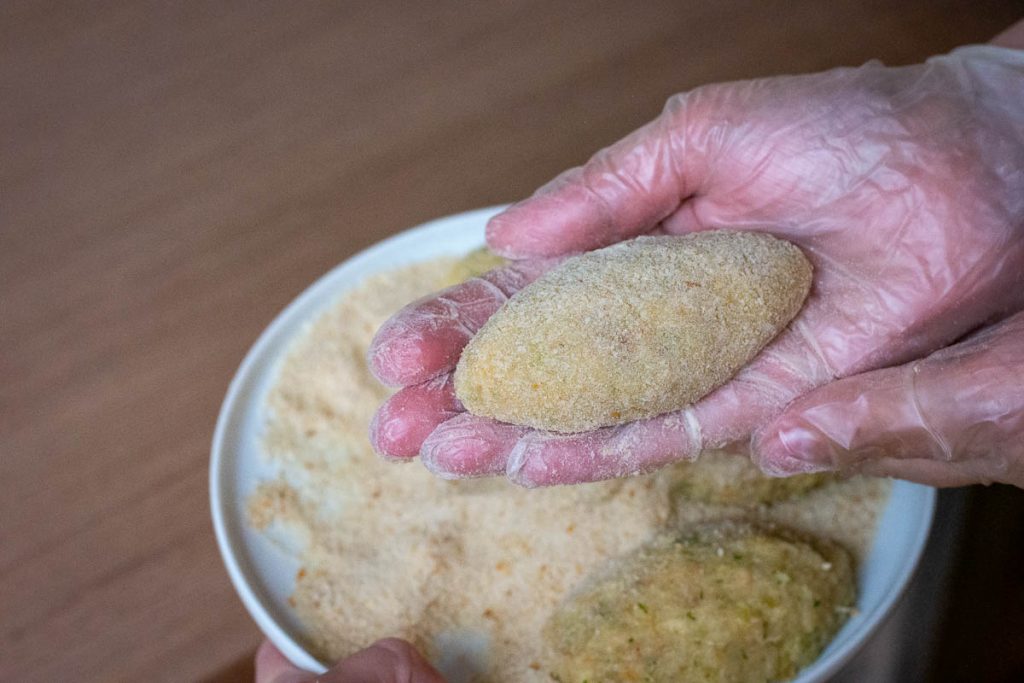
8. Fry gently. Heat oil to about ⅛ inch (3mm) deep in a frying pan. Cook the cakes over medium heat for about 5 minutes per side. They're soft going into the pan, so flip carefully and try not to move them around more than you need to.
9. Check for doneness. They're done once the internal temperature hits 145°F (63°C). Lift them out onto a paper towel–lined plate to drain.
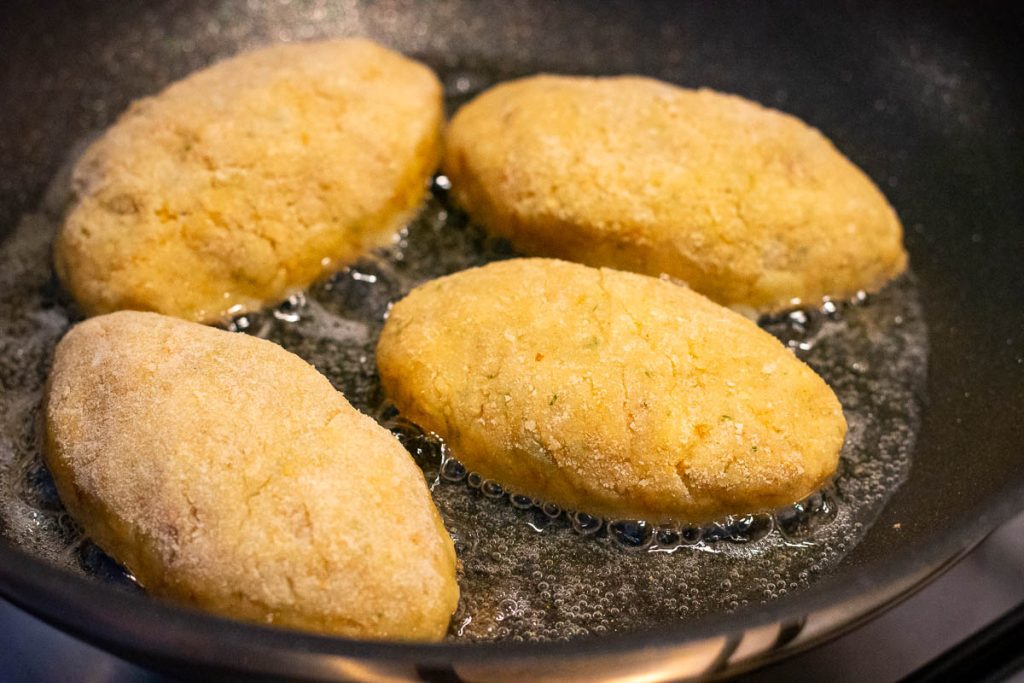
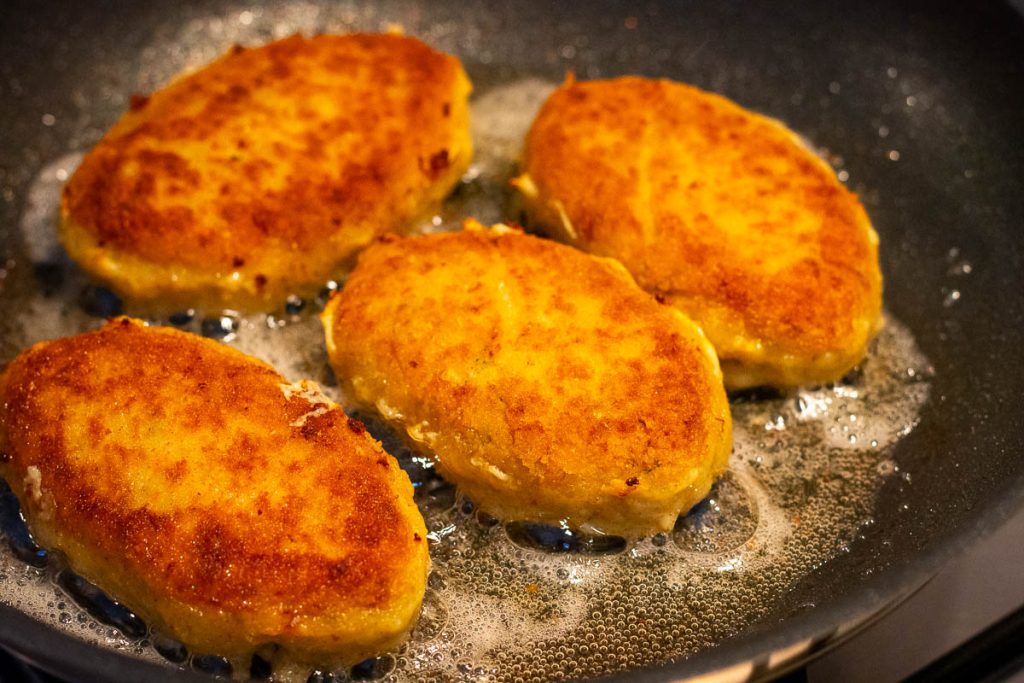
10. Cool, then chill. Let them come down to room temperature before transferring to the fridge. Pipe mayonnaise across the top just before serving.
Expert tips
- Don't rush the chilling step — a warm, unchilled mixture is much harder to shape and more likely to fall apart in the pan.
- Squeeze the bread properly. Too much leftover milk is the most common reason this mixture ends up too loose to hold its shape.
- Handle them gently in the pan. These aren't as sturdy as a beef patty — one aggressive flip and you'll have a broken fish cake.
- Use a thermometer rather than guessing by color. Pollock cooks through before it browns much, so color alone isn't a reliable cue here.
Serving suggestions
These are meant to be served cold, as part of a spread rather than a stand-alone plate — that's very much the point of them. On our Kūčios table, they sit alongside Balta Mišrainė (Lithuanian White Salad), and the mayonnaise on top does double duty as both garnish and a bit of extra richness against the mild fish.
Christmas In Lithuania eBook
Bring a touch of authentic Lithuanian magic to your holiday season! Whether you’re reconnecting with your roots or surprising loved ones with a nod to their heritage, Christmas in Lithuania is your ultimate guide to a heartwarming, delicious, and tradition-filled celebration.

If you're serving them at Easter instead, they work just as well on a cold buffet table next to eggs and other room-temperature dishes.
Storage and make-ahead
Once cooled, fish cakes keep in the fridge for up to 3 days in an airtight container — hold off piping the mayonnaise on top until just before serving, since it doesn't hold up well sitting in the fridge for days. You can also make the uncooked mixture up to a day ahead and keep it chilled, covered, until you're ready to shape and fry.
They don't freeze particularly well after cooking; the bread-soaked texture that makes them soft also makes them prone to going a bit watery once thawed.
Substitutions and variations
- Fish: cod, haddock, or hake all work in place of pollock.
- Gluten-free: swap the white bread for a gluten-free equivalent and use gluten-free breadcrumbs for the coating.
- Baked instead of fried: you can bake these at 400°F (200°C) for about 20 minutes, flipping halfway, though you'll lose some of the color and crust you get from pan-frying.
- No mincer: a food processor works fine.
FAQs
It translates simply to "fish cutlets" — žuvis is fish, and kotletai is the Lithuanian word for cutlets or patties or meatballs, used the same way for meat versions.
They're strongly associated with Kūčios, the Christmas Eve meal, but they show up at Easter and other big family gatherings too. If you're looking for more of our Lithuanian Christmas recipes and other Kūčios dishes, the Lithuanian Christmas Recipes category is a good place to browse, and this recipe is one of several drawn from my Christmas in Lithuania eBook, which has the full Kūčios menu if you want to build out the rest of the table.
Most fish cake recipes lean on potato for bulk. This one uses milk-soaked bread instead, which is a distinctly Lithuanian approach and gives a softer, less starchy result.
More Lithuanian Fish Recipes

Žuvies Kotletai (Lithuanian Fish Cakes)
Ingredients
- 340 g (0.75 lb) pollock fillets (or 500g/1.1 lb frozen fish, thawed)
- 70 g (about 3 slices) white sliced bread
- 70 ml (¼ cup + 2 tbsp) milk
- 1 onion finely chopped
- 1 medium egg
- a small bunch of fresh dill chopped
- 1 heaped tsp fish seasoning
- salt and black pepper to taste
- 50 g (½ cup) breadcrumbs for coating
- neutral oil for frying
Instructions
- Thaw the fish if frozen (500g (1.2 lb) frozen yields about 340g (0.75 lb) thawed). Squeeze out excess moisture, or pat fresh fillets dry with paper towels.
- Tear the bread into a bowl and pour the milk over it. Let soak 15–20 minutes.
- Sauté the onion in a little oil until softened, about 10 minutes. Set aside to cool slightly.
- Mince the fish in a meat mincer or food processor with the cooled onion and the soaked bread (squeeze out excess milk first).
- Add the egg, dill, fish seasoning, salt, and pepper. Mix well. The mixture should be soft but hold its shape — add a tablespoon of flour if too wet.
- Chill the mixture for 1 hour.
- Shape into 7–8 oval cakes and roll each in breadcrumbs.
- Heat oil to about ⅛ inch (3mm) deep in a pan. Fry over medium heat for about 5 minutes per side, flipping gently.
- Cakes are done at an internal temperature of 145°F (63°C). Drain on a paper towel–lined plate.
- Cool to room temperature, then chill. Pipe mayonnaise on top just before serving.
Video
Notes
Leave a Reply