

Introducing the delightful Lithuanian tradition of Kefir Battered Pollock—a unique twist on the conventional fried fish experience. Unlike the usual crispy coating, the batter resembles more of a pancake texture. Perfect for a cold appetizer, this budget-friendly recipe features pollock fillets shallow-fried to golden perfection, requiring less oil.

Jump to:
Recipe Highlights
- Kefir Battered Pollock is different to the usual fried fish recipes: the batter tastes more like a pancake rather than a crispy coating.
- This fish recipe is designed to be served cold with a side of mayo or homemade tartar sauce.
- Battered pollock is shallow fried (no need for lots of oil or a deep fryer!)
- Pollock is one of the cheapest white fish out there - making this recipe budget-friendly.
Subscribe To Our Newsletter
How Is Kefir Battered Pollock Served In Lithuania?
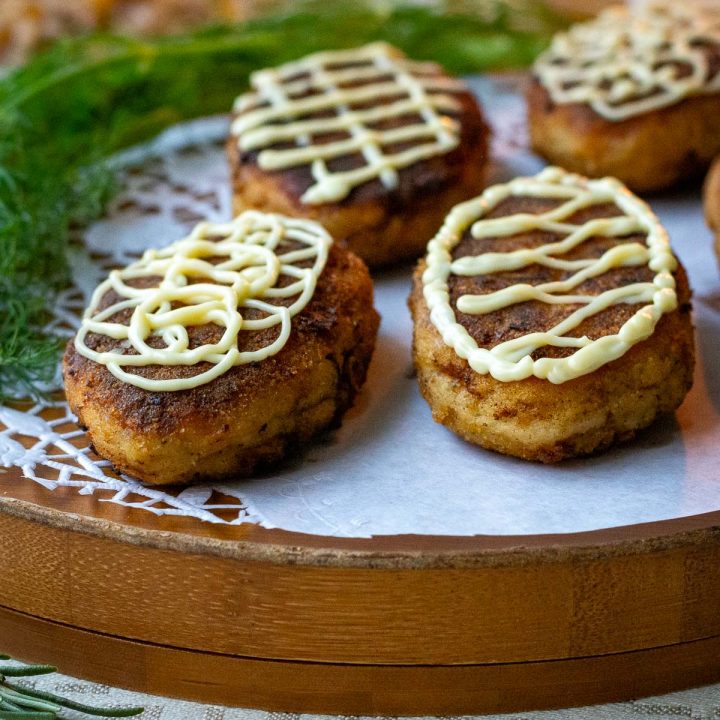
If you ever go to a traditional family gathering in Lithuania, you are more than likely to be greeted with a full spread of cold appetizers on the table, including things like Lithuanian Deviled Eggs, egg and cheese salad, pickled herring rollmops, boiled vegetable salad, beetroot salad and, of course, battered fish. Not forgetting the Lithuanian Rice Salad With Crab Sticks (Imitation Crab) and sliced Cheesy Turkey Meatloaf with Prunes.
Whilst it is typically served as part of a big spread of Lithuanian appetizers, Kefir Baterred Pollock is one of the best things to serve with a cold beer on a hot summer day. It also makes a delicious quick lunch.
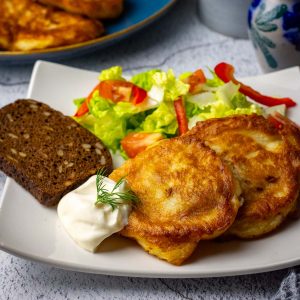
Serve battered pollock with a generous dollop of mayonnaise or homemade tartar sauce, a slice of bread and a simple green salad on the side.

Ingredients and Substitutes
- egg: we use large eggs in the UK, so you may need an extra-large if you're in the US.
- white sugar: optional, but traditionally used in batter recipes in Lithuania.
- kefir: if you are struggling to find plain kefir, use natural yogurt instead. Buttermilk may also be used. Have more kefir? Try Lithuanian Kefir Soup or Pink Soup next time.
- cornstarch (cornflour): which can be replaced with potato starch.
- all-purpose flour: white wheat flour.
- baking powder.
- all-purpose seasoning (a.k.a. vegeta): a simple seasoning helps bring out the fantastic fish flavor. If you don't have any handy, just mix equal parts of garlic powder, onion powder, turmeric and mixed fried herbs, and add a pinch of salt.
- pollock fillets: ideally, wild Alaska pollock. Kefir batter, however, works with other white fish like haddock or cod fillet. Frozen (thawed) fish is often used. We also use pollock in traditional Lithuanian Fish Cakes.
- vegetable oil: or sunflower or rapeseed oil (canola oil).

Step-By-Step Method
Beat the egg, a pinch of salt, sugar and kefir in a large mixing bowl.
In a separate bowl, mix the cornstarch, flour and baking powder. Add the dry ingredients into the wet and mix well until combined and there are no pockets of dry flour remaining.

Cut your pollock fillets into portions and sprinkle them with all-purpose seasoning (Vegeta) and a pinch of black pepper (or white pepper).

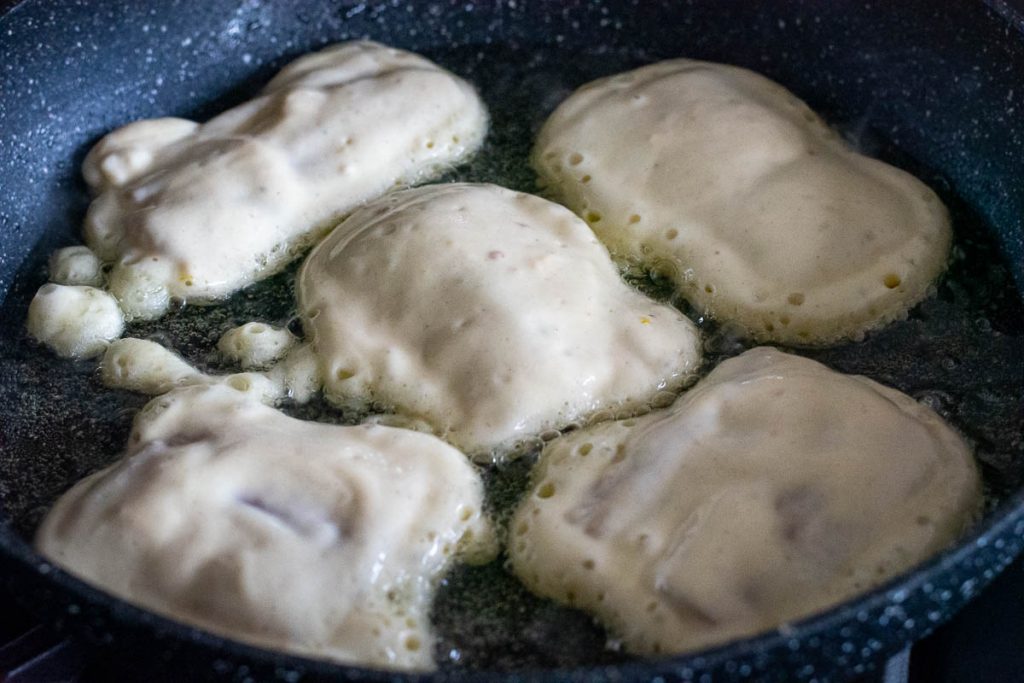
Heat oil in a large non-stick frying pan. Dip each piece of fish into the kefir batter and place them straight into hot oil. Cook the fish for approximately 2-3 minutes on each side (adjust cooking time based on the thickness of your fish though). They should be fully cooked through (internal temperature should reach 65°C or 150°F) and golden brown.
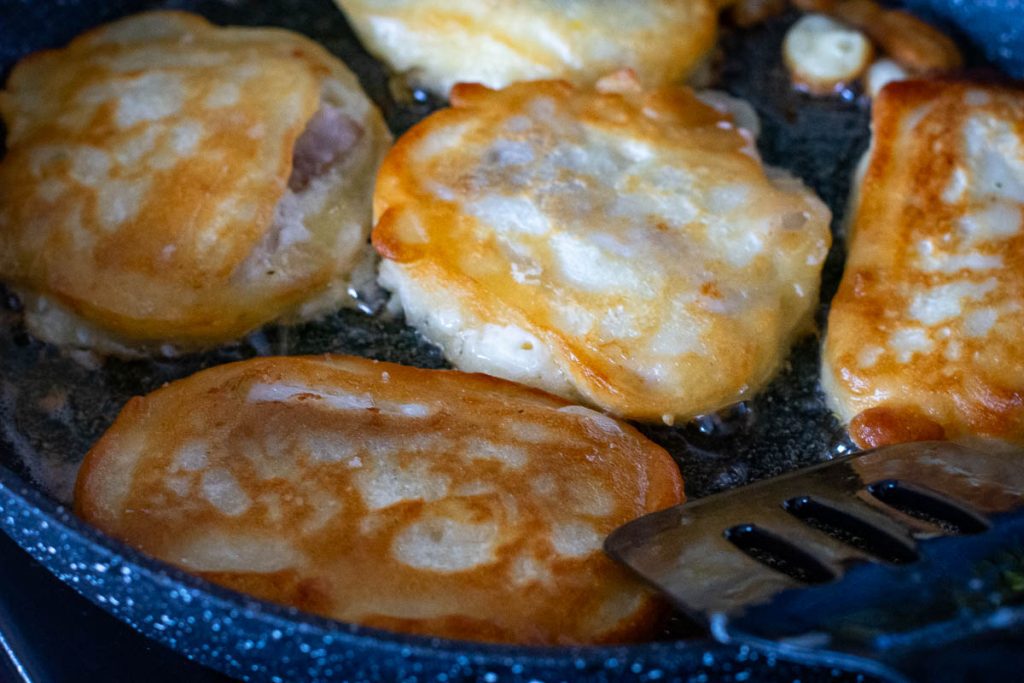
Place cooked fish on a paper towel-lined plate in a single layer for the excess oil to be absorbed. Cool the fish down to room temperature before eating or serve it chilled!
Extra Tips
Whilst Lithuanian Kefir Battered Pollock is very easy to make, follow these tips for the best results:
- Make sure to thaw the fish properly and let any excess moisture drain. Pat the pollock fillets dry with a paper towel before seasoning.
- Do not let the fish sit in the batter for long. Simply dip and place it straight into the pan. The batter should coat the fish generously.
- Make sure the oil temperature is high enough for the batter to sizzle as soon as it hits the pan. Adding battered fish into lukewarm oil will make it absorb excess oil and the finished product will be very greasy.
- Make sure to let the fish cool down to room temperature before serving it. Or serve chilled straight out of the fridge (it's my favorite way!).
- Make a lovely aioli or tartar sauce to go with your fish.
- If you have much batter left over, make mini blinis for canapes. Top the blinis with cream cheese, smoked salmon and fresh dill! You will have another bite-size appetizer for your table.

Other Cold Lithuanian Appetizers To Try
- Boiled Vegetable Salad (Balta Misraine)
- Lithuanian Herring With Sautéed Onions and Carrots
- Deviled Eggs With Ham And Cheese (Lithuanian Recipe)
- Tuna Stuffed Eggs
- Lithuanian Beetroot & Prune Salad
- Chicken Roulade With Apricots (Lithuanian Easter Recipe)
Kefir Battered Pollock Fillets (Lithuanian Fish Recipe)
Ingredients
- 1 egg large
- 1 tablespoon white sugar
- 200 ml (¾ cup + 2 tbsp) milk kefir
- 100 g (¾ cup) all-purpose flour
- 1 tablespoon cornstarch (a.k.a. cornflour)
- 1 ¼ teaspoon baking powder
- a pinch of salt
- 500 g (1.1 lb) pollock fillets, thawed if frozen
- 1 tablespoon all-purpose seasoning
- oil for frying
Instructions
- Beat the egg, a pinch of salt, sugar and kefir in a large mixing bowl.
- In a separate bowl, mix the cornstarch, flour and baking powder. Add the dry ingredients into the wet and mix well until combined and there are no pockets of dry flour remaining.
- Cut your pollock fillets into portions and sprinkle them with all-purpose seasoning (Vegeta) and a pinch of black pepper (or white pepper).
- Heat oil in a large non-stick frying pan. Dip each piece of fish into the kefir batter and place them straight into hot oil. Cook the fish for approximately 2-3 minutes on each side (adjust cooking time based on the thickness of your fish though). They should be fully cooked through (internal temperature should reach 65°C or 150°F) and golden brown.
- Place cooked fish on a paper towel-lined plate in a single layer for the excess oil to be absorbed. Cool the fish down to room temperature before eating or serve it chilled!
Leave a Reply