

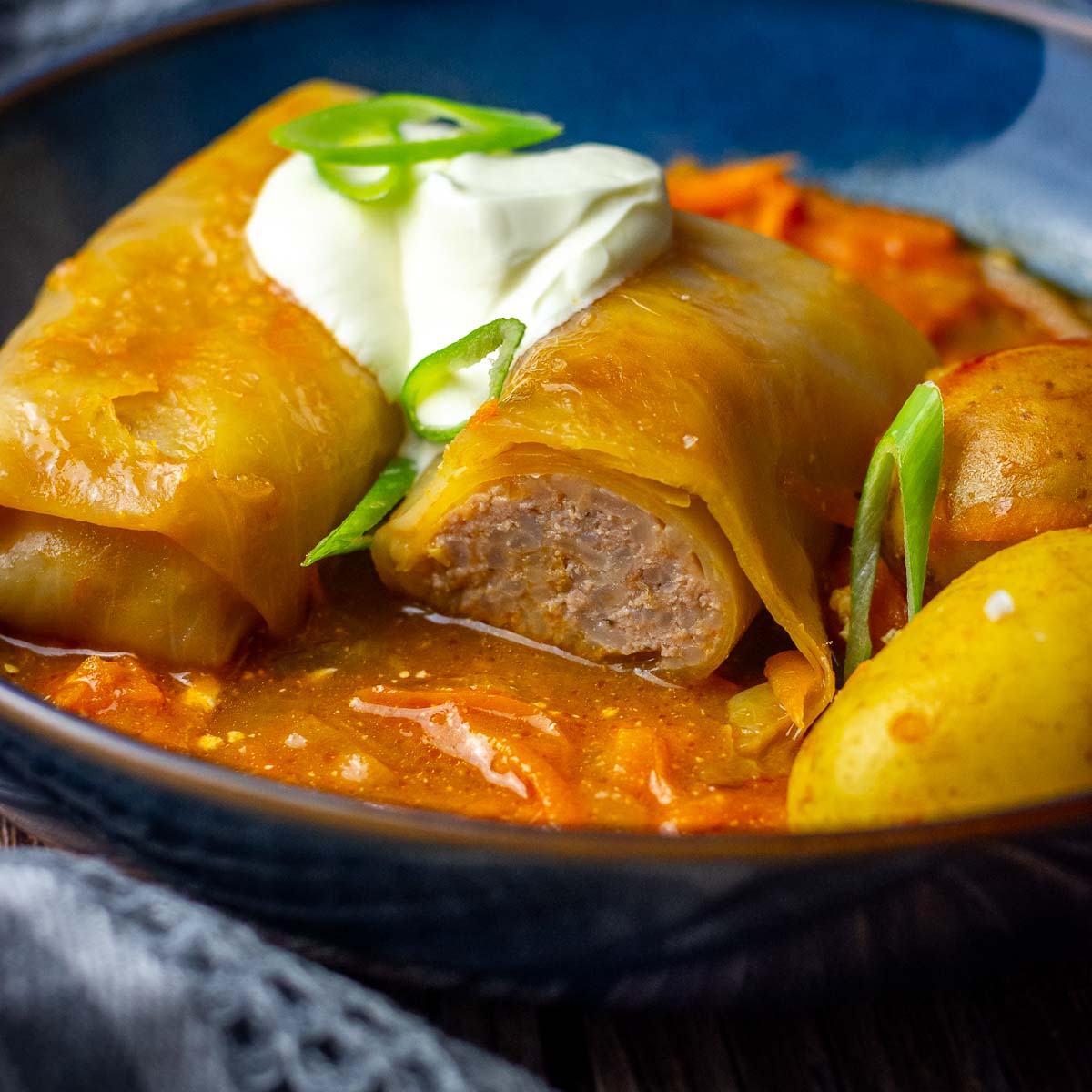
Discover the rich culinary heritage of Lithuania with our Balandeliai recipe, showcasing the beloved Lithuanian Cabbage Rolls. Bursting with flavor and tradition, these hearty cabbage rolls offer a delightful combination of tender cabbage leaves enveloping a savory pork and rice filling.
Jump to:
- What is Balandeliai and Are They Truly Lithuanian?
- The Good and The Bad
- Ingredients and Substitutes
- Variations and Extras
- What Type of Cabbage Is Best For Cabbage Rolls?
- Step-By-Step Method
- What To Serve With Stuffed Cabbage Rolls?
- Tips for Best Results
- Recipe FAQs
- What Lithuanian Dishes Should You Try Next?
- Balandėliai: Lithuanian Cabbage Rolls
What is Balandeliai and Are They Truly Lithuanian?
Many nations across the globe boast their unique rendition of stuffed cabbage rolls. While the ingredients and preparation techniques may differ slightly, they all share a common theme.
Referred to as Chou Farci in French cuisine, Malfouf in Middle East cooking, Golabki in Poland, and Krautwickel in Germany, each variation carries its own cultural flair.
In Eastern Europe, countries like Ukraine, Russia, Hungary, and Romania also have their own versions of these delectable rolls. However, it's the Lithuanian Balandėliai that holds a special place in my heart. I fondly recall learning to make them firsthand from my family during my childhood days.
These days I made them often in my North Wales kitchen. My English husband is a huge fan of cabbage rolls, and has even said that this recipe shares a top stop of his favourite Lithuanian dishes with Saltibarsciai!

What Does Balandėliai Means?
Balandėliai translates as little pigeons or little doves in Lithuanian and nobody I asked, could explain to me why this dish is named after these birds. The word balandėliai is also used in the Lithuanian language to refer to affectionate people in love who cannot take their hands off each other, and back in the day, I used to believe that the name of the dish must refer to these Lithuanian cabbage rolls being snuggly packed into a pot to cook 🙂

The Good and The Bad
The Good
- A great dish to feed a crowd!
- Balandeliai keep well in the fridge for up to 4 days and are easy to reheat.
- Delicious way to use use a freshly grown cabbage from the garden when they're in season!
- A portion of balandeliai is not overly high in calories, but definitely gives you the confort food feels.
The Bad
- It's impossible to make a small batch without wasting a cabbage head.
- Lithuanian Cabbage Rolls are quite labor-intensive - they will take just over 2 hours to make.
- Your house will smell of cabbage for a few hours 🙂
Ingredients and Substitutes
- large cabbage head: green or white.
- ground pork: traditionally quite fatty pork is used (20% fat) but we typically opt for 10-12%.
- white rice: uncooked, par-boiled or cooked rice can be used. If using cooked rice, reduce the amount by about half.
- salt and black pepper: you can further season the filling with dried herbs or all-purpose seasoning (vegeta).
- all-purpose flour.
- odourless oil: or butter.
- carrots: coarsely grated.
- onions: brown (yellow) onions are typically used.
- potatoes: unpeeled baby potatoes or peeled and halved/quartered potatoes can be used. Avoid overly floury potatoes as they will disintegrate in the cooking process.
- stock: we typically use a chicken or beef stock pot.
- tomato paste: also known as concentrated tomato puree. It can be replaced with tomato ketchup.
- sour cream: or creme fraiche.

Variations and Extras
As with many traditional dishes, each Lithuanian family makes their stuffed cabbage rolls slightly differently. Here are a few different variations:
- Some cut out the cabbage stalk before boiling it to speed up the leaf separation process.
- Various different types of ground meat can be used: chicken, veal, beef or turkey, but pork is the most popular.
- The meat filling is sometimes seasoned with all-purpose seasoning (vegeta), dried parsley or/and ground caraway seeds. Some families add some finely chopped sauteed onion to the pork too.
- Adding par-boiled rice to the meat stuffing makes the filling more tender than adding unboiled rice.
- Many families do not fry stuffed cabbage rolls and simply cook them in the sauce (we often choose this option to save time).
- Try adding chopped bell pepper alongside carrots and onions.
- Some recipes call for onions and carrots to be gently sauteed in butter before adding them to the pot too.
- Scatter some fresh dill on the top layer of balandeliai.
What Type of Cabbage Is Best For Cabbage Rolls?
You have the option to use either green or white cabbage, as both varieties yield equally satisfying results. Although it is not typical to use Savoy cabbage, I've eaten the French counterpart, Chou Farci, which utilizes Savoy effectively, suggesting it could be a suitable alternative.
- Opt for fresh, young cabbage. Young large leaves separate more readily, and have greater flexibility, making them ideal for rolling the filling. Your Cabbage rolls will also cook faster.
- Green cabbage tends to cook faster than white cabbage, with thinner and more pliable leaves.
- Ensure you choose a medium to large cabbage head. Smaller leaves may pose difficulty in rolling enough filling.

Step-By-Step Method
Ready to cook? Let's jump into the recipe!
Step 1: Prepare the Cabbage Leaves
Remove any damaged outer leaves from your head of cabbage and run it under the cold tap.
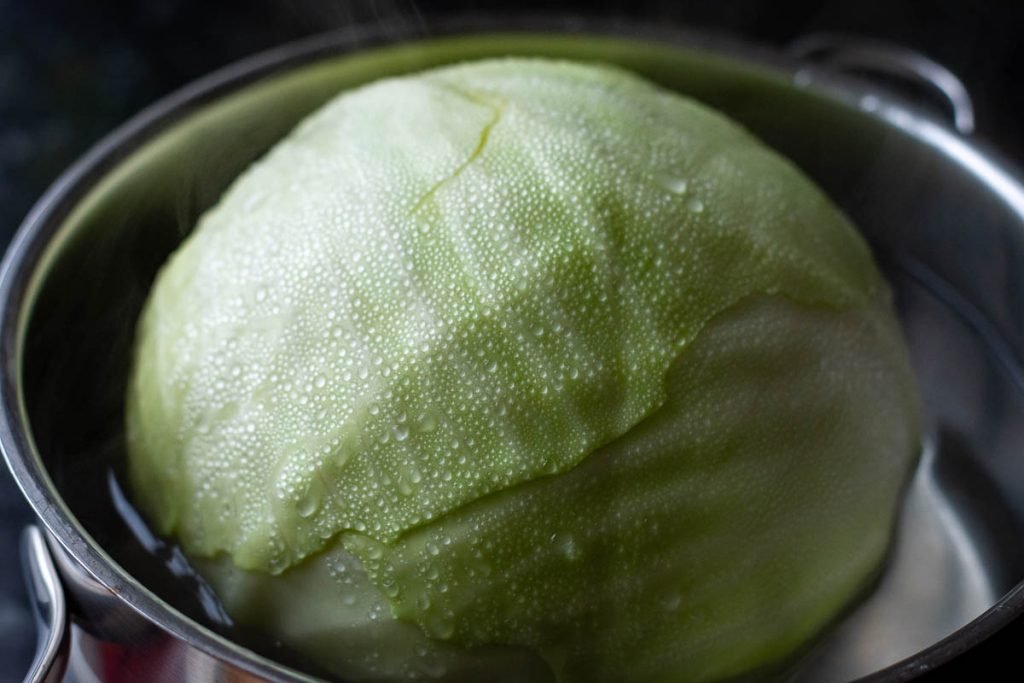
Place the whole cabbage stalk side down in a big pot and pour boiling water over it, so it is submerged at least up to ⅔.
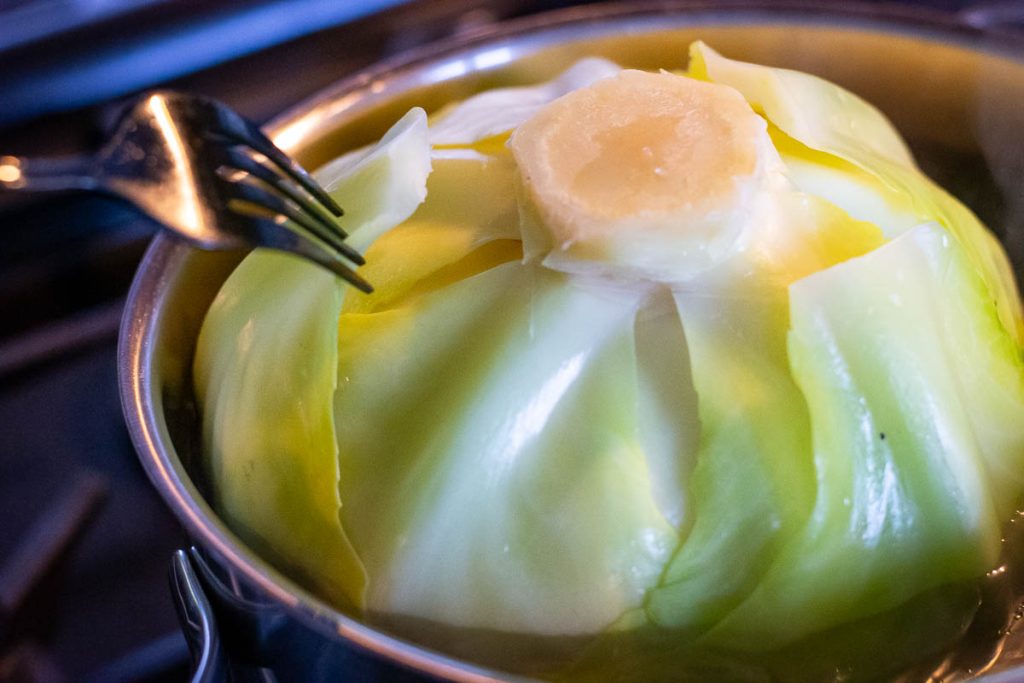
Boil the cabbage for 10 minutes over low-medium heat, and then turn it upside down using two forks, taking care not to splash yourself with hot water.
Using a sharp knife, cut the leaves at the stalk and wiggle the outer leaves to separate them from the head. Take the leaves out into a large bowl.
Turn the head around again and boil for a few minutes until your outer leaves can be separated again. Keep going until your leaves are too small and tough.
TIP: if after separating all the cabbage leaves, they still feel very stiff, place them back into the boiling water for a few minutes to soften further and become more flexible.
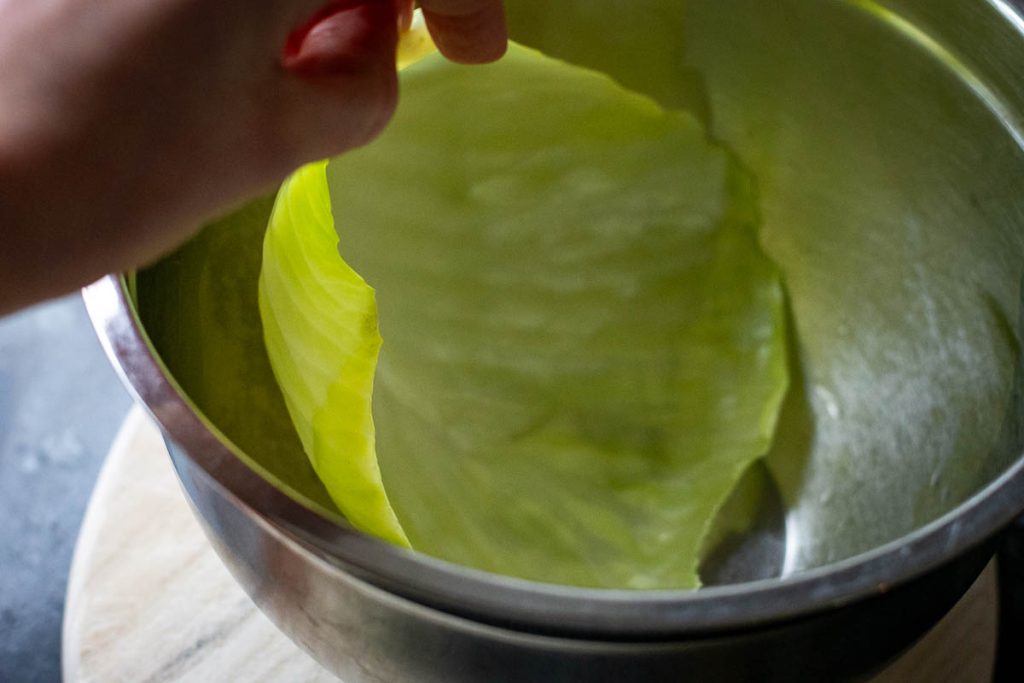
Leave the leaves to cool down enough to be able to handle with your hands.
Using a sharp pairing knife, cut the hard thick stalks of each cabbage leaf thicker part of the stem from each cabbage leaf. Simply run the knife flat across to make the thickness of the stalk the same as the rest of the leaf.
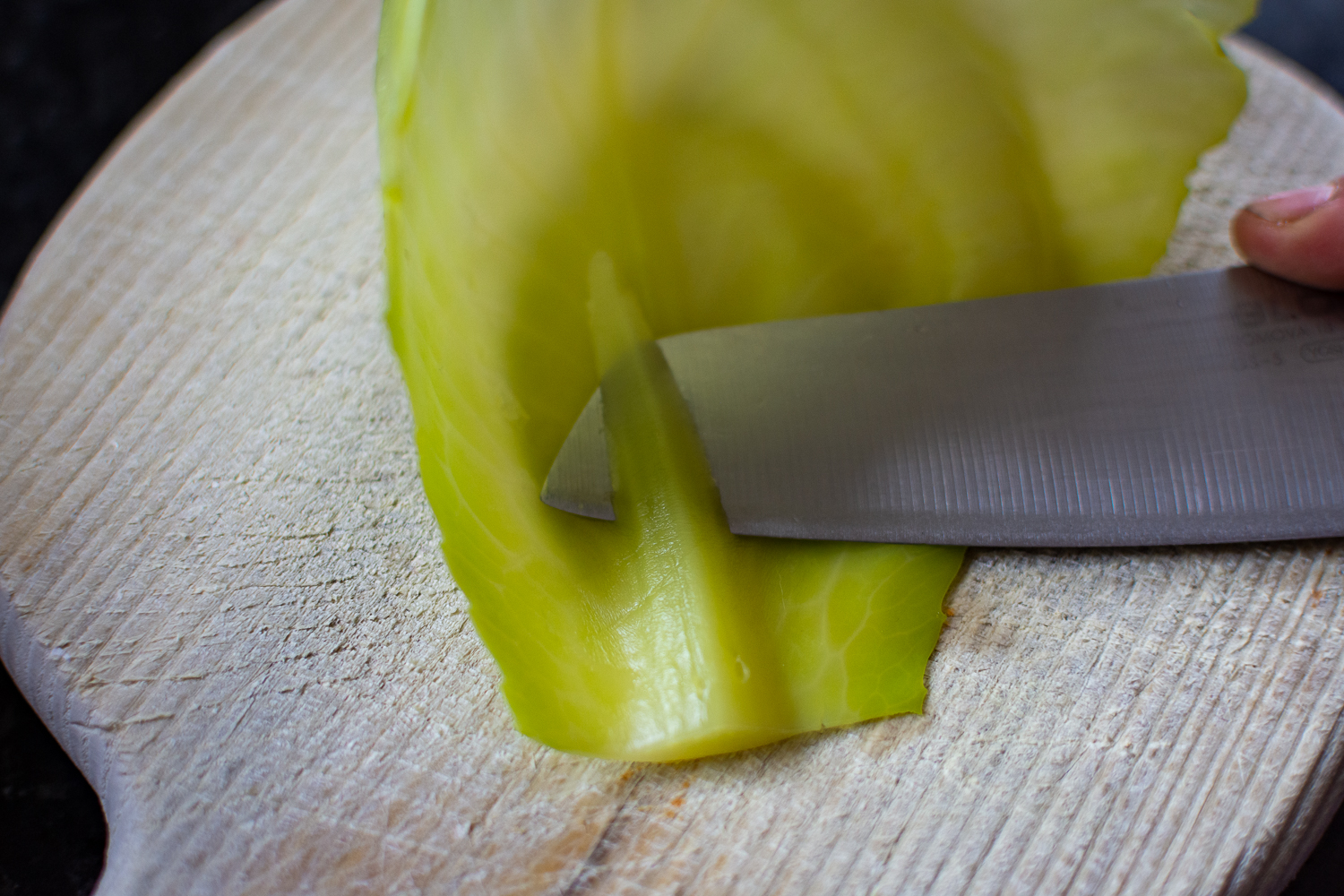
We use 14-16 leaves for the amount of pork filling in this recipe.
How To Separate Cabbage Leaves in A Microwave?
An excellent way to separate cabbage leaves and make less work for yourself is to utilize your microwave.
Place the cabbage in a shallow microwave-safe bowl and add a few tablespoons of water. Microwave it for 3-4 minutes to begin softening the leaves. Carefully peel off the outer leaves, then return the cabbage to the microwave to further soften more leaves. Repeat this process until you're left with leaves that are too small to contain the pork filling.
Step 2: Make The Ground Pork Filling
In a large bowl, mix the ground pork, rice, salt and black pepper until well combined. This meat mixture can be further flavoured with vegeta (Eastern European all-purpose seasoning) or dried parsley.
Sep 3: Assemble Lithuanian Cabbage Rolls
Arrange individual leaves on a clean kitchen surface like bowls. Spoon the meat stuffing into each cabbage leaf. Then roll the filling into the cabbage leaves as if you are shaping a burrito (fold one side of the cabbage leaf over, then fold in the sides and wrap it into a roll).
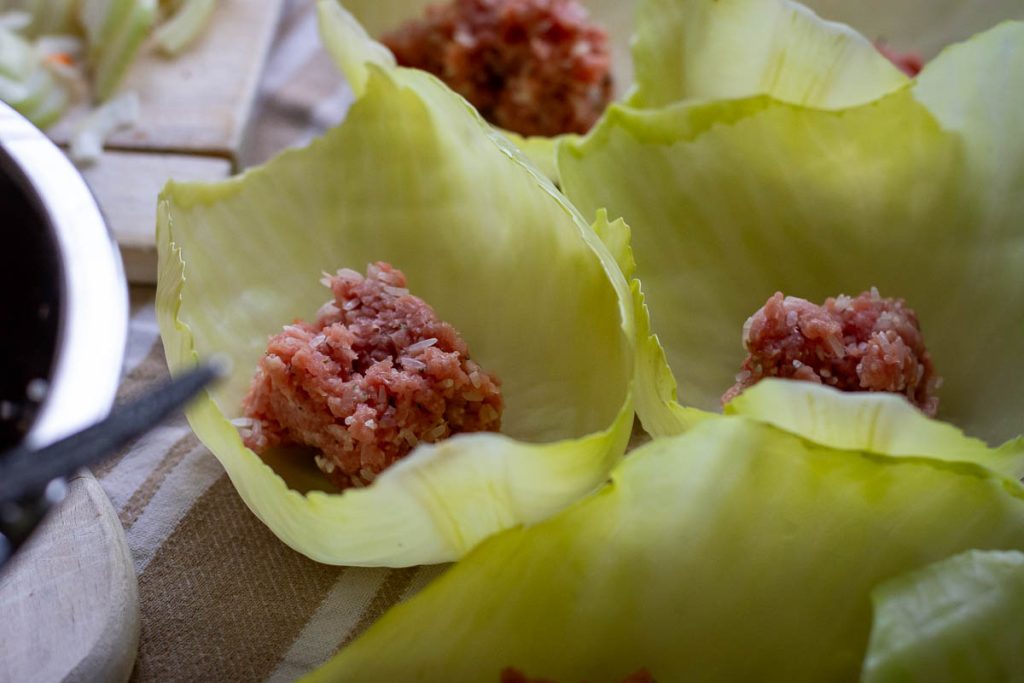
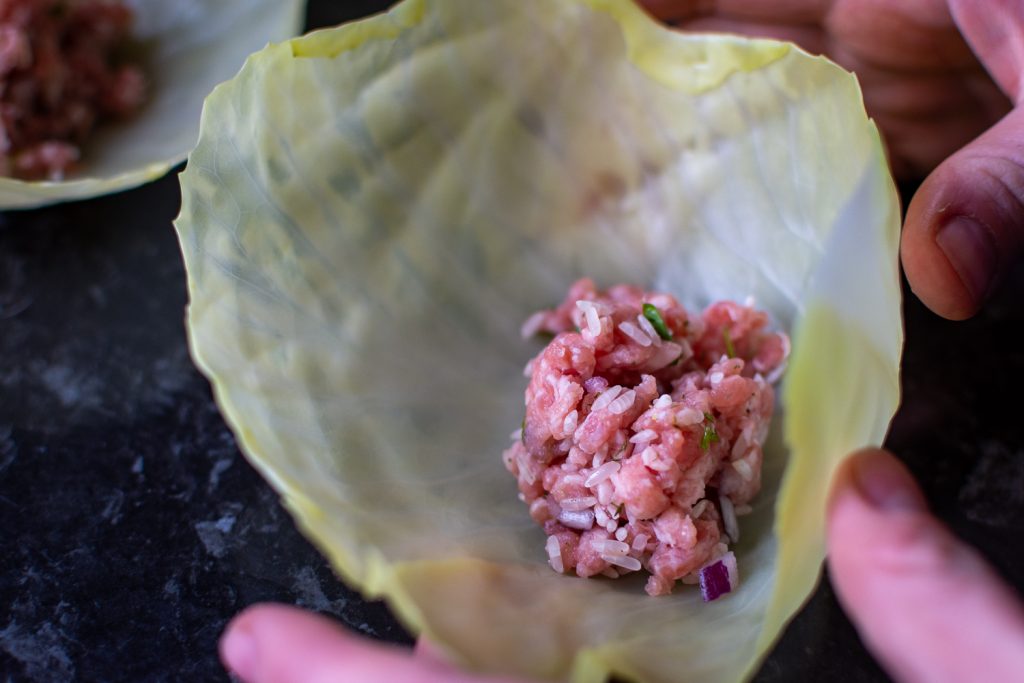
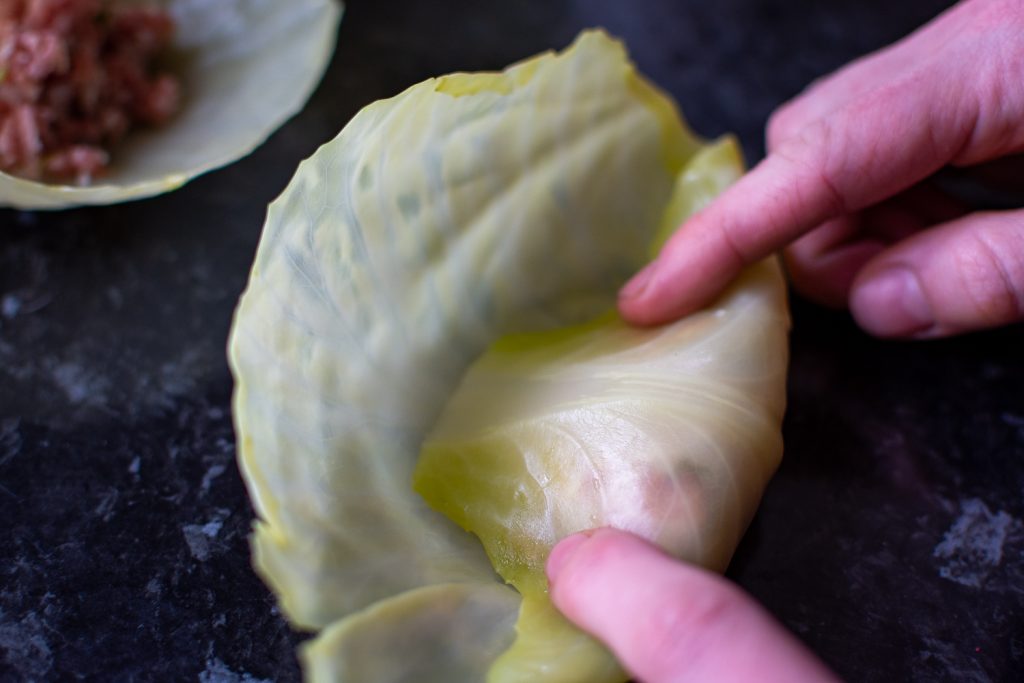
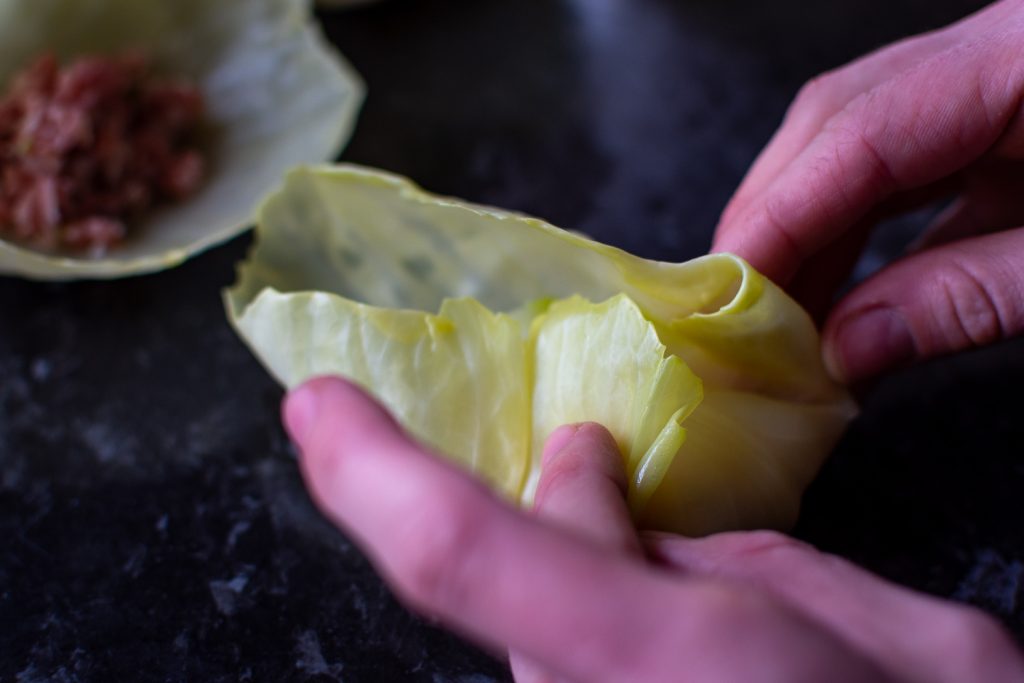
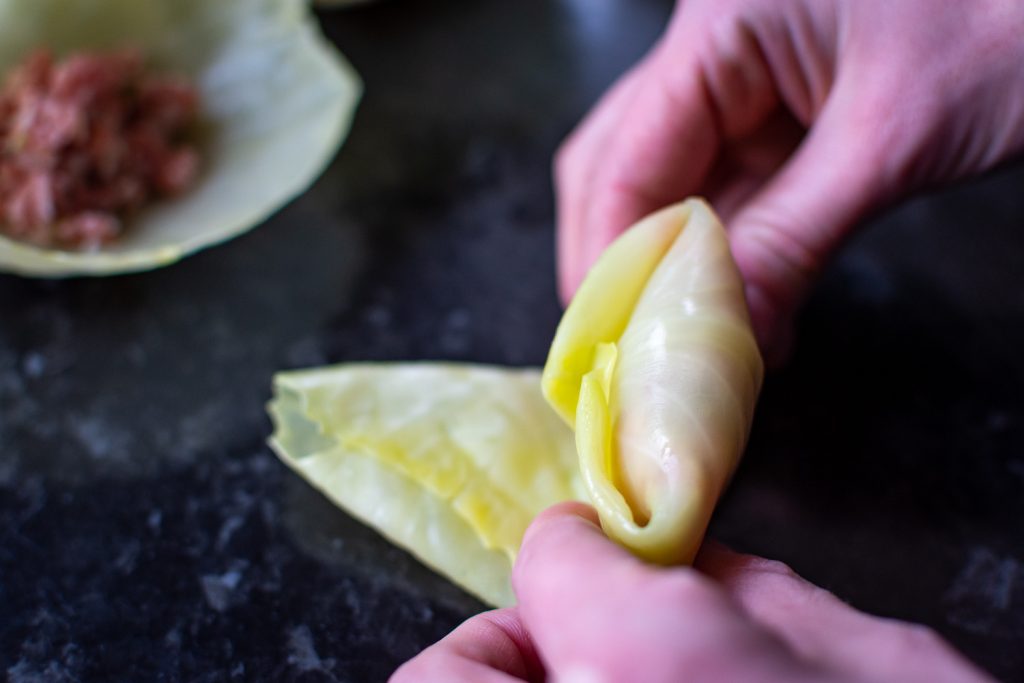
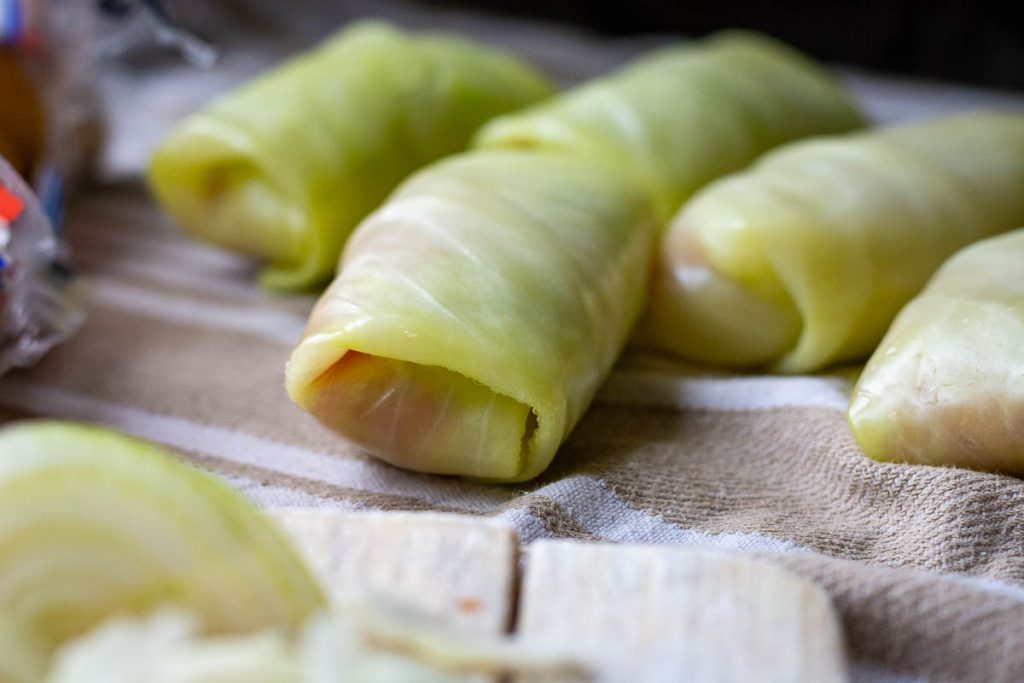
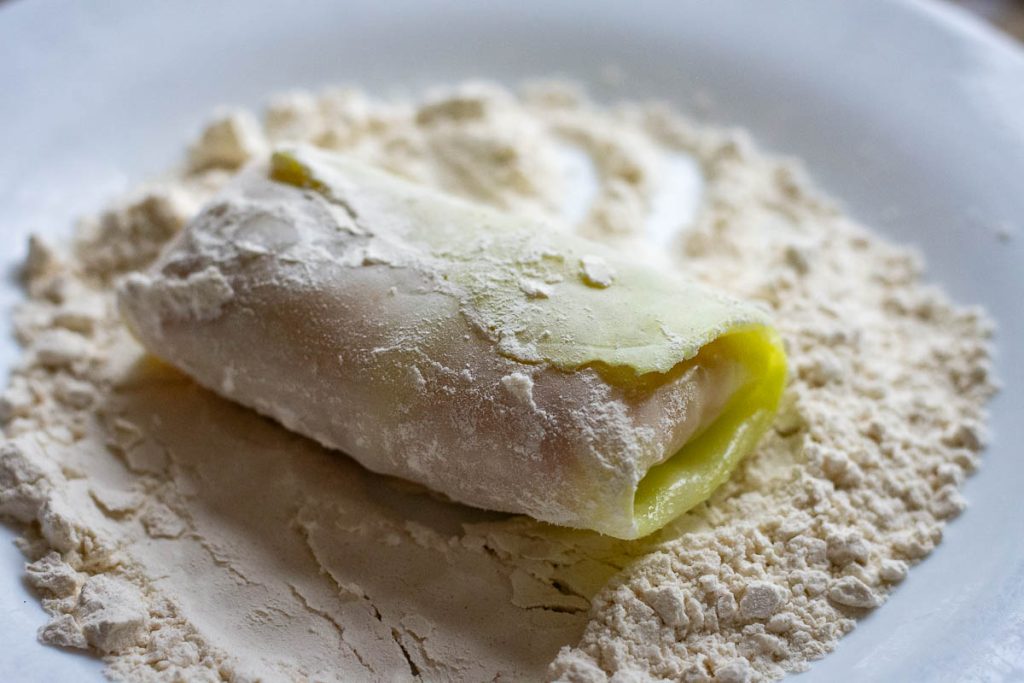
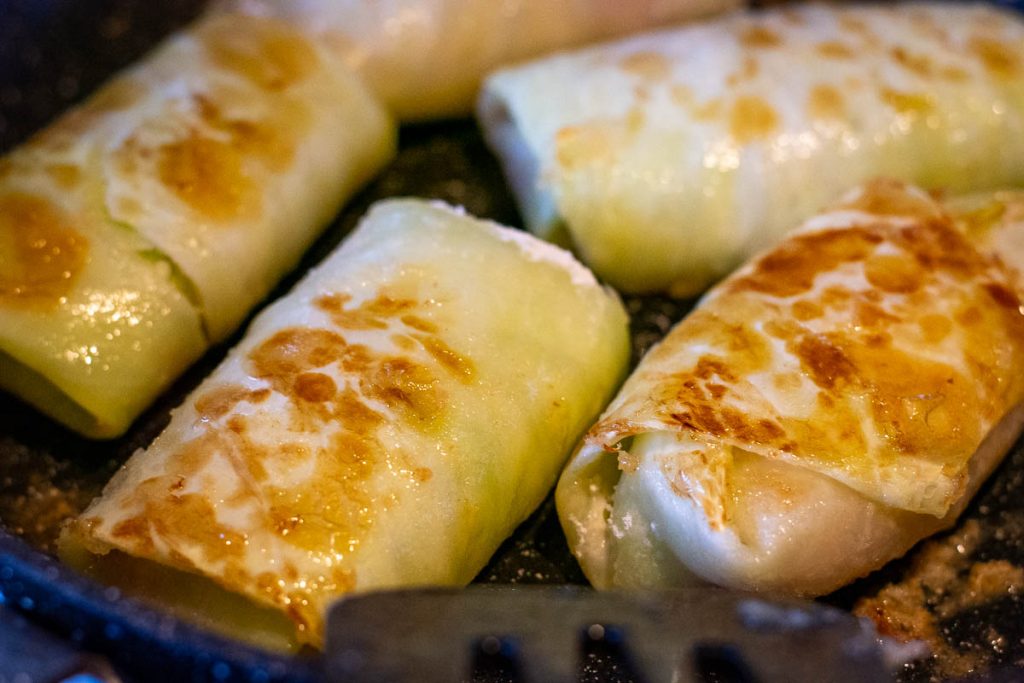
Spray the cabbage rolls with some water, then roll them in all-purpose flour. Heat a large skillet over medium heat with some oil or butter. Sear the cabbage rolls on both sides until they're lightly browned.
Step 4: Tomato Sauce and Cooking
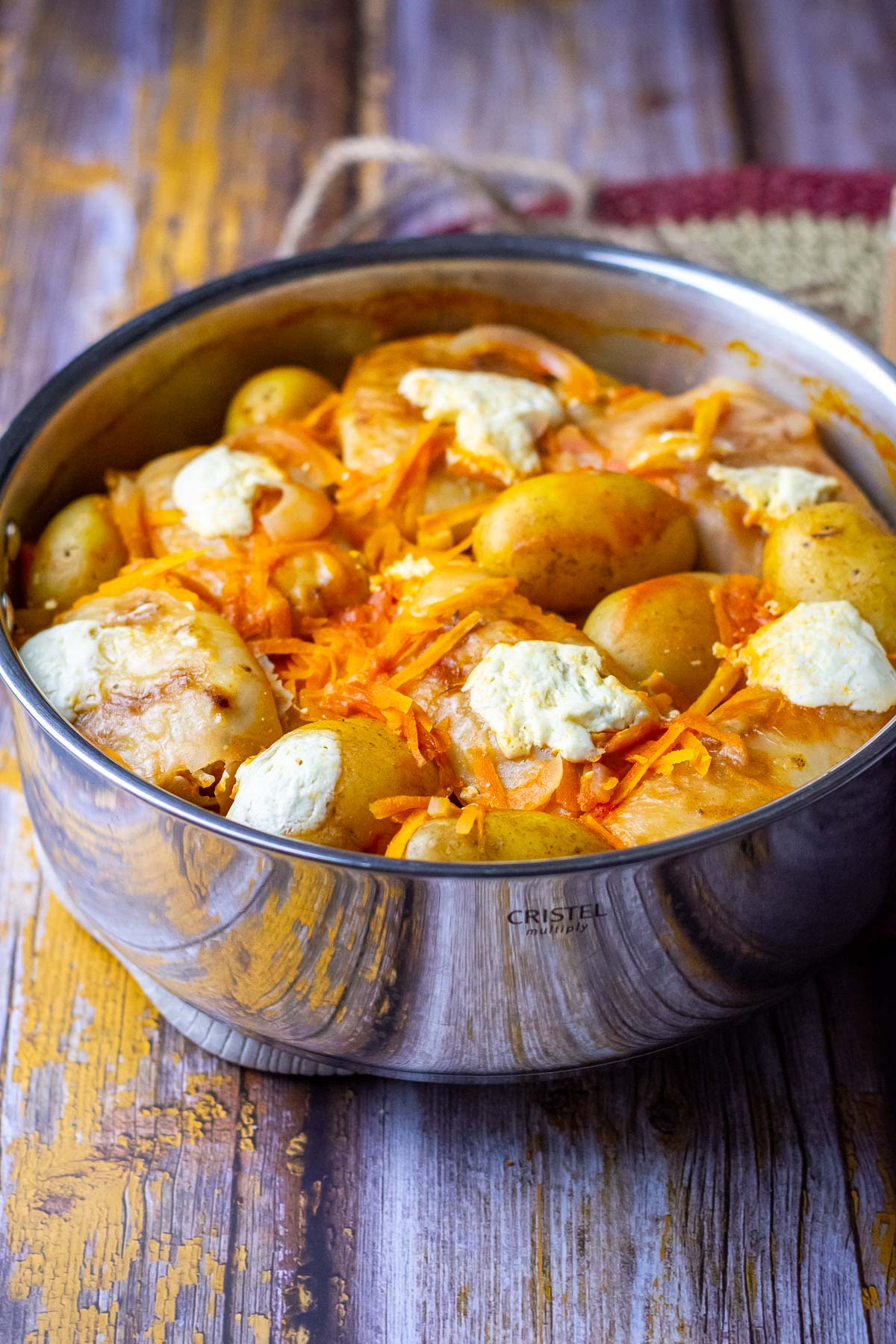
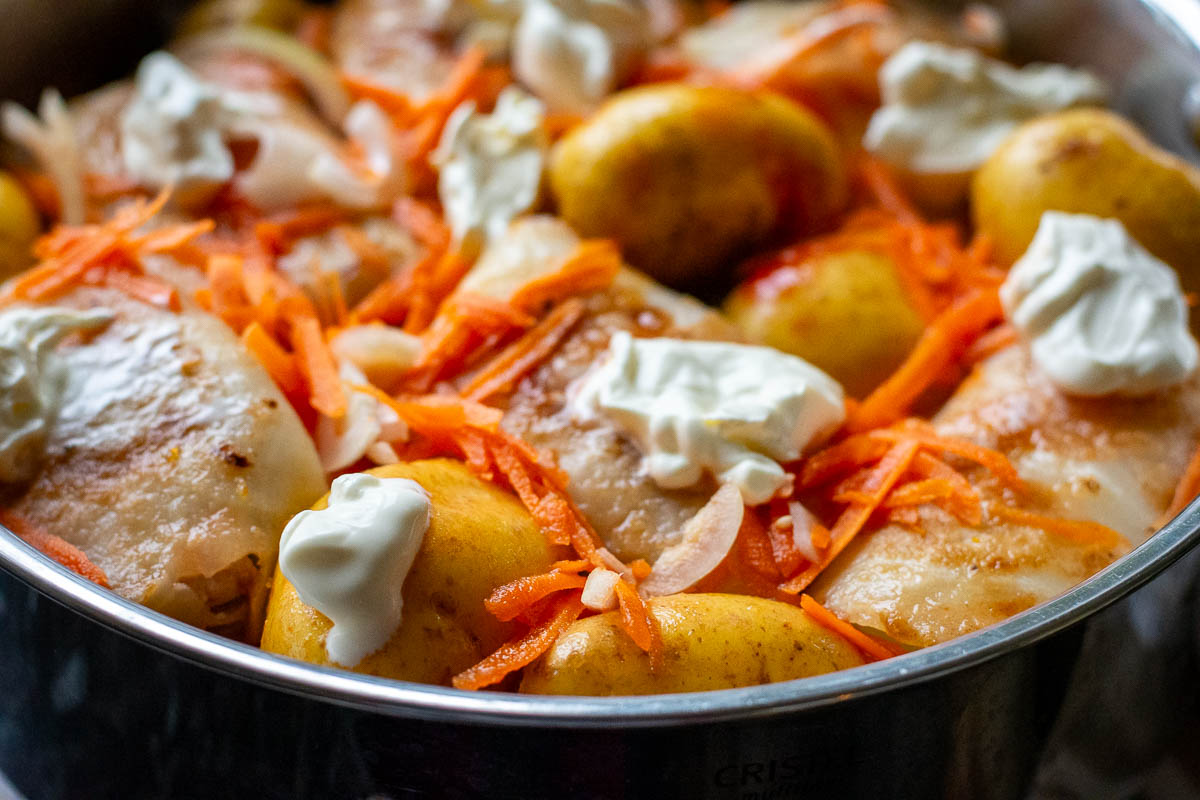
Scatter a third of the grated carrots and onions on the bottom of a large pot (large enough to fit all the cabbage rolls and potatoes). Snuggly arrange the bottom layer of the cabbage rolls adding potatoes to fill the gaps in between them.
Scatter another third of the carrots and onions and then arrange a second layer of cabbage rolls and potatoes. Finish with the remaining carrots and onions.
Mix the stock with tomato paste and pour the mixture over the cabbage rolls. Note that you may need more or less stock depending on the size an shape of the pot you're using. The cabbage rolls should be ⅔ way submerged.
Spoon small dots of sour cream on top. Cover the pot with a lid, set it over medium-high heat and bring it to a boil. Then reduce the heat to low and cook Balandeliai for approximately 50-60 minutes.
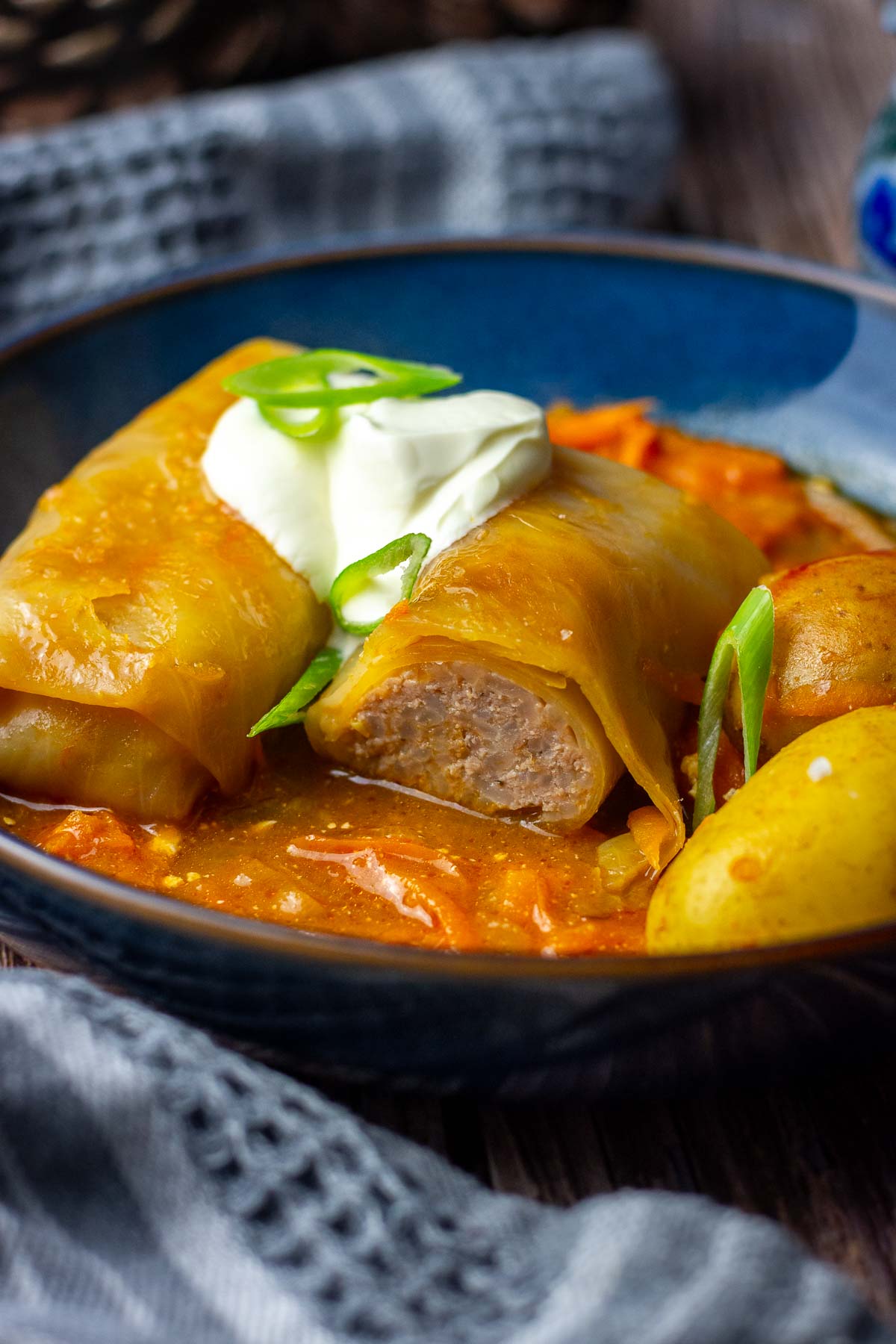
Serve 2-3 balandeliai per portion with a couple of potatoes, and a few tablespoons of tomato sauce. Add a generous amount of creme fraiche on each cabbage roll too!
What To Serve With Stuffed Cabbage Rolls?
Traditionally, Lithuanian Cabbage Rolls are served with the potatoes that have been boiling together with the rolls and a generous dollop of sour cream (or creme fraiche). The dish is often scattered with some fresh dill or sprinkled paprika on top.
Lithuanians like to mash the potatoes on the plate to soak up the thin tomato sauce too!
Leftovers are also enjoyed with a slice of Lithuanian bread.
Tips for Best Results
It is hard to mess up Lithuanian Cabbage Rolls, even if it is your first time making them. Yes, sure your cabbage leaves may be tough if not boiled long enough, making the filling hard to encase, but even then, your Balandeliai will taste delicious (there is actually a recipe for unstuffed cabbage rolls, so don't worry if they don't look perfect).
Here are a few tips for the best results:
- If you are using white cabbage (especially if it's older and has tough leaves), once you separate individual leaves, place them back into the boiling water for 5-7 minutes to soften further. This will make them more flexible.
- Do not skip the step of thinning the tough cabbage leaf stalk. They won't soften in the same time that the filling cooks through.
- For more tender succulent filling, use fattier ground pork.
- If you have leftover cooked rice, you can use them in the meat filling instead.
- Arrange the cabbage rolls snuggly in the pan so that they don't have much space to unroll.
Recipe FAQs
Why Do You Need To Sear Balandeliai In A Frying Pan First?
You don't, really. Many Lithuanian families, roll the filling in cabbage leaves and place them straight into a pot to cook. But coating the cabbage rolls in flour and searing them will give them a lovely colour, and more flavour and the flour will thicken the sauce ever so slightly.
Why Is My Cabbage Tough on My Cabbage Rolls?
Make sure to cut off the hard piece that attaches to the thick center stem. Old white cabbage also takes a lot longer to soften, so your Lithuania Cabbage Rolls may need longer cooking.
How To Store and Reheat Leftovers?
Cool the cabbage rolls to room temperature, then store them in the fridge. You can simply place the whole pot in the fridge (but the cabbage smell may escape) or place them in an airtight container. Reheat balandeliai in a microwave or on the stove. You may need to add a splash of water if you've used up a lot of the sauce.
What Can I Do With The Remaining Cabbage?
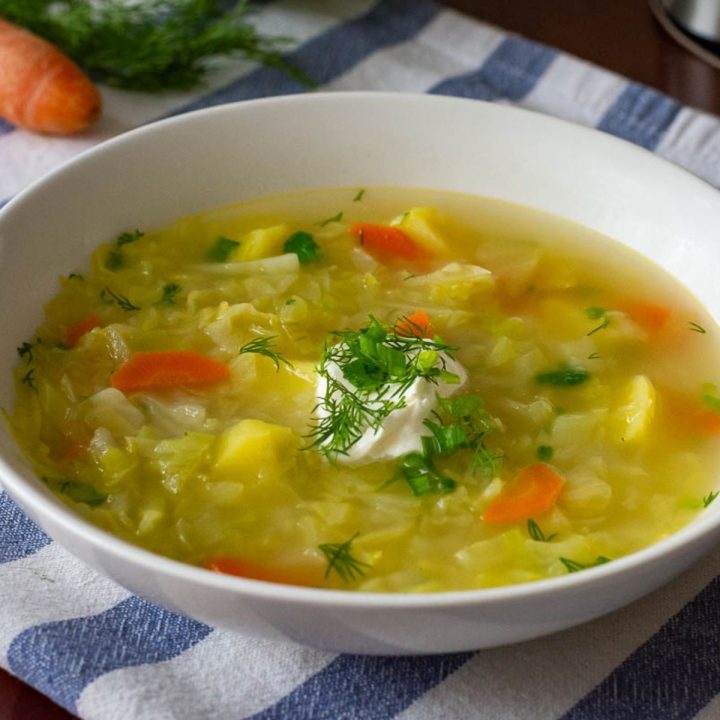
As only large leaves can be used to roll the pork filling, you won't be able to use the whole head of cabbage. The smaller centre leaves can be used to make Lithuanian Cabbage Soup, or sliced into steaks and seared in a pan for a lovely side dish. Alternatively, shred the remaining cabbage and add it to Lithuanian Buckwheat Casserole!
What Lithuanian Dishes Should You Try Next?

Balandėliai: Lithuanian Cabbage Rolls
Ingredients
- 1 large cabbage head green or white
- 500 g (1.2 lb) ground pork
- 100 g (½ cup) rice uncooked
- 1 teaspoon salt
- ¼ teaspoon black pepper
- 2 tablespoon all-purpose flour
- 1-2 tablespoon neutral oil
- 2 carrots coarsely grated.
- 1 yellow onion thinly sliced
- 750 g (1.5 lb) potatoes
- 500 ml (2 cups) stock chicken or beef
- 2 tablespoon tomato paste
- 2 tablespoon sour cream plus extra to serve
Instructions
Prepare Cabbage Leaves:
- Remove any damaged outer leaves from your head of cabbage and run it under cold tap.
- Place the whole cabbage stalk side down in a big pot and pour boiling water over it, so it is submerged at least up to ⅔.
- Boil the cabbage for 10 minutes over low-medium heat, and then turn it upside down using two forks, taking care not to splash yourself with hot water.
- Using a sharp knife, cut the leave at the stalk and wiggle the outer leaves to separate them from the head. Take the leaves out into a large bowl.
- Turn the head around again and boil for a few minutes until your outer leavesa can be separated again. Keep going until your leaves are too small and tough.
- TIP: if after separating all the cabbage leaves, they still feel very stiff, place them back into the boiling water for a few minutes to soften further and become more flexible.
- Leave the leaves to cool down enough to be abel to handle with your hands.
- Using a sharp pairing knife, cut the hard thick stalks of each cabbage leaf thicker part of the stem from each cabbage leaf. Simply run the knife flat across to make the thickness of the stalk the same as the rest of the leaf.
- We use 14-16 leaves for the amount of pork filling in this recipe.
Pork Filling:
- In a large bowl, mix the ground pork, rice, salt and black pepper until well combined. This meat mixture can be fruther flavoured with vegeta (Eastern European all-purpose seasoning) or dried parsley.
Assemble and Cook:
- Arrange individual leaves on a clean kitchen surface like bowls. Spoon the meat stuffing into each cabbage leaf. Then roll the filling into the cabbage leaves as if you are shaping a burrito (fold one side of the cabbage leaf over, then fold in the sides and wrap it into a roll).
- Spray the cabbage rolls with some water, then roll them in all-purpose flour. Heat a large skillet over medium heat with some oil or butter. Sear the cabbage rolls on both sides until they're lightly browned.
- Scatter a third of the grated carrots and onions on the bottom of a large pot (large enough to fit all the cabbage rolls and potatoes). Snuggly arrange the bottom layer of the cabbage rolls adding potatoes to fill the gaps in between them.
- Scatter another third of the carrots and onions and then arrange a second layer of cabbage rolls and potatoes. Finish with the remaining carrots and onons.
- Mix the stock with tomato paste and pour the mixture over the cabbage rolls. Note that you may beed more or less stock depending on the size an shape of the pot you're using. The cabbage rolles should be ⅔ way submerged.
- Spoon small dots of sour cream on top. Cover the pot with a lid, set it over medium-high heat and bring it to a boil. Then reduce the heat to low and cook Balandeliai for approximately 50-60 minutes.
- Serve 2-3 balandeliai per portion with a couple of potatoes, and a few tablespoons of tomato sauce. Add a generous amount of creme fraiche on each cabbage roll too!

Leave a Reply