

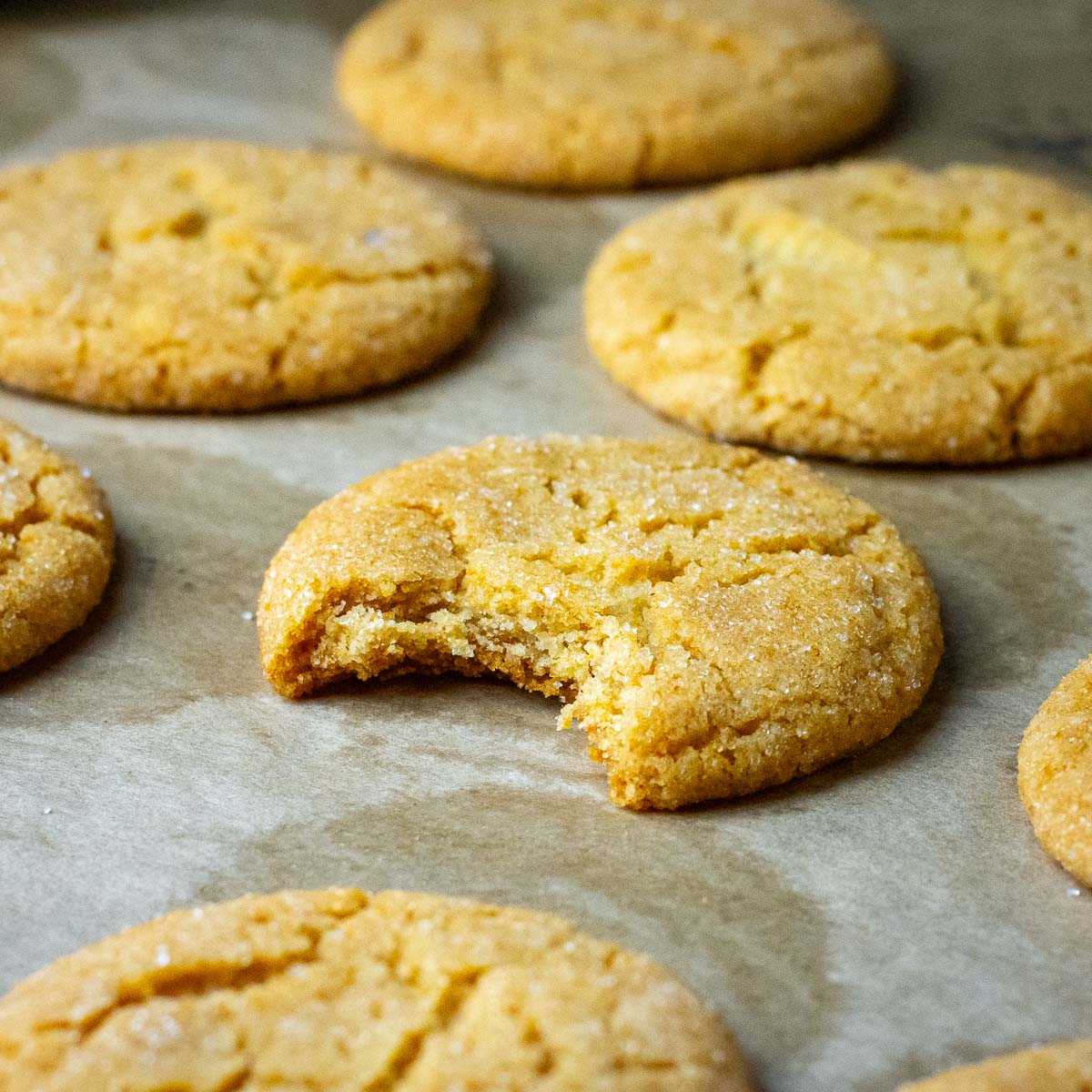
Every fall, my family wanted gingerbread and nobody wanted to roll, cut and ice it. These Lithuanian Honey Cookies were the answer: one bowl, no cutters, no icing, and a chewy, crackle-topped cookie that tastes of honey and ginger. When I was little, my mom made them with cinnamon. Once I grew up and got properly into ginger, they became ginger-only, and they have stayed that way.
Jump to:
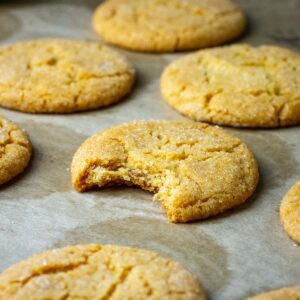
If you know gingersnaps (gingernuts, if you’re reading from the UK), think of a slightly chewier cousin. Crisp edge, sugary crackled top, a slight pull in the middle.

Recipe Highlights
THE SHORTCUT: All the honey-ginger flavor of gingerbread, with no rolling, no cutters and no icing.
TIMING: About 15 minutes of actual work, an hour in the fridge, and 11 to 13 minutes in the oven.
TEXTURE: Crisp outside, slightly chewy inside, and chewier than any gingersnap you’ve bought.
MAKE-AHEAD FRIENDLY: The dough keeps in the fridge for up to 48 hours, so you can bake them fresh when someone turns up.
YIELD: 16 cookies, which in my house is not as many as it sounds.

Honey, Ginger and Lithuanian Baking
I want to be straight about what these are. They are not the traditional Lithuanian honey cookie, known as meduoliai. They’re a family-kitchen shortcut that borrows its flavor from one.
The traditional version is meduolis (plural meduoliai), from medus, the Lithuanian word for honey. Meduoliai are honey-spice thick cookies (think, German Lebkuchen) that are rolled out, cut into shapes and iced. You’ll find them at Christmas, and at Kaziuko Mugė, the St. Casimir’s Fair held around March 4. Gingerbread itself is said to have reached Lithuania from Germany in the 16th century, and ginger and honey cookies were once believed to help keep the flu away in cold weather.
If you want that full rolled, cut and iced version, I have one: Lithuanian Gingerbread Cookies With Orange Icing.
These are what we made when we couldn’t be bothered. Same flavor logic of honey and ginger, a fraction of the effort. I’d say it was a very good compromise.
Christmas In Lithuania eBook
Bring a touch of authentic Lithuanian magic to your holiday season! Whether you’re reconnecting with your roots or surprising loved ones with a nod to their heritage, Christmas in Lithuania is your ultimate guide to a heartwarming, delicious, and tradition-filled celebration.

Ingredient Notes
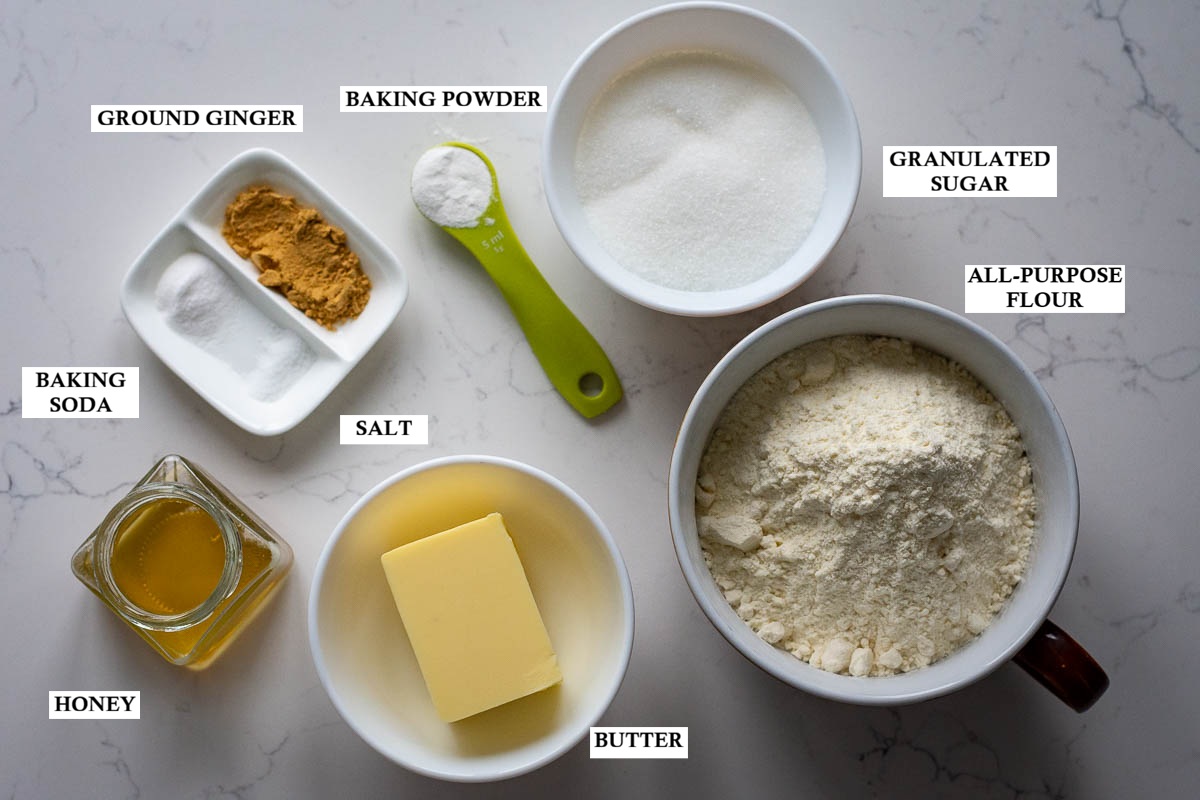
Honey. Use clear, runny honey. If yours has set solid in the jar, stand the jar in a bowl of hot water until it loosens up. There’s only 5 tablespoons (100g) in the dough, so the honey’s flavor does a lot of the work. Use one you’d happily eat off a spoon.
Butter. Unsalted, melted. Melting it rather than creaming it is what keeps this a stir-and-go dough, and it gives you a chewy cookie rather than a cakey one.
Ginger. 1¼ teaspoons of ground ginger. This is a ginger-forward cookie. If your jar has been in the cupboard since the last time you made gingerbread, replace it, because ground ginger fades.
Sugar. Half a cup (100g) goes into the dough, and about 3 tablespoons (35g) is for rolling. The sugar coating is what gives you the crackled, crunchy shell, so don’t skip it.
Flour. All-purpose, 225g. I’d weigh it. Cup measures for flour can easily swing by 30g or more depending on how you scoop, and that is the difference between a chewy cookie and a dry one.
How to Make Lithuanian Honey Cookies
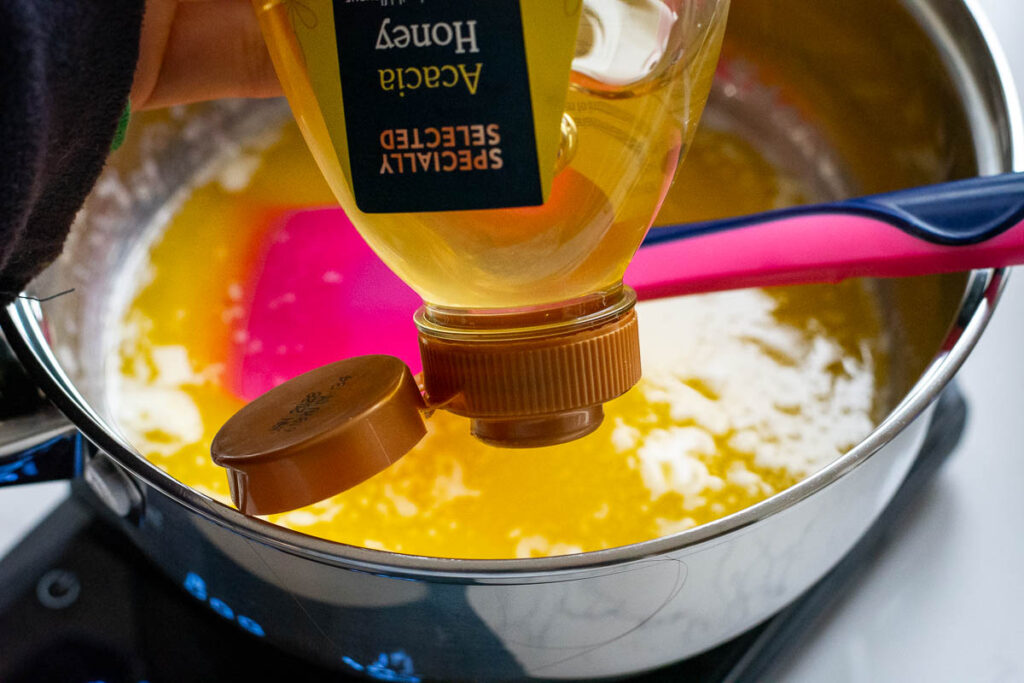
1. Melt the butter. Melt 7 tablespoons (100g) unsalted butter in a small saucepan, then take it off the heat and let it cool for a few minutes.
2. Add the honey. Stir in 5 tablespoons (100g) honey until fully combined. Let the mixture cool until it’s warm, not hot. You should be able to comfortably touch the side of the pan.
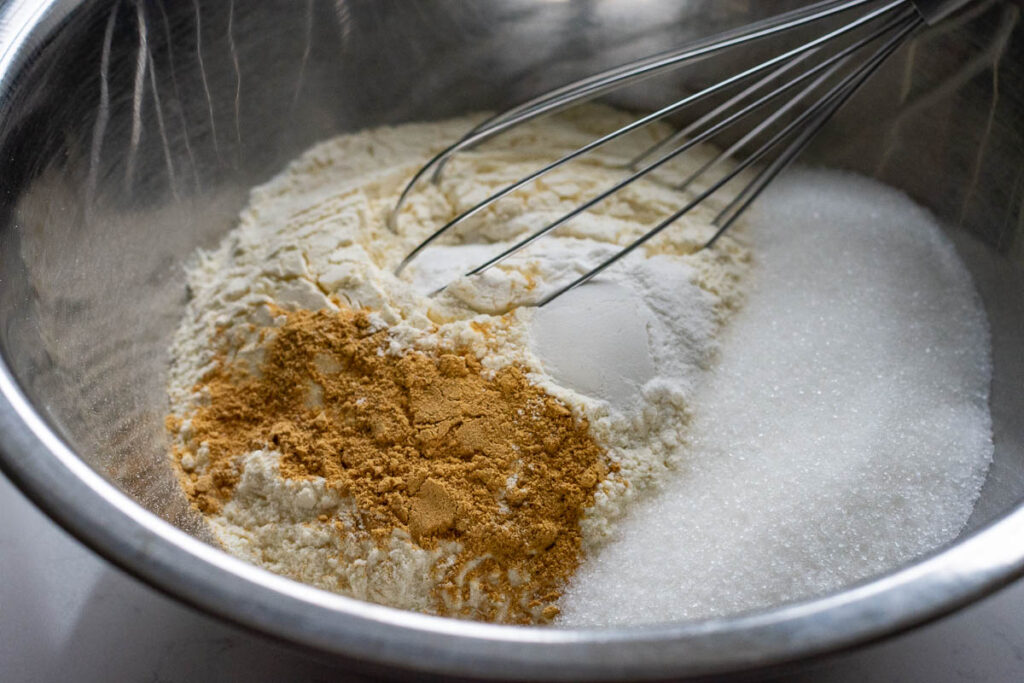
3. Mix the dry ingredients. In a separate bowl, whisk together 1¾ cups plus 2 tablespoons (225g) all-purpose flour, ½ teaspoon baking powder, ½ teaspoon baking soda, ⅛ teaspoon fine salt, 1¼ teaspoons ground ginger and ½ cup (100g) granulated sugar.
4. Make the dough. Pour the warm butter and honey into the dry ingredients and mix with a rubber spatula until there’s no dry flour left. It will be soft and sticky. That’s right.
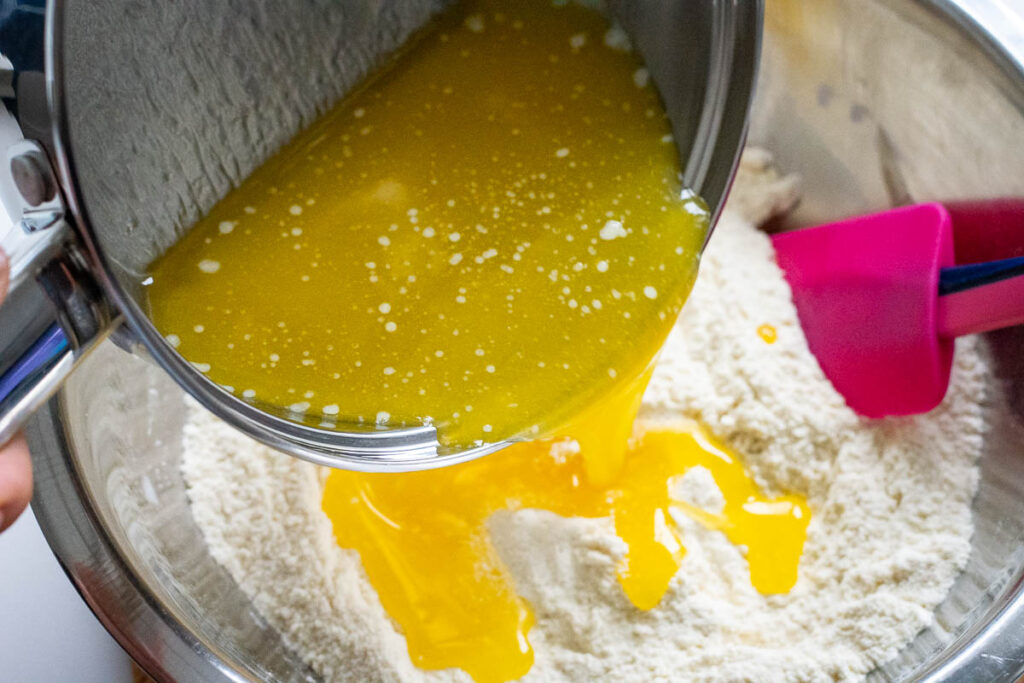
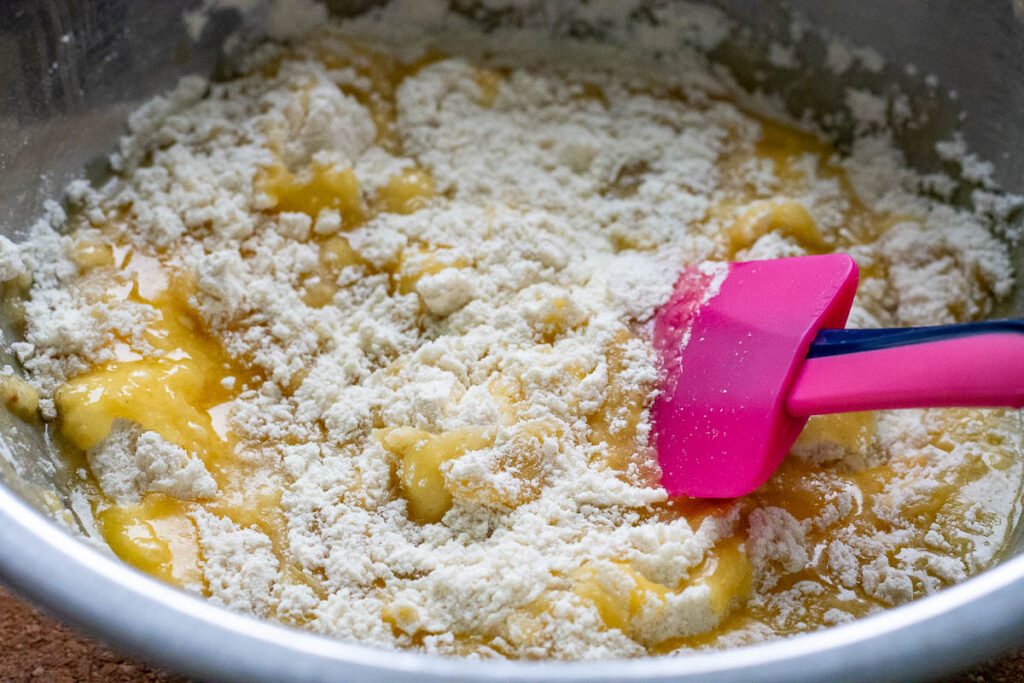
5. Chill. Cover the bowl and refrigerate for at least 1 hour, or up to 48 hours.
6. Heat the oven. Preheat to 350°F (180°C), conventional (non-fan). Line one large baking sheet, or two, with parchment paper.
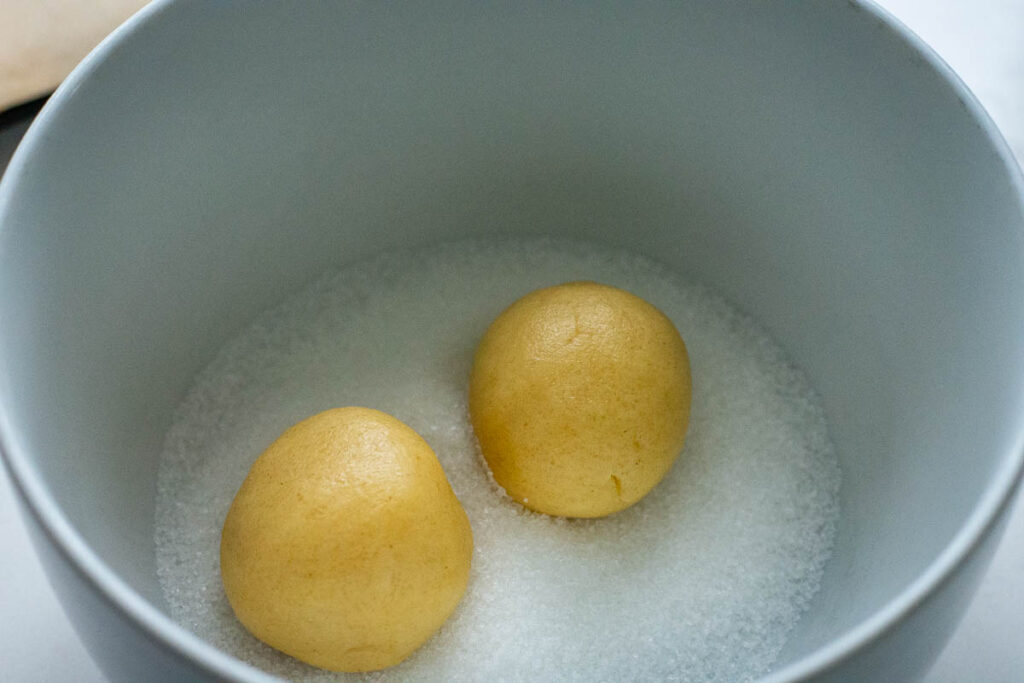
7. Shape. Divide the dough into 16 tight balls, about 33g (just over 1 ounce) each. That’s roughly the size of a walnut in its shell, or a little smaller than a golf ball, about 1½ inches (3.5 to 4cm) across. Roll each ball in granulated sugar to coat.
8. Space them out. Arrange on the baking sheet with 2 to 2½ inches (5 to 6cm) between them. They spread.
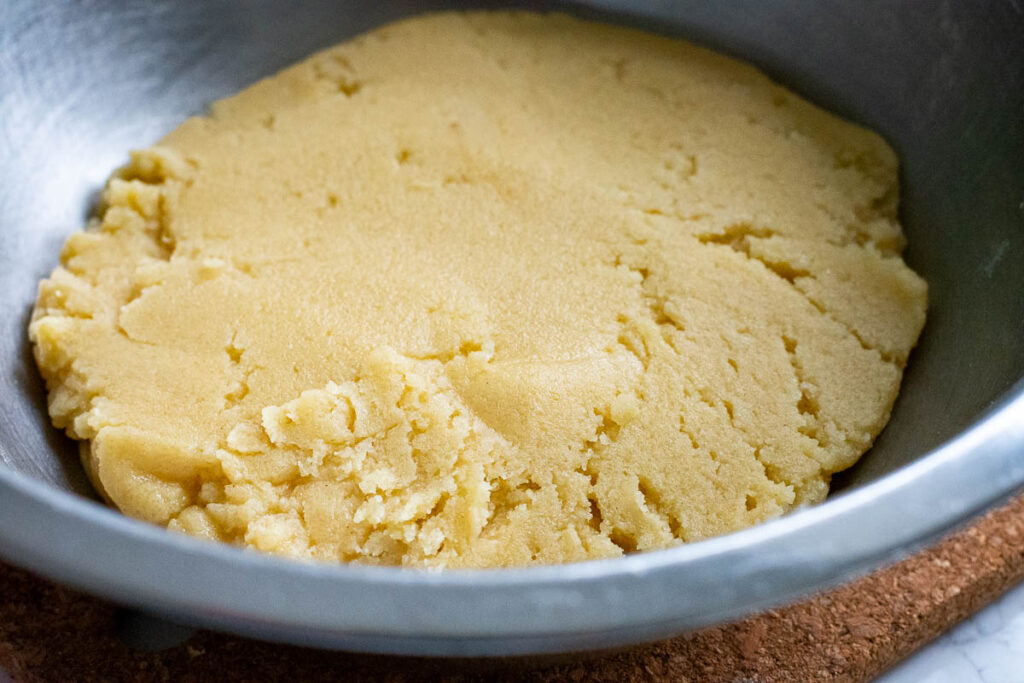
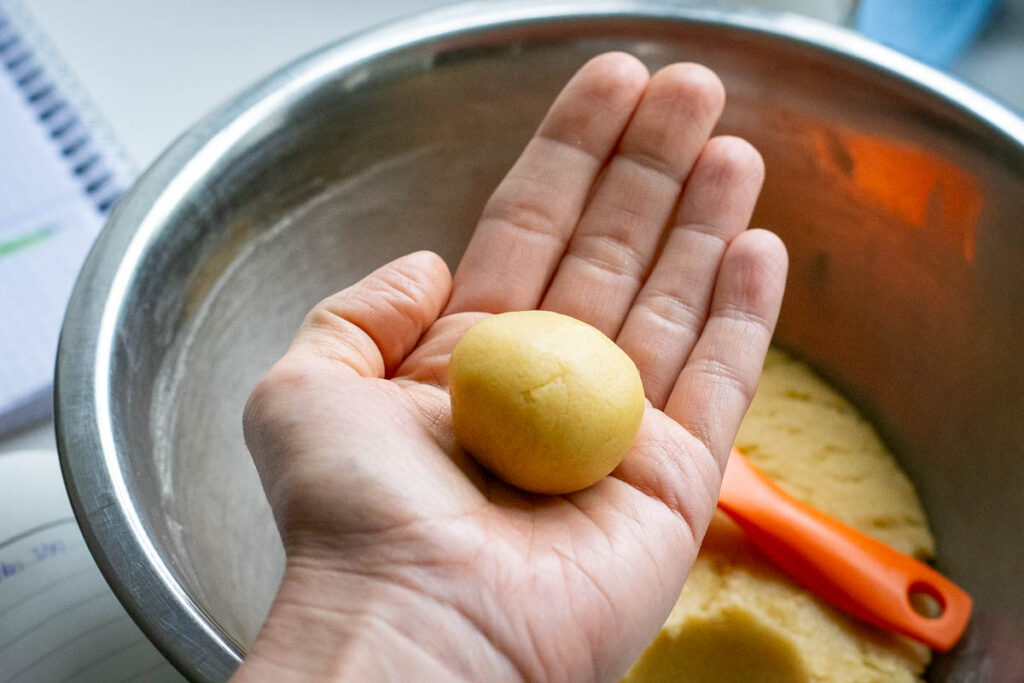
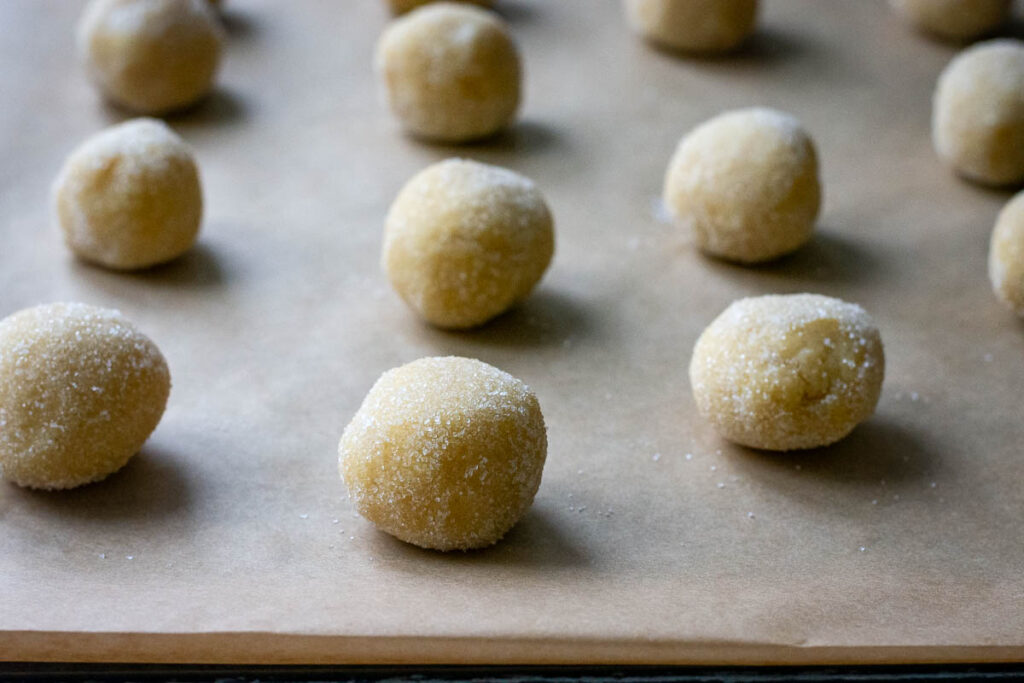
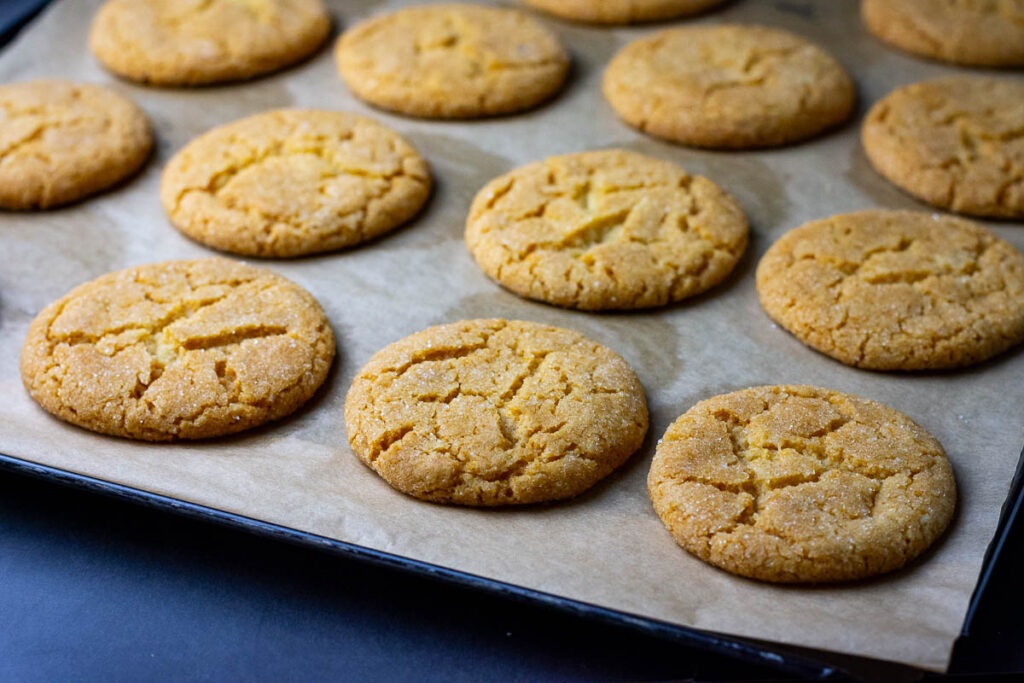
9. Bake. Bake for 11 to 13 minutes, until golden brown and crackled on top.
10. Cool. Leave them on the baking sheet. They’re soft when they come out and firm up as they cool, ending up crisp outside with a slight chew in the middle.
Tips for Chewy, Crackled Cookies
- Let the butter and honey cool. If they’re hot when they hit the flour, the dough turns loose and greasy. Warm is the target.
- Don’t skip the chill. The dough is soft. An hour in the fridge firms it up enough to roll tight balls that keep their shape in the oven.
- Weigh the dough balls. About 33g each gives you 16 cookies of the same size, which means they all finish baking at the same time.
- Give them room. 2 to 2½ inches between cookies. They spread more than you expect.
- Pull them when golden, not dark. They firm up as they cool, so they will look slightly underdone at the point you want them out.
- Leave them on the tray. Moving them while they’re soft is how you end up with a bent cookie.
What to Serve Them With
Tea or strong coffee, mainly. They’re also a good fit for a fall or winter cookie tin, and for the plate you put out when someone turns up unannounced, which in a Lithuanian household is a normal Tuesday.
Storage and Make-Ahead
- Dough: keeps in the fridge for up to 48 hours, so you can mix it the night before and bake the next day.
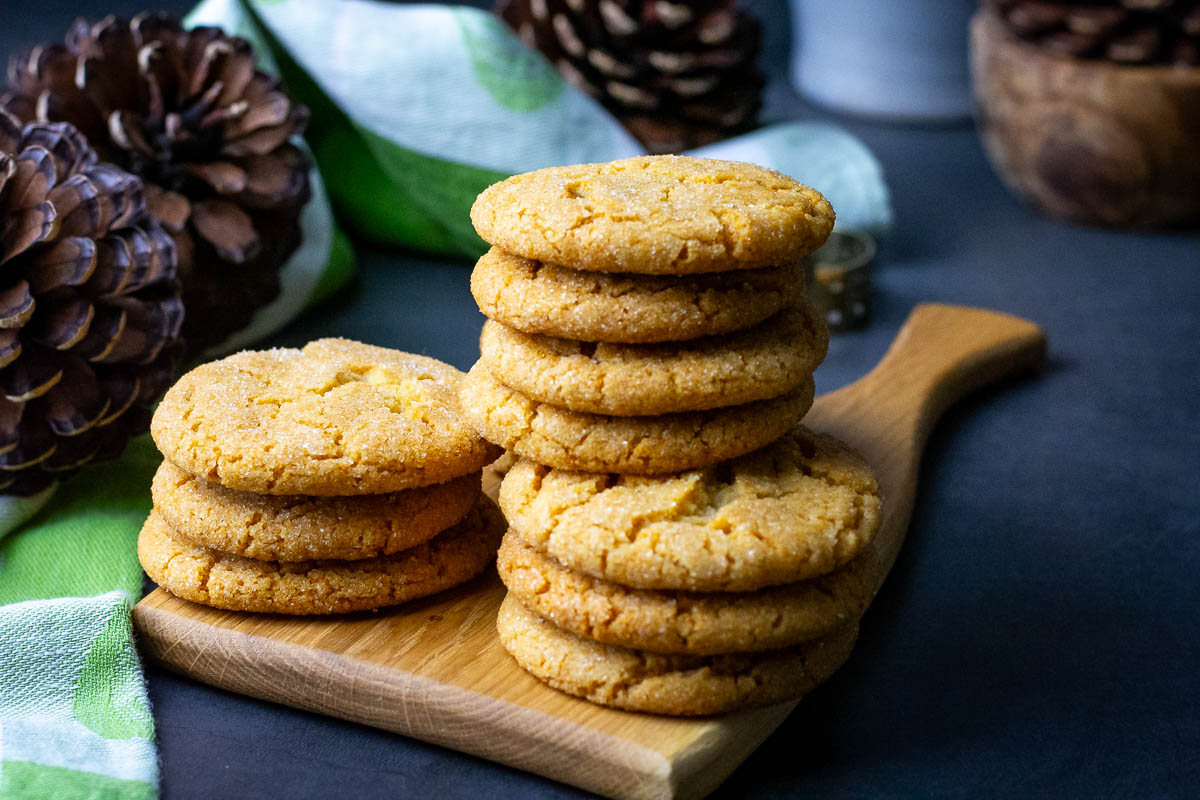
- Baked cookies: store at room temperature for up to 1 week.
- Freezing: I haven’t tested it, so I won’t tell you to do it. My hunch is that the sugar coating would absorb moisture as the cookies thaw and leave them sticky, and I’d rather you froze nothing than froze something I can’t vouch for.
Variation: The Cinnamon Version
This is the one my mom made when I was a kid. Swap the ground ginger for ground cinnamon, to taste. I’d start modestly and add more next time if you want it stronger. These days, I also really like them with ⅛ teaspoon of ground cardamom!
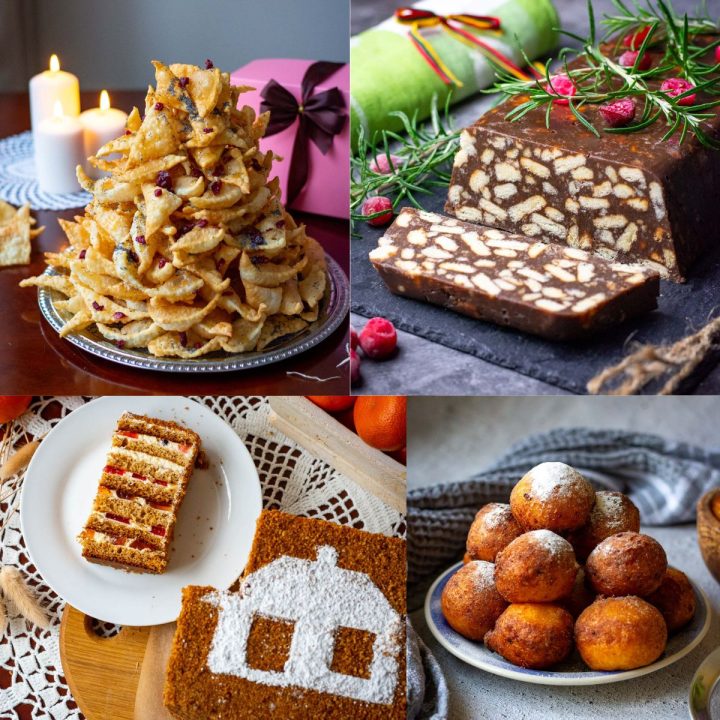
More Lithuanian Baking Recipes
Lithuanian Honey Cookies
Equipment
- Small saucepan
- 2 Mixing bowls
- Rubber Spatula
- Small bowl for rolling in sugar
- 1-2 Large baking sheets
- Parchment Paper
Ingredients
- 1¾ cups + 2 tbsp (225g) all-purpose flour
- ½ teaspoon baking soda
- ½ teaspoon baking powder
- ⅛ teaspoon fine salt
- 1¼ teaspoons ground ginger
- ½ cup (100g) granulated sugar, plus about 3 tablespoons (35g) for rolling
- 7 tablespoons (100g) unsalted butter
- 5 tablespoons (100g) clear (liquid) honey
Instructions
- Melt the butter. Melt it in a small saucepan, then take it off the heat and let it cool for a few minutes.
- Add the honey. Stir the honey into the butter until fully combined, then let the mixture cool until warm, not hot.
- Mix the dry ingredients. In a separate bowl, whisk together the flour, baking soda, baking powder, salt, ginger and ½ cup (100g) sugar.
- Make the dough. Pour the warm butter and honey mixture into the dry ingredients and mix with a rubber spatula until no dry flour is left.
- Chill. Cover and refrigerate for at least 1 hour.
- Heat the oven. Preheat to 350°F (180°C). Line one large baking sheet, or two, with parchment paper.
- Shape. Divide the dough into 16 tight balls, about 32g (just over 1 ounce) each. That is roughly the size of a walnut in its shell. Roll each in granulated sugar to coat.
- Space them out. Arrange on the baking sheet, leaving 2-2½ inches (5-6cm) between them. They spread.
- Bake. Bake for 11-13 minutes, until golden brown and crackled on top.
- Cool. Leave them on the baking sheet. They are soft when they come out and firm up as they cool, ending up crisp outside with a slight chew in the middle.
Notes
Leave a Reply