

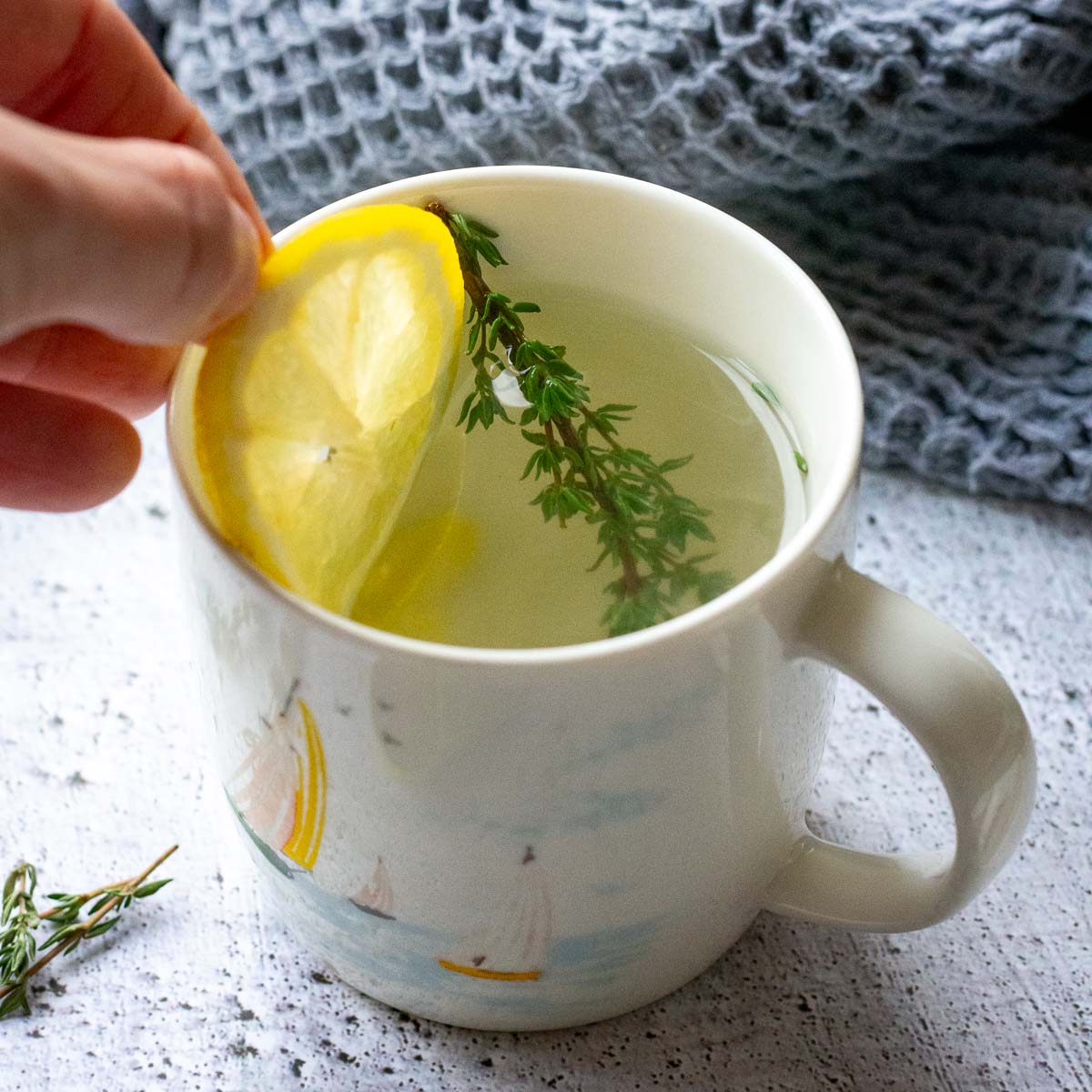
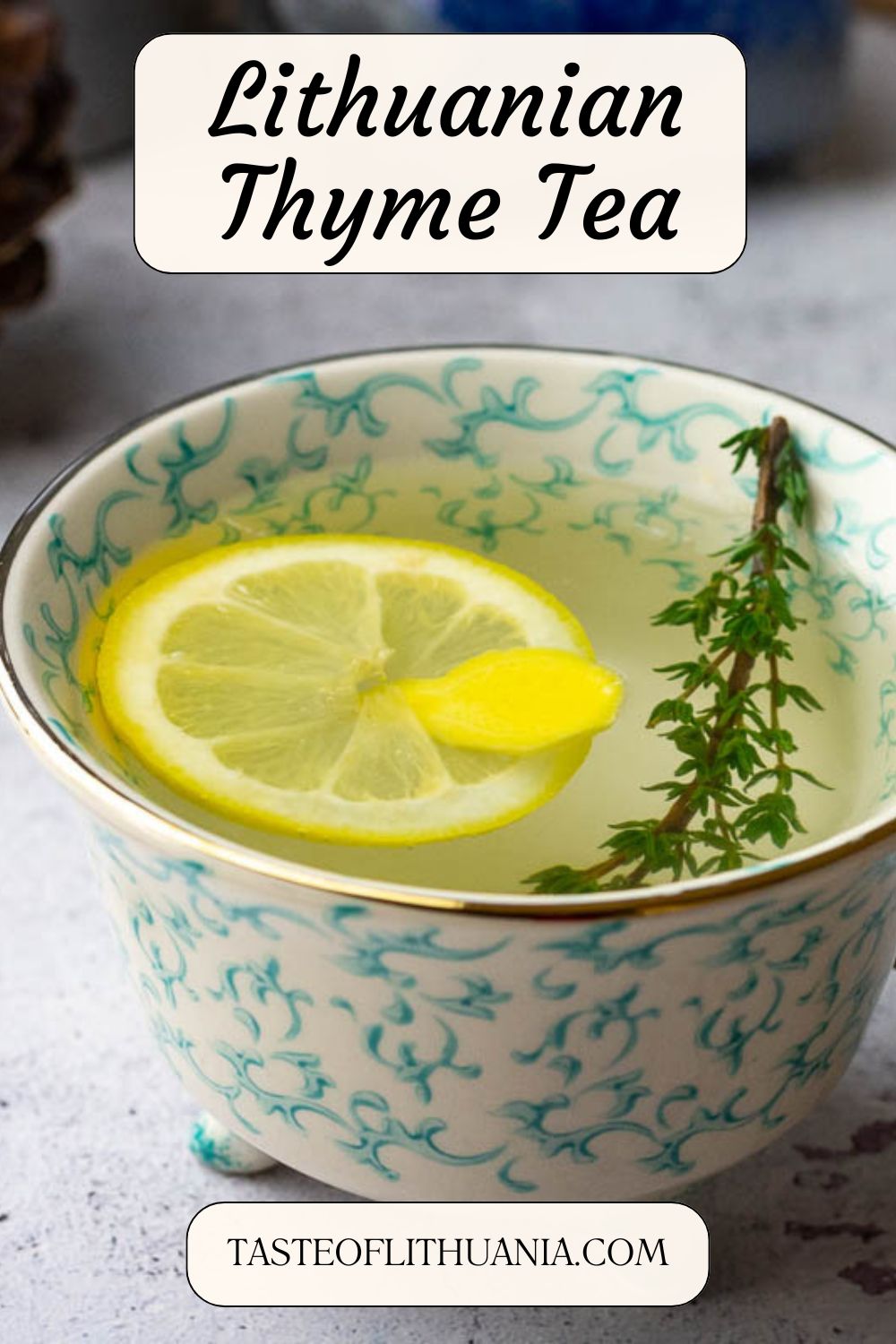
There’s a distinct memory I have of winter in Lithuania: the kettle humming, steam dancing from the spout, and a mug of hot thyme tea warming my hands. Whether you’re searching for how to make thyme tea or curious about thyme tea for cough, this simple infusion has been part of Lithuanian homes for generations. It’s gentle, aromatic, and — most importantly — deeply tied to tradition, comfort, and cold winter evenings.
Jump to:
I’m not here to tell you it’s a cure-all. I’m not a medical professional, and this article isn’t medical advice. But I will walk you through the tea my grandmother handed me, the tea I make for my husband (who doesn't believe in thyme but swears by echinacea), and the tea I still reach for when a cough creeps in, I have a runny nose or to ease any symptoms of upper respiratory infections. Because tradition matters, and sometimes the best remedy is an old one shared with love.
Disclaimer + Personal Story
Let’s be clear: I am not suggesting thyme tea treats or cures anything. I did not consult clinical studies to write this. I’m sharing what Lithuanian grandmothers and mothers have passed down, what I drank growing up, and what I offer to loved ones — including my British husband — when winter settles like an old blanket.
In the summers of my childhood, we would wander into the meadows near my grandmother’s house, searching for the tiny purple blossoms of Thymus vulgaris — common herb thyme that grows wild not only in the Mediterranean region but also in Lithuania. We’d harvest thyme sprigs and air-dry them for winter. I remember the sweet smell of drying herbs, and how we felt like keepers of something secret and ancient.
When cold winds blew and coughs began echoing down the hall, we’d make this tea. Sometimes simply for its flavor. Sometimes “just in case.” That’s the world this tea comes from: preventative comfort as much as tradition.
Thyme for Tea
Before we get to the method, let’s talk about the star ingredient: thyme.
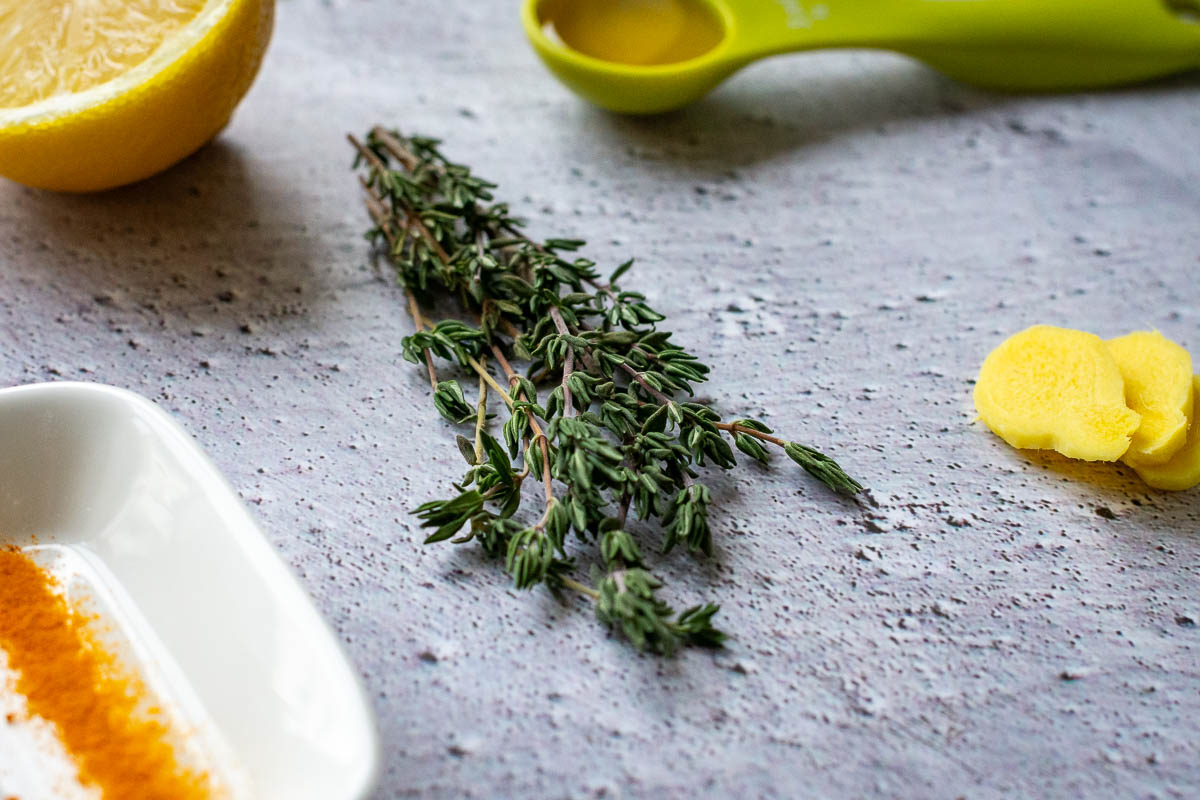
Thyme is an aromatic herb from the mint family, with a history of medicinal uses dating and numerous health benefits to ancient times. It contains volatile oils and phenolic compounds that modern research suggests may have antimicrobial properties (and anti-inflammatory properties) and may support the immune system when used as part of a broader healthy lifestyle.
Thyme tea is usually made from:
- Dried thyme (easiest and most consistent),
- Fresh thyme tea made with fresh sprigs of thyme.
True thyme tea for cough is simple, but the quality of your thyme matters:
- Use fresh leaves in spring/summer if available.
- Use dried herb in winter — it’s concentrated and shelf-stable.
- Avoid tea blends with strong competing herbs if you want the thyme’s flavor to shine.
If you’re brewing for flavor and tradition, both dried flowers and fresh sprigs work. Just remember that dried thyme is more potent — so use it sparingly.
How To Make Thyme Tea?
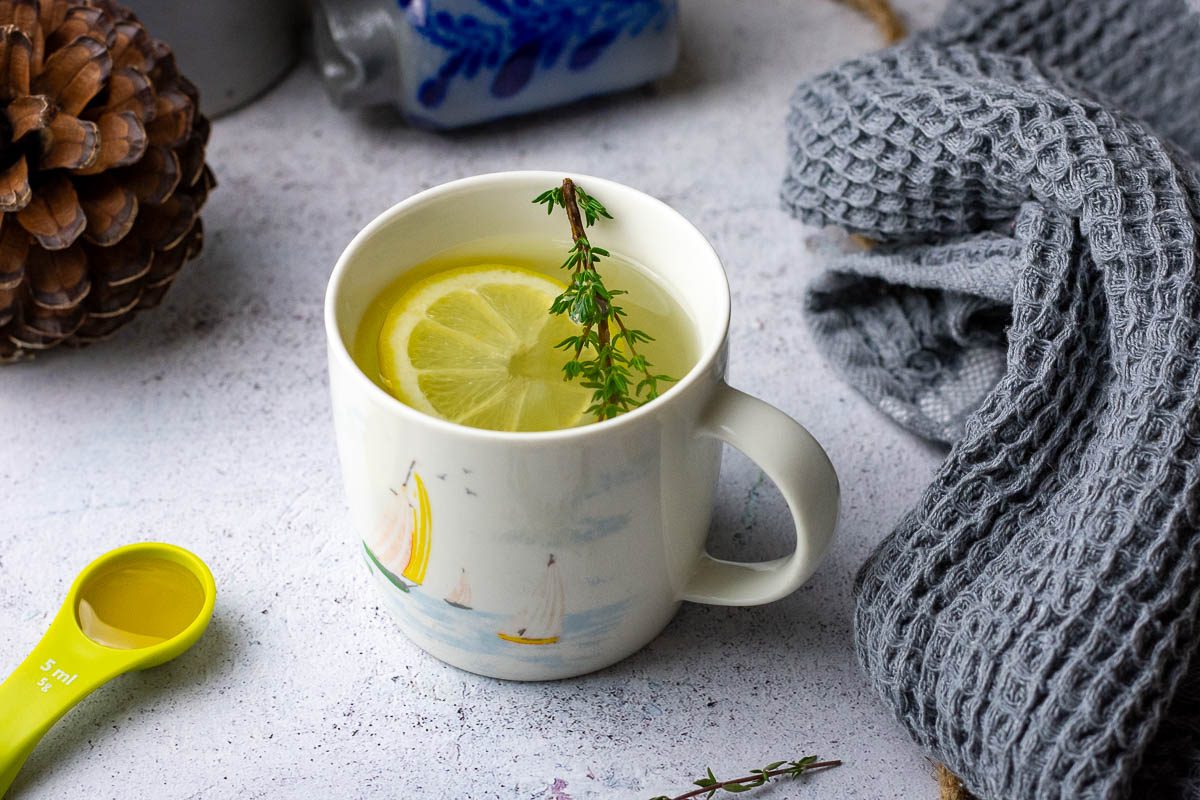
This is the classic, Lithuanian-style thyme tea — very simple, very effective for sipping.
- 1 teaspoon dried thyme or 2 teaspoons fresh thyme leaves (about 2–3 sprigs)
- 200–300 ml hot tea water (just boiled)
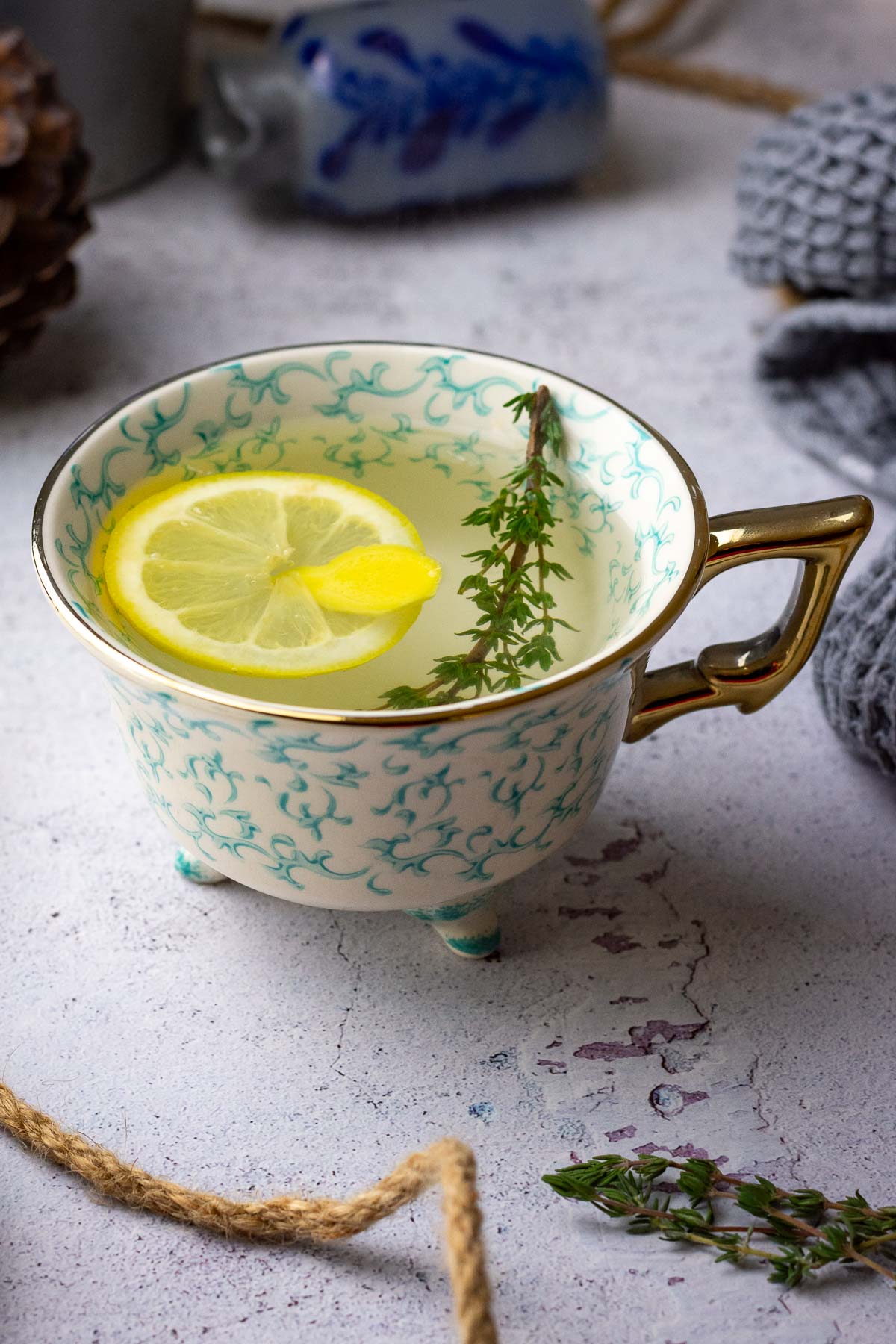
1. Place the thyme in a teapot or mug. You can add a slice of lemon and some ginger at this stage.
2. Pour boiling water over the leaves.
3. Cover and steep for 5–8 minutes. Customise (see variations below).
4. Sip warm.
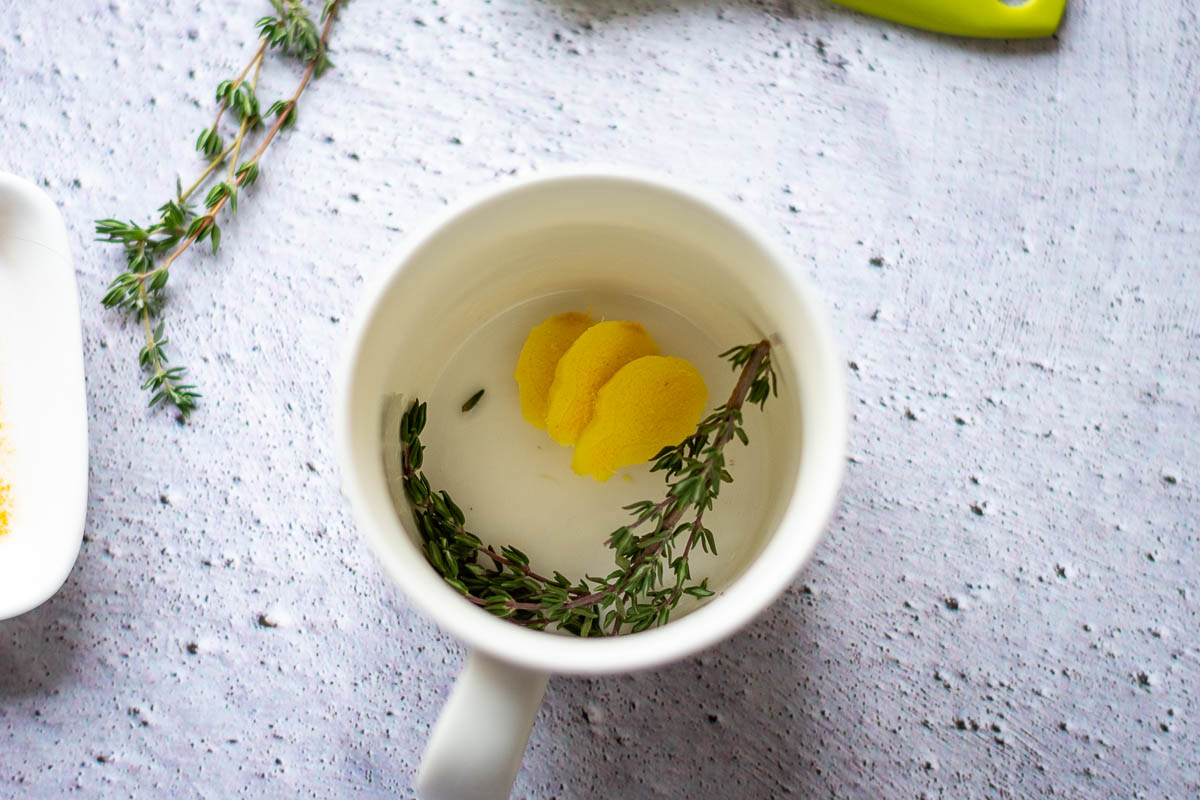
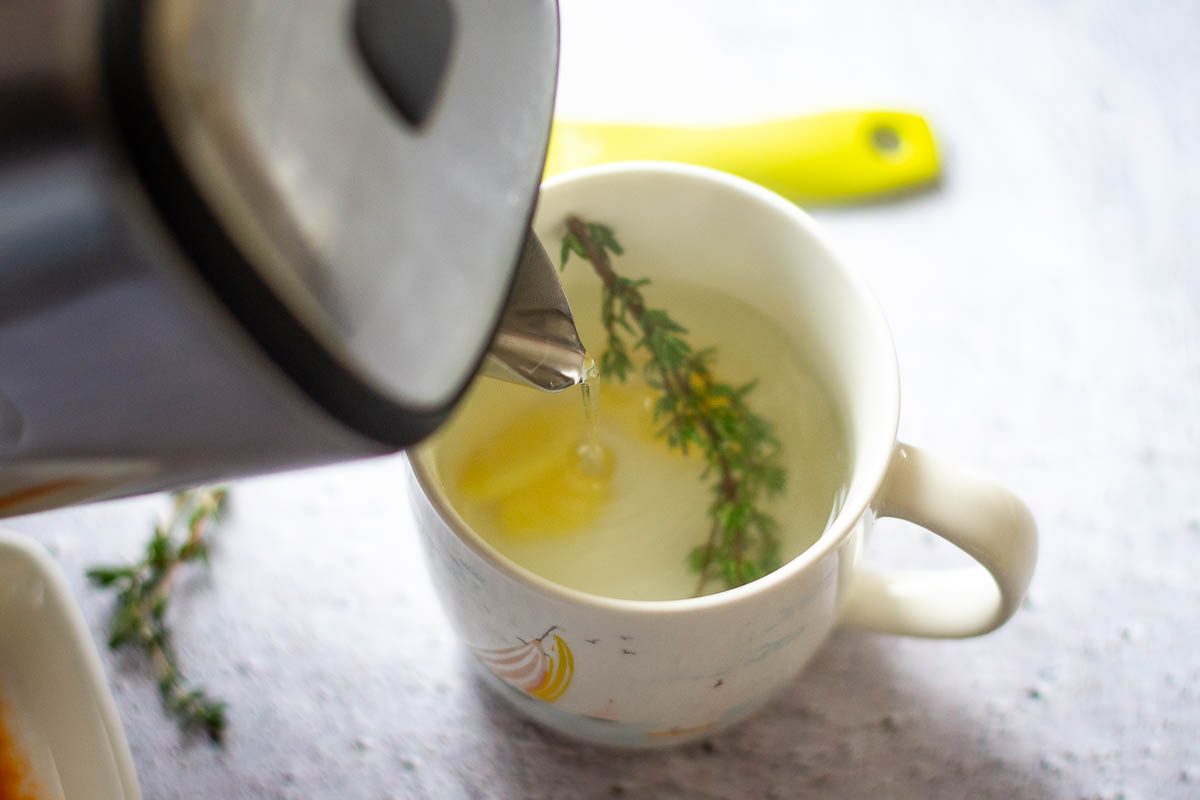
No fancy gear. No heavy base pot or steam inhalation ritual. This is straight thyme, hot water, and patience.
How To Enjoy Thyme Tea For a Cough?
There is no magic bullet for coughs, flu symptoms (like nasal congestion or runny noses) or respiratory issues, but many people find this herbal tea soothing:
- Sip slowly rather than gulping.
- Drink warm tea; the steam adds comfort to your chest and throat.
- Pair with rest and hydration. Tea alone isn’t a cough medicine.
Remember: this is herbal tea rooted in custom, not a replacement for medical treatment. If symptoms are severe or persistent — difficulty breathing, persistent chest cough, or acute bronchitis signs — seek professional care.
Variations
Thyme tea is a flexible base. Here are ways people in Lithuania and beyond customise it:
Add Lemon & Honey
A splash of lemon juice and a spoonful of honey transforms thyme tea into a sweet, soothing blend. Honey tea is a favourite for sore throat days.
Mix With Other Teas
- Green tea + thyme: refreshing and lighter
- Black tea + thyme: stronger and warmer
Both can provide a fuller flavor base and contribute antioxidants (like those found in green tea).
Ginger & Spices
- Add thin slices of fresh ginger for warmth
- A pinch of cinnamon or turmeric for spice
These blends add complexity and a spicy kick, great for evenings or when you crave extra comfort.
Chamomile Before Bed
Mix thyme with chamomile for a gentle night-time infusion. Chamomile’s calming profile plus thyme’s aroma makes a lovely pairing.
Thyme Tea in Lithuanian Culture
In traditional honey cake households and Lithuanian kitchens at large, herbs sit in jars just as lovingly as spices. Thyme wasn’t just for coughs; it was part of daily life — a first-aid cup for sniffles, a warm welcome for cold souls, and a practical drink that even children sipped on cold mornings.
Teachers, mothers, grandmothers — many would reach for thyme before more modern medicinals like cough syrups or essential oil of thyme. Scientific studies that explore volatile oils and antimicrobial activity in thyme help explain why it became such a favourite… but the real reason isn’t always science. It’s memory.
More Lithuanian Herbal Recipes
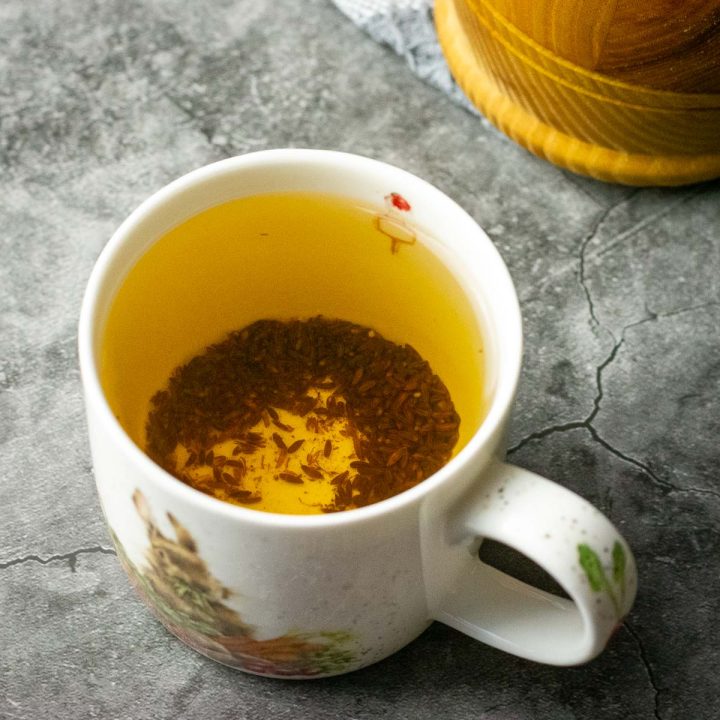
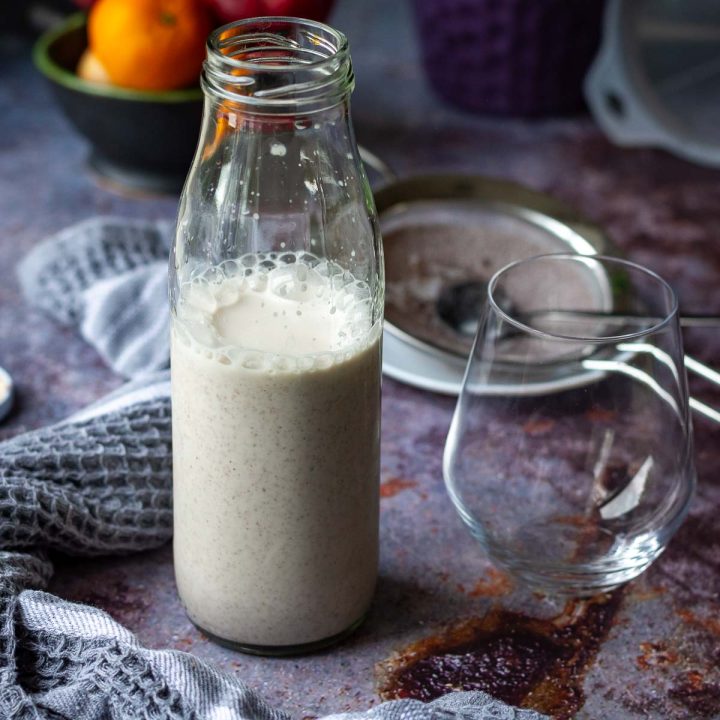
If you enjoy this tea, I’ll link more traditional Lithuanian herbal recipes below — from calming infusions (like Caraway Seed Tea) to 'not-so-tasty' but "effective" drinks.


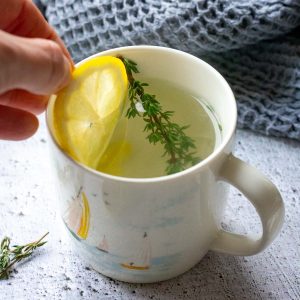
Thyme Tea for Cough (Lithuanian Home Remedy)
Ingredients
- 1 teaspoon dried thyme or 2 teaspoon fresh thyme (about 2–3 sprigs)
- 200–300 ml (¾–1¼ cups) boiling water
Optional Add-Ins
- 2-3 fresh ginger slices
- 1 teaspoon honey
- 1 tablespoon freshly squeezed lemon juice or a lemon slice
- a pinch of ground cinnamon or turmeric
Instructions
- Place the thyme in a mug or heatproof cup.
- *If you wish, you can add a lemon slice and ginger at this stage too.
- Pour boiling water over the thyme.
- Cover and let steep for 5–8 minutes.
- Strain the tea or simply remove the sprigs of thyme.
- Sip warm.
Optional Enhancements (Traditional Lithuanian Style)
- Let the tea cool slightly, then stir in 1 teaspoon honey.
- For a more warming effect, add a pinch of cinnamon or turmeric.
Video




Leave a Reply