

Kūčia isn’t just a Christmas Eve dish—it’s a Lithuanian tradition steeped in centuries of symbolism and history. Although not often seen on modern Christmas Eve tables, this ancient grain dish honors the harvest, celebrates good health, and even welcomes the spirits of ancestors back home for the feast. So, grab your oats and poppy seeds, and let’s bring some retro holiday magic to your table, Lithuanian-style!
Jump to:
What is Kūčia?
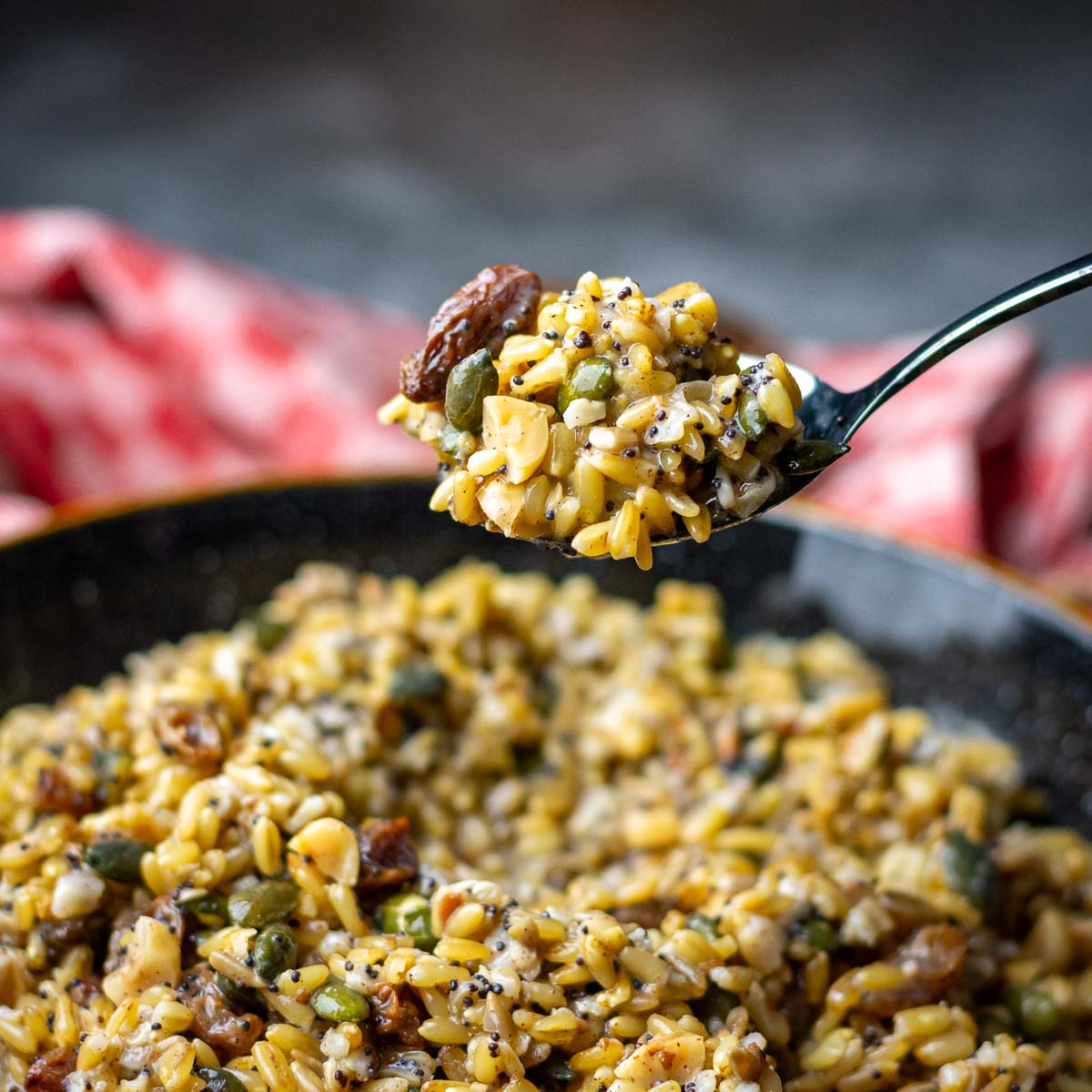
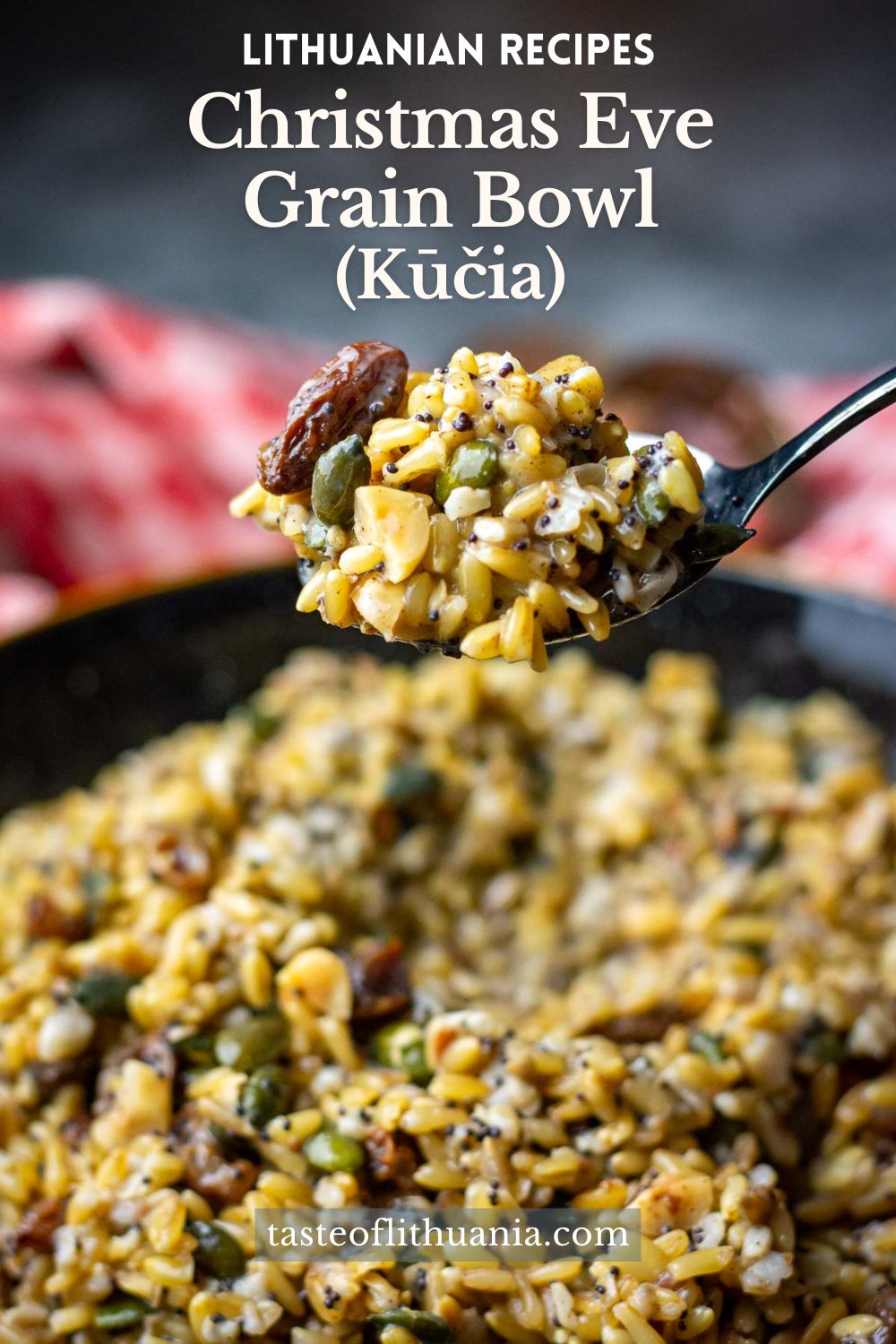
Kūčia is a centuries-old Lithuanian grain dish traditionally served on Christmas Eve, a meal so integral to the occasion that it even gives the night its name—Kūčios. Rooted in both pagan and Christian traditions, this dish symbolizes abundance, gratitude, and unity.
Made from grains such as oat groats or barley, mixed with seeds, nuts, dried fruits, honey, and poppy seed milk, Kūčia embodies the simplicity and wholesomeness of the season.
Every ingredient has symbolic meaning: grains for prosperity, honey for health, and seeds for protection—making this dish not just a meal but a heartfelt ritual.
Historical and Cultural Significance
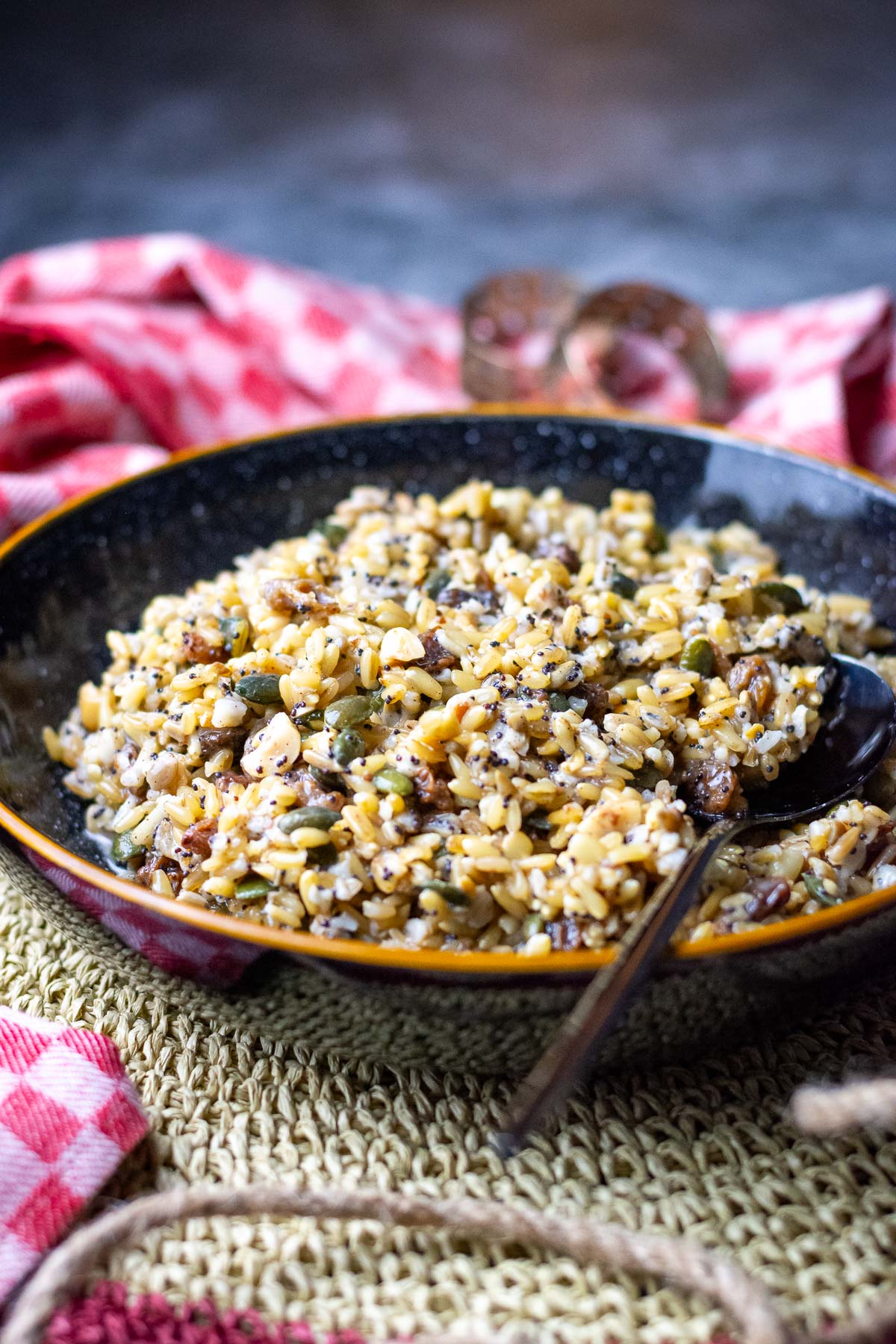
Kūčia is more than just a dish—it’s a time capsule of Lithuanian history and tradition. Dating back to pagan times and later woven into Christian customs, it was considered essential for the Christmas Eve table. The word "Kūčia" likely derives from the Greek word kukkia, meaning "beans," hinting at its ancient Byzantine roots. Originally made with grains, legumes, and honeyed water, this dish evolved over centuries, reflecting Lithuania’s agrarian culture.
Historically, Kūčia was seen as a sacred offering, symbolizing gratitude for the year's harvest and hope for the next. Families believed it pleased ancestral spirits who, according to folklore, returned home on Christmas Eve. Each spoonful was a connection to heritage, a prayer for abundance, and a gesture of unity, making Kūčia both food and folklore on a plate.
If you are interested in Christmas traditions and food in Lithuania, have a look at our Christmas in Lithuania eBook! It's over 110 pages of customs, traditions and recipes!
Ingredients and Substitutes
Here's everything you'll need to make Kūčia:
- oat groats: that's whole oats, not rolled or steel-cut oats.
- poppy seeds: if you are making poppy seed milk, you may use ground poppy seeds that you used to extract "milk".
- nuts: Lithuanians typically use blanched hazelnuts, but you can experiment with whatever you like.
- dried fruit: like cranberries, currants, sultanas or raisins.
- seeds: we used pumpkin seeds, sunflower seeds and ground flaxseed, but you may add things like linseeds and hemp seeds too.
- spices: we flavour our Kucia with cinnamon, but you may skip it, or add a mixture of nutmeg, cinnamon and ground cloves.
- a pinch of salt.
- honey: may be replaced with sugar or maple syrup to make it plant-based.
- poppy seed milk: if you don't want to make it, you can use your favourite plant-based milk.
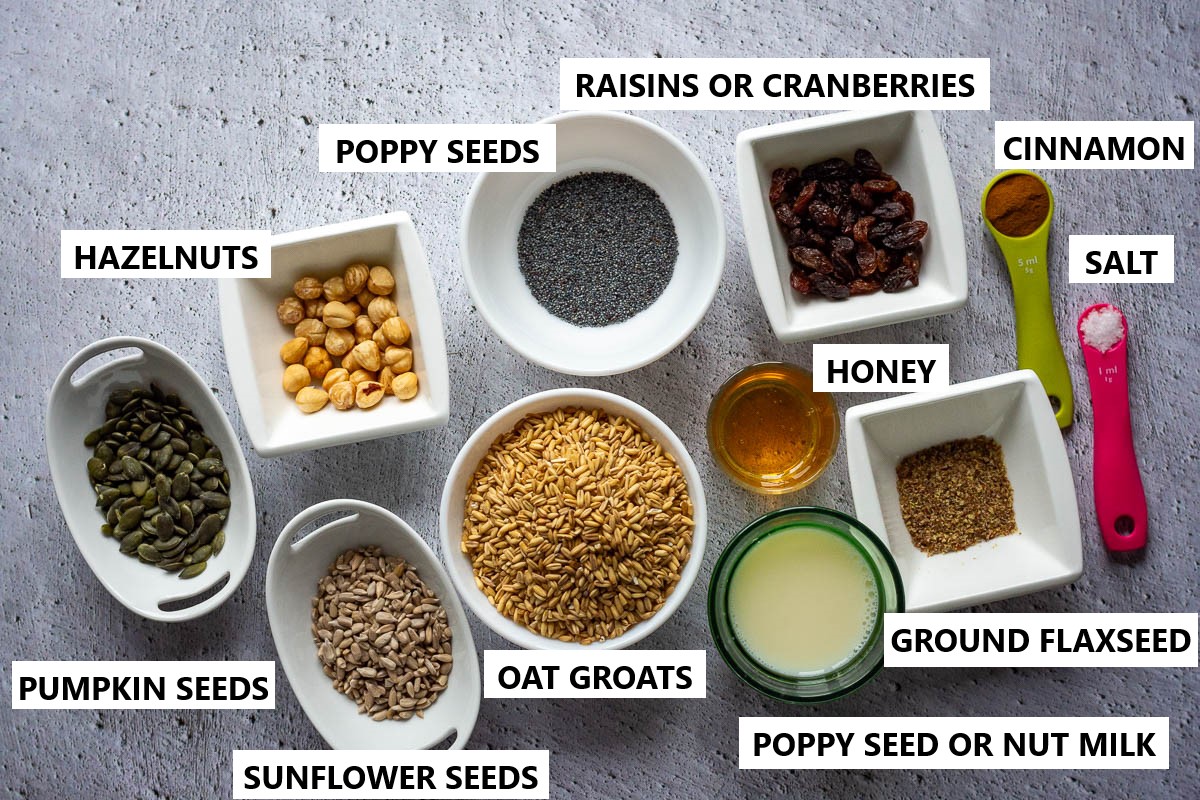
Find the quantities and detailed method in the recipe card at the bottom of the post.
Step-by-Step Method
1. Prepare the Poppy Seed Milk: Follow a poppy seed milk recipe, or save time by using your favorite nut milk (hazelnut, almond, or cashew work well).
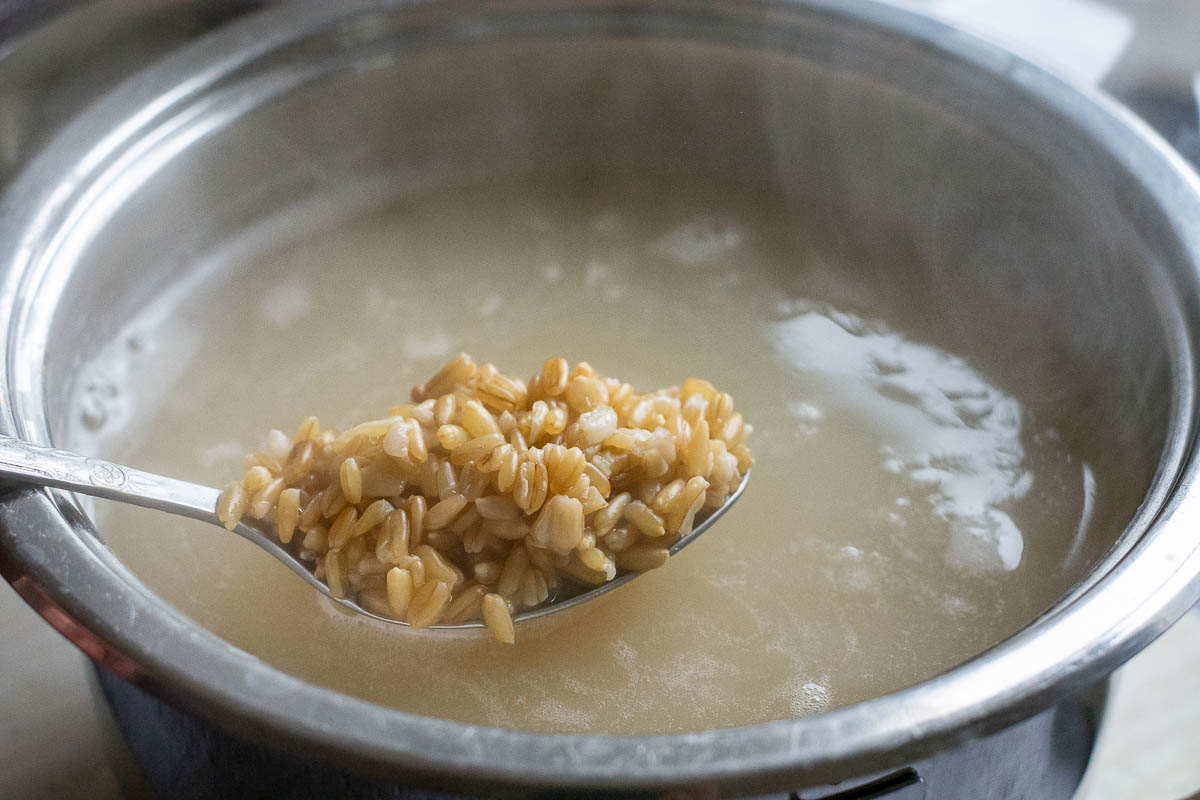
2. Cook the Oat Groats: In a large pot, cover the oat groats with plenty of cold water. Bring to a boil, then simmer for 20–25 minutes until softened but still slightly chewy.
3. Soak the Poppy Seeds: Pour boiling water over the poppy seeds, cover, and let them soak. Alternatively, use 2 tablespoons of blitzed poppy seeds from the poppy seed milk preparation.
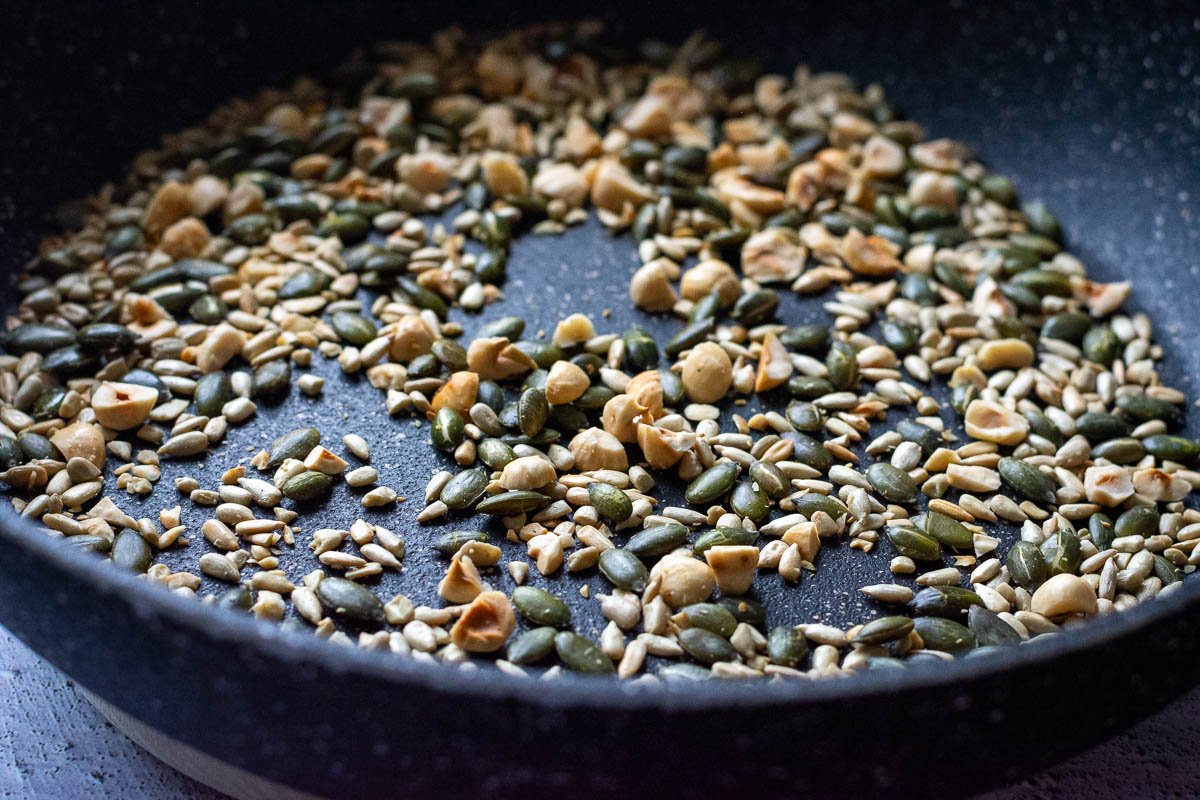
4. Toast the Nuts and Seeds: Lightly toast hazelnuts, pumpkin seeds, and sunflower seeds in a frying pan, then set aside to cool.
5. Drain the Groats: Once cooked, drain the oat groats thoroughly and rinse with cold water. Let them drain completely in a colander.
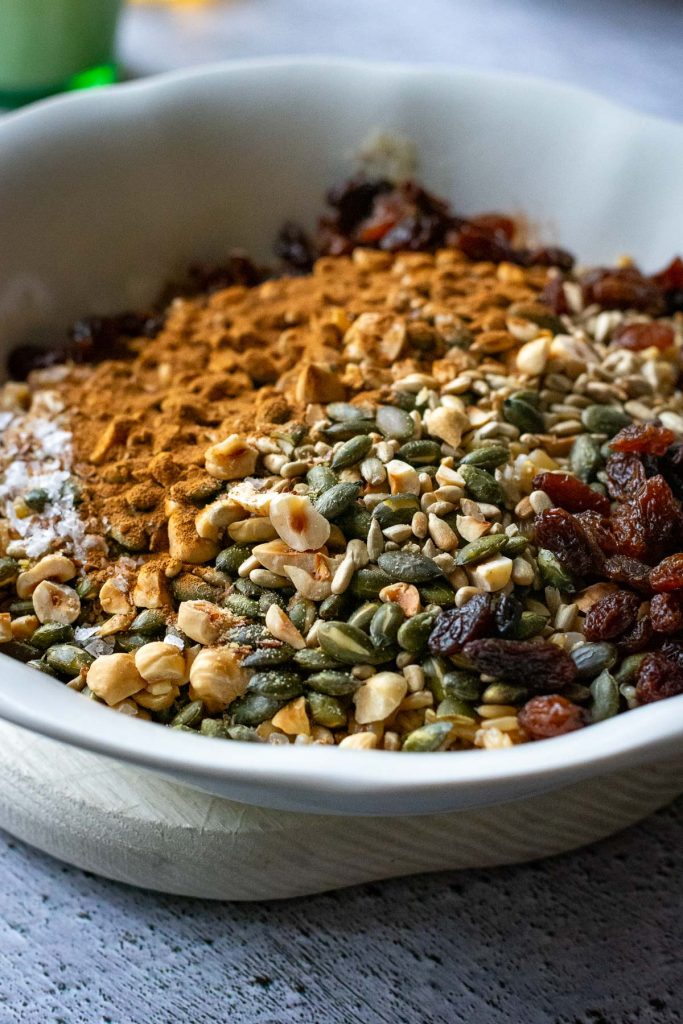
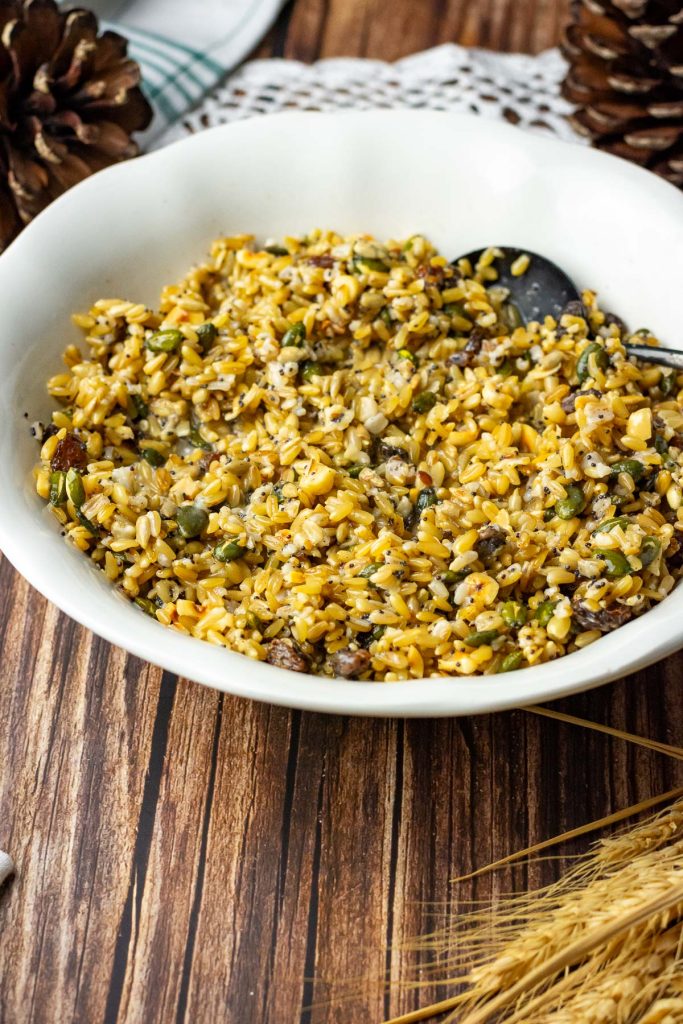
6. Combine Everything: In a large bowl, mix the oat groats, toasted nuts and seeds, poppy seeds, dried fruit, flaxseed, salt, honey, and poppy seed milk. Stir until well combined.
How To Serve Kūčia?
Kūčia is traditionally served cold as part of the Christmas Eve table (one of the 12 dishes), often presented in a large communal dish for everyone to share. While it’s meant to be eaten simply and humbly, it carries deep symbolic meaning, so don’t rush through this dish—savor it.
Kūčia is served alongside other traditional Lithuanian Christmas Eve dishes, like Cranberry Kissel, Kuciukai (Poppy Seed Cookies) and Sacramental Bread.
Christmas In Lithuania eBook
Bring a touch of authentic Lithuanian magic to your holiday season! Whether you’re reconnecting with your roots or surprising loved ones with a nod to their heritage, Christmas in Lithuania is your ultimate guide to a heartwarming, delicious, and tradition-filled celebration.

Variations
Kūčia is as adaptable as it is traditional! While oat groats are classic, you can explore other grains to suit your taste, pantry, or schedule. Here's a quick guide to alternate grains and their cooking times:
- Barley (Pearled or Hulled): Barley adds a nutty flavor and chewy texture. Hulled barley needs about 40-50 minutes to cook, while pearled barley takes 25-30 minutes.
- Wheat Berries: For a hearty bite, use wheat berries. They take about 40-50 minutes to cook but offer a satisfying chew.
- Quinoa: A quick and gluten-free option, quinoa cooks in just 10-15 minutes. It has a mild, nutty flavor that pairs beautifully with the honey and seeds, however it's not traditionally Lithuanian.
- Green Buckwheat: Choose unroasted buckwheat for a neutral flavor. It cooks quickly, in 15-20 minutes.
No matter the grain, ensure they retain some texture—Kūčia isn’t meant to be mushy. Experiment with blends for a dynamic mix of flavors and textures, making the dish uniquely yours.
More Traditional Lithuanian Christmas Recipes
If Kūčia has piqued your interest in Lithuanian holiday traditions, get ready to explore more Christmas recipes that bring old-world charm and symbolism to the table.
Kūčia (Lithuanian Christmas Eve Dish)
Ingredients
- 200 g (1¼ cups) oat groats
- 2 tablespoon poppy seeds
- ¼ cup blanched hazelnuts
- ¼ cup dried cranberries currants or raisins
- 2 tablespoon pumpkin seeds
- 2 tablespoon sunflower seeds
- 1 teaspoon ground flaxseed
- 1 teaspoon ground cinnamon
- a pinch of salt
- 2 tablespoon honey
- 120 ml (½ cup + 2 tbsp) poppy seed milk
Instructions
- First, make the poppy seed milk by following the recipe here. If you're short on time, we recommend using your favorite nut milk (hazelnut, almond or cashew milk work well).
- Place the oat groats in lots of cold water in a large pot. Bring to a boil, then simmer for 20-25 minutes. You want the oat groats to soften, but still retain a bit of bite.
- In the meantime, pour boiling water over the poppy seeds, cover and leave to soak (if you made poppy seed milk, you may use 2 tablespoon of blitzed poppy seeds instead).
- In a dry frying pan, lightly toast the hazelnuts, pumpkin seeds and sunflower seeds, leave them to cool down.
- Once the oat groats are cooked, drain well, and run plenty of cold water through them. Leave the oats to drain completely in a colander.
- In a large bowl, mix the oats, toasted seeds and nuts, poppy seeds, dried fruit, flaxseed, salt, honey and poppy milk.
Leave a Reply