

Kugelis is the dish Lithuanians actually grew up eating, not the fancier stuff that ends up in cookbooks. Every family has a version of their Lithuanian Potato Pudding, and every family will tell you theirs is the right one. Mine bakes grated potatoes with butter and onion until the top turns deep gold and the edges pull away from the dish, then gets topped with a proper bacon, onion and sour cream sauce.

Jump to:
- What is Kugelis?
- Why You'll Love This Lithuanian Potato Dish
- Equipment Needed
- Ingredient Notes
- What Potatoes To Use For Lithuanian Kugelis
- Step-By-Step Method
- Tips for Success
- What To Serve Potato Pudding With?
- Storage and Reheating
- Recipe FAQs
- Other Lithuanian Potato Dishes
- Kugelis (Lithuanian Potato Pudding)
What is Kugelis?
Kugelis is a baked Lithuanian potato pudding made from grated raw potatoes, onion, egg and butter, baked until the top is golden and the inside sets into something between a dense mash and a custard. Along with cepelinai, it's considered one of Lithuania's national dishes, and it turns up on family tables far more often than either dish appears on a restaurant menu. Depending on which part of Lithuania your grandmother is from, you may also hear it called bulvinis plokštainis, literally "flat potato dish."
Is it authentically Lithuanian? Yes, but the history is tangled, the way most peasant food history is. Potato puddings show up under different names across the region — Yiddish kugel, Polish baba kartoflana — and ingredients and techniques almost certainly crossed borders more than once over the centuries. What makes this version Lithuanian isn't that the concept is unique to Lithuania. It's that the specific ratio of potato to bacon to sour cream, and the way it's baked and served, has been refined here for generations until it became something distinctly its own.

Why You'll Love This Lithuanian Potato Dish
- Real comfort food — crisp, golden top; soft, savory-custardy inside.
- Feeds a crowd cheaply — it's mostly potatoes, plus bacon and a few staples you likely already have.
- Freezes well — bake once, eat off it for weeks.
- Adaptable — swap the sauce for a mushroom sour cream sauce, a plain onion sauce, or just a dollop of sour cream if you want to keep it simple.
- A genuine way into Lithuanian cooking if you've never tried it before.
Equipment Needed
I won't sugarcoat it: kugelis takes a bit longer to make if you don't have the right tool for grating. Raw potatoes are finely grated for this dish, so you'll need one of the following:
- A large zester-grater — part of a box grater with fine spikes and a hole in the middle. Look for one with a large surface area on that side.
- A powerful blender or food processor that can handle raw potatoes (we've tested this with a Vitamix — it works well).
- A traditional electric Lithuanian potato grater, if you happen to have one — it makes this recipe nearly effortless.
You'll also need a potato peeler, a large ovenproof dish, and a large frying pan for the sauce.

Ingredient Notes
To make a 24 x 24 cm (9½ x 9½ inch) dish of kugelis, serving 4–6 generous portions, you'll need:
- 1.3 kg (about 3 lb) potatoes, peeled — see the section below for which varieties work best.
- 1 large onion, very finely chopped.
- 2 large eggs.
- 1 teaspoon salt and a pinch of black pepper.
- 70 g (5 tablespoons) butter.
- 50 ml (3 tablespoons) whole milk — cream works too, if you'd rather.
- ¼ lemon, juice only (about 1 tablespoon), or 1 crushed 500 mg vitamin C tablet.

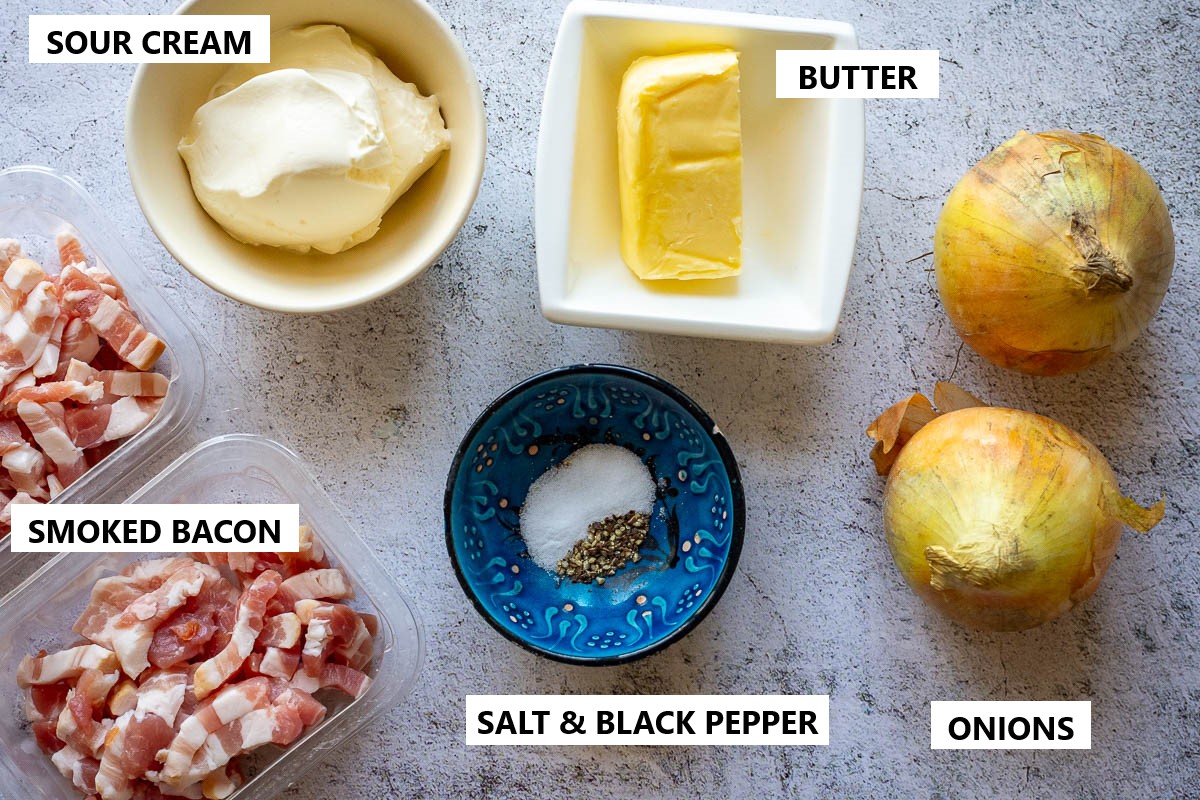
Kugelis is traditionally served with a Lithuanian sour cream sauce, and there are several variations. Some people keep it simple with just butter and crispy bacon; others prefer a creamy Lithuanian mushroom sauce. My own preference is a bacon, onion and sour cream sauce, which you'll need the following for:
- 300 g (10 oz) smoked bacon, cut into small pieces or lardons.
- 1 tablespoon butter.
- 2 large or 4 small onions, thinly sliced or chopped.
- 100 g (scant ½ cup) sour cream or crème fraîche.
- Salt and black pepper, to taste.
What Potatoes To Use For Lithuanian Kugelis
If you're in Lithuania, look for a starchy-but-buttery variety — Vineta and Laura both work well. Outside Lithuania, Russet or Yukon Gold potatoes are your best bet; in the UK, Maris Piper or King Edward do the job.
Generally, any potato that makes a good creamy mash will work here. Avoid very waxy, low-starch varieties — they won't grate into the right texture and the finished kugelis will end up denser than it should be.
Step-By-Step Method
Step 1: Make Lithuanian Kugelis
Melt the butter in a large frying pan over low heat. Add the finely chopped onion and sauté until it softens and turns light golden brown. There will be a good amount of butter left in the pan — that's exactly what you want, since it goes into the potato mixture and keeps it moist.

Grate the peeled potatoes on the fine zester side of your grater, or blitz them into a paste in a food processor or high-powered blender.
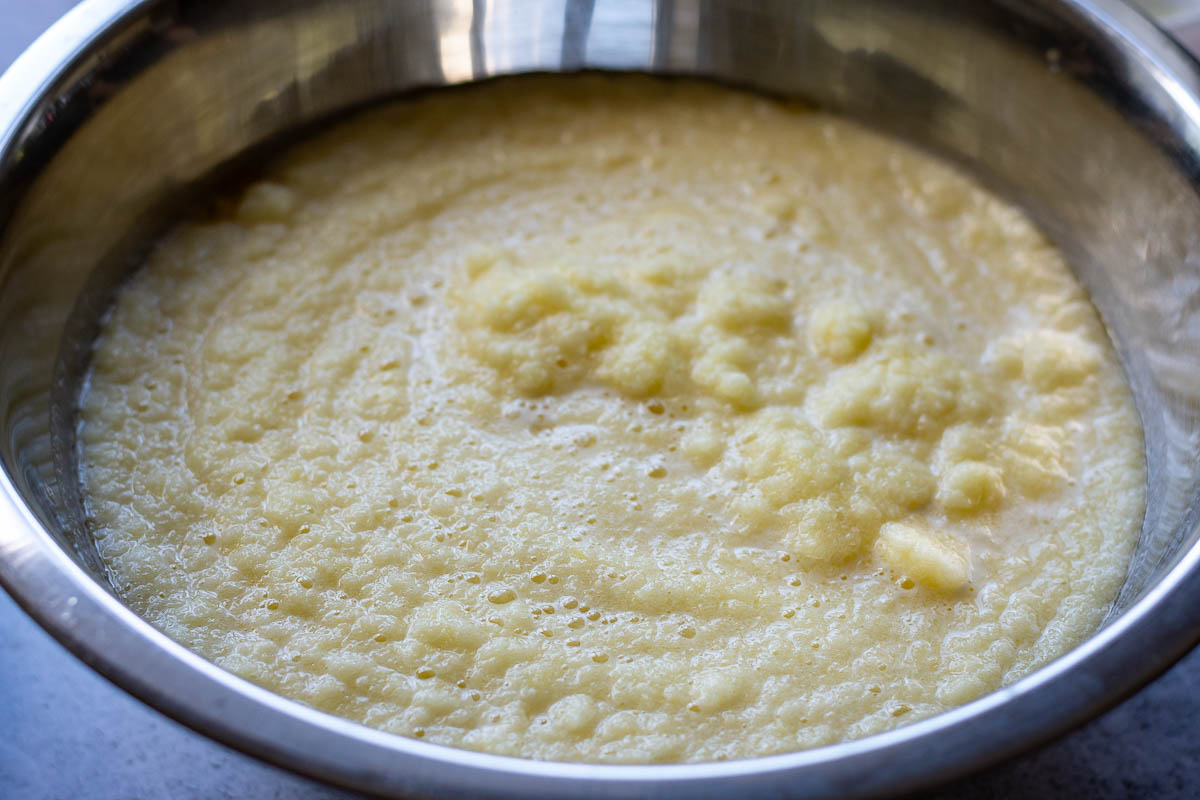
At this point, preheat the oven to 180°C fan (200°C conventional / 400°F). Grease your ovenproof dish with oil or butter.
Mix the grated potatoes with the buttery onion, milk, eggs, salt and pepper. Add the lemon juice (or crushed vitamin C tablet) and mix everything together well.
Pour the mixture into the prepared dish and bake for 40 minutes. Then increase the temperature to 200°C fan (220°C conventional / 425°F) and bake for another 15–20 minutes, until the top is deep golden brown and the sides are just starting to pull away from the dish.

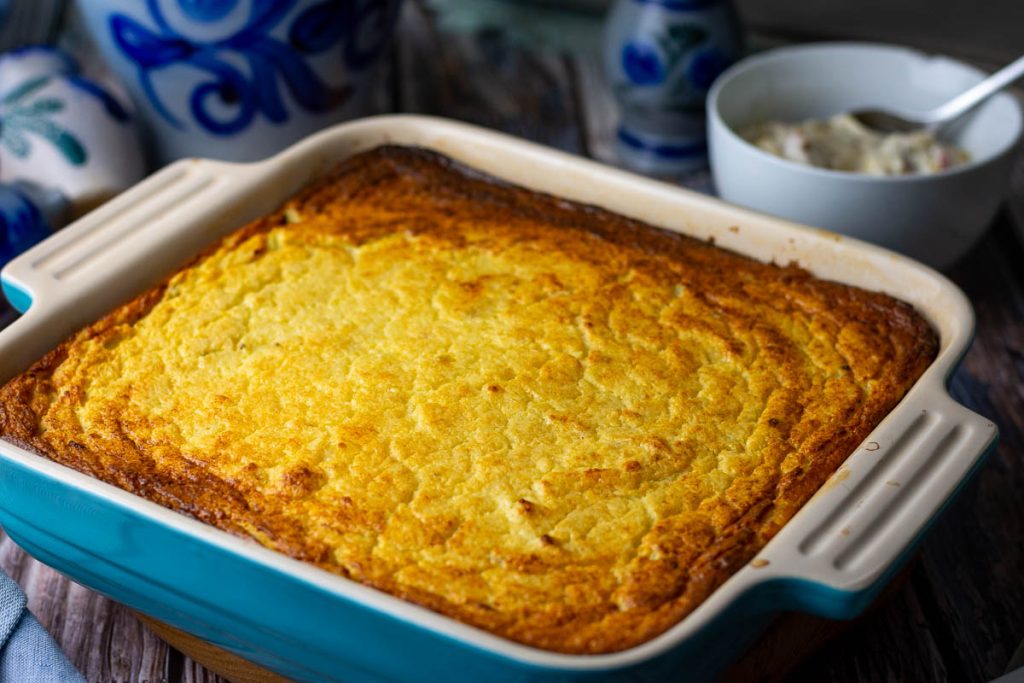
The larger your baking dish, the thinner the kugelis will be, and the faster it will cook — keep an eye on it if you've used a bigger pan than specified.
Step 2: Make The Sauce
While the kugelis bakes, fry the bacon in a large dry frying pan over medium heat until crisp and browned. Remove and set aside.

In the same pan, melt the butter and add the onions. Sauté over medium heat until softened and lightly browned.
Add the crispy bacon back into the pan with the onions. Just before serving, stir in the sour cream and a couple of tablespoons of water, and heat for 3–4 minutes until warmed through.

Step 3: Serving Lithuanian Kugelis
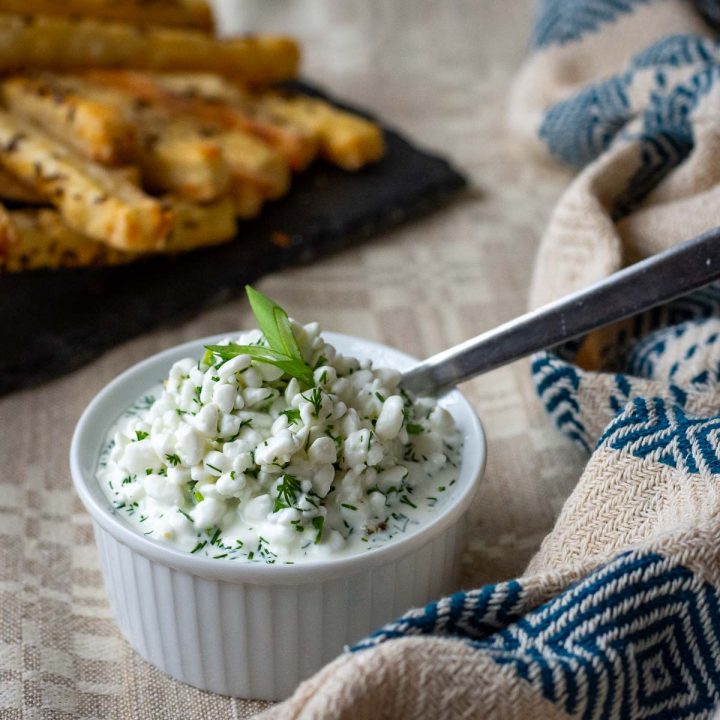
Once the kugelis is out of the oven, let it sit at room temperature for 5–10 minutes before slicing — this makes it much easier to cut cleanly. Cut it into portions, dollop a generous amount of onion and bacon sauce on top and serve immediately.

Tips for Success
- Keep the potatoes from browning. Raw grated potato oxidizes fast, turning gray within minutes. The lemon juice or vitamin C slows this down — don't skip it, especially if you're grating by hand and it's taking a while.
- Watch the two-stage bake. The first 40 minutes at 180°C fan sets the pudding; the final 15–20 minutes at 200°C fan is what gives you that deep golden, slightly crisp top. Don't shortcut the temperature increase.
- Texture check. The inside should be soft, closer to a dense mash than a bread, with a firm, browned top. If it's still wet in the center after the full bake time, give it another 10 minutes.
- Grating by hand takes longer than you'd think. Budget more time than you expect for the first attempt — it gets faster once you know what you're doing
What To Serve Potato Pudding With?
Kugelis is normally served on its own — it's rich and filling enough that you don't need a side dish.
If you've come across recipes claiming kugelis is traditionally served with applesauce or lingonberry jam, that's not accurate. That pairing belongs to other dishes and isn't how it's eaten in Lithuania. Here, it's the sour cream, on its own or with bacon and onion, and that's genuinely it.
Storage and Reheating
Leftovers keep in an airtight container in the fridge for up to 24 hours. Store the kugelis and the sauce separately.
To reheat, slice the kugelis thinner and fry it in a covered pan with a little butter until warmed through. Warm the sauce separately in a frying pan, adding an extra spoonful of sour cream if it's thickened up.
Freezing kugelis isn't recommended.
Recipe FAQs
Raw grated potatoes oxidize quickly, turning brown and unappealing. Vitamin C slows down that browning. If you're grating by hand, it takes a while to get through all the potatoes, so it's worth adding a crushed vitamin C tablet (uncoated) or lemon juice as you go.
Yes. Skip the bacon and make a creamy onion sauce instead (you may want extra salt to compensate). Fried mushrooms — cremini, chestnut, or rehydrated porcini — also work well stirred through. Some people skip the sauce entirely and just serve kugelis with a dollop of sour cream.
Yes — bulvinis plokštainis is the more literal Lithuanian name for the same dish, and you'll hear both used depending on the region and generation.
They're related but not identical. Both are baked potato (or noodle) puddings that likely share common Central and Eastern European roots, but the ingredients, seasoning and texture of Lithuanian kugelis have their own distinct character.
Other Lithuanian Potato Dishes
- Lithuanian Potato Dumplings With Farmer's Cheese
- Cepelinai (Lithuanian Potato and Meat Dumplings)
- Lithuanian Potato Pancakes
- Lithuanian Potato Pancakes With Ground Meat (Kėdainių Blynai)
- Lithuanian Baked Mashed Potato Bites - Švilpikai

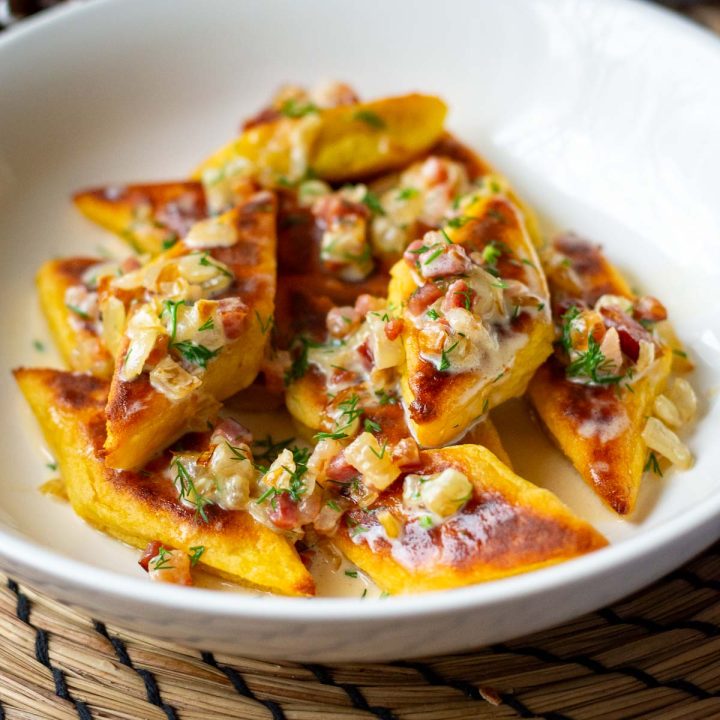


Kugelis (Lithuanian Potato Pudding)
Equipment
- Potato Grater see section "Equipment Needed" in the text above
- 24 x 24 cm (9½ x 9½ inch) ovenproof dish
Ingredients
- 70 g (5 tbsp) butter
- 1 onion large, very finely chopped
- 1.3 kg (about 3 lb) potatoes peeled
- 2 eggs large
- 1 teaspoon salt
- 50 ml (3 tbsp) whole (full-fat) milk
- ¼ lemon juice only or 1 crushed 500 mg vitamin C tablet
- 300 g (10 oz) smoked bacon lardons
- 1 tablespoon butter
- 2 large or 4 small brown onions thinly sliced or chopped
- 100 g (scant ½ cup) sour cream or creme fraiche
- salt and black pepper to taste
Instructions
Make the kugelis:
- Melt the butter in a large frying pan over low heat. Add the onion and sauté until softened and light golden brown.
- Grate the peeled potatoes on the fine zester side of a box grater, or blitz to a paste in a food processor or high-powered blender.
- Preheat the oven to 180°C fan (200°C conventional / 400°F). Grease the ovenproof dish.
- Mix the potatoes with the buttery onion, milk, eggs, salt and pepper. Stir in the lemon juice (or crushed vitamin C tablet).
- Pour into the prepared dish and bake for 40 minutes. Increase the temperature to 200°C fan (220°C conventional / 425°F) and bake for a further 15–20 minutes, until deep golden and the sides pull away from the dish.
Make the sauce:
- While the kugelis bakes, fry the bacon in a dry frying pan over medium heat until crisp. Remove and set aside.
- In the same pan, melt the butter and add the onions. Sauté until softened and lightly browned.
- Return the bacon to the pan with the onions. Just before serving, stir in the sour cream and 2 tablespoons of water, and heat for 3–4 minutes.
Serve:
- Let the kugelis rest for 5–10 minutes before slicing. Top with the bacon and onion sauce and serve immediately.
Notes



Gabby says
Does not give cooking temperature anywhere - how hot to set the oven!
Ieva says
Hi, Gabby. You can find the temperature in the recipe card under no.3 step. It is also in the Step-By-Step Method under the photo of grated potatoes. Hope that helps.
It is 180°C (or approximately 360°F) 🙂