

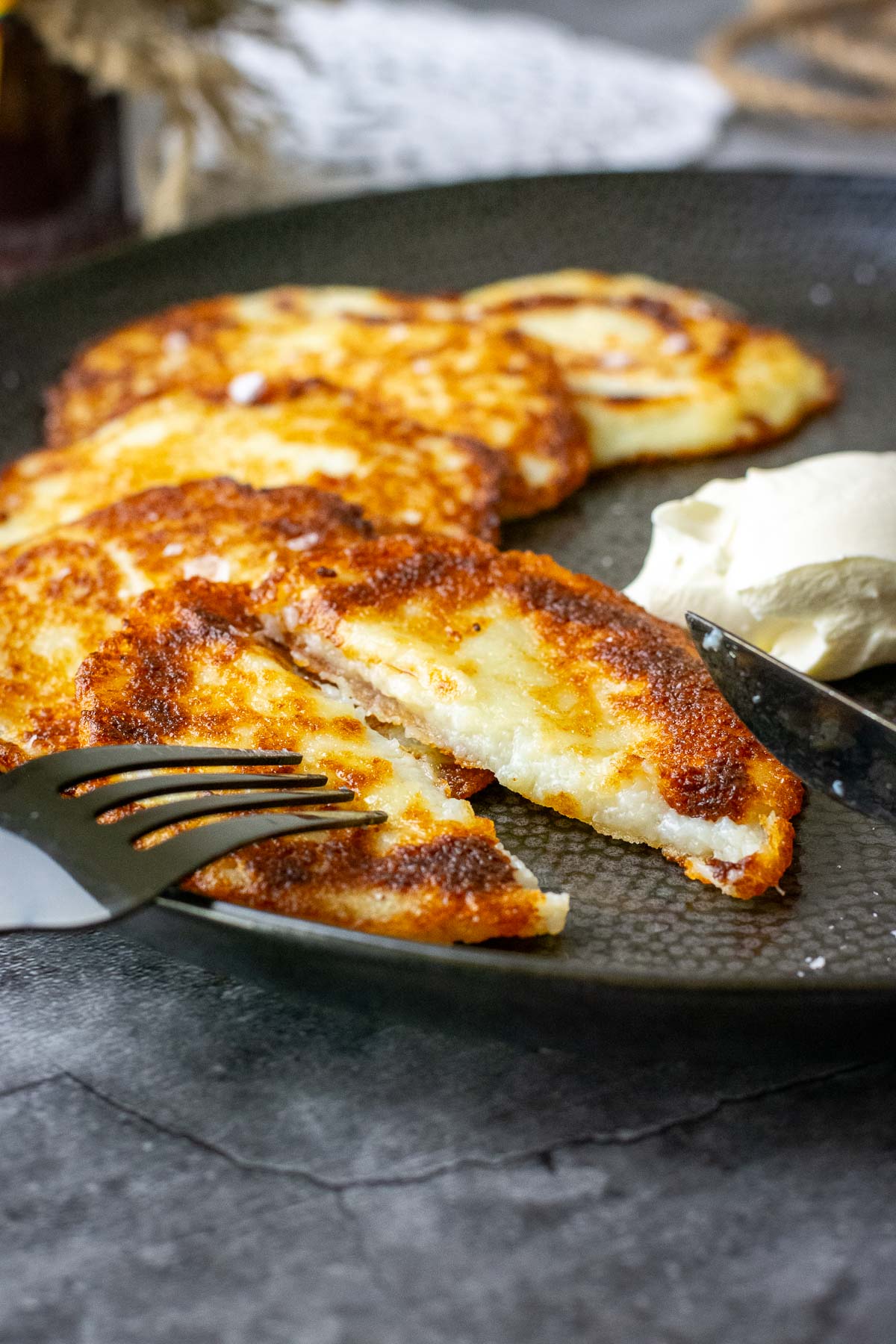
Crispy on the outside, tender on the inside, Lithuanian Potato Pancakes (or Bulviniai Blynai) are the ultimate comfort food of Lithuanian cuisine. Whether served with a dollop of sour cream or enjoyed plain, these golden beauties are a simple yet irresistible staple that brings a taste of tradition to your table.

Jump to:
- Lithuanian Comfort Food At Its Best
- Equipment Needed
- Ingredient Notes
- What Potatoes To Use For Lithuanian Potato Pancakes?
- Step-By-Step Method
- Important Tips For Best Results
- Serving Suggestions
- More Lithuanian Pancake Recipes
- Try More Lithuanian Food Made With Potatoes
- Lithuanian Potato Pancakes (Bulviniai Blynai)
Lithuanian Comfort Food At Its Best
Traditional Lithuanian food is never overly complicated. And these potato pancakes are no exception: they are made with just 3 main ingredients, but they create something irresistibly crispy on the outside and fluffy on the inside. So much so, that potato pancakes are typically enjoyed as a main course.
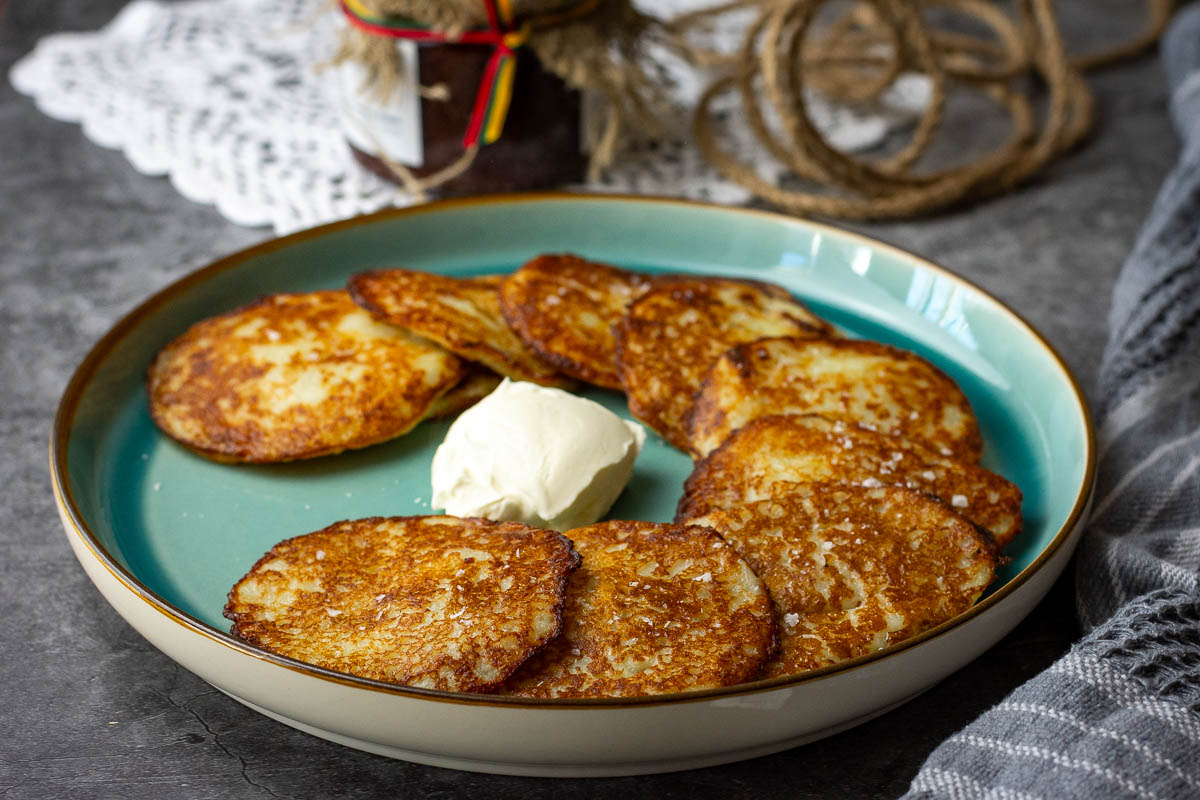
Lithuanians pile these pancakes on their plates, sprinkle some extra salt on top and enjoy them with a generous amount of sour cream or Farmer's Cheese Dip.
What does Bulviniai Blynai mean? Well, it's nothing complicated either. The literal translation is actually "potato pancakes".
Looking for something even simpler, but with the same flavors and textures? Try Lithuanian Pan-Fried Potatoes next!
Equipment Needed
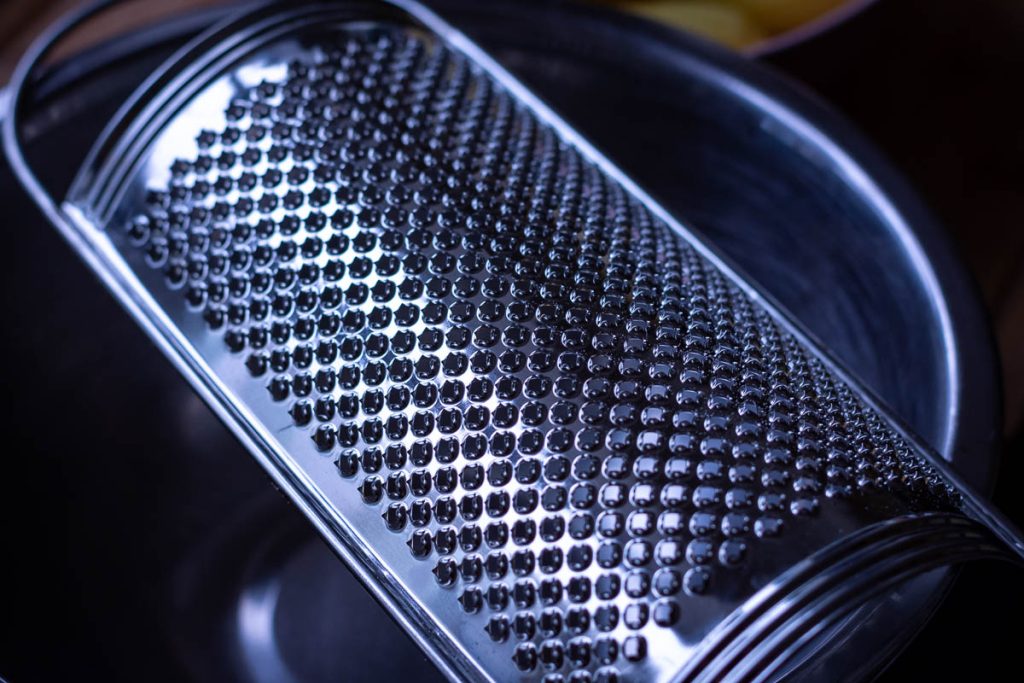
- Grater: You’ll need the spiky side of the grater—the one usually reserved for finely grating Parmesan or lemon zest. That’s the magic side for making Lithuanian Potato Pancakes. Fair warning: it’s small, so grating a pile of potatoes can be a workout. If you’d rather save some time (and your knuckles), consider investing in a larger potato grater online. Many typical Lithuanian foods are made by grating potatoes this way, e.g. Kugelis (Lithuanian Potato Cake) and Cepelinai (Potato Dumplings With Meat Stuffing).
- Large Mixing Bowl: Perfect for combining all the ingredients without messing.
- Large Non-Stick Frying Pan: A must for achieving that perfect golden crisp. Want to speed things up? Use two or even three pans at once, so you can serve all the potato pancakes at the same time—no one likes to wait for crispy goodness!
Ingredient Notes
Here's everything you will need to make these pancakes:
- potatoes: starchy yellow-fleshed potatoes. We discuss suitable types of potatoes in the section below.
- salt: we love coarse Malson Sea Salt flakes.
- small egg.
- odourless oil for frying: we use vegetable (canola) or sunflower oil.
- sour cream: or farmer's cheese dip, to serve.
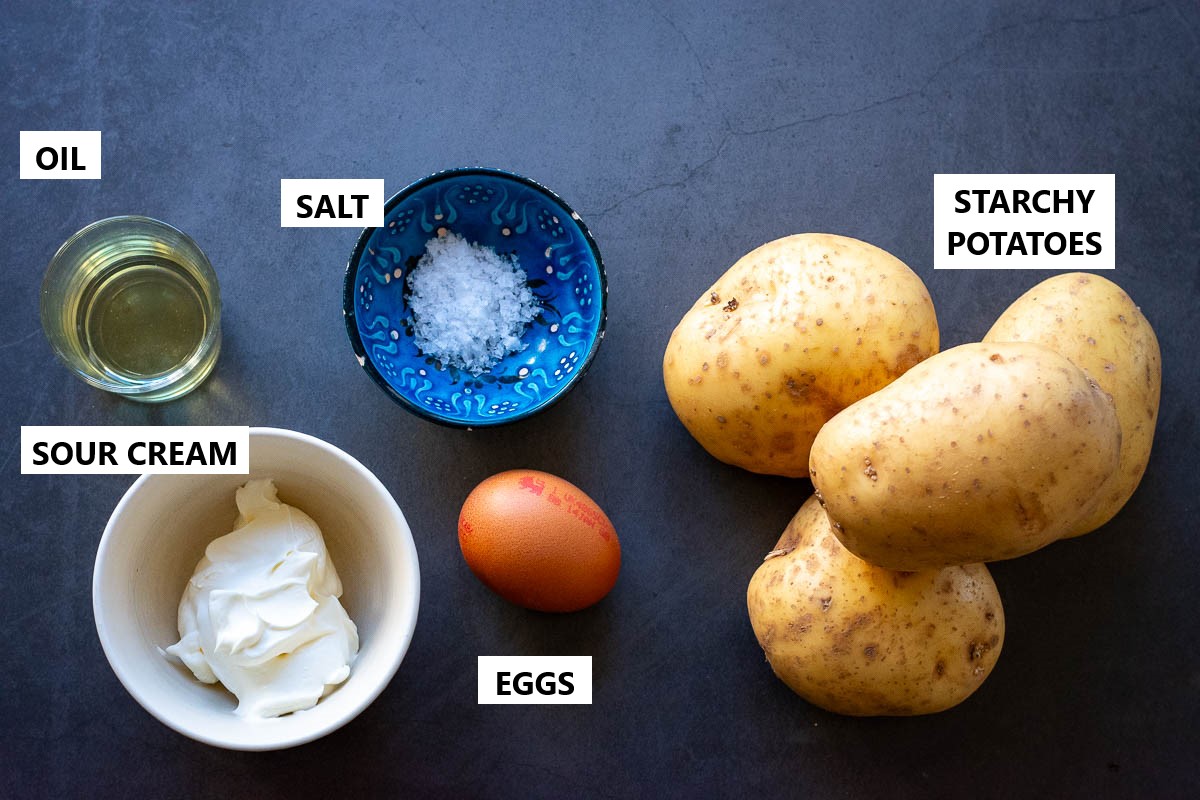
Find the ingredient quantities and detailed instructions in the recipe card at the bottom of the post.
What Potatoes To Use For Lithuanian Potato Pancakes?
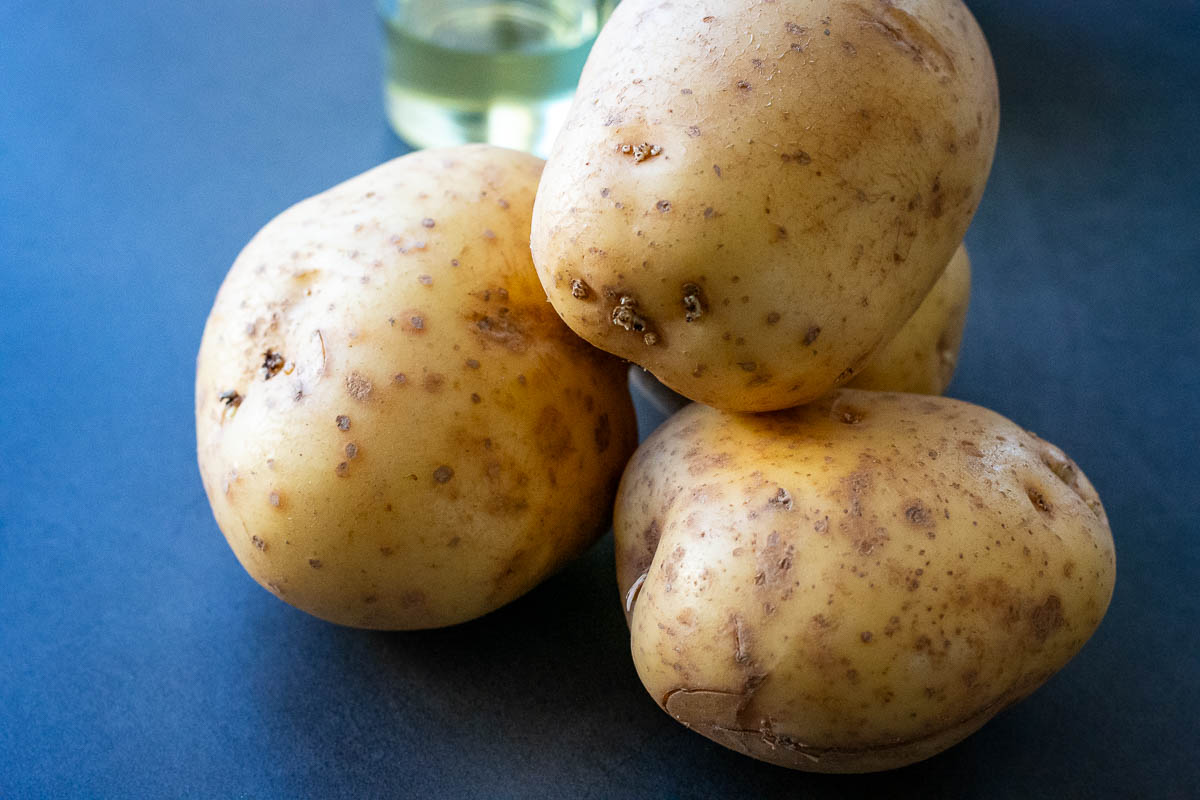
Since potatoes are the main ingredient (and pretty much the only ingredient) in this recipe, choosing the right variety is key. You’ll want a type that crisps up beautifully on the outside while staying soft and fluffy inside. You need extra starchy potatoes, ideally with golden flesh. Because potato varieties vary so much around the world, here are some we’ve tried and can confidently recommend:
- If you’re in a region where Laura, Soraya, or Vineta potatoes are available, these are ideal for Lithuanian Potato Pancakes. These are best for most other tasty dishes from Lithuania.
- In the US, you can’t go wrong with Yukon Gold, but you can also get good results with Russet potatoes.
- In the UK, Albert Bartlett Butter Gold potatoes are the best we’ve found.
If you can only get less starchy, more watery potatoes, make sure to read through the Tips in the sections below.
Step-By-Step Method
1. Peel the potatoes and pat them dry with paper towels to remove any extra moisture. Using the zester/ parmesan side of a box grater, finely grate the potatoes.
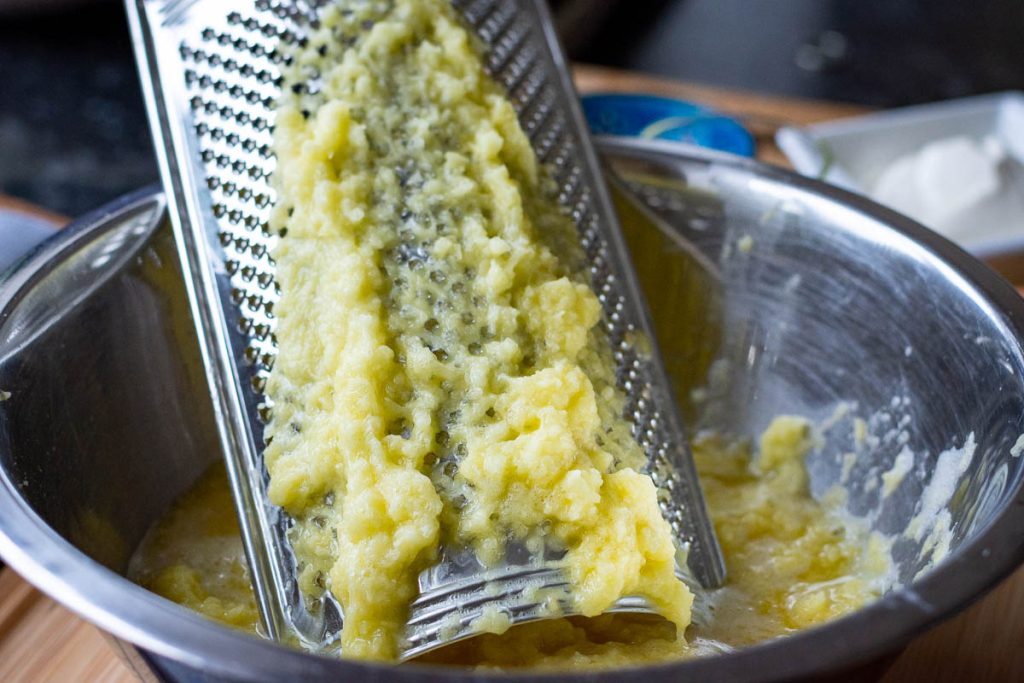
Alternatively, use a powerful smoothie maker or food processor to blitz raw potatoes into fine paste).
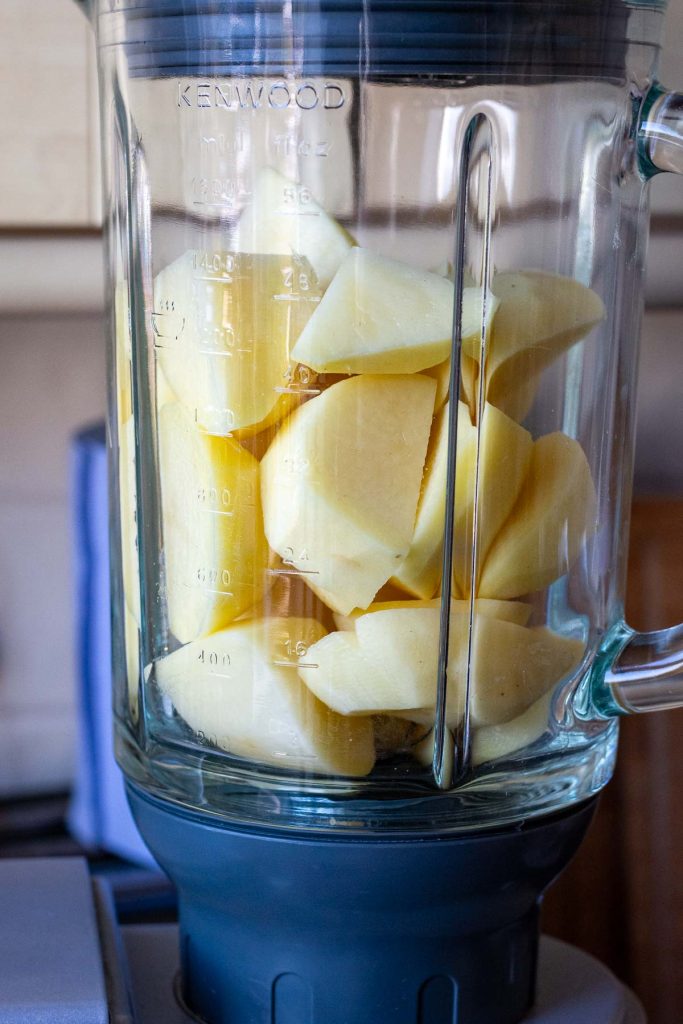
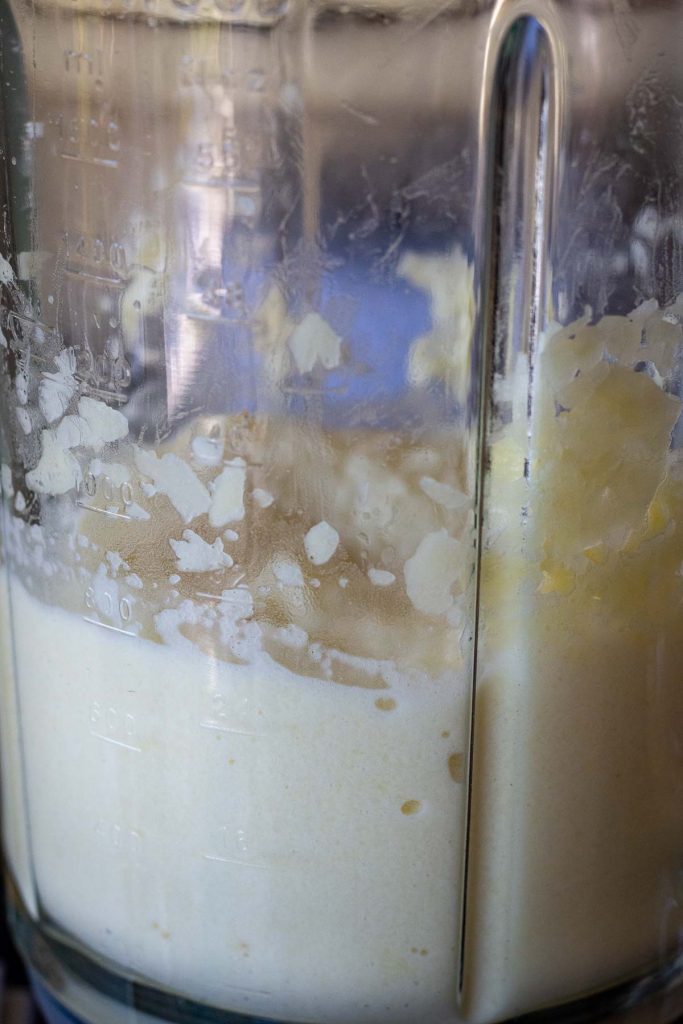
TIP: If any liquid pools on top, spoon it off. If you're using very watery potatoes, you may need to drain them through a fine sieve.
2. In a large mixing bowl, combine the raw grated potatoes with an egg and a generous pinch of salt. Mix well.
TIP: if your potatoes have lower starch content, add a tablespoon of potato starch or corn starch.
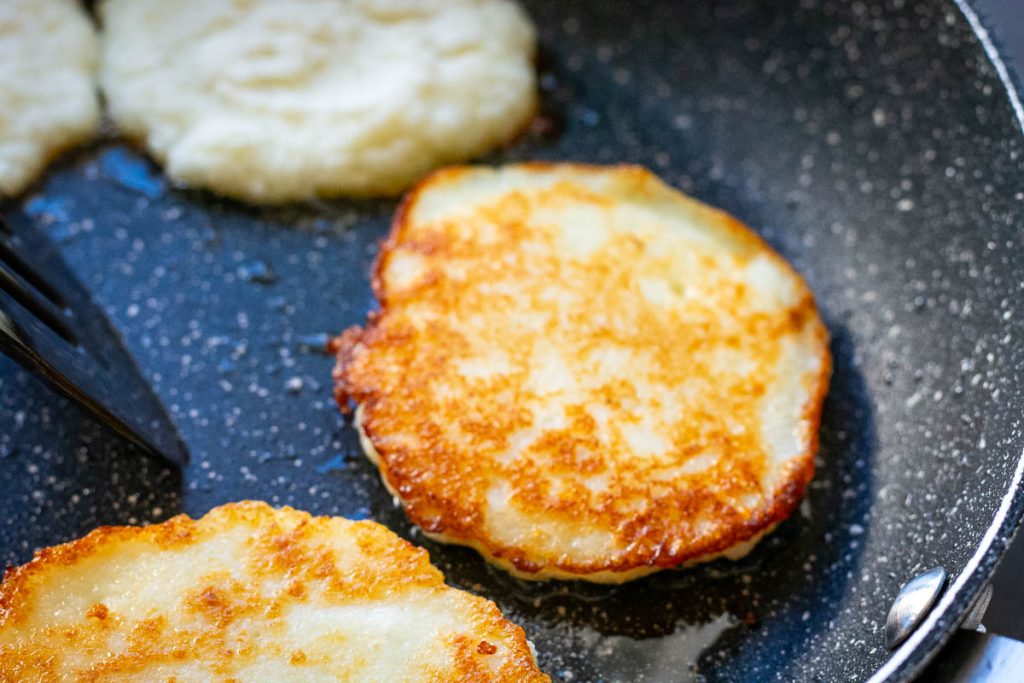
3. Heat a good glug of vegetable oil in a large frying pan over medium heat. Scoop a heaping spoonful of the potato mixture for each pancake and gently place it into the hot pan. Let them fry undisturbed for about 2 minutes to develop a crispy base. (Resist the urge to flip too soon, or they might stick or fall apart.)
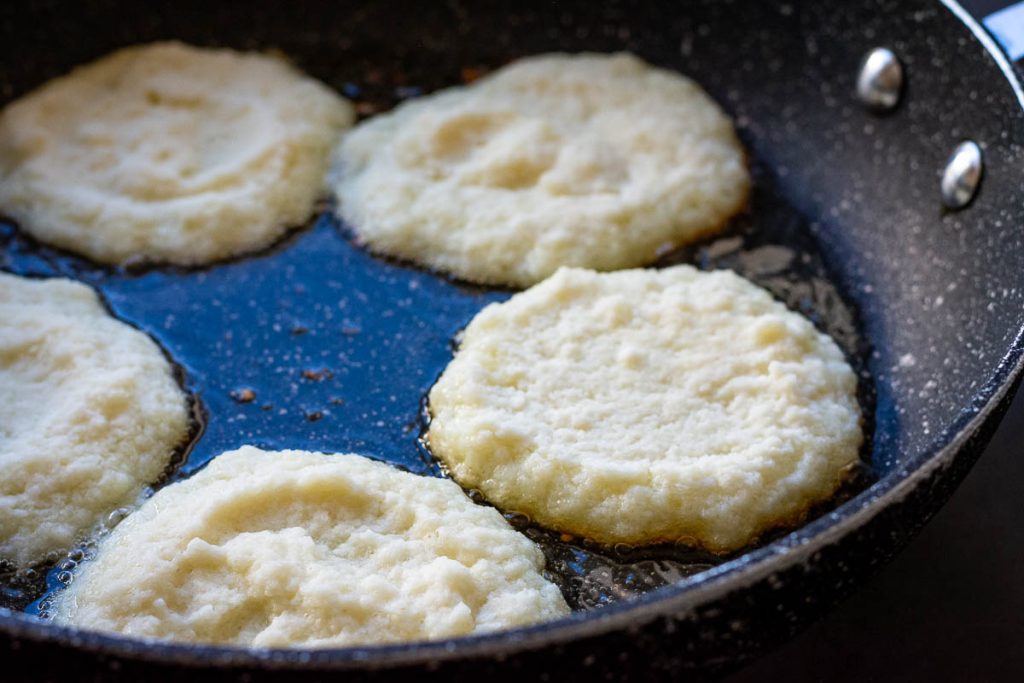
4. Flip the pancakes and fry for another 2–3 minutes, until both sides are beautifully crispy and golden brown. Add more oil as needed between batches.
5. Serve immediately with a dollop of sour cream or Curd Cheese Dip for the ultimate comfort food experience.
TIP: Making a big batch? Keep the pancakes warm by arranging them in a single layer on a baking sheet and placing them in a low oven until ready to serve.
Important Tips For Best Results
- Keep the Potatoes Bright: To prevent your grated potatoes from browning, squeeze in a little lemon juice. Just a touch is enough—you don’t want lemon-flavored pancakes!
- Work Quickly: Grated potatoes oxidize fast. Once grated, mix and fry the pancakes as soon as possible to keep them light in color and texture.
- Handle Watery Potatoes: If your potatoes turn out too watery, drain the grated mixture through a fine sieve or cheesecloth. Don’t overdo it; you want them moist but not soggy. For extra binding power, mix in a tablespoon of potato starch or all-purpose flour.
- Boost the Flavor: For a traditional twist, grate in a yellow or white onion. It adds a subtle kick and rounds out the flavor of the pancakes beautifully.
- Perfect Frying Temperature: Make sure your oil is hot before frying, but not smoking. If the oil isn’t hot enough, the pancakes will absorb it and turn greasy instead of crisp.
Serving Suggestions
If you are a regular visitor to Taste of Lithuania, you may know by now that traditional Lithuanian dishes are often paired with various dairy products. Lithuanian potato pancakes are almost always served with either a dollop of sour cream, Lithuanian cottage cheese sauce or Farmer's Cheese Dip. If none of these are available, they are enjoyed with a glass of sour milk or milk kefir.
As mentioned before, potato pancakes are typically served as a main course, so if you fancy adding some protein, we recommend serving them with some bacon rashers or crispy bacon bits scattered all over the top. Smoked salmon is another great addition.
Another great way to enjoy these crispy pancakes is to serve them as a side dish instead of breakfast potatoes (just think about them as a twist on Potato Rosti). Serve poached eggs on top and enjoy the runny egg yolks as a sauce!
More Lithuanian Pancake Recipes
Lithuanians do enjoy savoury pancakes - no doubt about that! A variation of these is Kedainiu Blynai - Grated Potato Pancakes with Meat Stuffing. Next time, why not also try our Samogitian Pancakes (a.k.a. žemaičių blynai), that are mashed potato pancakes with ground meat stuffing.
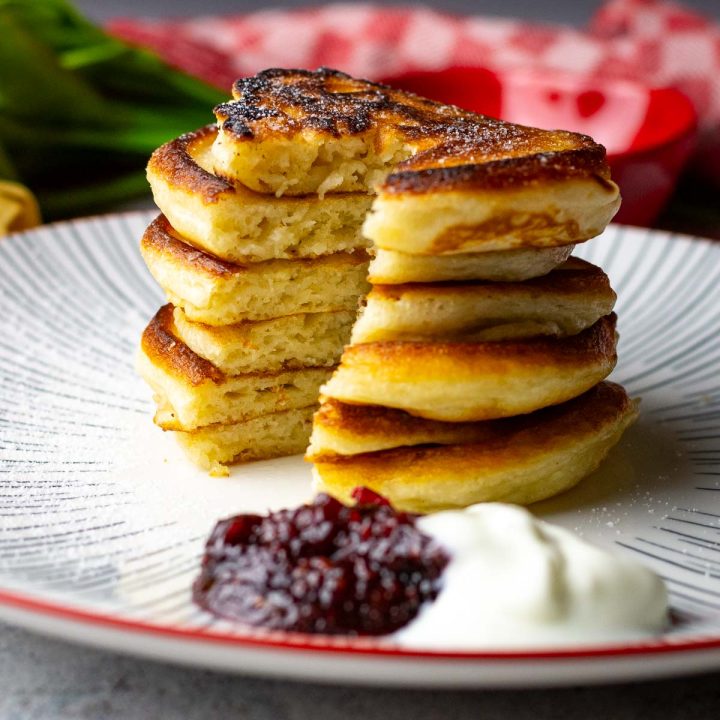
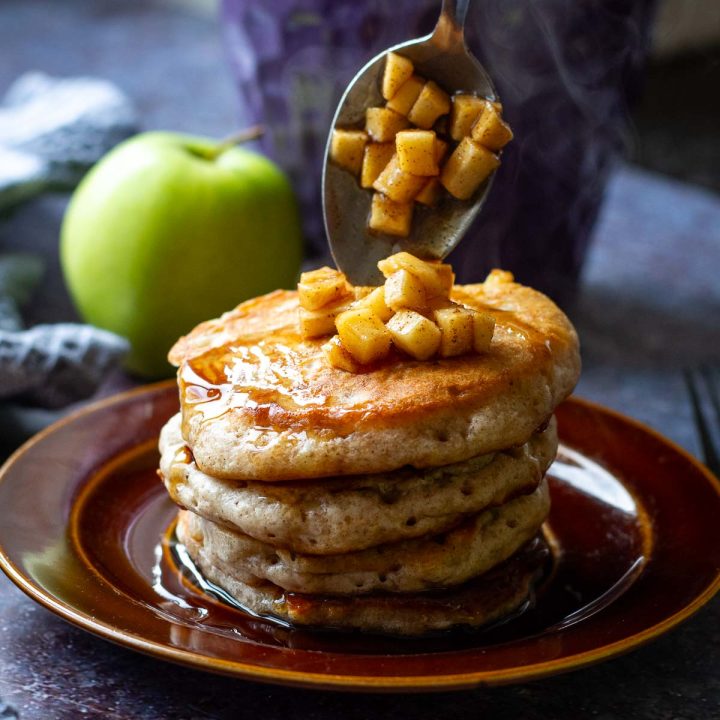
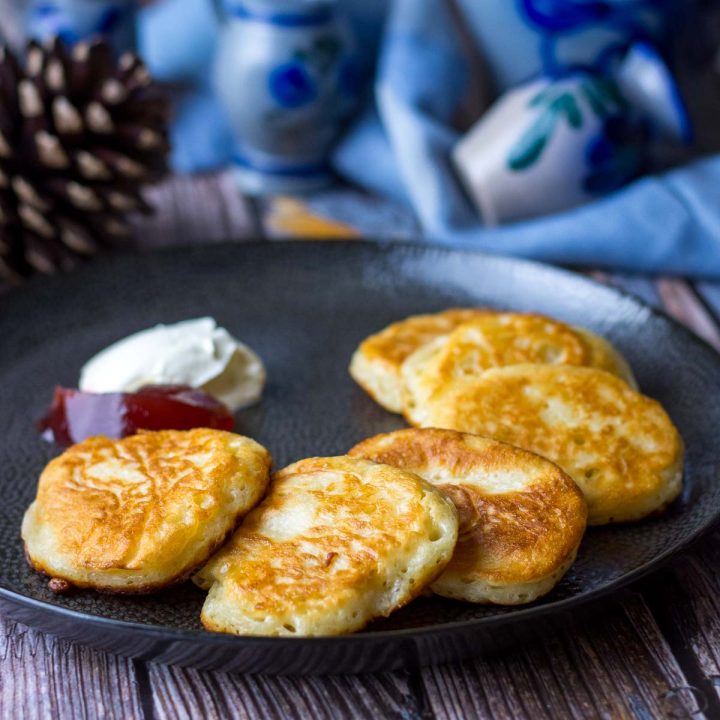
And if you are in the market for sweet pancakes, that are perfect for breakfast, have a look at some of our recipes below:

Try More Lithuanian Food Made With Potatoes
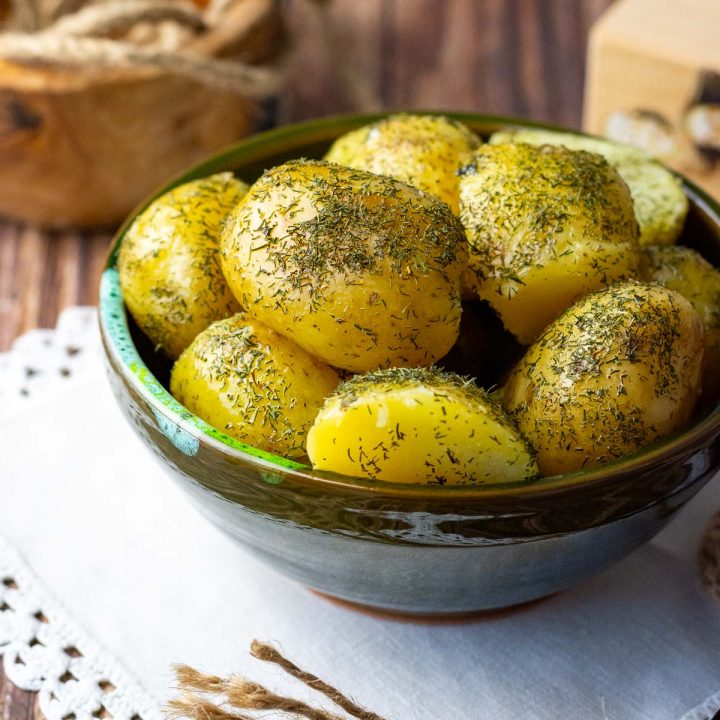
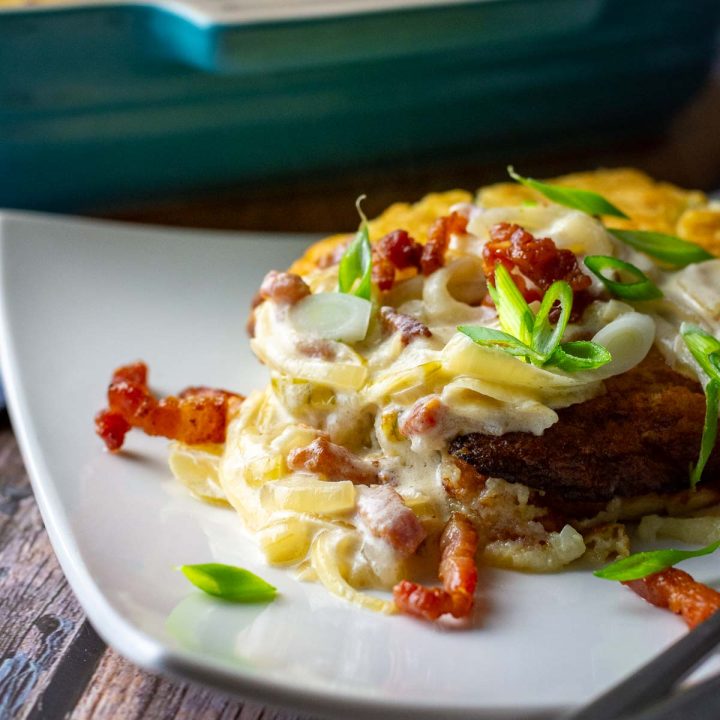
If you follow Taste of Lithuania, you already know how central potatoes are to Lithuanian cooking. From being the star of traditional food like potato sausages (vedarai) and baked mashed potato bites (svilpikai) to anchoring countless other Lithuanian dishes, the humble spud is a hero in authentic Lithuanian food. If you’ve enjoyed this Lithuanian potato pancake recipe, dive into more recipes where potatoes truly steal the show!


Lithuanian Potato Pancakes (Bulviniai Blynai)
Equipment
- Box Grater With A Wide Zester Side or Powerful Smoothie Maker/ Food Processor
Ingredients
- 800 g (1.8 lb) starchy yellow-fleshed potatoes* peeled
- 1 teaspoon salt plus extra to sprinkle on top
- 1 egg small
- 6 tablespoon odourless oil for frying
- sour cream or farmer's cheese dip to serve
Instructions
- Peel the potatoes and pat them dry with a paper towel to remove any extra moisture. Using the zester side of a box grater, finely grate the potatoes (photo of the grater in the text above). Alternatively, use a powerful smoothie maker or food processor to blitz raw potatoes into fine paste).TIP: If any liquid pools on top, spoon it off. If you're using very watery potatoes, you may need to drain them through a fine sieve.
- In a large mixing bowl, combine the grated potatoes with an egg and a generous pinch of salt. Mix well. TIP: if your potatoes have lower starch content, add a tablespoon of potato or corn starch.
- Heat a good glug of vegetable oil in a large frying pan over medium heat. Scoop a heaping spoonful of the potato mixture for each pancake and gently place it into the hot pan. Let them fry undisturbed for about 2 minutes to develop a crispy base. (Resist the urge to flip too soon, or they might stick or fall apart.)
- Flip the pancakes and fry for another 2–3 minutes, until both sides are beautifully crispy and golden brown. Add more oil as needed between batches.
- Serve immediately with a dollop of sour cream or Farmer's Cheese Dip for the ultimate comfort food experience.
- Making a big batch? Keep the pancakes warm by arranging them in a single layer on a baking sheet and placing them in a low oven until ready to serve.
Notes

Theressa says
I made the Bulviniai Blynai for Sunday Brunch today. My husband and I were delighted with them My husband said he wants them every week! They are super easy to make. I used russet potatoes and fried them in the bacon grease that was rendered from the bacon that I fried earlier in the same pan. Dėkoju!
Ieva says
Thank you so much for taking the time to leave the comment! So glad you both enjoyed it! Great idea to fry them in bacon grease - yum! 🙂
Shane says
Really nice, although my grandmother would use an onion and some plain flour as well. (She came from Lithuania to the UK after WW2). I like what you're doing! Lithuanian dishes are awesome.
Ieva says
Yes, my parents sometimes add onion too! It's delicious!
I love hearing about how people find my blog and about their connections to Lithuania 🙂 Thank you so much for the kind words, I am really enjoying sharing recipes from my heritage 🙂
Ruth E-P says
My great- grandmother was Lithuanian who emigrated to the uk in the late 1890s and the potato pancakes were passed down as a family recipe. Finely chopped onion was always added , no egg or flour, and the potato mush drained of water in a sieve , but collecting and mixing back in the starch that washed out and settled in the drained fluid. It was considered the tastiest version if they were fried in chicken fat, or rather the lard with chicken juices and fat that resulted from roasting chickens in the old ways, collected in a basin and used rather than thrown away.
Ieva says
Oh, that’s so special! I love recipes that are passed down through generations!
Onions are certainly a very common addition to the pancakes, but what I especially love is the way the starch is added back to the potatoes (we only use this method for cepelinai or boiled potato dumplings). I can never find potatoes in the UK that are as starchy as the varieties we get in Lithuania, so I will definitely try this with potato pancakes as well. Thank you for a wonderful tip! 🙂